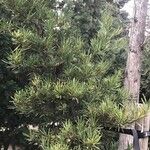
Podocarpus macrophyllus
Yew plum pine · Buddhist Pine · Big-leaf podocarp · Japanese yew · Yew
Description
Source: leafsnapPodocarpus macrophyllus, commonly known as the Japanese yew or Buddhist pine, is an evergreen coniferous tree belonging to the Podocarpaceae family. Native to eastern Asia, including China and Japan, this tree can grow up to 20 meters tall and boasts a dense crown of dark green foliage that can be pruned into various shapes. The leaves of Podocarpus macrophyllus are long and narrow, reaching up to 10 cm in length. They are arranged in a spiral pattern along the stem and have a glossy texture. The tree produces small male cones that are yellowish-green and female cones that are reddish-purple. Due to its attractive foliage and ability to be shaped into forms such as topiaries or bonsai trees, Podocarpus macrophyllus is commonly used as an ornamental plant. Additionally, it has medicinal properties, with its leaves known for their anti-inflammatory effects. The plant prefers well-drained soil with moderate moisture levels but can tolerate drought conditions once established. It grows best in full sun but can also adapt to partial shade. Overall, Podocarpus macrophyllus is a versatile plant with both ornamental and medicinal value, making it popular among gardeners worldwide.
🌳 the buddhist pine is more than merely pleasant to look at; it also benefits the environment. it is effective at cleaning the air by neutralizing harmful substances like formaldehyde. mature trees of buddhist pine yield timber valued for crafting sturdy, attractive furniture, and their seeds are used to produce high-quality varnish. truly, the buddhist pine's contributions span from detoxifying the air to improving our homes through its distinct uses.
🎭 Optimism, Sympathy
Care Guide
💧 Water Every 7 days
The Buddhist pine flourishes in humid, subtropical climates, yet it can adapt to less frequent watering, tolerating mild drought conditions. You should water it every 1 to 2 weeks, ensuring the soil remains slightly moist. Often grown indoors, this plant also benefits from occasional misting to increase humidity levels.
How should I water my Buddhist pine in the best way?
Your Buddhist pine is not very particular about how you water it. You can use any common watering tool like watering cans, hoses, or cups. When watering, it's best to apply the water directly to the soil, making sure to evenly moisten all areas to provide water for the entire root system. Using filtered water is recommended as tap water may contain harmful particles. It's also beneficial to use water that is at or slightly above room temperature to prevent shocking the Buddhist pine. However, the plant generally responds well to any type of water.
What do I need to do if I give my Buddhist pine plant too much or too little water?
When planting outdoor plants, especially new ones or seedlings, it's important to remember that they are prone to not getting enough water. So, make sure to water them adequately for the first few months. Once the roots are established, Buddhist pines can rely on rain most of the time. If you have a Buddhist pine planted in a pot, be careful not to overwater it. However, if you accidentally overwater it, you should take immediate action to fix the situation. Stop watering the plant right away to minimize the damage. Then, remove the plant from its pot and check the roots for any signs of root rot. If there is no root rot, you can return the plant to its container. But if you find root rot, trim away the affected roots and apply a fungicide to prevent further damage. Lastly, repot the Buddhist pine in well-draining soil. On the other hand, if you notice that your Buddhist pine is underwatered, simply water it more frequently. This is usually an easy fix. When underwatered, the plant's leaves will droop, dry out, and fall off. But once it receives sufficient watering, the leaves will quickly regain their fullness. So, correct your watering frequency as soon as you notice underwatering.
How often should I give water to my Buddhist pine?
Most outdoor plants can grow naturally with rainfall. However, if your area doesn't get much rain, you'll need to water your plants every 2 weeks during spring and fall. In the summer, you'll need to water more often. During the slow growth period in winter, you can water less frequently, or not at all. Young or newly planted Buddhist pine trees require more frequent watering to help them establish and become more drought tolerant. For potted plants, there are two main ways to determine when to water your Buddhist pine. One way is to set a regular watering schedule, like once a week or every other week. However, this may not work well as it doesn't consider the specific conditions of your growing environment. Another approach is to water based on soil moisture. Ideally, wait until the top 2 to 4 inches of soil (about ⅓ to ½ the depth of the pot) have completely dried out before giving more water.
How much water does my Buddhist pine plant need?
When watering your Buddhist pine, you may be surprised to learn that it doesn't always require a lot of water. Instead, if only a few inches of soil have dried out since the last watering, you can promote healthy growth by giving it around five to ten ounces of water each time. You can also gauge how much water to give based on the soil's moisture levels. Take note of how many inches of soil have dried out between waterings. To ensure the Buddhist pine receives enough moisture, provide enough water to dampen all the dry soil layers since the last watering. If more than half of the soil has dried out, it's best to give more water than usual. In such cases, keep adding water until you see excess water draining from the pot's drainage holes. If your Buddhist pine is planted in an area that receives ample rain, it may not need additional watering. During the initial stages or when it is young, make sure it receives 1-2 inches of rain per week. As the plant grows and becomes established, it can rely solely on rainwater. Only in hot weather with no rainfall for 2-3 weeks should you consider giving it a full watering to prevent stress.
How do I know if I'm giving my Buddhist pine tree enough water?
The Buddhist pine is more commonly affected by overwatering, and there are specific signs to watch out for. Typically, an overwatered Buddhist pine will have yellowing leaves and may shed some leaves. Additionally, overwatering can lead to the plant's overall structure shrinking and may contribute to root rot. Conversely, an underwatered Buddhist pine will also start to droop. It may also develop brown or fragile leaves. Regardless of whether you notice signs of overwatering or underwatering, it is important to take action to revive the health of your Buddhist pine.
☀️ Light Full sun
Buddhist pine prospers with abundant sunlight, but it can tolerate extended periods of shade or nearly complete darkness. Native to areas with plentiful sun, it is not especially harmed by excessive light. Still, insufficient light can impede its growth and damage its health.
How many hours of sunlight does Buddhist pine need each day to grow well?
To ensure healthy growth, Buddhist pine needs a minimum of 3-6 hours of sunlight daily. While this is the minimum requirement, plants that can tolerate partial sunlight typically can also do well in full sunlight. These plants are more adaptable since they require less light for photosynthesis compared to plants that need full sunlight or partial shade.
What kind of sunlight does a Buddhist pine tree need?
Buddhist pine thrives under full or partial sun exposure. It prefers direct morning light, but during summer, it requires protection from intense afternoon sun. Excessive hot afternoon sun in temperate climates can scorch the leaves, resulting in a negative impact on the plant's overall appearance and health.
Does sunlight harm Buddhist pine? How can you protect Buddhist pine from damage caused by the sun and heat?
Indoor Buddhist pine can get damaged by direct sunlight when taken outside. To avoid sunburn, slowly move the pots from a shaded area to a brighter spot. However, even plants used to the sun can still get damaged by extreme heat. During a heatwave, it's crucial to keep the soil consistently moist to help the plants withstand high temperatures. To protect sensitive Buddhist pine during extreme weather, either move potted plants to areas with afternoon shade or use a shade cloth to cover them up.
Should I keep Buddhist pine away from direct sunlight?
Buddhist pine benefits from bright morning sun and some full sun exposure. However, it cannot handle the harsh, hot midday sun of summer. If the plant is in the ground, it can gradually adapt to the increasing intensity of the summer sun. But if it is in a pot and has been indoors or in a protected location, it may get injured when exposed suddenly to direct summer sun in the hottest part of the day. To protect the plant from the afternoon summer sun, it is recommended to plant or place it in an understory location where it is shaded at midday by taller trees, plants, buildings, or landscape features.
If Buddhist pine doesn't get enough sunlight, what will happen?
If Buddhist pine doesn't get enough sunlight, it can turn pale green and its leaves may droop or turn yellow. While losing some leaves is normal, it's a problem if leaves are falling off but no new ones are growing. Inadequate light can also result in thin, pale new growth that is susceptible to insects. By noticing these signs and adjusting the lighting, you can greatly improve the plant's condition.
🌡️ Temperature 15–37.8°C
the buddhist pine does well in its native habitat with moderate temperatures of 50 to 85 ℉ (10 to 30 ℃). It prefers temperatures from 59 to 100 ℉ (15 to 38 ℃), though it can tolerate some frost. In winter the plant needs cooler conditions and can withstand 41 to 59 ℉ (5 to 15 ℃). During summer it benefits from some shade to avoid hotter temperatures.
What are the ideal growing conditions for a Buddhist pine?
The Buddhist pine, or Podocarpus macrophyllus, thrives best in moderate temperatures ranging from 50 to 85 °F (10 to 30 °C), preferring temperatures between 59 to 100 °F (15 to 38 °C). It can tolerate some degree of frost, requiring cooler temperatures between 41 to 59 °F (5 to 15 °C) during winter months. In the summer, it benefits from a bit of shade to shield it from hotter temperatures. Although it has some cold tolerance and generally does not require special measures when temperatures are above the tolerable minimum, temporary cold protection measures, like wrapping the plant with plastic film or fabric, may be necessary if temperatures are expected to drop below this threshold. Once temperatures rise again, protective measures should be removed.
How should I care for my Buddhist pine in low temperatures?
The Buddhist pine has a moderate tolerance for low temperatures and performs best when kept above a certain minimum temperature. During winter, it should remain above the tolerable growing minimum temperature. If the temperature drops below the limit for growth, leaves may begin to droop, and in severe cases, they might wilt and fall off. To care for the Buddhist pine in low temperatures, frost-damaged parts should be trimmed off. Before encountering low temperatures again, wrap the plant with non-woven fabric or cloth, and set up a wind barrier to protect it from cold winds.
What should I do if my Buddhist pine experiences high temperatures?
During the summer, it's important to keep the Buddhist pine below the suitable growth maximum temperature. Exceeding the tolerable growing maximum temperature can cause the leaves to lighten in color, dry out at the tips, curl, and make the plant more susceptible to sunburn. To mitigate high temperature effects, trim away the sunburnt and dried-up parts of the plant. Move the plant to a shaded location, especially away from midday and afternoon sun, or use a shade cloth. Watering the plant in the morning and evening helps keep the soil moist and the plant healthy.
💨 Humidity normal (40-60%)
This plant will thrive in moderate humidity, which is probably the level in your home. However, misting it a few times a week can be very beneficial. Make sure the room has good ventilation.
🪴 Soil 5-6
🌱 Fertilizer
Buddhist pine has specific nutrient needs and does not require heavy fertilization. Spring is the best time to fertilize for optimal growth. Providing nutrients improves its vigor, strengthens its resistance to pests and diseases, and helps maintain its long lifespan.
Why should I put fertilizer on my Buddhist pine?
To promote healthy growth in Buddhist pine, it is recommended to fertilize it in the spring. Keep in mind that this plant has a long lifespan and requires support. Enhancing the soil with nutrients can also boost the plant's overall health, increasing its resistance to common pests and diseases that can hinder growth or shorten its lifespan.
When should I fertilize my Buddhist pine for the best results?
Unlike garden annuals and perennials, Buddhist pine is unique in that it does not rely heavily on extra nutrients for healthy growth. However, the growing medium may not always provide sufficient nutrients. To ensure optimal growth, it is recommended to fertilize Buddhist pine in the spring before new growth emerges.
When is it best to not use fertilizer on my Buddhist pine?
Unlike other plants that benefit from regular fertilization, Buddhist pine does not require excessive nutrients. Over-fertilization can actually harm it, leading to decline. To ensure the plant's health, it is best to only apply fertilizer during spring, and refrain from doing so during the summer, fall, and winter seasons. Additionally, avoid adding any fertilizer or organic matter to the soil during these times.
What kind of plant food does my Buddhist pine tree need?
The age of your plant determines the fertilizer it needs. However, Buddhist pine doesn't need a lot of extra nutrients. Look for balanced plant food that supports healthy root development and growth, but avoid fertilizers high in nitrogen.
How should I fertilize my Buddhist pine?
When fertilizing Buddhist pine, remember that the method and timing are both crucial. Add the fertilizer once during springtime, specifically around the plant's base. Take care to avoid getting any fertilizer on the trunk. If using granulated fertilizer, cover the pellets with a thin layer of soil to help the soil effectively absorb the nutrients.
🪴 Pot & Repot 2-3 years
When repotting a Buddhist pine, select a pot 1–2 inches (2.5–5 cm) larger with good drainage. Use a well-draining potting mix. Repot in spring or fall, making sure the root ball is slightly below the rim of the flower pot. Water thoroughly after repotting and place it in a warm spot with indirect sunlight.
✂️ Pruning
The Buddhist pine is known for its dense evergreen foliage and columnar shape. To keep it healthy and visually appealing, prune it between early and late winter. Start by removing any dead branches and thinning out crowded areas to improve air circulation. Selective trimming helps maintain the tree's shape, encourages healthier growth, and prevents pest infestations, all of which enhance its aesthetic appeal and structural integrity.
🌿 Propagating
🐛 Diseases & pets
☠️ Toxicity
Characteristics
- Plant Type
- Tree
- Life Cycle
- Perennial
- Genus
- Podocarpus
- Family
- Podocarpaceae
- Hardiness Zone
- 8-12
- Mature Height
- 4.88 m to 20.12 m
- Mature Spread
- 4.57 m to 6.1 m
- Leaf Color
- Green
- Leaf Type
- Evergreen
- Flower Color
- Yellow, Green, Gold
- Bloom Time
- Late spring, Early summer
- Planting Time
- Spring, Autumn
- Harvest Time
- Mid summer, Late summer, Early fall
- Native Area
- Myanmar, Vietnam, Japan, China