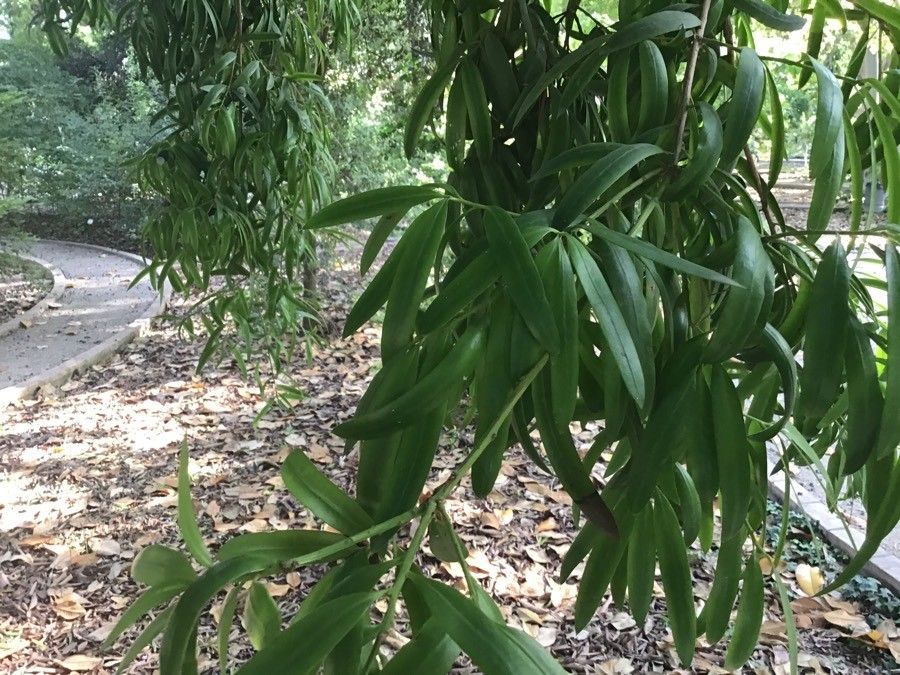
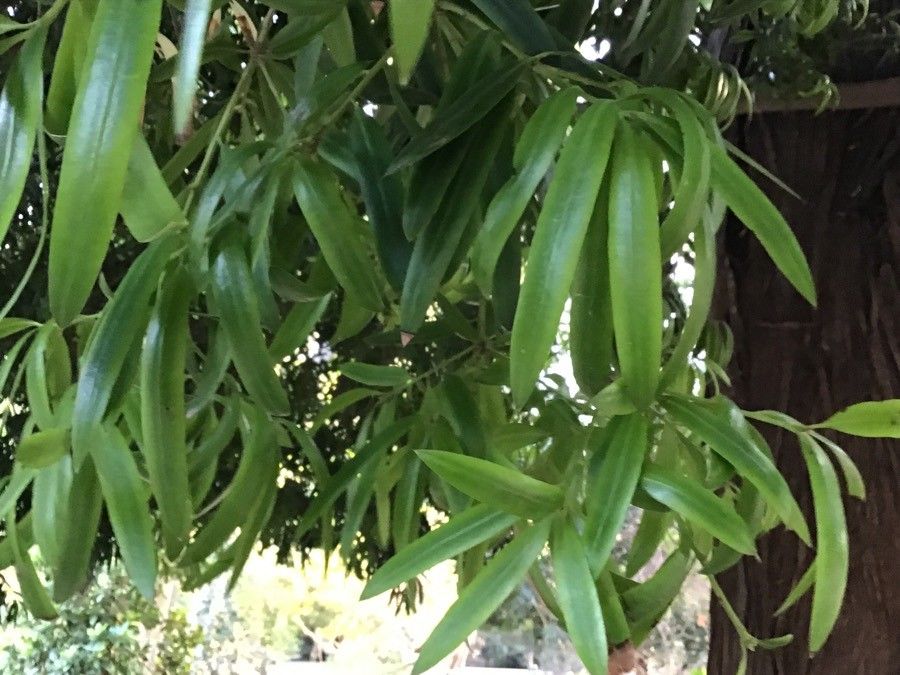
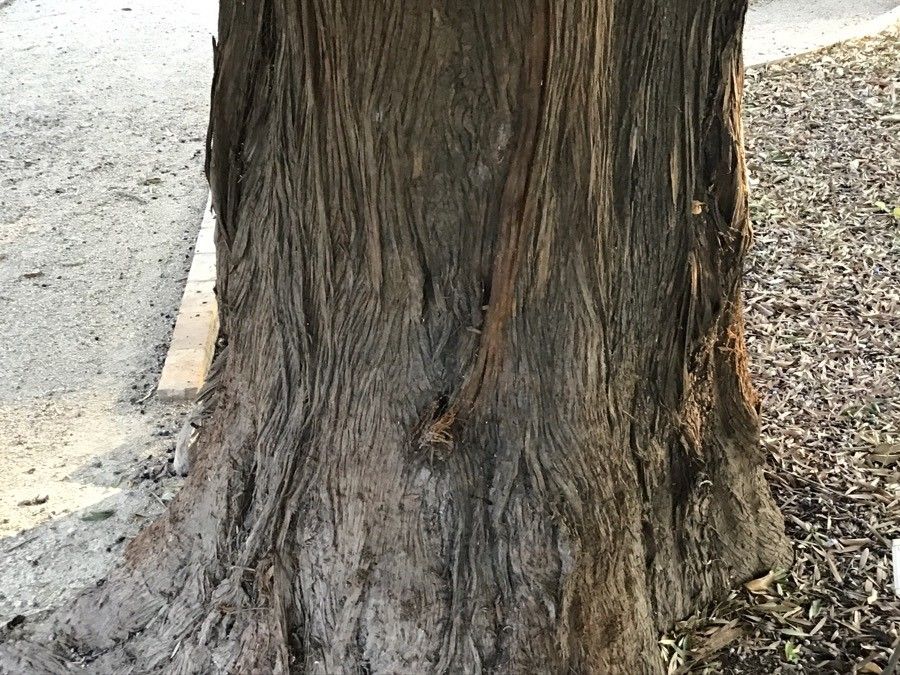
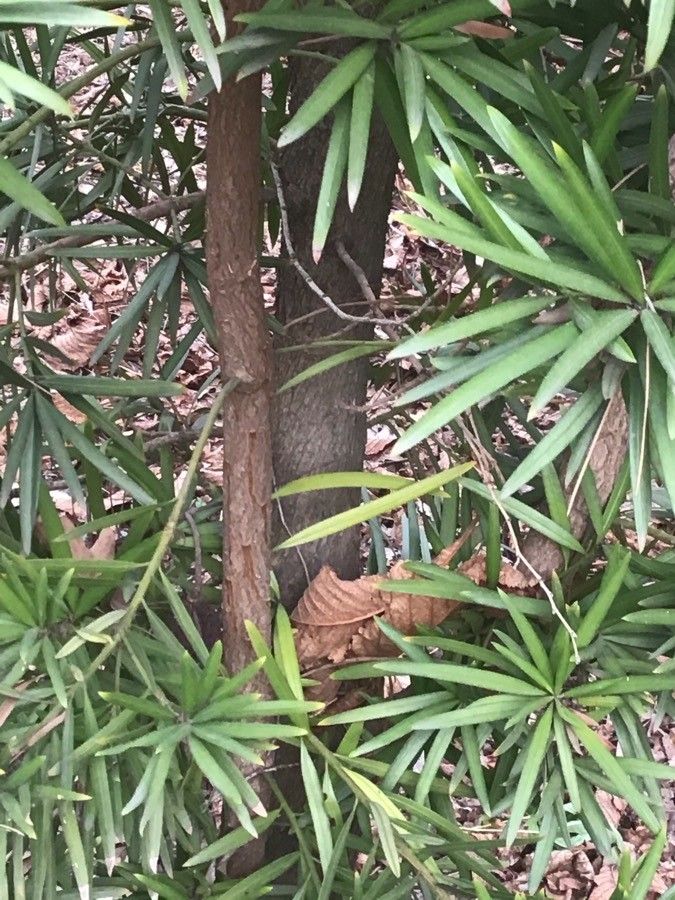
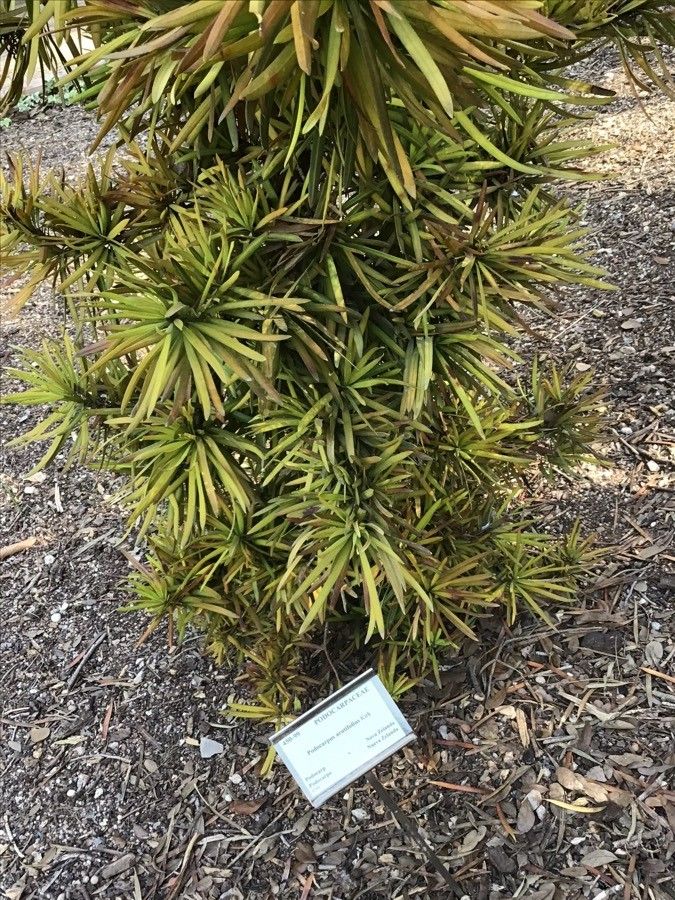
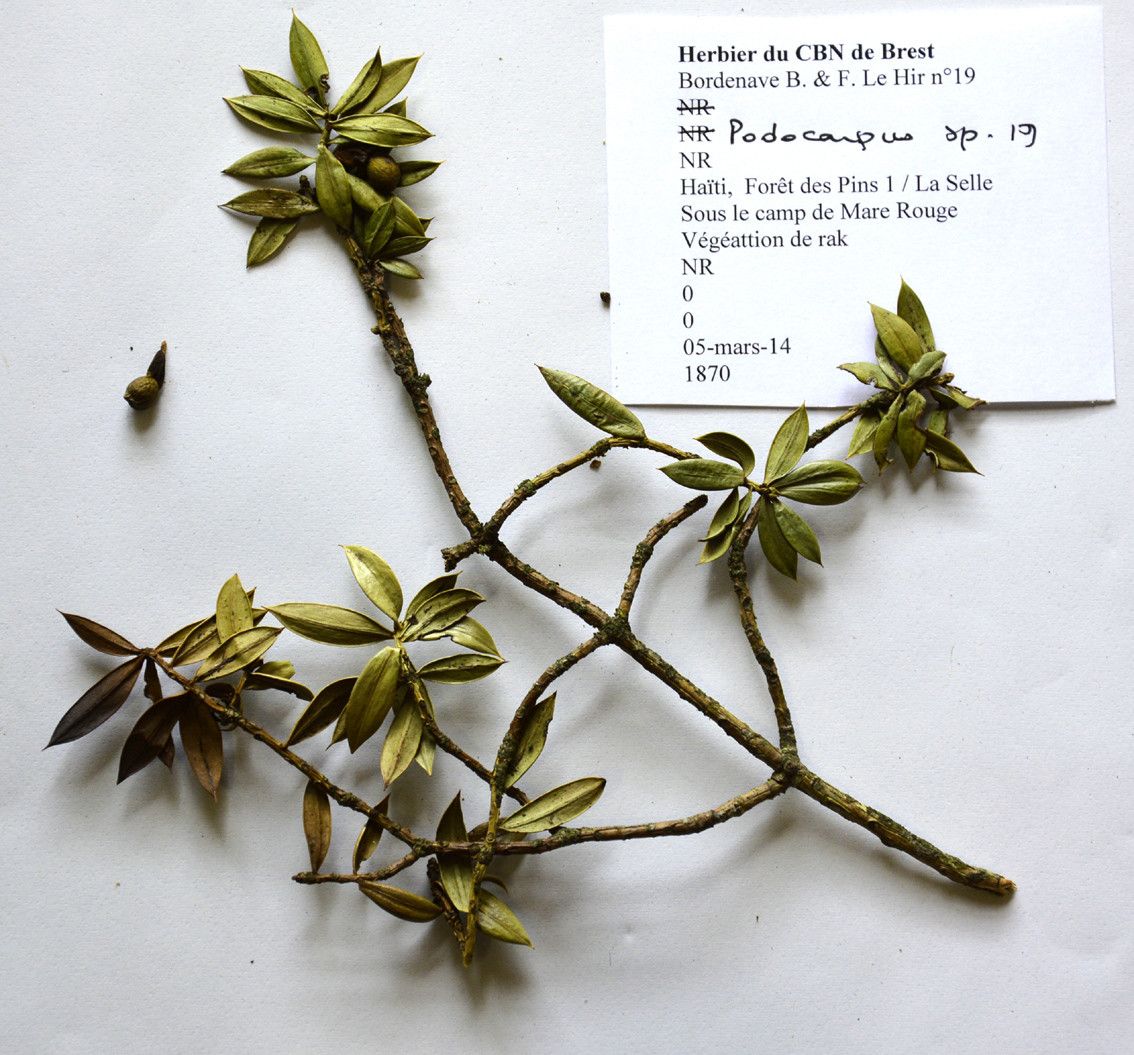
Podocarpus neriifolius, commonly known as Yellowwood Pine or Oleander Podocarpus, is a slow-growing evergreen tree belonging to the Podocarpaceae family. Native to Southeast Asia, it can be found in countries such as India, Nepal, Bhutan, and Myanmar.
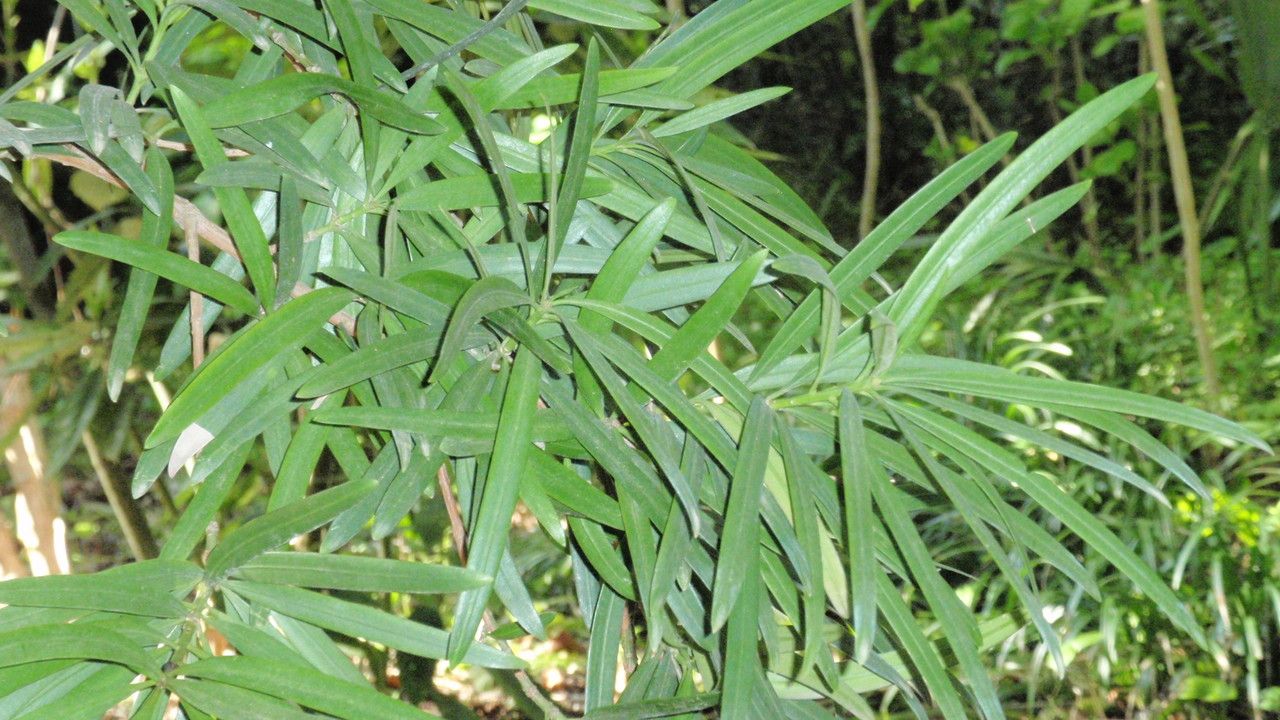
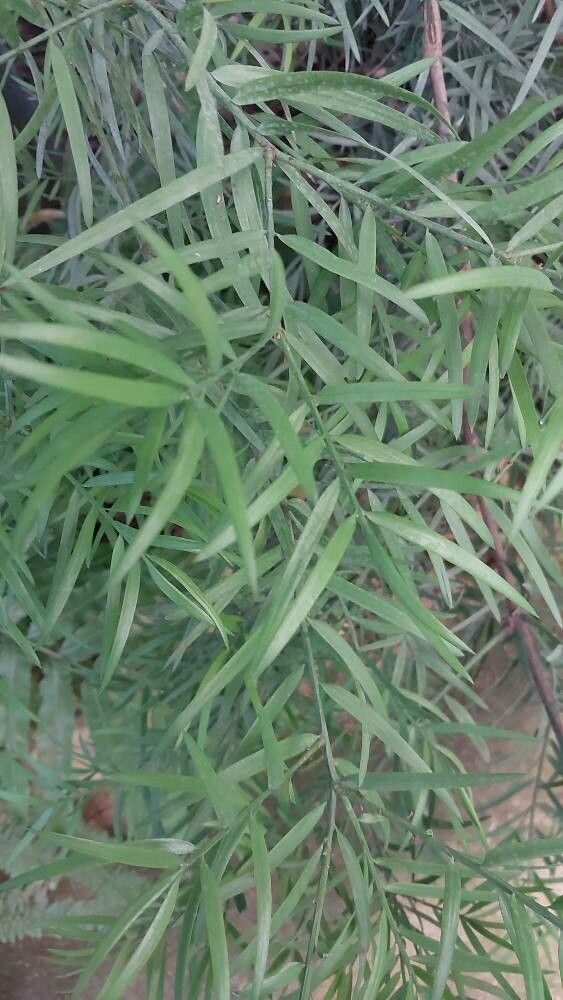
This tree can reach heights of up to 30 meters, with a trunk diameter of up to 1 meter. It boasts a conical shape and dense foliage comprised of narrow, pointed leaves that are approximately 5-10 cm long. The leaves are dark green on the upper side and lighter green underneath.
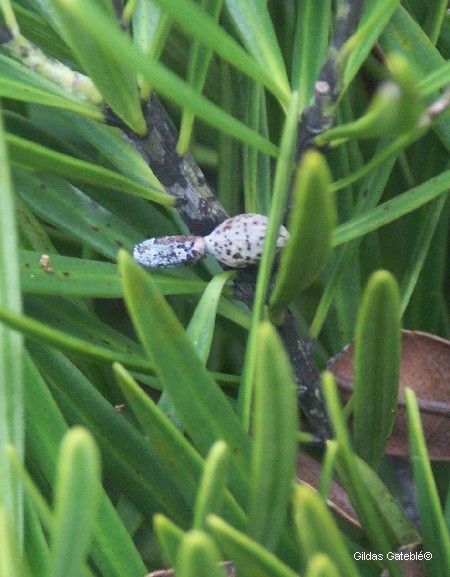
Yellowwood Pine produces small yellowish-green flowers that bloom from spring through summer. These are followed by small fleshy fruits that transition from green to purple-black as they ripen.
Due to its attractive foliage and shape, this plant is commonly used for ornamental purposes, making it an ideal choice for landscaping projects such as hedges or screens. Additionally, its durable wood is prized for furniture making.
Podocarpus neriifolius prefers well-drained soil with moderate moisture levels but can tolerate drought conditions once established. It thrives in full sun but can also adapt to partial shade.
Overall, this slow-growing evergreen tree makes an excellent addition to any garden or landscaping project due to its attractive appearance and low maintenance requirements once established.
Oleander podocarp has strong resistance to disease and is usually not susceptible to illnesses. Regarding care, this plant is relatively low-maintenance. When grown outdoors it needs only minimal watering, and larger plants generally do not require pruning. Smaller plants, however, should be pruned after they finish blooming. Oleander podocarpt is suitable for anyone with an outdoor space, like a garden or a deck, and does not need much experience in plant care.
How to keep Podocarpus Neriifolius.
Light
Oleander podocarp prefers abundant sunlight for robust growth but can also get by with fewer sunny periods. However, prolonged stretches of reduced sunlight can impair its health. Its hardy nature, developed in a naturally sunny habitat, helps it tolerate varying light conditions. Excessive sun can cause sunscorch, while insufficient light may lead to stunted growth.
Water
The oleander podocarp is a versatile plant that originates from a variety of ecosystems. It adapts well to moderate hydration, requiring water only every 2-3 weeks. It can tolerate both wet and dry conditions and thrives outdoors in climates with adequate rainfall, which reduces the need for frequent watering.
Temperature
Oleander podocarp comes from regions where temperatures commonly range between 68 to 100 °F (20 to 38 ℃). It prefers a temperate climate and may need seasonal adjustments, such as increased watering during hotter periods.
Fertilizer
Oleander podocarp has particular nutrient needs and does not require heavy fertilization. Applying fertilizer in spring is the best time for optimal growth. Providing nutrients enhances its health, strengthens its resistance to pests and diseases, and helps sustain its long lifespan.
Pruning
The Oleander podocarp is an evergreen plant characterized by its narrow leaves and dense foliage. To keep the plant healthy, prune it between early winter and late winter. Focus on removing any dead branches and thinning out excessive growth. This will improve air circulation, promote a healthier appearance, and encourage new growth while preserving the plant's natural form.
Botanical profile.
- Plant Type
- Tree
- Life Cycle
- Perennial
- Genus
- Podocarpus
- Family
- Podocarpaceae
- Hardiness Zone
- 9-12
- Mature Height
- 24.99 m
- Mature Spread
- 24.99 m
- Leaf Color
- Dark Green
- Leaf Type
- Evergreen
- Flower Color
- Yellow, Green
- Flower Size
- 2.54 cm to 5.08 cm
- Bloom Time
- Mid spring, Late spring
- Planting Time
- Spring, Summer, Autumn
- Harvest Time
- Late summer, Early fall, Mid fall
- Native Area
- Nepal, India, Malaysia, Indonesia, Cambodia, Vietnam, Myanmar, Philippines, Bhutan, Bangladesh, Laos, Fiji, Brunei, Thailand, China
Other names.
Reader questions.
How should I water my Oleander plant?
Your Oleander podocarp is not picky when it comes to how you water it. You can use common watering tools such as watering cans, hoses, or cups to moisten the soil. It's important to water directly at the soil and make sure all areas are moistened equally to provide water to the whole root system. Using filtered water is recommended as tap water might have harmful particles for the plant. Water at room temperature or slightly above to avoid shocking the Oleander podocarp. However, this plant generally responds well to any kind of water.
Why should I put fertilizer on my Oleander podocarp plant?
To promote healthy growth in Oleander podocarp, it is important to fertilize it in the spring. Since this plant has a long lifespan, it requires support for optimal development. Additionally, adding nutrients to the soil not only enhances the plant's overall health but also helps it resist common pests and diseases that can hinder growth or decrease its lifespan.
What are the sunlight requirements for Oleander podocarp?
Oleander podocarp requires full sun exposure, defined as above 6 hours of sunlight, for optimal growth but can also tolerate partial sun, which is about 3-6 hours of sunlight. Extended periods with less sunlight can affect the plant's health adversely. It's essential to monitor the movement of sunlight through your garden carefully to provide your Oleander podocarp with the ideal balance of light and shade, ensuring its health and happiness.
What is the ideal temperature range for Oleander Podocarp?
Oleander Podocarp, scientifically known as Podocarpus neriifolius, thrives in a temperate climate with temperatures ranging from 68 to 100 °F (20 to 38 °C). This plant is extremely heat-loving and sensitive to cold. During the winter months, it is critical to maintain temperatures above 20°C, ensuring the plant is kept away from cold drafts and heaters in order to prevent damage. Any temperature approaching 0°C can be detrimental to the plant. If you are growing Oleander Podocarp outdoors, it's recommended to bring it indoors during autumn and place it near a bright window to protect it from cold temperatures.
What should I do if I give too much or too little water to my Oleander podocarp?
When it comes to outdoor plants, especially newly planted ones or seedlings, they can easily suffer from lack of watering. It's important to remember to consistently water them for a few months while they are still small or recently planted. Once the roots are established, the Oleander podocarp can generally rely on rainwater. However, if you have potted Oleander podocarps, overwatering is more likely to occur. If you accidentally overwater your potted Oleander podocarp, take immediate steps to address the situation. Stop watering the plant right away to minimize the impact of overwatering. Then, remove the plant from its pot to inspect the roots. If you find that the roots are not affected by root rot, you can return the plant to its container. In case there are signs of root rot, trim the affected roots and consider applying a fungicide to prevent further damage. Finally, repot the Oleander podocarp in well-draining soil. On the other hand, if your Oleander podocarp is underwatered, simply water it more frequently. Underwatering is typically easy to remedy as the plant's leaves will droop and dry out, but will regain fullness after sufficient watering. Make sure to adjust your watering frequency promptly when underwatering occurs.
When should I fertilize my Oleander podocarp?
The growing medium may not provide sufficient nutrients for healthy growth, but Oleander podocarp is an exception to this. Unlike most garden plants, it doesn't need a lot of extra nutrients. For optimal results, it is best to fertilize Oleander podocarp in the spring, before new growth emerges.
Can Oleander podocarp grow with artificial lighting?
Yes, Oleander podocarp can grow with artificial lighting, which becomes crucial especially when natural sunlight is limited, like during winter or in spaces that don't get much sunlight. Artificial lights, such as LED lights, are advisable as they can provide specific light wavelengths needed by the plant. For full sun plants, you need 30-50W/sq ft, for partial sun plants 20-30W/sq ft, and for full shade plants 10-20W/sq ft of artificial light. Placement should be 12-36 inches above the plant, and the duration should mimic natural daylight hours, typically 8-12 hours per day.
How do you handle Oleander Podocarp in low temperatures?
In low temperatures, Oleander Podocarp can experience stress, indicated by a lightening of the leaves' color once temperatures fall below -5°C. Following frost damage, leaves might turn brown or black, and the plant may wilt or droop. To address this, trim off the frost-damaged parts of the plant and immediately move it to a warmer indoor environment. Position the plant near a south-facing window to ensure it receives ample sunlight, but keep it away from direct heat sources like heaters or air conditioning vents, which can cause the air around the plant to become excessively dry.
How frequently should I water my Oleander podocarp?
If your area gets enough rainfall, most outdoor plants can grow naturally without additional watering. However, if your area lacks rainfall, you should water your plants adequately every 2 weeks in the spring and fall. In the summer, you'll need to water them more frequently. In the winter, when plants don't grow as much and require less water, you can water them less often or not at all. For young or newly planted Oleander podocarps, it's important to water them more frequently to help them establish and grow into drought-tolerant plants. When it comes to potted plants, there are two main ways to determine how often to water your Oleander podocarp. The first option is to follow a set watering schedule, such as once a week or once every other week. However, this may not account for the specific conditions of your growing environment. Alternatively, you can adjust your watering frequency based on the moisture level of the soil. It's generally best to wait until the top two to four inches of soil (about ⅓ to ½ the depth of the pots) have dried out completely before watering again. Keep in mind that during the summer, this plant's water needs will be higher, so a predetermined schedule may not be sufficient.
When is it not a good idea to put fertilizer on my Oleander podocarp?
Not all plants, like Oleander podocarp, need frequent fertilization. It thrives without requiring excessive nutrients. Over-fertilization can actually harm it, leading to decline in growth. Spring is the only season when fertilizer should be used - refrain from adding any during summer, fall, and winter.
What are the symptoms of insufficient light for Oleander podocarp?
Oleander podocarp exhibits several symptoms when exposed to insufficient light, such as smaller new leaves, leggy or sparse growth, faster leaf drop, slower or no new growth, and lighter-colored new leaves. Chlorosis, or the yellowing of leaves, sunscald, leaf curling, wilting, and leaf scorching are also symptoms that indicate either underexposure or overexposure to sunlight. These symptoms help identify when the plant is not receiving the ideal amount of sunlight for its health.
What should you do if Oleander Podocarp experiences high temperatures?
Oleander Podocarp should ideally be kept in temperatures below 38°C during the summer months to avoid heat stress. Excessive heat above 43°C can lead to lighter colored leaves, making the plant more prone to sunburn. If this occurs, you should trim away the parts of the plant that are sunburned or have dried up. To protect the plant from further damage, move it to a shaded location, particularly shielding it from the midday and afternoon sun. It's also important to water the plant in the morning and evening to ensure the soil remains moist and to help the plant cope with the heat.