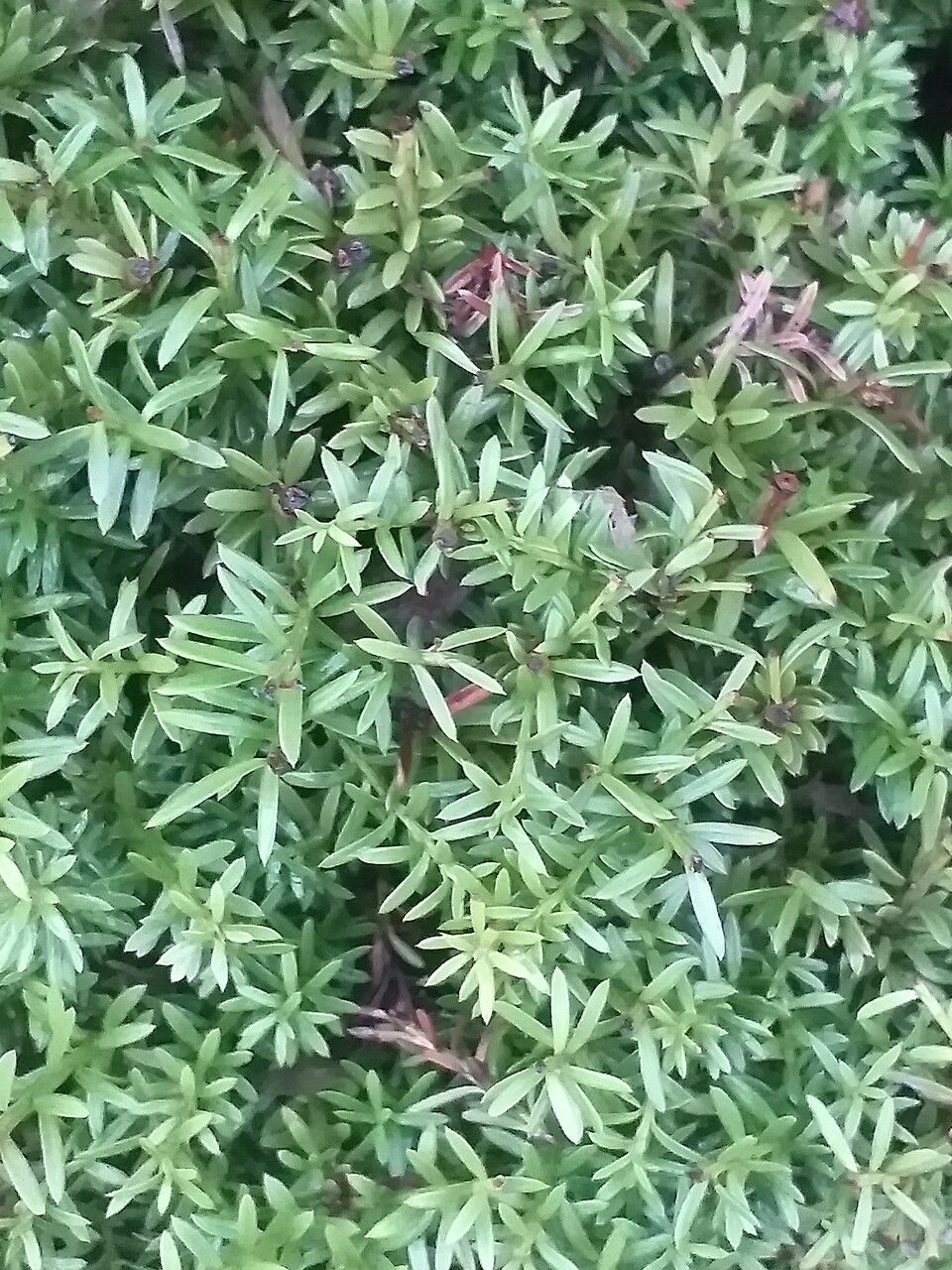
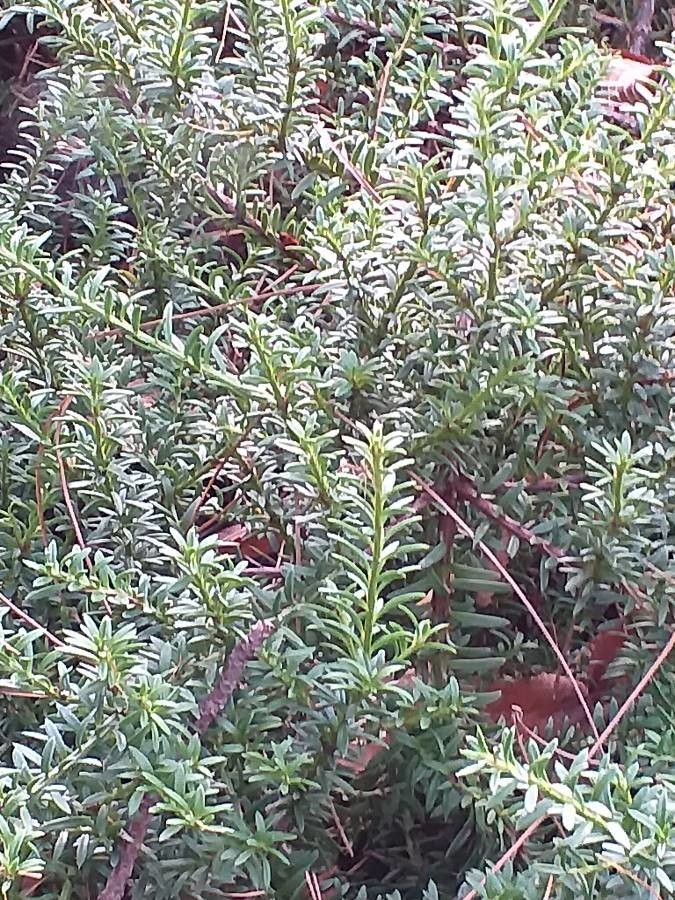
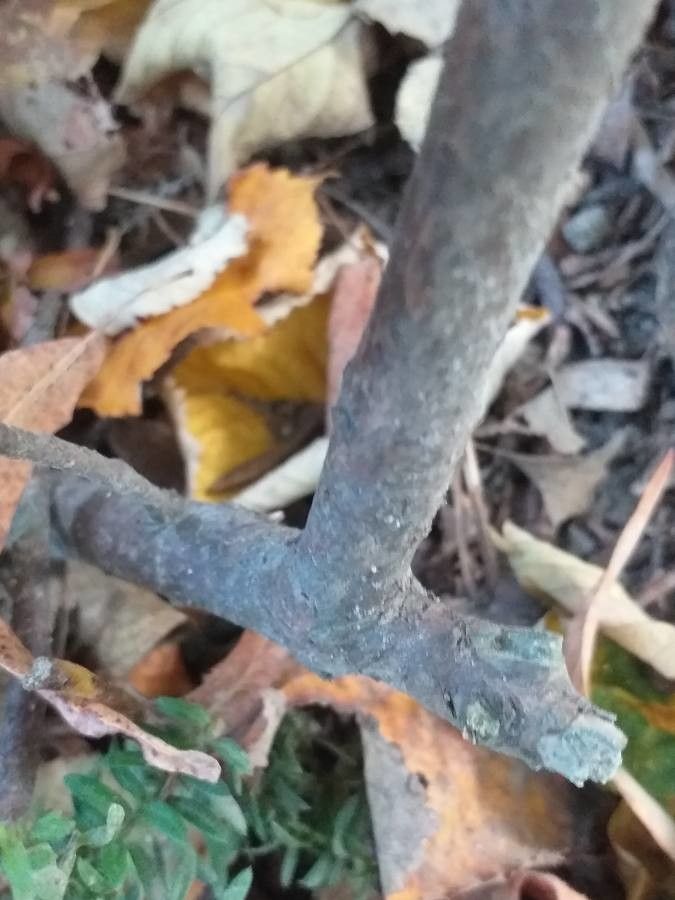
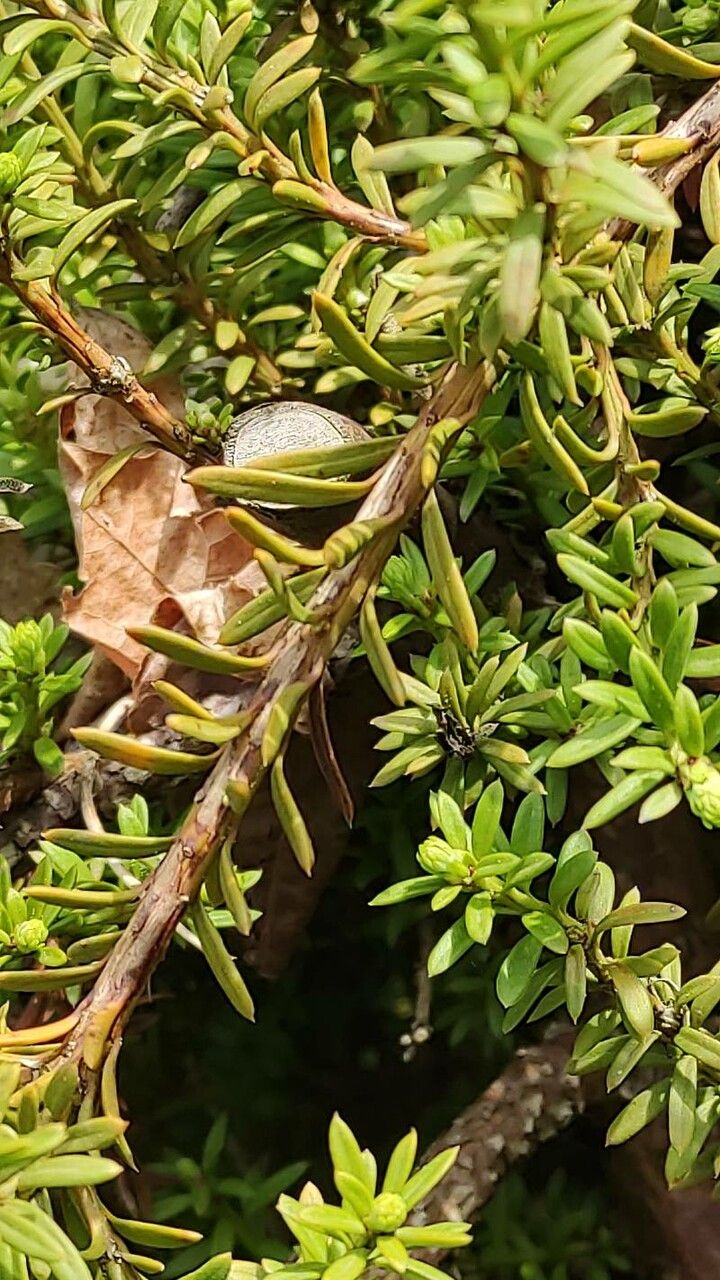
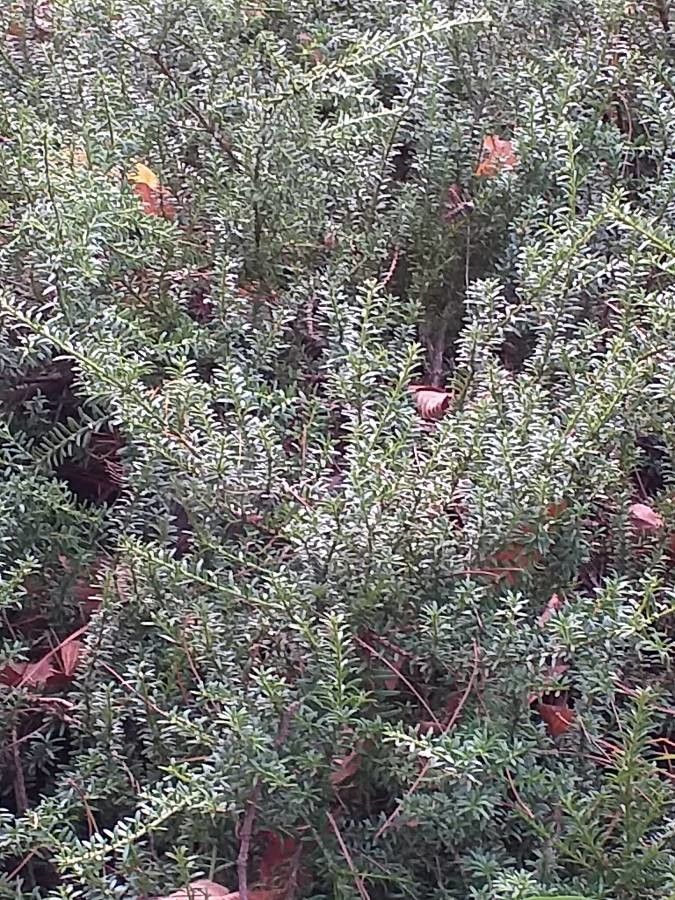
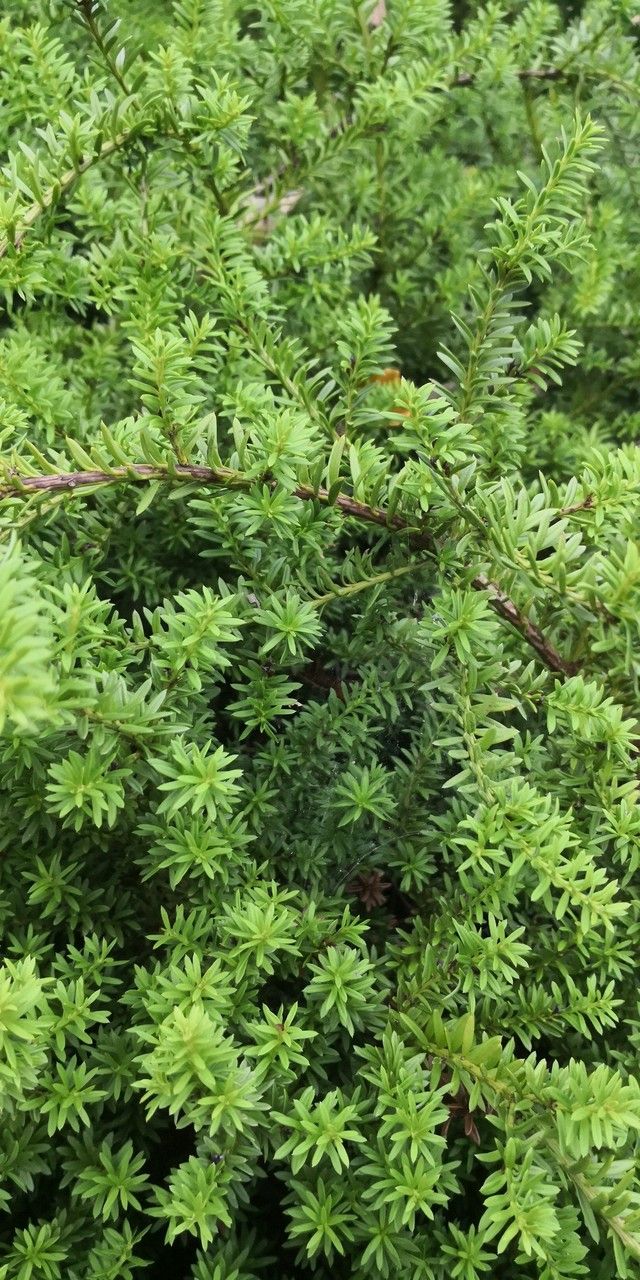
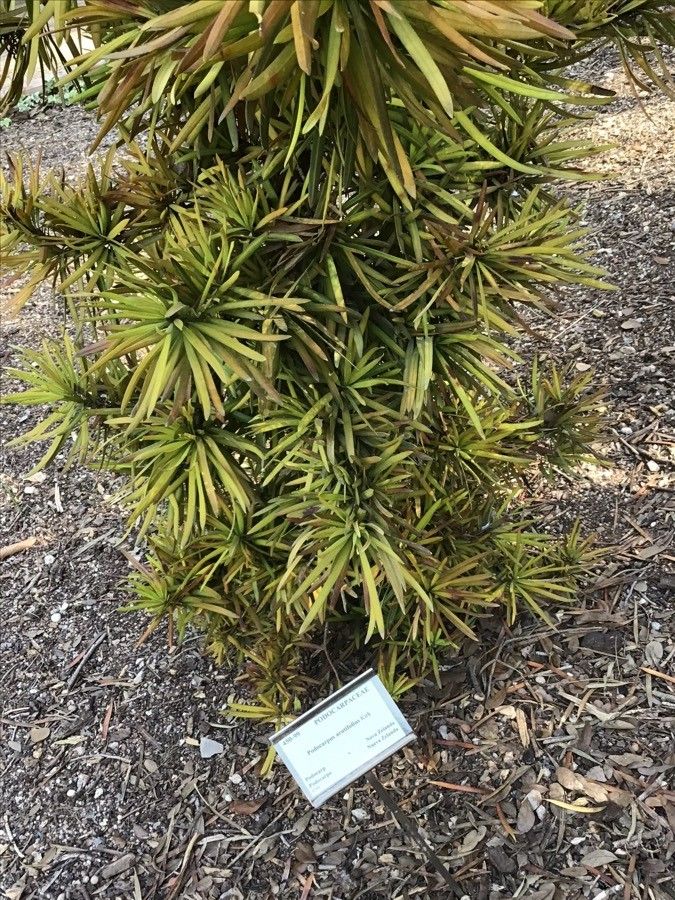
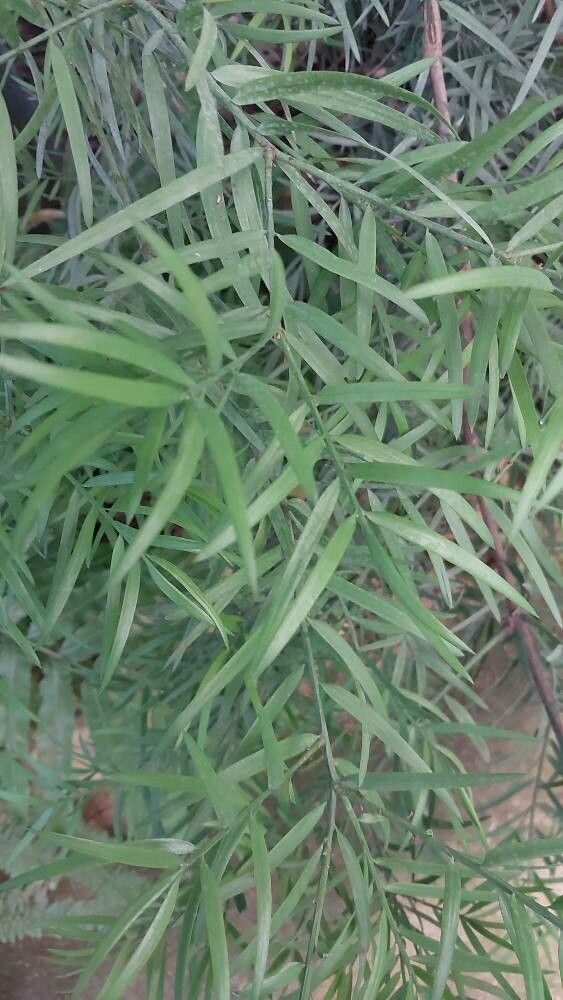
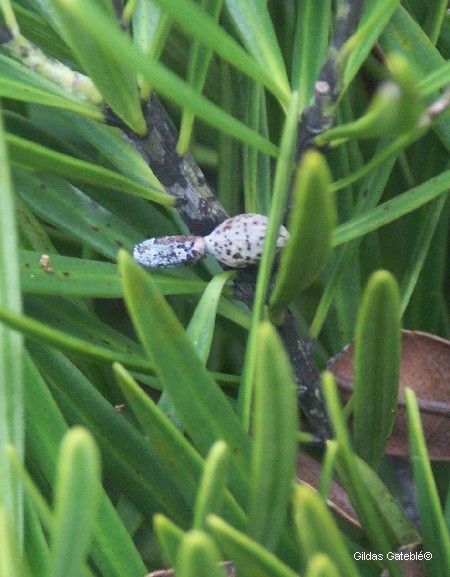
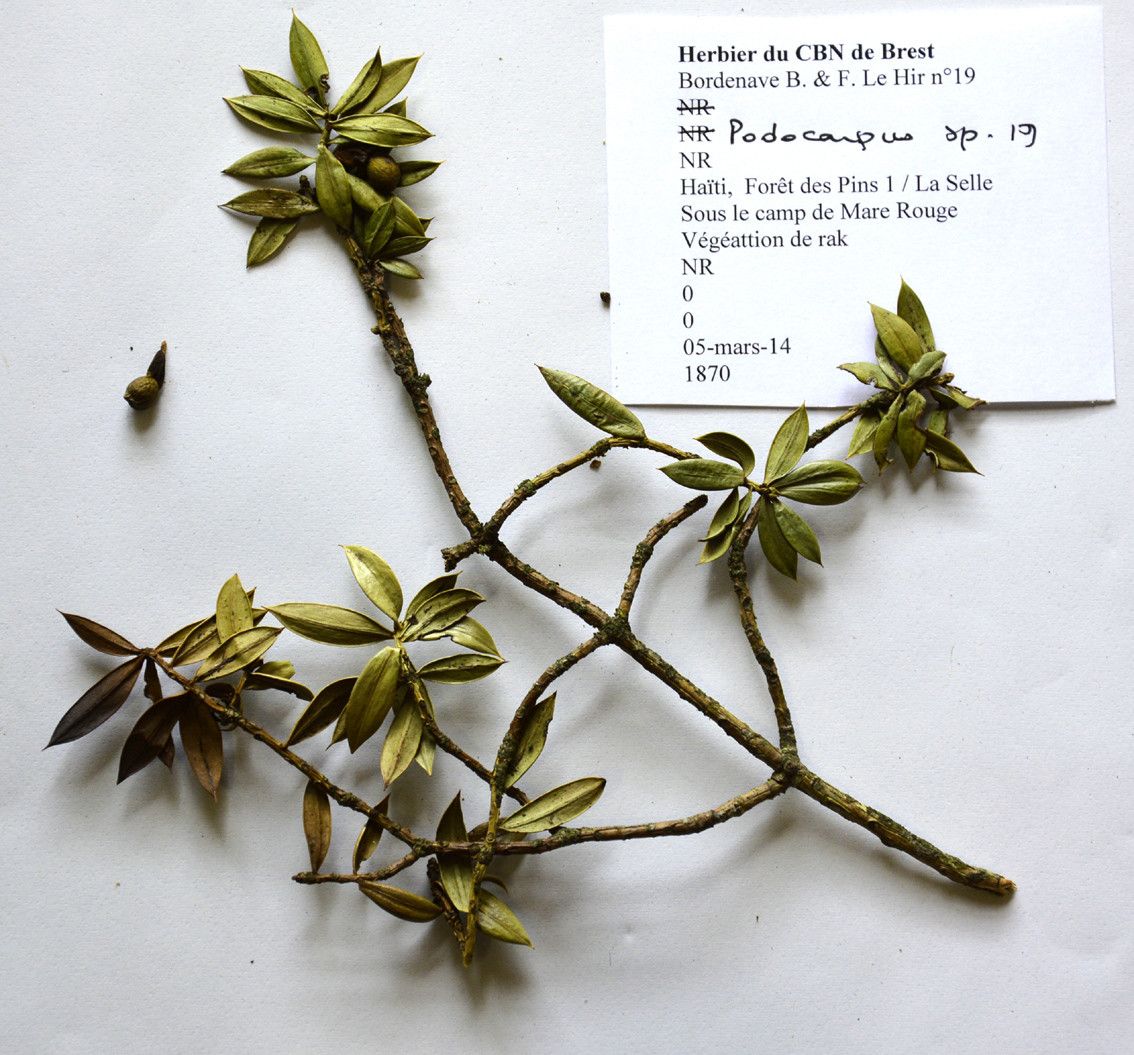
Podocarpus nivalis, commonly known as the snow totara, is a coniferous tree native to New Zealand, belonging to the Podocarpaceae family. It can grow up to 15 meters tall and features a narrow, conical shape with dense, dark green, needle-like foliage.
This evergreen tree produces small cones, approximately 1-2 cm in length, which contain seeds dispersed by birds and other animals. The snow totara thrives in moist soil but can tolerate dry periods once established. It grows best in full sun or partial shade and is often used as an ornamental plant in landscaping due to its appealing foliage.
Furthermore, Podocarpus nivalis has significant cultural value to the indigenous Maori people, who have used its leaves for medicinal purposes for centuries. Traditionally, the leaves were used to treat colds, coughs, and other respiratory ailments.
In summary, Podocarpus nivalis is a beautiful evergreen tree with both ornamental and cultural importance in New Zealand. Its attractive foliage makes it a popular choice for landscaping, while its medicinal properties highlight its significance in Maori culture.
Alpine totara is resistant to disease and generally not susceptible to illnesses. In terms of maintenance, this plant is relatively low-maintenance. When grown outdoors it needs little watering, and larger specimens typically do not require pruning. Smaller specimens, however, should be pruned after they have flowered. Alpine totara is suitable for anyone with outdoor space, such as a garden or a deck, and does not require extensive plant-care experience.
How to keep Podocarpus Nivalis.
Light
Alpine totara is a plant that does best with plentiful sunlight, taking in the most rays during the day, yet it can tolerate sites with lower light. Its growth may be harmed if light levels fall far below, or rise well above, its preferred range.
Water
The Alpine totara is well-suited for alpine environments. It requires watering every two weeks to maintain the right balance between moisture retention and drought tolerance. As an evergreen, it stays hydrated throughout the year and adapts well to outdoor conditions, as long as there is sufficient drainage. This makes it resilient and able to thrive in a variety of soil types.
Fertilizer
Alpine totara has specific nutrient needs and does not require heavy fertilization. Fertilizing in spring is best for promoting optimal growth. Supplying nutrients enhances its health, increases its resistance to pests and diseases, and helps maintain its long lifespan.
Pruning
Alpine totara can be pruned during the summer to encourage new growth or in the fall to prepare for benefits in the spring. However, keep in mind that pruning in the fall may reduce the fruit yield. If you prefer a shrubby appearance, trim one-third of the new growth. For a tree-like appearance, you can either remove the lower branches to showcase the bark or lightly prune to maintain a hedge shape.
Botanical profile.
- Plant Type
- Shrub
- Life Cycle
- Perennial
- Genus
- Podocarpus
- Family
- Podocarpaceae
- Hardiness Zone
- 7-10
- Mature Height
- 61 cm to 91 cm
- Mature Spread
- 0.91 m to 2.13 m
- Leaf Color
- Green
- Leaf Type
- Evergreen
- Flower Color
- Purple
- Bloom Time
- Mid spring, Late spring
- Planting Time
- Spring, Summer, Autumn
- Harvest Time
- Late summer, Early fall, Mid fall
- Native Area
- New Zealand
Other names.
Reader questions.
What are the sunlight requirements for Alpine totara?
Alpine totara requires full sun, which means it should receive above 6 hours of sunlight daily. It can also grow in partial sun, benefiting from about 3-6 hours of sunlight. It's essential to monitor the movement of sunlight through your garden to find the optimal spots that offer a balanced mix of light and shade, ensuring the plant's needs are met for healthy growth.
How does Alpine totara react to different lighting conditions?
Alpine totara thrives best when it gets an abundance of sunlight throughout the day, as it can absorb maximum rays, supporting optimal growth. However, it's capable of surviving in less sunny areas, although its growth may be hindered if light conditions are significantly below or above its light preferences. Inadequate light can negatively impact the plant, while too much sunlight can also be detrimental.
What artificial lighting is recommended for Alpine totara when natural sunlight is insufficient?
When natural sunlight is insufficient for Alpine totara, especially during winter or in less sunny spaces, artificial lighting becomes crucial. LED lights are recommended because they can be adjusted to provide the specific light wavelengths needed by the plant. The light intensity should be 30-50W/sq ft for full sun plants, 20-30W/sq ft for partial sun, and 10-20W/sq ft for full shade plants. The artificial light source should be placed 12-36 inches above the plant and turned on for 8-12 hours per day to mimic natural sunlight conditions.
What are the symptoms of light deficiency in Alpine totara?
Alpine totara may show several symptoms when it experiences light deficiency, including smaller new leaves, leggy or sparse growth, faster leaf drop, slower or no new growth, lighter-colored new leaves, chlorosis, sunscald, leaf curling, wilting, and leaf scorching. These symptoms indicate that the plant is not receiving adequate sunlight, affecting its ability to grow and remain healthy.
How can you address sunlight deficiency in Alpine totara?
To address sunlight deficiency in Alpine totara, gradually introduce the plant to sunnier locations until it receives at least 6 hours of direct sunlight daily. For indoor plants, use a south-facing window and keep curtains open during daylight hours or supplement with artificial light for at least 8 hours daily. For outdoor plants, avoid sudden changes in light intensity to prevent sunburn. Additionally, prune obstructions like tree branches that block sunlight and consider transplanting to a more suitable location with ample sunlight and good drainage.