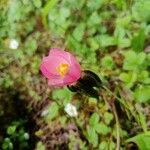
Podophyllum hexandrum
Himalayan mayapple · Indian Podophyllum · Podophyllum Resin
Description
Source: wikipedia (CC BY-SA)Sinopodophyllum is a herbaceous perennial plant in the family Berberidaceae, described as a genus in 1979. It includes only one known species, Sinopodophyllum hexandrum, native to Afghanistan, Bhutan, northern India, Kashmir, Nepal, Pakistan, and western China. Common names include Himalayan may apple and Indian may apple.
Care Guide
💧 Water
The Himalayan mayapple, native to mountainous regions, thrives in consistently moist soil and moderate humidity. It needs weekly watering to stay hydrated, though it can tolerate some drought. This plant does best outdoors, where it can take advantage of natural rainfall during its active growing season.
☀️ Light Partial sun
Himalayan mayapple tends to favor areas that receive moderate sunlight. It can also do well in locations with limited sun exposure. Its native habitat demonstrates it is able to thrive under these light conditions. Excessive sunlight can be damaging, while an overall lack of light may keep it from reaching optimal growth.
What are the sunlight requirements for Himalayan mayapple?
Himalayan mayapple thrives under conditions with moderate to little sun exposure, requiring partial sun of about 3-6 hours of sunlight or full shade, which is less than 3 hours of sunlight daily. It's crucial to observe how sunlight moves through your garden to find spots that offer an ideal balance of light and shade for the plants, ensuring their well-being. In its native habitat, the Himalayan mayapple shows resilience and the ability to prosper even with minimal sunlight, though excessive sunlight can be harmful, and insufficient light may inhibit growth.
What are the solutions for plants with insufficient sunlight?
To optimize plant growth with insufficient sunlight, it's recommended to gradually adapt your Himalayan mayapple to changing light conditions by shifting it to sunnier spots each week until they receive the necessary sunlight. For plants that are large or not easily movable, consider using artificial light, such as keeping a desk or ceiling lamp on for at least 8 hours daily or investing in professional plant grow lights. When minimizing obstructions to sunlight, observe and remove any barriers like branches or leaves that may block light. For smaller plants, consider transplanting during their dormant period to a location with ample sunlight and good drainage.
What artificial lighting is suitable for indoor Himalayan mayapple?
Indoor Himalayan mayapple requires adequate lighting, especially when natural sunlight is insufficient. Artificial lights, particularly LED lights customized to provide specific wavelengths, can be vital for optimal growth. Full sun plants need 30-50W/sq ft of artificial light, partial sun plants 20-30W/sq ft, and full shade plants 10-20W/sq ft. The light source should be placed 12-36 inches above the plant to mimic natural sunlight, and most plants need 8-12 hours of light per day to mimic natural daylight hours.
What are the symptoms of light deficiency in Himalayan mayapple?
Symptoms of light deficiency in Himalayan mayapple include new leaves growing smaller than previous ones, leggy or sparse growth, faster leaf drop, slower or halted growth, and lighter-colored new leaves. Chlorosis, or the loss of green leaf color turning yellow, sunscald with pale or necrotic areas on leaves, leaf curling to reduce surface area exposed to sunlight, wilting due to loss of hydration, and leaf scorching with brown, dry edges are also symptoms. These symptoms indicate insufficient light or overexposure to sunlight, affecting the plant's health.
🌡️ Temperature 5–35°C
The Himalayan mayapple is a plant native to cool, mountainous regions, thriving ideally between 41 to 95 °F (5 to 35 ℃). To mimic its natural habitat, gradually adjust temperatures with the seasons, placing it in a cooler area during winters and a warmer area during summers.
What is the ideal temperature range for growing a Himalayan mayapple?
The Himalayan mayapple is native to cool, mountainous regions and thrives in temperatures between 41 to 95 °F (5 to 35 °C). To best mirror its natural habitat, it's recommended to adjust the temperature progressively with the seasons, keeping it in cooler areas during the winter and in warmer spots during the summer. This plant has strong cold resistance, usually not requiring special frost protection measures in winter. However, if temperatures are expected to drop below -25°C, cold protection should be provided by covering the plant with materials such as soil or straw. Additionally, watering the plant abundantly before the first freeze in autumn helps to ensure the soil remains moist and enters a frozen state, which is beneficial for the plant during winter and early spring.
How does the Himalayan mayapple react to low temperatures?
The Himalayan mayapple is quite cold-tolerant, with optimal growth occurring when the temperature stays above 5°C. During winter, it's crucial to keep the temperature above -20°C. If the temperature falls below -25°C, while there may not be noticeable changes in winter, the plant may experience decreased sprouting or fail to sprout in the spring. When spring comes, it's advisable to remove any parts of the plant that have failed to sprout, helping to encourage new growth.
What should I do if my Himalayan mayapple is exposed to high temperatures?
During the summer, it's important to ensure the Himalayan mayapple is kept in temperatures below 35°C. Exposure to temperatures above 38°C can cause the leaves to lighten in color, become prone to curling, and the plant may suffer from sunburn. In severe cases, the plant may wilt and become dry. To mitigate these issues, trim away sunburned and dried-up parts of the plant. Move the plant to a location that provides shade during the midday and afternoon sun, or use a shade cloth. Additionally, water the plant in the morning and evening to keep the soil moist, which helps protect it from overheating and maintains its health.
💨 Humidity
🪴 Soil 5-6
🌱 Fertilizer
For Himalayan mayapple, the primary time to fertilize is in early spring when the flowers are starting to form. The appropriate fertilizer promotes improved blooms and helps Himalayan mayapple produce attractive flowers. Fertilizing in early spring ensures strong flowering through the season and supplies energy for dormant growth phases.
🪴 Pot & Repot
✂️ Pruning
The Himalayan mayapple is a perennial that benefits from light pruning. In early spring, remove any dead foliage to promote healthy growth. Later, prune the spent flowers to maintain the plant’s shape and encourage future blooms. Be sure to sterilize your tools to prevent infections, which will enhance both the plant's appearance and its vigor.
🌿 Propagating
🐛 Diseases & pets
☠️ Toxicity
Characteristics
- Plant Type
- Herb
- Life Cycle
- Perennial
- Genus
- Podophyllum
- Family
- Berberidaceae
- Hardiness Zone
- 5-9
- Mature Height
- 30 cm
- Mature Spread
- 30 cm
- Leaf Color
- Green, Purple, Brown
- Leaf Type
- Deciduous
- Flower Color
- White, Pink
- Flower Size
- 2.03 cm to 4.06 cm
- Bloom Time
- Early spring, Mid spring
- Planting Time
- Spring, Summer
- Harvest Time
- Mid summer, Late summer