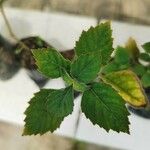
Pogostemon cablin
Patchouli-plant · Patchouly · Patchouli · Patschuli
Description
Source: leafsnapPatchouli (; Pogostemon cablin) is a species of flowering plant in the family Lamiaceae, commonly called the mint or deadnettle family. The plant grows as a bushy perennial herb, with erect stems reaching up to 75 centimetres (2.5 ft) in height and bearing small, pale pink-white flowers. It is native to the island region of Southeast Asia, including Sri Lanka, Indonesia, the Malay Peninsula, New Guinea and the Philippines. It is also found in many parts of North East India. Noted for its fragrant essential oil, it has many commercial uses and is now extensively cultivated in tropical climates around the world, especially in Asia, Madagascar, South America and the Caribbean. Indonesia currently produces over 90% of the global volume of patchouli oil (~1,600 metric tons).
Care Guide
💧 Water
Patchouli flourishes in moist soil and high humidity, needing weekly watering to keep its aromatic leaves vibrant. Being sensitive to drought, it requires well-drained soil to prevent root rot, particularly when grown outdoors during the growing season.
☀️ Light Full sun
Patchouli grows best in areas with constant sun exposure, although it can also adapt to places where sunlight is less abundant. In its natural habitat it is found in sites with plentiful sun. An imbalance in sun exposure can hinder its growth, causing leaf discoloration or stunted development.
What are the sunlight requirements for patchouli plants?
Patchouli plants require full sun, which means they thrive best with more than 6 hours of sunlight per day, although they can also grow in partial sun conditions, receiving about 3-6 hours of sunlight. It's important to observe your garden's sunlight patterns to choose the best spots that offer a good mix of light and shade. This will ensure your patchouli plants grow healthy and happy.
How can artificial lighting help patchouli plants indoors?
For indoor patchouli plants, especially when natural sunlight is scarce, artificial lighting can be a crucial factor for optimal growth. Options like LED lights are preferred because they can be tailored to provide specific wavelengths beneficial for plants. The general guideline suggests 30-50W/sq ft for full sun plants, 20-30W/sq ft for partial sun plants, and 10-20W/sq ft for full shade plants. The light source should be placed 12-36 inches above the plant, and the duration should mimic natural daylight, typically 8-12 hours per day.
What are the symptoms of inadequate light exposure in patchouli plants?
Patchouli plants may exhibit several symptoms when they don't receive enough light, such as smaller new leaves, leggy or sparse growth, faster leaf drop, and slower or stopped growth. Additionally, insufficient light can lead to lighter-colored new leaves, chlorosis (yellowing of leaves), sunscald, leaf curling, wilting, and leaf scorching. All these symptoms reflect the plant's struggle to adapt to poor lighting conditions.
How can you address light deficiencies for patchouli plants both indoors and outdoors?
To combat light deficiencies, gradually increase the sunlight exposure for your patchouli plants. Indoors, move the plant closer to a south-facing window or use artificial lighting, ensuring it receives at least 6 hours of light each day. For outdoor plants, gradually relocate them to sunnier spots weekly to prevent sunburn. Reducing obstructions and transplanting smaller plants can also help maximize sunlight exposure. Note that while parts of the plant that have suffered may not recover, new growth should be healthy once light conditions improve.
🌡️ Temperature 20–37.8°C
Patchouli comes from warm regions and generally grows best in temperatures of 68 to 100 °F (20 to 38 ℃). In colder seasons, steps such as providing a greenhouse environment are necessary to maintain its optimal growth.
What is the native climate for Patchouli?
Patchouli is native to warmer climates and thrives in temperatures ranging between 68 to 100°F (20 to 38°C). This heat-loving plant requires adjustments such as creating a greenhouse environment in cooler seasons to ensure its optimal growth.
How should Patchouli be cared for in cooler temperatures?
During cooler temperatures, it is crucial to protect Patchouli from cold. In the autumn, it's recommended to bring outdoor-grown Patchouli indoors and place it near a bright window but away from heaters to avoid harm. Maintaining temperatures above 20°C during winter is beneficial for the plant's growth, as temperatures approaching 5°C can be detrimental.
What are the symptoms of low temperature exposure in Patchouli and how can it be treated?
Patchouli prefers warm temperatures and does not tolerate low temperatures well, thriving best above 20°C. Exposure to temperatures below 1°C may cause leaves to lighten in color, turning brown or black with frost damage, accompanied by wilting and drooping. To treat this, trim off the frost-damaged parts and move the plant to a warmer indoor environment, ensuring it is placed near a south-facing window for sunlight exposure while avoiding direct placement near heaters or air conditioners to prevent air dryness.
How does high temperature affect Patchouli and what are the solutions?
Patchouli should be kept below 38°C during summer to prevent high temperature stress. When the temperature exceeds 43°C, the leaves may lighten in color and the plant becomes susceptible to sunburn. To mitigate this, trim the sunburned and dried-up parts, and move the plant to an area that provides shade during midday and afternoon sun. Watering the plant in the morning and evening will help keep the soil moist and assist the plant in coping with the high temperatures.
💨 Humidity normal (40-60%)
This plant will thrive in moderate humidity, which is probably the level in your home. However, misting it a few times a week can be very beneficial. Make sure the room has good ventilation.
🪴 Soil 5-6
🌱 Fertilizer
Correct feeding is essential for Patchouli's health and appearance. Fertilize Patchouli during summer, repeating the application monthly throughout the season. Nutrients supply energy for growth and help maintain the plant's parts. Fertilization improves Patchouli's floral display, ensuring the best blooms.
🪴 Pot & Repot 2-3 years
Repot patchouli every 2 to 3 years in the spring, using a slightly larger container to support its growth. Use well-draining soil and keep the moisture consistent, making sure not to overwater. This approach will help patchouli thrive, enhancing the fragrance of its leaves, which are highly valued in aromatherapy.
✂️ Pruning
Patchouli is a bushy herb known for its aromatic leaves. To keep it healthy, prune the plant from early to late spring. Start by removing any dead stems and shaping the plant by trimming it back by one-third. This helps to promote growth, improve air circulation, and reduce pests. Be sure to use sterilized tools during the pruning process to prevent disease and maintain a healthy, fragrant plant.
🌿 Propagating
🐛 Diseases & pets
☠️ Toxicity
Characteristics
- Plant Type
- Herb
- Life Cycle
- Perennial
- Genus
- Pogostemon
- Family
- Lamiaceae
- Hardiness Zone
- 10-11
- Mature Height
- 76 cm
- Mature Spread
- 91 cm
- Leaf Color
- Green
- Leaf Type
- Deciduous
- Flower Color
- White
- Flower Size
- 4.06 cm to 6.35 cm
- Bloom Time
- Fall
- Planting Time
- Spring, Summer, Autumn, Winter
- Harvest Time
- Late fall, Early winter, Mid winter
- Native Area
- India, Malaysia, Indonesia, Vietnam, Philippines, China