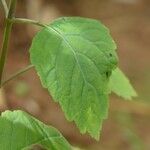
Pogostemon heyneanus
Indian patchouli · Java patchouli · False patchouli
Care Guide
💧 Water
☀️ Light Partial sun
Indian patchouli is native to habitats such as forest understories and rocky areas, where it receives natural shade. It prefers partial sun but can tolerate full sun or full shade, illustrating its versatile and hardy nature.
🌡️ Temperature 20–37.8°C
Indian patchouli comes from tropical regions where the climate is typically warm and humid. Therefore, it is adapted to high heat and moisture. It does not tolerate sudden temperature shifts and favors a stable thermal environment, so it is important to avoid temperature fluctuations indoors. It generally cannot withstand cold conditions and requires warmer temperatures to grow; if the environmental temperature falls too low, the plant may stop growing or even die.
💨 Humidity
🪴 Soil 6-8
🌱 Fertilizer
Correct fertilization is essential for Indian patchouli's health and appearance. Fertilize Indian patchouli in summer, repeating the application monthly throughout the season. The nutrients provide energy for growth and help maintain the plant's structures. Fertilization improves Indian patchouli's flowering, ensuring the best blooms.
🪴 Pot & Repot
✂️ Pruning
🌿 Propagating
🐛 Diseases & pets
☠️ Toxicity
Characteristics
- Plant Type
- Herb
- Life Cycle
- Perennial
- Genus
- Pogostemon
- Family
- Lamiaceae
- Hardiness Zone
- 10-12
- Mature Height
- 0.61 m to 1.22 m
- Mature Spread
- 30 cm to 61 cm
- Leaf Color
- Dark Green, Forest Green
- Leaf Type
- Evergreen
- Flower Color
- Lavender
- Flower Size
- 0.51 cm to 0.76 cm
- Bloom Time
- Mid fall, Late fall, Early winter
- Planting Time
- Spring, Summer, Autumn
- Harvest Time
- Winter
- Native Area
- Sri Lanka, India, Malaysia, Indonesia, Myanmar, Philippines, Bangladesh, Thailand