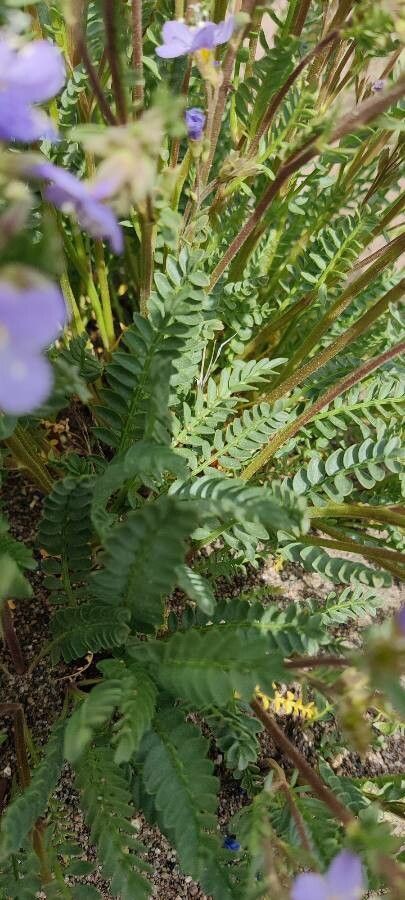
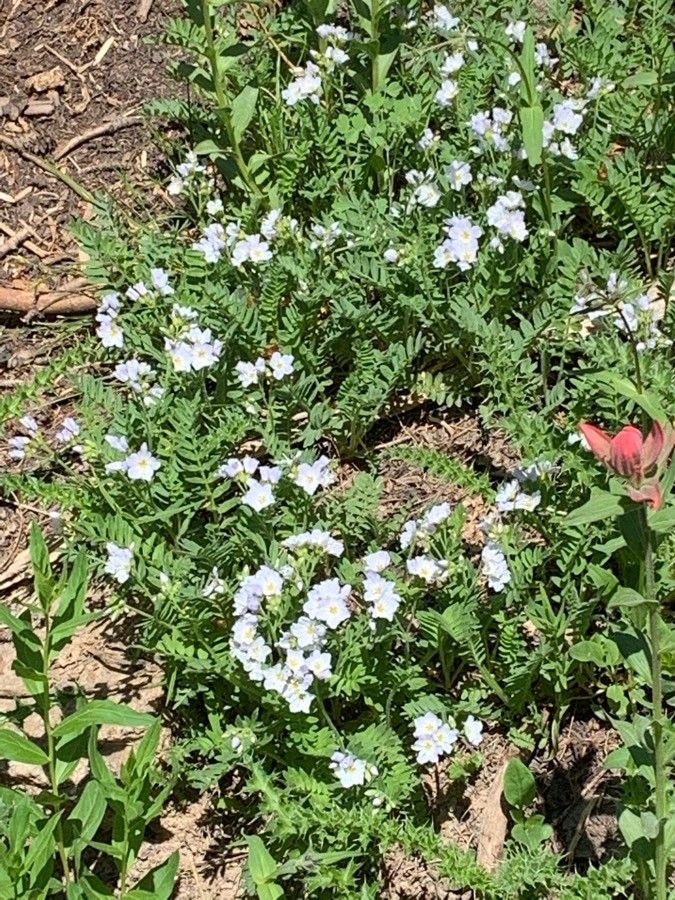
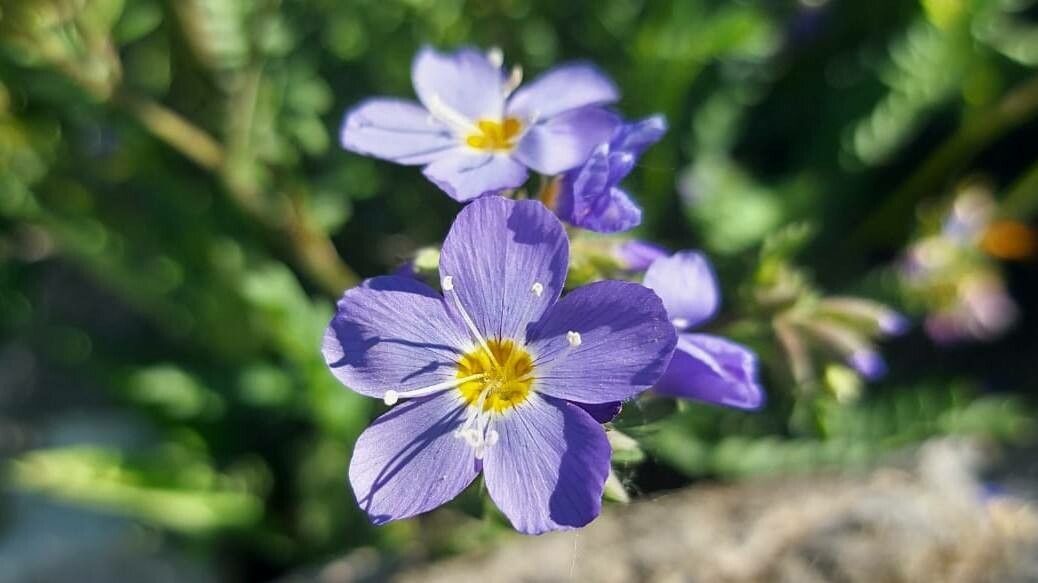
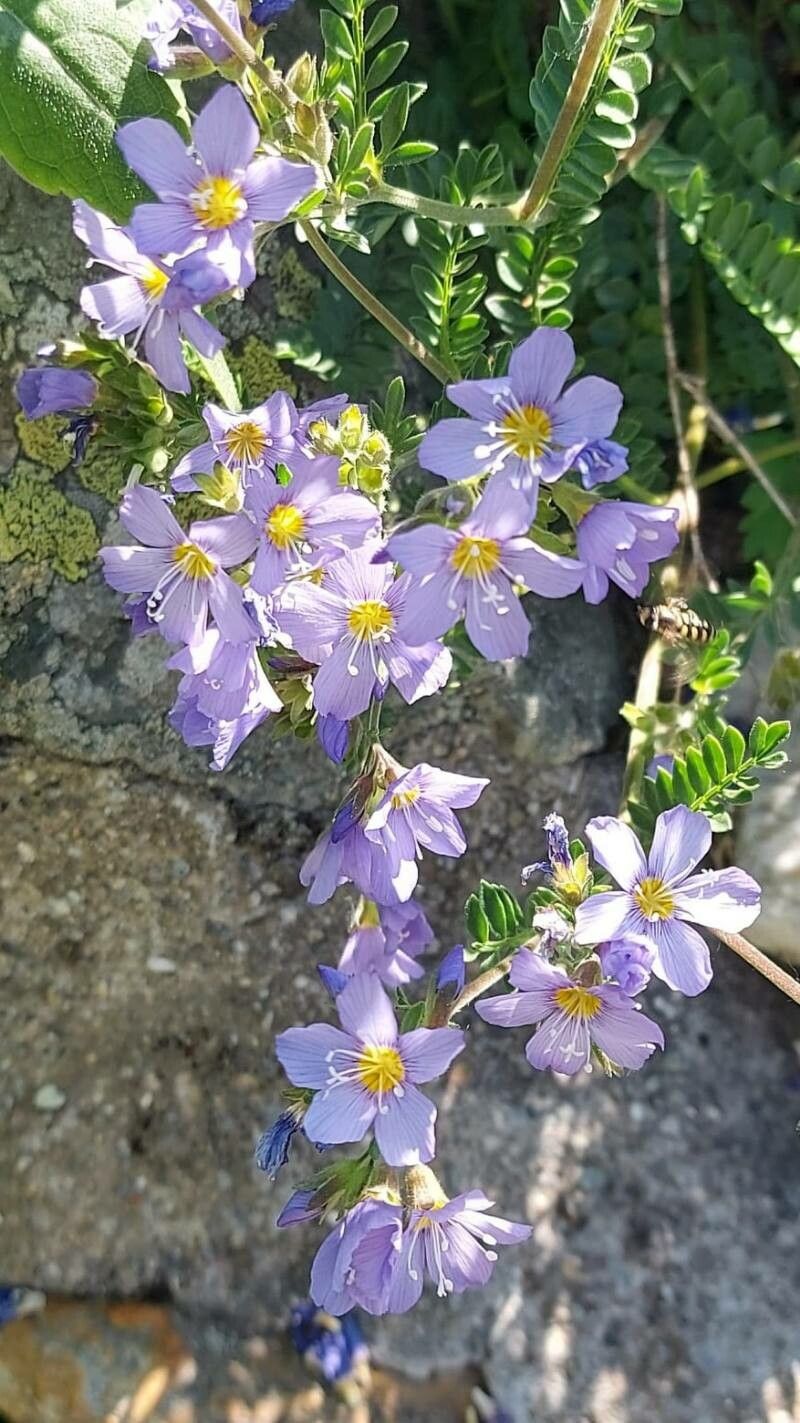
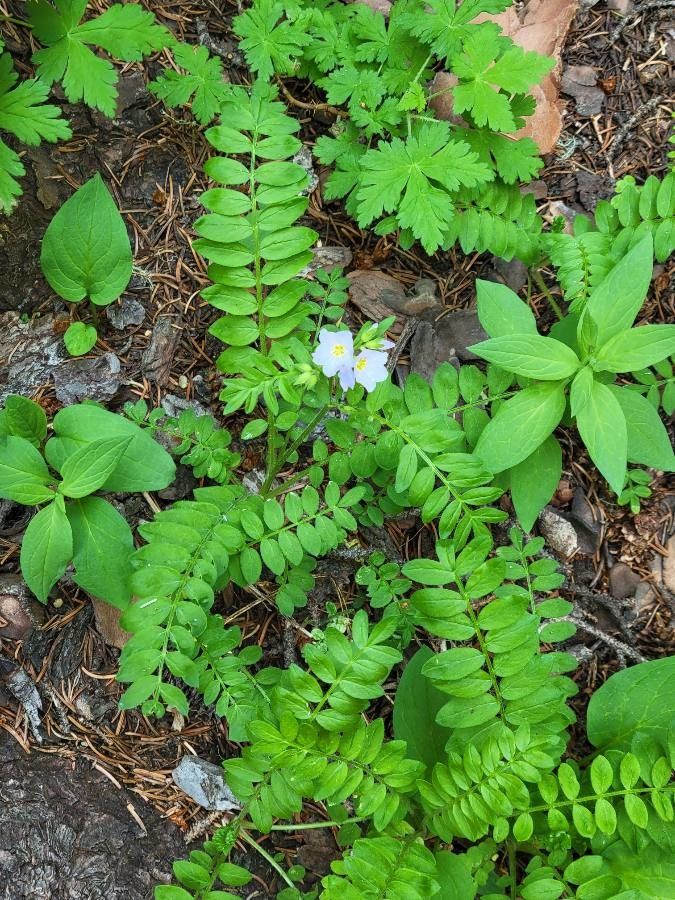
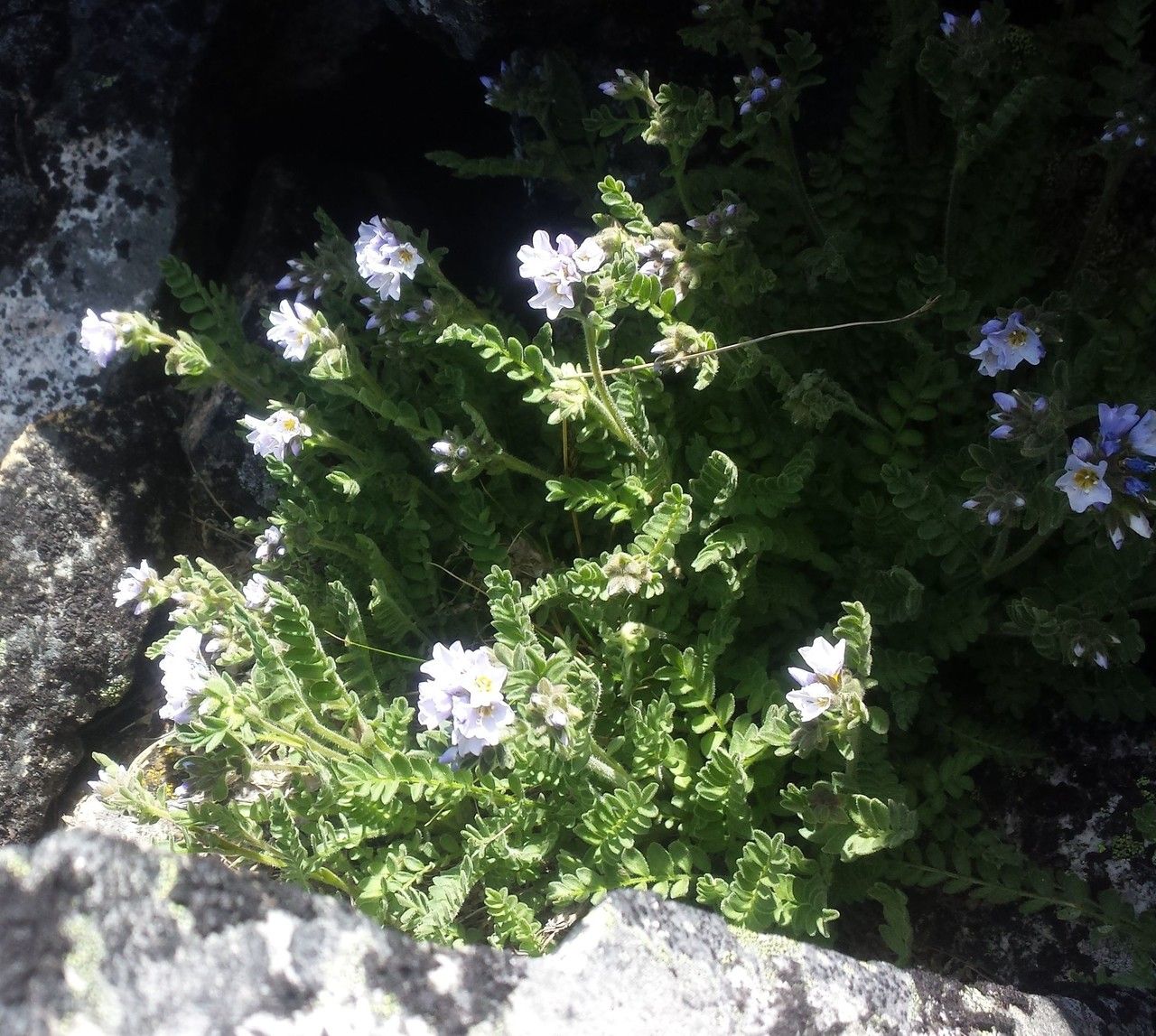
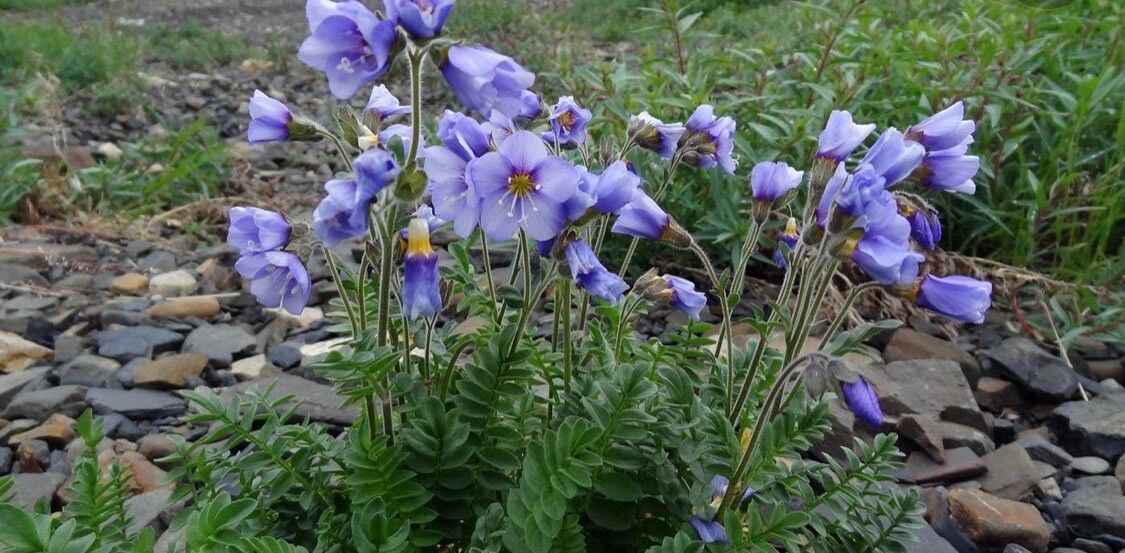
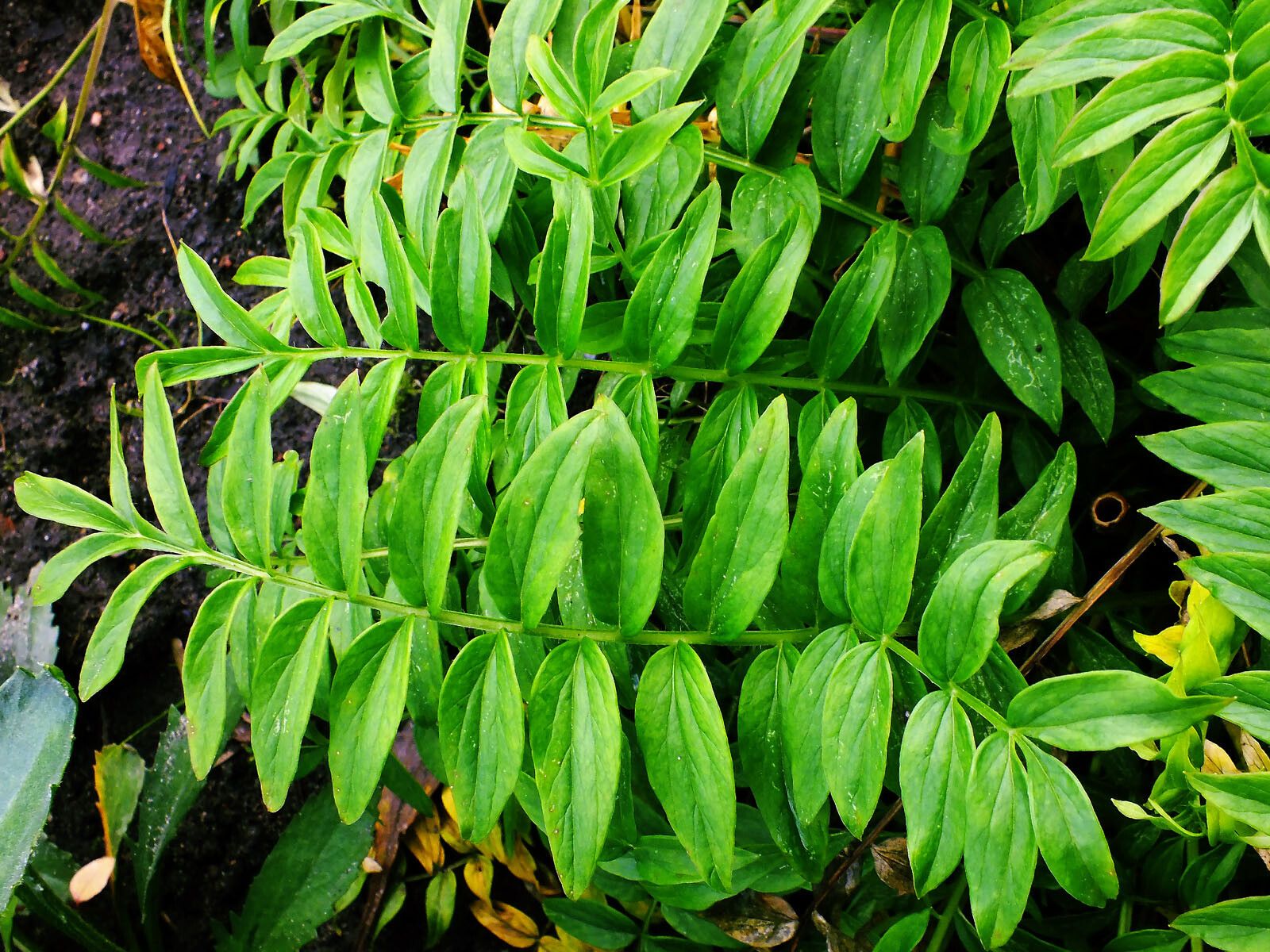
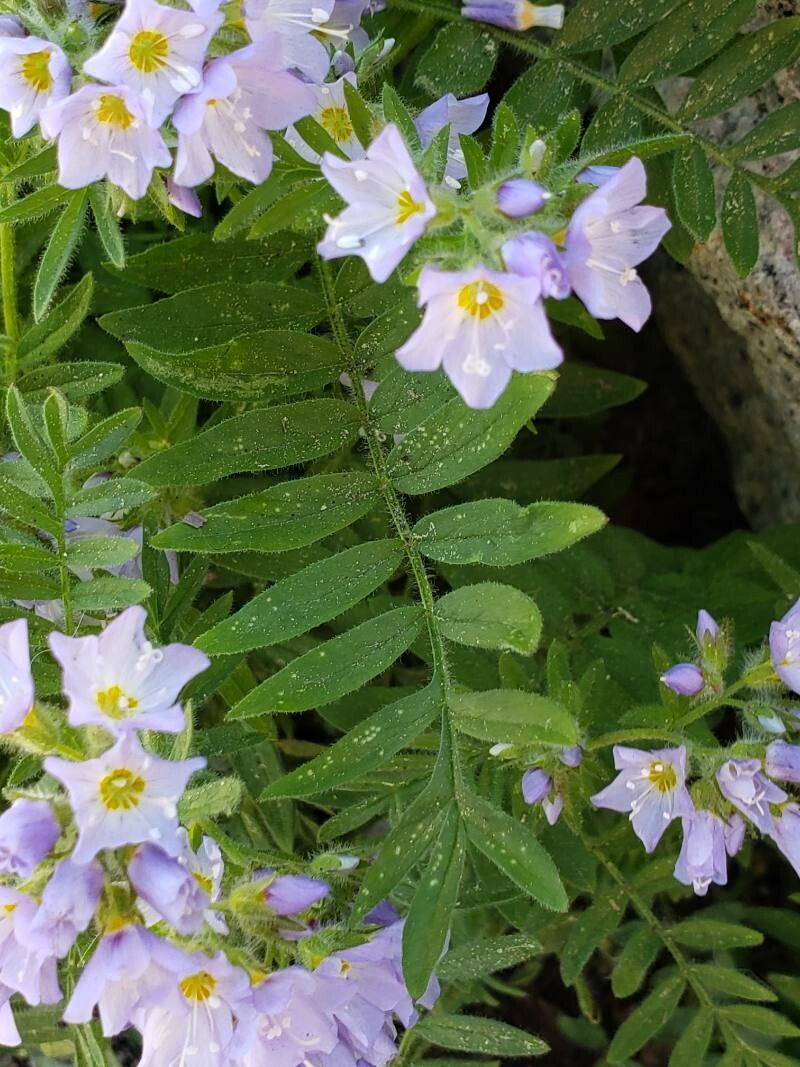
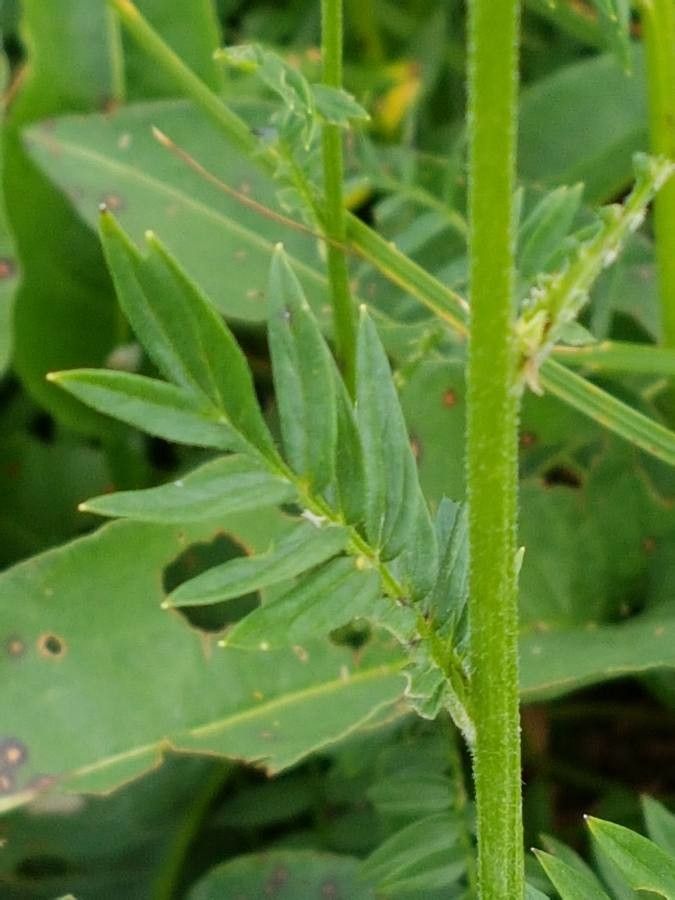
Polemonium pulcherrimum is a species of flowering plant in the phlox family known by several common names, including beautiful Jacob's-ladder, showy Jacob's-ladder, and skunk-leaved polemonium. It is native to western North America from Alaska and Yukon to Arizona and New Mexico, where it can be found in many types of mountain habitat, including alpine talus and rock cracks at high elevations. It is a common and widespread wildflower in several regions. It is a perennial herb producing a clump of several erect stem approaching a maximum height of 30 centimeters. The leaves are mostly basal, with smaller ones arranged along the stem. The leaves are made up of several pairs of lance-shaped to oval or round leaflets. The herbage is lightly hairy, densely glandular, sticky, and strongly scented, the odor reminiscent of skunk. The showy inflorescence is a dense elongated or headlike cluster of bell-shaped flowers each just under a centimeter wide. The flower is deep to bright or pale blue to nearly white with a yellow throat.
Beautiful jacob's-ladder shows good disease resistance and is generally not prone to illnesses. Still, it can be affected by pests and diseases present in its surroundings. Such infections are usually mild. For care, the plant requires a medium level of maintenance. It should be pruned regularly to maintain an attractive appearance and healthy growth. Fertilizing can also encourage flowering. Beautiful jacob's-ladder is suitable for anyone who has outdoor space, like a garden or patio, and does not demand extensive care experience. It may need extra attention when grown indoors.
How to keep Polemonium Pulcherrimum.
Light
The beautiful jacob's-ladder needs plenty of light to maintain healthy growth. This care requirement stems from its native habitats, which receive a lot of light. While it can tolerate reduced sun exposure, a lack of light can hinder its growth and vigor. Conversely, too much light can scorch the leaves and harm the plant's overall health.
Water
Beautiful Jacob's-ladder thrives in cool, moist environments and needs consistent moisture to grow well. It benefits from weekly watering to maintain its growth and requires soil that stays evenly moist. Typically found outdoors, this plant flourishes with ample rainfall and moderate temperatures during the growing season.
Fertilizer
For Beautiful jacob's-ladder, the primary time to fertilize is in early spring while the flowers are developing. The appropriate fertilizer promotes better blooms and helps Beautiful jacob's-ladder produce attractive flowers. Fertilizing in early spring ensures good flowering through the season and supplies energy for dormant growth phases.
Pruning
Jacob's-ladder is a beautiful plant known for its delicate, feather-like leaves and clusters of blue flowers. To maintain its shape and promote good air circulation, it's important to perform light pruning in early to mid-spring. Be careful to avoid heavy pruning, as it can stress the plant and reduce flowering. By following these guidelines, you can ensure the plant stays healthy and visually appealing throughout the season.
Botanical profile.
- Plant Type
- Herb
- Life Cycle
- Perennial, Annual
- Genus
- Polemonium
- Family
- Polemoniaceae
- Hardiness Zone
- 3-8
- Mature Height
- 46 cm
- Mature Spread
- 49 cm
- Leaf Color
- Green
- Leaf Type
- Deciduous
- Flower Color
- Lavender
- Flower Size
- 1.02 cm to 2.29 cm
- Bloom Time
- Mid spring, Late spring, Early summer
- Planting Time
- Spring, Summer
- Harvest Time
- Mid summer, Late summer, Early fall
- Native Area
- Russia
Other names.
Reader questions.
How should I water my Beautiful jacob's-ladder?
To properly water the Beautiful jacob's-ladder, it's best to use filtered water at room temperature. Tap water may have harmful particles, so filtering it is recommended. The plant prefers slightly warm water since it comes from a warm environment, and cold water can be a shock. Avoid watering from above, as this can cause problems with the foliage. Instead, apply the filtered room temperature water directly to the soil until it is completely soaked. This method helps the roots spread and gather essential nutrients.
Why should I put fertilizer on my Beautiful jacob's-ladder?
Fertilization is important for the Beautiful jacob's-ladder for several reasons. One main reason is that it provides key nutrients that help the plant grow above and below ground. Although the overall fertilization needs for a Beautiful jacob's-ladder are relatively low, annual fertilization can be very beneficial. It helps to keep the plant alive and may also encourage better flower growth that lasts longer. For those who want their Beautiful jacob's-ladder to look its best, it is recommended to keep up with annual fertilization.
What are the sunlight requirements for Beautiful jacob's-ladder?
Beautiful jacob's-ladder thrives with specific amounts of sunlight exposure. It requires 'Full sun' which is defined as above 6 hours of sunlight per day, or 'Partial sun,' meaning about 3-6 hours of sunlight daily. Observing how sunlight moves through your garden is crucial for finding the perfect balance of light and shade to ensure the plants' well-being.
What should I do if I give too much or too little water to my Beautiful jacob's-ladder?
Both overwatering and underwatering can harm the health of your Beautiful jacob's-ladder, but overwatering is more common. If the plant gets too much water, its stems and leaves may wilt and turn yellow. Overwatering for a long time can also cause diseases like root rot, mold, and mildew, which can kill the plant. Underwatering is less likely because this plant can tolerate drought. However, it can still happen, and you'll notice brittle, brown leaves. It's important to spot signs of overwatering early since some diseases like root rot can't be fixed if you wait too long. If you see early signs, reduce watering immediately and check if the soil drains well. If it doesn't, replace it with a loose, well-draining potting mix. If you see signs of underwatering, simply water more regularly until the signs go away.
When should I fertilize my Beautiful jacob's-ladder?
The best time to fertilize a Beautiful jacob's-ladder is in late winter or early spring when it is transitioning from dormancy to active growth. Fertilizing at this time promotes healthy growth and sets the plant up for a successful season. While early spring is the most preferred time, fall is also acceptable for fertilization. However, it is not advisable to fertilize during summer or winter.
Why is adequate lighting essential for Beautiful jacob's-ladder, and how can artificial lighting help?
Adequate lighting is essential for the growth and health of Beautiful jacob's-ladder, as it originates from natural habitats with significant light exposure. Insufficient sunlight can impact its growth and vitality, while excessive exposure can cause leaf burn. In spaces with less natural light, especially during winter, artificial lighting can be a vital solution. LED lights, recommended for their customization to plant needs, should provide 30-50W/sq ft for full sun plants, 20-30W/sq ft for partial sun plants, and 10-20W/sq ft for full shade plants. Proper distance (12-36 inches above the plant) and duration (8-12 hours daily) of artificial light mimic natural sunlight conditions, promoting healthier plant growth.
How often do I need to water my Beautiful jacob's-ladder plant?
If your Beautiful jacob's-ladder plant is in a pot, the best way to check if it needs water is by sticking your finger in the soil. If the top two to three inches are dry, it's time to give it some water. For outdoor plants in the ground, you can use the same method. When the top few inches of soil feel dry, water the plant. In the spring and early fall, this might mean watering once a week. But during very hot weather, you may need to water twice a week or more. However, it's worth noting that mature, well-established Beautiful jacob's-ladder plants can handle periods of drought quite well.
When is the best time to not fertilize my Beautiful jacob's-ladder?
To properly care for your Beautiful Jacob's Ladder, it is important to only fertilize it in the late winter and early spring. This plant has low fertilizer needs, so a single annual feeding is enough. Overfertilization can occur if you continue to fertilize throughout spring, summer, and fall. However, if you missed fertilizing in the spring, it is acceptable to feed this plant in the fall. Additionally, refrain from fertilizing the Beautiful Jacob's Ladder during most of the growing season and also during the winter. In winter, the plant enters a dormant growth phase where new growth does not occur. Therefore, it is not recommended to fertilize during most of the winter.
What are the symptoms of inadequate or excessive sunlight for Beautiful jacob's-ladder?
Symptoms of inadequate sunlight include smaller new leaves, leggy or sparse growth, faster leaf drop, slower or halted growth, and paler new leaves, indicating insufficient chlorophyll and nutrients. Excessive sunlight can lead to chlorosis (yellowing leaves due to chlorophyll breakdown), sunscald (damage from intense sun), leaf curling (a defense against water loss and damage), wilting (loss of turgor pressure), and leaf scorching (brown, dry edges on leaves). These symptoms negatively affect the plant's ability to photosynthesize and overall health.
How much water does my Beautiful jacob's-ladder plant need?
To properly water your Beautiful jacob's-ladder, don't hold back when it comes to watering. Make sure the top few inches of soil are dry before giving it a nice, thorough watering. You should add enough water to completely saturate the soil and allow excess water to drain out of the pot's drainage holes. If you don't see any excess water draining, you may not have given enough water. However, be cautious not to let water accumulate in the soil, as this can harm the plant. On the other hand, if water isn't draining properly, it could mean the soil isn't draining well, which is not good for the plant's health. If the plant is outdoors, around an inch of rain per week should be sufficient.
What kind of fertilizer does my Beautiful jacob's-ladder plant need?
When it comes to fertilizing a Beautiful jacob's-ladder, any general-purpose fertilizer with balanced nutrients will work well. However, some nutrient blends are particularly beneficial. Many gardeners believe that higher levels of phosphorus can improve root strength and flower quality, which is important for Beautiful jacob's-ladder as a flowering plant. You can choose between granular or liquid form fertilizers as long as they contain sufficient nutrients. Additionally, organic methods such as adding compost, manure, or similar materials can greatly enhance the soil quality for your Beautiful jacob's-ladder.
What solutions are available for managing sunlight exposure for Beautiful jacob's-ladder?
To manage sunlight exposure, gradually move the plants to sunnier locations to receive at least 6 hours of sunlight daily, using a south-facing window for indoor plants. Consider artificial lighting, such as grow lights, for insufficient natural light, ensuring at least 8 hours of light daily. For outdoor plants, avoid sudden light intensity changes to prevent sunburn. Minimizing obstructions, like pruning surrounding trees, and transplanting smaller plants during their dormant period to sunnier spots can improve sunlight exposure. It's noted that parts of the plant affected by insufficient light may not recover, but new growth should be healthy with improved lighting conditions.