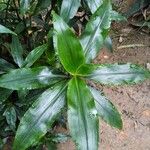
Pollia condensata
Description
Source: wikipedia (CC BY-SA)Pollia condensata, sometimes called the marble berry, is a perennial herbaceous plant with stoloniferous stems and hard, dry, shiny, round, metallic-looking blue fruit. It is found in forested regions of Africa. The blue colour of the fruit, created by structural coloration, is the most intense of any known biological material.
Care Guide
💧 Water
Pollia condensata flourishes in environments with consistent moisture. It requires weekly watering but can withstand brief periods of dryness. When grown indoors, it is important to keep the soil moist and well-draining. Additionally, maintaining stable temperatures and high humidity levels will help mimic its natural habitat, promoting optimal growth.
☀️ Light Partial sun
marble berry is indigenous to habitats like forest understories or rocky areas, where it receives natural shade. Its preferred light condition is partial sun, but it can adapt to full sun or full shade, showing its versatile and hardy nature.
🌡️ Temperature 20–37.8°C
Marble berry comes from tropical regions, where the climate is usually warm and humid. As a result, it is well adapted to high temperatures and humidity. It does not tolerate sudden temperature changes and prefers a stable temperature environment, so temperature fluctuations indoors should be avoided. It typically cannot withstand cold and requires higher temperatures for growth. If the environmental temperature falls too low, the plant may stop growing or even die.
💨 Humidity
🪴 Soil 6-7
🌱 Fertilizer
marble berry needs the most fertilizer during its active growth period, which occurs mainly in spring, summer, and early fall. Fertilization provides essential nutrients the soil may lack, encouraging healthy root and stem development and maintaining the attractive foliage that is a key feature of this plant.
🪴 Pot & Repot
✂️ Pruning
For optimal results, prune Pollia condensata in early spring. Remove any dead or diseased stems to improve air circulation and light availability. Trimming overgrown branches helps maintain an open structure, enhances flowering, and reduces pests. These steps promote the plant's overall vitality and enhance its visual appeal in the garden.
🌿 Propagating
🐛 Diseases & pets
☠️ Toxicity
Characteristics
- Plant Type
- Herb
- Life Cycle
- Perennial
- Genus
- Pollia
- Family
- Commelinaceae
- Hardiness Zone
- 10-12
- Mature Height
- 30 cm to 61 cm
- Mature Spread
- 30 cm to 49 cm
- Leaf Color
- Green, Dark Green
- Leaf Type
- Evergreen
- Flower Size
- 1.02 cm to 2.03 cm
- Bloom Time
- Late spring, Summer, Early fall, Mid fall
- Planting Time
- Spring, Summer
- Harvest Time
- Mid summer, Late summer, Fall, Early winter
- Native Area
- Angola, Sudan, Nigeria, Congo, Guinea, Uganda, Sierra Leone, Equatorial Guinea, Cameroon, Liberia, Togo, Ghana, Côte d'Ivoire, Ethiopia, Congo (DRC), Central African Republic