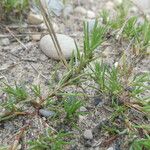
Polycnemum majus
Giant needleleaf
Care Guide
💧 Water
The Giant Needleleaf thrives in conditions with moderate moisture, striking a balance between hydration and proper drainage. For optimal moisture levels, water the plant weekly and mist it periodically to mimic its natural humid environment, which promotes growth and health. Although the plant can endure brief periods of dryness, maintaining consistent humidity is essential for its overall well-being.
☀️ Light Full sun
Giant needleleaf does best in uninterrupted sunlight but can tolerate partial shade. Outdoor specimens may need to be repositioned with the seasons. Irregular sun exposure can impair giant needleleaf's growth and vigor.
What are the sunlight requirements for Giant needleleaf?
Giant needleleaf thrives in environments of full sun, requiring above 6 hours of sunlight daily for optimal growth. It can also tolerate partial sun, which means about 3-6 hours of sunlight each day. It's essential to watch how sunlight moves through your garden to ensure plants receive the perfect balance of light and shade, maintaining their health and happiness.
How does artificial lighting support Giant needleleaf's growth?
When natural sunlight is insufficient, especially during winter or in less sunny spaces, artificial lighting becomes crucial for the growth of Giant needleleaf. LED lights are recommended for indoor plant lighting as they can be tailored to provide specific wavelengths needed by the plant. Full sun plants require 30-50W/sq ft of artificial light, partial sun plants need 20-30W/sq ft, and full shade plants should get 10-20W/sq ft. The light source should be placed 12-36 inches above the plant to mimic natural sunlight and be turned on for 8-12 hours a day to simulate the natural daylight cycle.
What symptoms indicate Giant needleleaf is receiving inadequate light?
Giant needleleaf shows several symptoms when light conditions are poor, including smaller new leaves, leggy or sparse growth, faster leaf drop, slower or no new growth, and irregularly colored or paler leaves. Conditions such as chlorosis (where leaves lose their green color), sunscald (damage from intense sunlight), leaf curling (a mechanism to reduce surface area exposed to sunlight), wilting (loss of turgor pressure), and leaf scorching (brown, dry patches on leaves) are symptoms that can indicate either too much or too little light exposure.
What solutions can help improve Giant needleleaf's growth in regards to light exposure?
To optimize Giant needleleaf's growth with correct light exposure, gradually move plants to sunnier locations to receive at least 6 hours of direct sunlight daily. A south-facing window is ideal for indoor plants. Consider using artificial lights for additional support, keeping them on for at least 8 hours daily. For outdoor plants, avoid sudden changes in light intensity to prevent sunburn. Minimize obstructions by pruning trees or transplanting to sunnier locations. Although parts of the plant affected by insufficient sunlight might not recover, new growth will be healthy with improved light conditions.
🌡️ Temperature 15–35°C
Giant needleleaf is native to temperate regions and does best at temperatures between 68 and 95 °F (20 and 35 ℃). During colder seasons, keep it indoors in a warmer environment to imitate its native climate.
What are the ideal temperature conditions for Giant Needleleaf?
Giant Needleleaf, with its botanical name Polycnemum majus, is native to temperate environments and thrives in temperatures between 68 to 95 °F (20 to 35 °C). During the cooler seasons, it's recommended to keep the plant in a warmer, indoor setting to accommodate its preference for milder climates. Although it has some cold tolerance and generally does not require special care when temperatures are above 0°C, precautions are needed if temperatures are expected to drop below freezing. Temporary protective measures such as wrapping the plant with plastic film, fabric, or other insulating materials may be necessary to protect it from cold damage. Once temperatures rise again, these protections should be removed to avoid any negative impact on the plant's health.
How does low temperature affect Giant Needleleaf and what are the solutions?
Giant Needleleaf exhibits moderate tolerance to low temperatures but performs best when kept above 20°C. During winter, it's crucial to ensure the temperature remains above 0°C to prevent cold damage. Exposure to temperatures below -10°C may cause the leaves to droop; while they might recover in mild cases, severe exposure can lead to wilting and eventual leaf drop. To manage frost damage, it's advisable to trim off the frost-damaged parts of the plant. Additionally, taking proactive measures like wrapping the plant with non-woven fabric or cloth, and setting up a wind barrier can significantly help protect it against cold winds and further temperature drops.
What effect does high temperature have on Giant Needleleaf and how can it be mitigated?
Giant Needleleaf should ideally be kept below 35°C during the summer months. Temperatures above 41°C can alter the leaf's color to a lighter shade, cause the tips to dry and wither, lead to leaf curling, and increase susceptibility to sunburn. To mitigate damage from high temperatures, affected areas of the plant should be trimmed away. Moving the plant to a shaded location, especially away from the harsh midday and afternoon sun, or using a shade cloth can help protect it. Ensuring the soil remains moist through watering in the morning and evening will also aid in keeping the plant healthy during hotter periods.
💨 Humidity
🪴 Soil 6-8
🌱 Fertilizer
Giant needleleaf benefits from regular, mild applications of fertilizer to encourage healthy leaf development. You should fertilize Giant needleleaf about once a month during the summer. Nitrogen is essential for foliage, and providing nitrogen-rich sources helps Giant needleleaf thrive.
🪴 Pot & Repot
✂️ Pruning
The giant needleleaf tree benefits greatly from proper pruning, which is ideally performed from early to late spring. Pruning helps remove dead branches, promotes bushier growth, and enhances the tree's shape. Regularly pruning the tree also improves air circulation and helps prevent diseases. It is important to always use sharp, clean tools and to sterilize the shears both before and after each use.
🌿 Propagating
🐛 Diseases & pets
☠️ Toxicity
Characteristics
- Plant Type
- Herb
- Life Cycle
- Annual
- Genus
- Polycnemum
- Family
- Amaranthaceae
- Hardiness Zone
- 8-10
- Mature Height
- 5 cm to 30 cm
- Mature Spread
- 5 cm to 15 cm
- Leaf Color
- Green
- Leaf Type
- Deciduous
- Flower Color
- White, Green
- Flower Size
- 0.20 cm to 0.25 cm
- Bloom Time
- Summer
- Planting Time
- Spring, Summer
- Harvest Time
- Late summer, Early fall, Mid fall
- Native Area
- Turkey, Austria, Czech Republic, Slovakia, Montenegro, Bulgaria, Armenia, Poland, Greece, Croatia, Slovenia, Belarus, Ukraine, Serbia, Russia, Hungary, Germany, Kyrgyzstan, Kazakhstan, Italy, Spain, Switzerland, Albania, Azerbaijan, Romania, Belgium, France