Polygonatum × hybridum, commonly known as Solomon's seal, is a perennial plant that belongs to the Asparagaceae family. This hybrid species is the result of crossbreeding Polygonatum multiflorum and Polygonatum odoratum. Native to Europe and Asia, Solomon's seal has been widely cultivated as an ornamental plant in gardens.
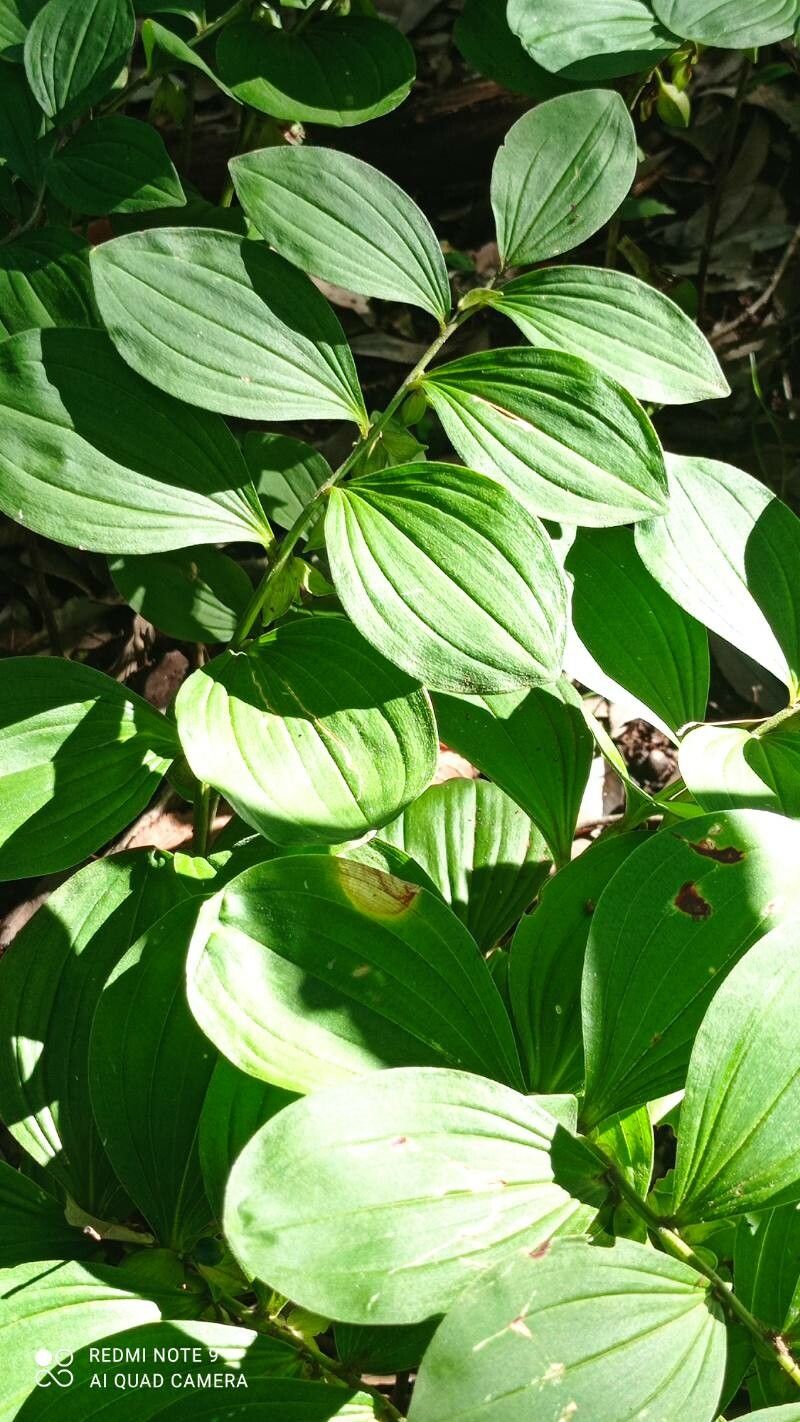
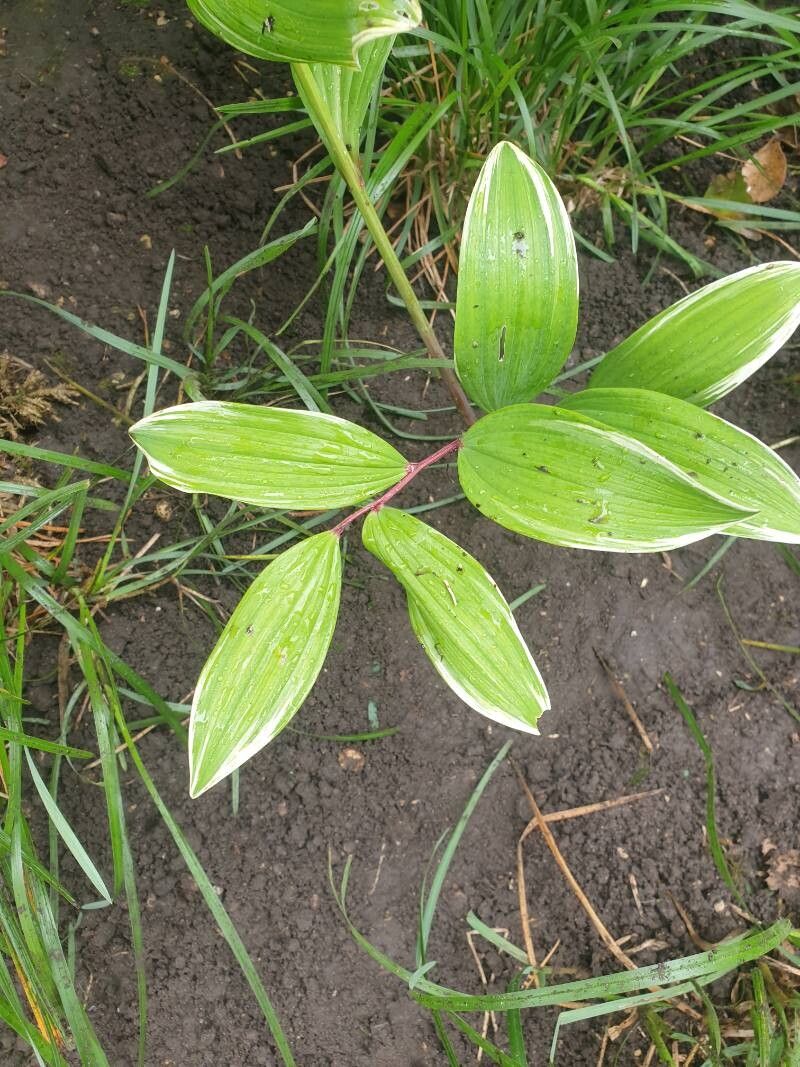
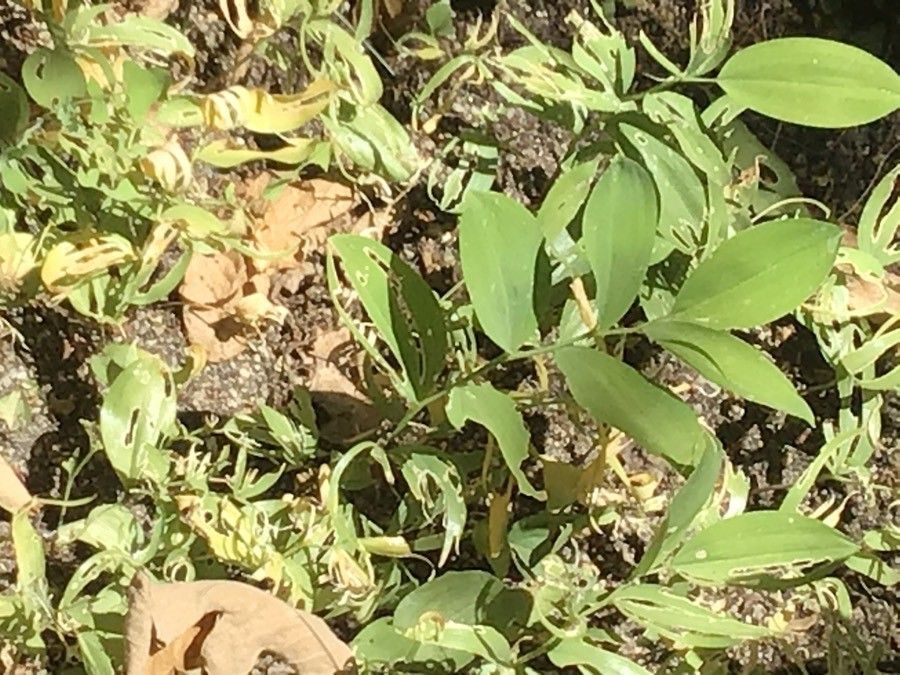
The plant features an upright stem that can grow up to 1 meter tall. Its leaves, arranged alternately along the stem, are oval-shaped with pointed tips, creating a ladder-like appearance.
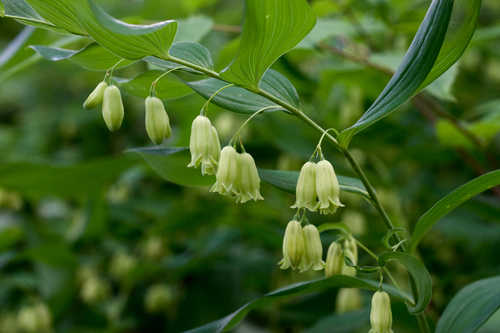
In late spring or early summer, Solomon's seal produces small, bell-shaped flowers with greenish-white petals that hang from the underside of arching stems. These flowers later give way to small blue-black berries in the summer.
The root system of Solomon's seal consists of rhizomes that grow horizontally underground, producing new shoots each year. These rhizomes have been used for medicinal purposes for centuries due to their anti-inflammatory properties.
Aside from its medicinal uses, Solomon's seal is also popular as an ornamental garden plant. Its attractive foliage and delicate flowers make it ideal for shady areas or woodland gardens.
Overall, Polygonatum × hybridum (Solomon’s Seal) is a beautiful perennial herbaceous flowering plant with multiple uses, both medicinally and aesthetically, making it a popular choice among gardeners worldwide.
Botanical profile.
- Genus
- Polygonatum
- Family
- Asparagaceae