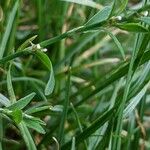
Polygonum aviculare
علف هفت بند · Knotgrass · Knot-weed · Prostrate knotweed · English knotgrass
Description
Source: leafsnapPolygonum aviculare, commonly known as knotgrass or birdweed, is a herbaceous annual plant belonging to the Polygonaceae family. It is a widespread weed, often found in gardens, lawns, and agricultural fields globally. The plant features slender stems that can grow up to 50 cm in height and are typically reddish or greenish-brown. Its leaves are small, narrow, and pointed, reaching up to 3 cm in length. The flowers of Polygonum aviculare are small and inconspicuous, with greenish-white petals that bloom from June to October. The plant produces small triangular nutlets as fruit, each containing a single seed. Knotgrass has been used for medicinal purposes for centuries due to its anti-inflammatory properties, which make it useful for treating skin conditions such as eczema and psoriasis. Additionally, it has been employed as an herbal remedy for digestive issues, such as diarrhea. Despite its medicinal benefits, knotgrass is considered an invasive weed because of its rapid spread through seed dispersal by wind or animals. If left unchecked, it can quickly overrun lawns and gardens. In summary, while Polygonum aviculare may be regarded as a nuisance by some, it holds value in traditional medicine worldwide. Moreover, it plays important ecological roles, such as providing food for wildlife like birds, which feed on its seeds during winter months when other food sources are scarce.
💡 This plant was discovered in Philadelphia around 1910. It is a type of rice field weed that is difficult to remove due to its strong ability to thrive in wetlands, riverbanks, grasslands, moors, and mudflats.
🌳 Often overlooked, common knotgrass is a striking bioindicator of compacted, unhealthy soil. Its tendency to grow in compacted areas signals to land managers that the soil may need aeration or remediation.
🎭 Renewal
Care Guide
💧 Water Every 7 days
Prostrate knotweed thrives in humid environments and prefers consistent moisture, needing weekly watering. Although it is moderately drought-tolerant, it is often grown outdoors, where it benefits from natural rainwater. This enhances its seasonal vigor.
How should I water my Prostrate knotweed plant?
To water Prostrate knotweed, you have a few options. You can use a garden hose with a spray nozzle, a watering can, or any other common watering tool. This plant is not very particular about how it gets its water, so rainwater, tap water, or filtered water will all work. However, it's best to avoid watering this plant from overhead because it can damage the leaves and flowers and potentially lead to disease. Instead, a drip irrigation system is often the most effective way to water Prostrate knotweed. These systems distribute water evenly and directly to the soil. If you have a Prostrate knotweed in a container, you can use a similar watering method but with different tools. Simply use a cup, watering can, or tap water to directly water the soil in the container.
What should I do if I give too much water or too little water to my Prostrate knotweed?
Underwatering Prostrate knotweed can be resolved by simply watering it more regularly when you notice that it lacks moisture. However, overwatering can be a more serious problem as it can lead to diseases and the decline and death of the plant. To prevent this, it is important to choose a suitable location for planting that receives ample sunlight to help dry the soil and has good drainage to prevent water from pooling and causing waterlogged soil. If you have overwatered Prostrate knotweed in a pot, it may be necessary to consider transferring it to a new pot with better drainage. When repotting, make sure to use loose soil and a pot that drains efficiently.
How often do I need to water my Prostrate knotweed?
To ensure the health of your Prostrate knotweed, it is important to provide regular watering throughout the growing season. In the spring, aim to water the plant once a week. As the season progresses and temperatures rise, you may need to increase watering to two to three times per week. However, be cautious not to exceed this rate as it can harm the plant. Regardless of the frequency, it's crucial to maintain the soil in a relatively moist state without making it too wet. When watering Prostrate knotweed in a pot, you will generally need to water more frequently compared to plants in the ground. This is because the soil in a pot can heat up and dry out faster. Therefore, plan to water a potted Prostrate knotweed a few times per week, instead of just once per week for plants in the ground.
How much water does my Prostrate knotweed require?
There are a few ways to decide how much water to give your Prostrate knotweed. One approach is to gauge the moisture in the soil by feeling it and watering until the top six inches are moist. Another option is to use a specific measurement, such as about two gallons per week, but be aware that this may be too much if your plant needs less water. When growing in a container, you can check the soil's dryness by sticking your finger in and water until there is some drainage from the pot.
How do I know if I am watering my Prostrate knotweed enough?
Avoiding overwatering your Prostrate knotweed can be tricky because while these plants have deep roots that need weekly watering, they are prone to root rot and browning when overwatered. Underwatering is less likely to occur as these plants can tolerate some time without watering, but if you wait too long, they will start to wilt and develop dry leaves.
☀️ Light Full sun
Common knotgrass grows best with plenty of sunlight, though it can tolerate some shade. It originates from environments with substantial light exposure, and its health depends heavily on that factor. Insufficient sun can stunt its growth, while excessive exposure can cause stress.
What are the sun requirements for Prostrate knotweed?
Prostrate knotweed thrives best in full sun, meaning it requires above 6 hours of sunlight daily. It can also tolerate partial sun, which is about 3-6 hours of sunlight. It's essential to observe your garden's light patterns to ensure the plant gets a suitable balance of light and shade, as too little or too much sunlight can affect its health negatively.
What essentials should be considered for Prostrate knotweed's growth?
Prostrate knotweed originates from environments with significant light exposure and optimally grows under an abundant amount of sunlight, though it can manage some shade. Insufficient sunlight can stunt its growth, while too much can cause stress. For indoor plants particularly, when natural light is not sufficient, artificial lighting is crucial. LED lights are recommended because they can be tailored to provide the specific wavelengths needed by the plant. The intensity of artificial light required varies; full sun plants need 30-50W/sq ft, partial sun plants 20-30W/sq ft, and full shade plants 10-20W/sq ft. The light source should be placed 12-36 inches above the plant, mimicking natural light conditions for 8-12 hours per day.
What are the important symptoms of incorrect sunlight exposure for Prostrate knotweed?
When Prostrate knotweed receives inadequate light, it may exhibit symptoms including smaller new leaves, leggy or sparse growth, accelerated leaf drop, slower or halted growth, and paler new leaves, indicating a lack of chlorophyll. Overexposure to sunlight can cause chlorosis (leaves turning yellow) due to chlorophyll breakdown, sunscald (pale or necrotic spots on leaves), leaf curling as a defense mechanism against sunlight, wilting from increased water loss, and leaf scorching, characterized by brown, crispy leaf edges. These symptoms highlight the plant's struggles with either too little or too much sunlight.
How can I address Prostrate knotweed's sunlight-related problems?
For sunlight-related issues, gradually increasing the plant's exposure to sunlight is key. This can be done by moving it closer to a sunnier spot each week, aiming for at least 6 hours of direct sunlight daily. For indoor plants, using artificial lighting, such as keeping a lamp on for at least 8 hours a day or investing in professional grow lights, helps ensure enough light. Outdoor plants should also be moved gradually to avoid shock from sudden light changes. Removing obstructions like overhanging branches can increase sunlight exposure. For smaller, easily movable plants, consider transplanting them to sunnier locations during their dormant periods. While some damage from improper light may be irreversible, new growth will be healthy with corrected light conditions.
🌡️ Temperature 0–35°C
Common knotgrass is native to habitats where temperatures generally range from 68 to 95 °F (20 to 35 ℃). It does well in these warm conditions. Seasonal adjustments to promote optimal growth may require moderating temperatures to match this range.
What is the native environment of Prostrate knotweed?
Prostrate knotweed, or Polygonum aviculare, thrives in environments where the temperature typically ranges from 68 to 95°F (20 to 35°C). These conditions are optimal for its growth, indicating its preference for warm climates. The plant has strong cold resistance, making it adaptable to various environments without the need for special frost protection measures in most cases.
How does Prostrate knotweed respond to cold temperatures?
Prostrate knotweed has a notable cold tolerance and can generally withstand winter conditions without special frost protection. However, if temperatures are expected to plummet below -40°C, protective measures are advisable. Covering the plant with soil or straw can shield it against extreme cold. It's also beneficial to water the plant abundantly before the first freeze of autumn to ensure the soil remains moist and freezes in this state, which helps prevent drought and water scarcity during the colder months.
What should be done if Prostrate knotweed experiences very low temperatures?
If Prostrate knotweed is exposed to temperatures falling below -40°C, it can lead to a decrease in sprouting or possibly no sprouting at all come springtime. In such scenarios, any parts of the plant that have failed to sprout in the spring should be removed. This care helps in mitigating the impact of severe cold and ensuring the plant can recover and continue its growth cycle.
What are the signs of Prostrate knotweed being affected by high temperatures, and how can this be addressed?
When Prostrate knotweed is subjected to temperatures above 35°C, especially exceeding 41°C, its leaves may lighten in color, become prone to curling, suffer sunburn, and in extreme instances, the plant might wilt and dry up. Addressing this involves trimming away the sunburned and dried parts of the plant. To protect the plant further, it's advisable to relocate it to a shadier spot or use a shade cloth for protection against the midday and afternoon sun. Ensuring the soil remains moist through watering in the morning and evening can also help counteract damage from high temperatures.
💨 Humidity high (>60%)
This plant needs special care because it loves high humidity levels of 60-80% or more. The best way to achieve this is by placing a humidifier near the plant. Daily misting is also essential! Make sure the room has good ventilation.
🪴 Soil 5-7
🌱 Fertilizer
Common knotgrass responds well to regular, low-strength fertilizer applications to encourage healthy leaf development. You should feed Common knotgrass about once a month during the summer. Nitrogen is important for foliage, and supplying nitrogen-rich fertilizer helps Common knotgrass thrive.
🪴 Pot & Repot
✂️ Pruning
🌿 Propagating
🐛 Diseases & pets
☠️ Toxicity
Characteristics
- Plant Type
- Herb
- Life Cycle
- Annual, Perennial
- Genus
- Polygonum
- Family
- Polygonaceae
- Hardiness Zone
- 2-10
- Mature Height
- 10 cm to 40 cm
- Mature Spread
- 61 cm to 91 cm
- Leaf Color
- Green
- Leaf Type
- Deciduous
- Flower Color
- Pink, White
- Flower Size
- 0.20 cm to 0.51 cm
- Bloom Time
- Late spring, Early summer, Mid summer
- Planting Time
- Spring
- Harvest Time
- Mid summer, Late summer
- Native Area
- Libya, Egypt, Turkey, Sweden, Austria, Eritrea, Pakistan, Morocco, Yemen, Belarus, Uzbekistan, Russia, Iraq, Germany, Iceland, Ethiopia, Romania, Belgium, Netherlands, Nepal, Saudi Arabia, Portugal, France, Tunisia, Georgia, Cyprus, Bulgaria, Poland, Greece, Ukraine, China, Norway, Afghanistan, Italy, Kazakhstan, Spain, Switzerland, Denmark, Myanmar, Japan, Israel, Finland, Iran, Albania, Ireland, United Kingdom, Hungary, Algeria, Costa Rica, Turkmenistan