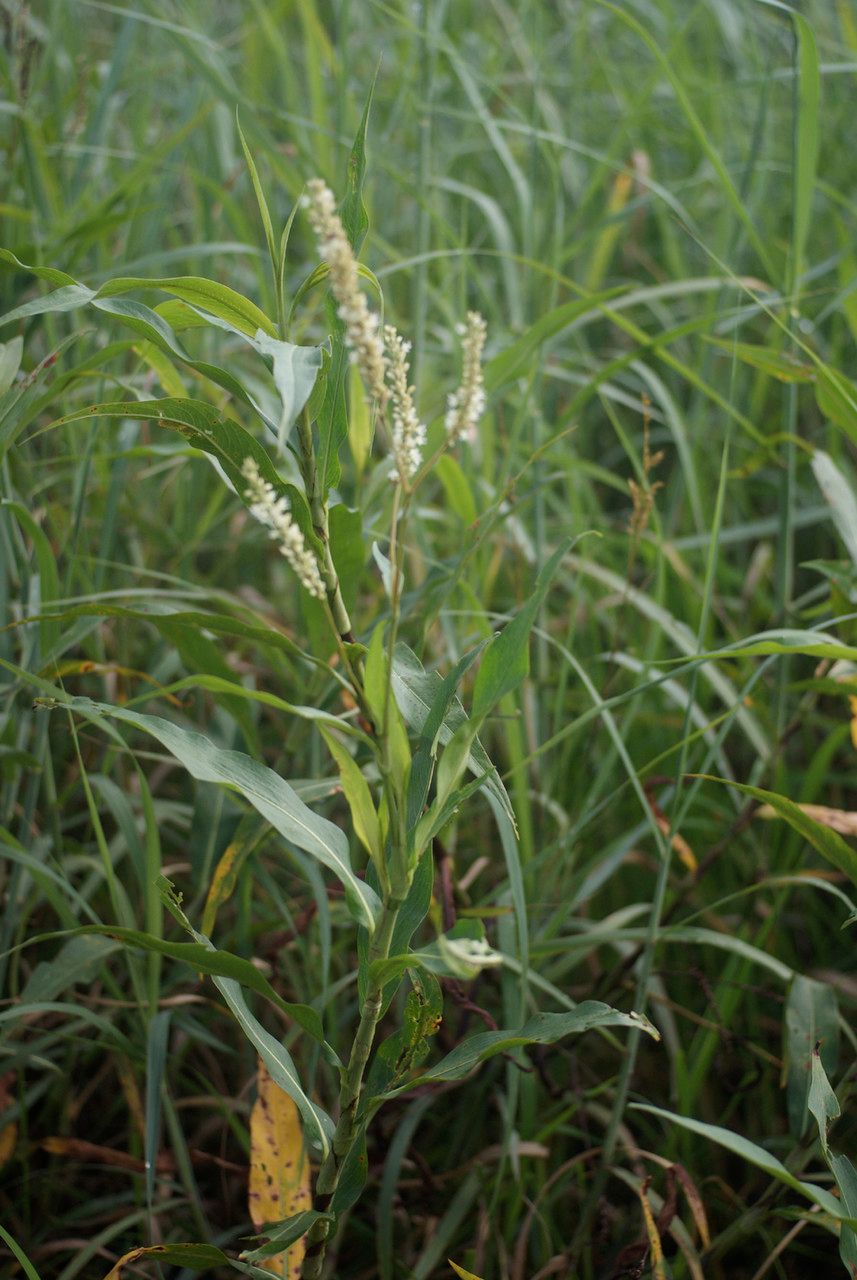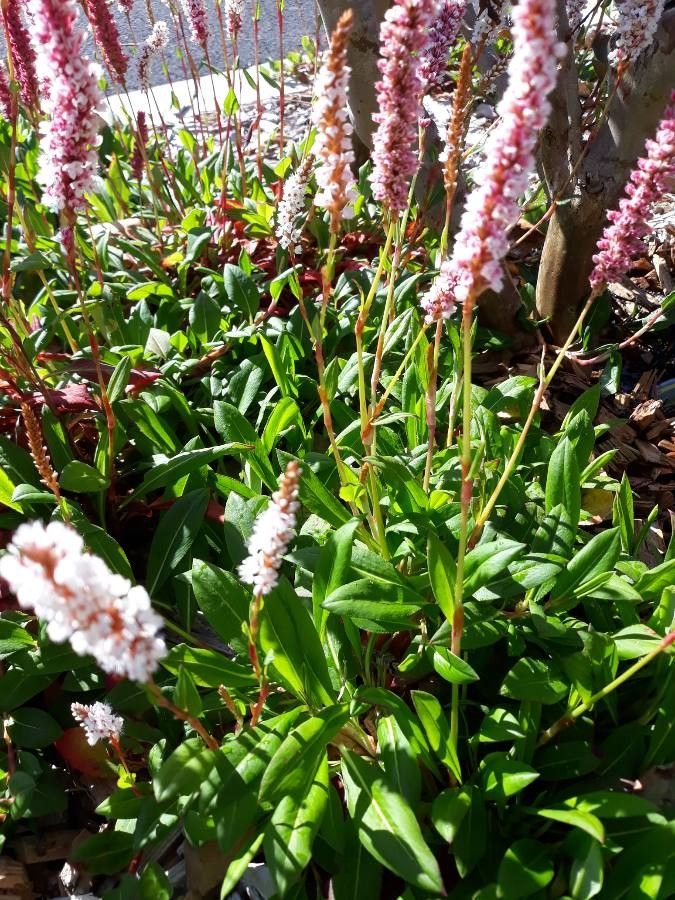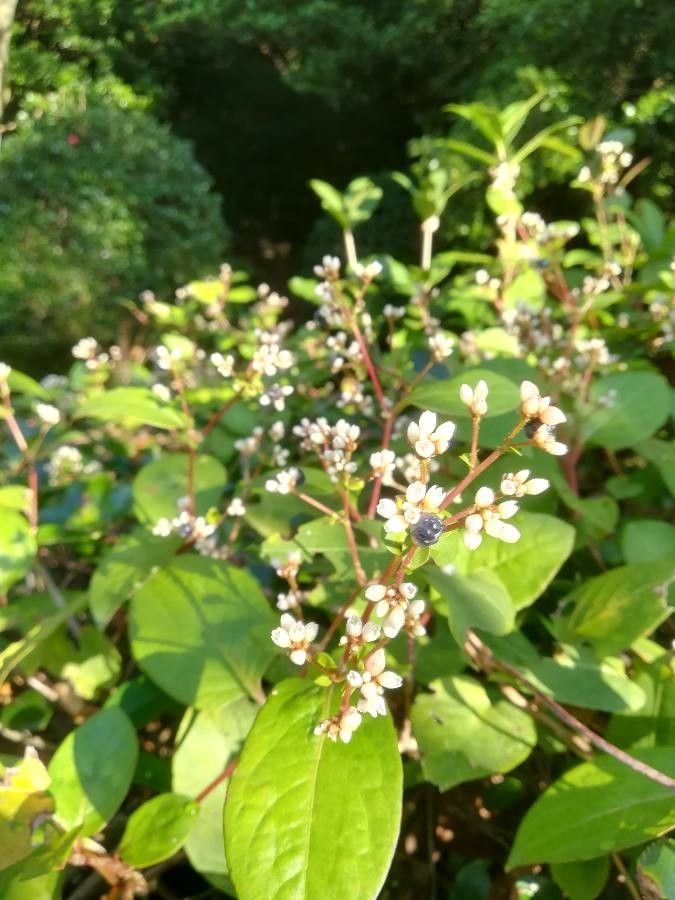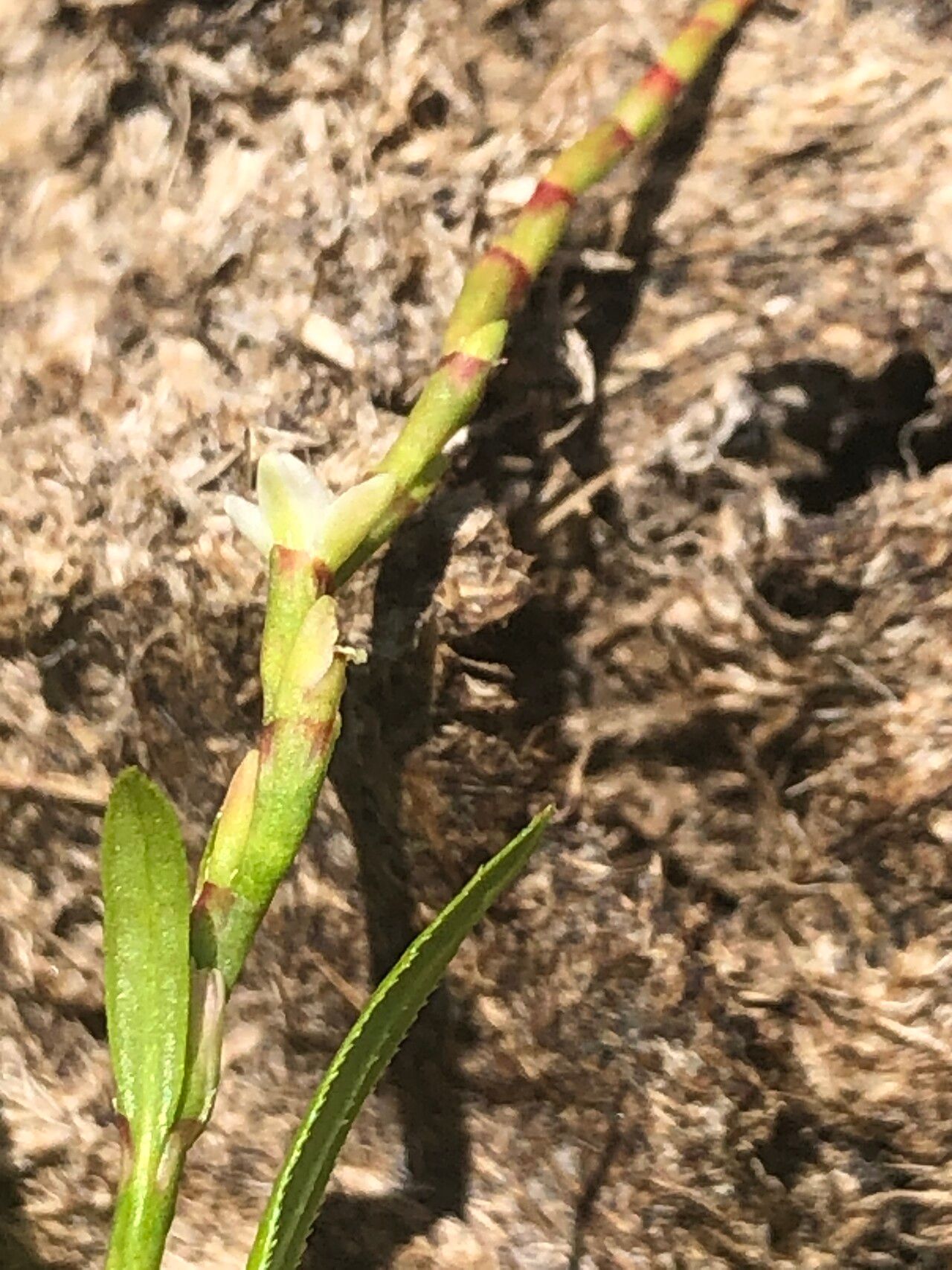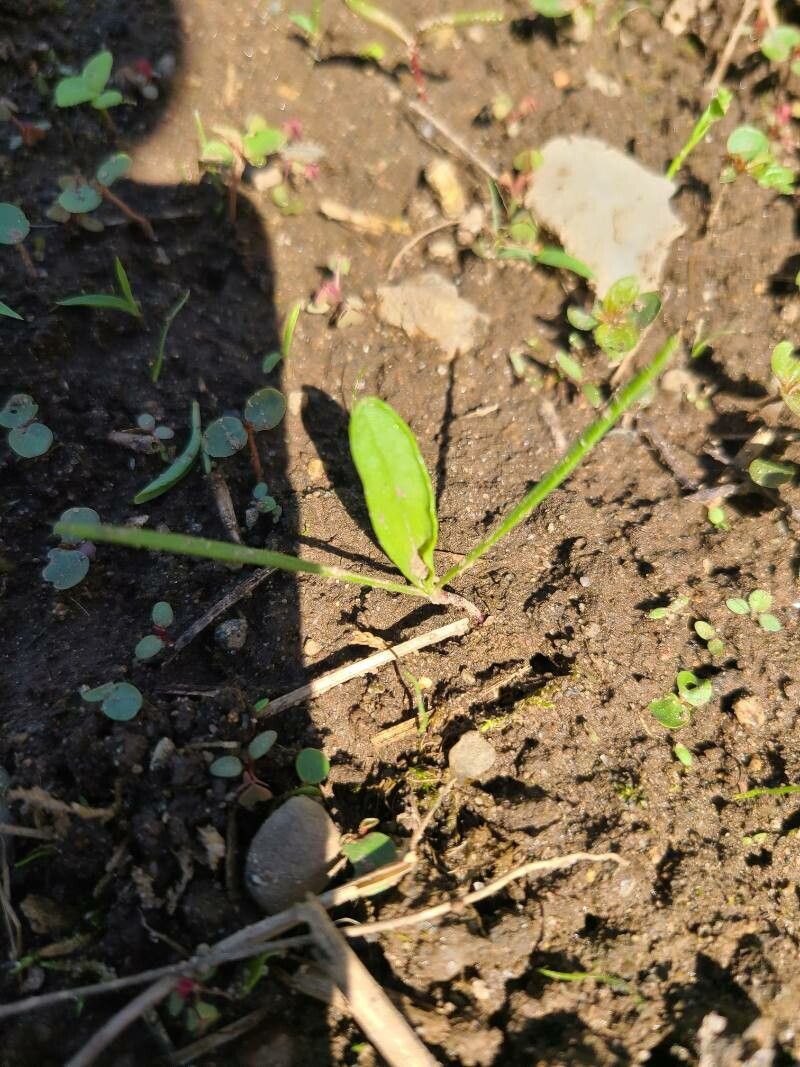
Persicaria orientalis is a species of flowering plant in the family Polygonaceae, known as kiss-me-over-the-garden-gate and princess-feather. It was first described, as Polygonum orientale, by Carl Linnaeus in 1753. It was transferred to the genus Persicaria by Édouard Spach in 1841. Its native distribution is unclear. As of May 2019, Plants of the World Online lists only Uzbekistan, whereas other sources give a much wider distribution in temperate and tropical Asia and Australia. It is widely cultivated and naturalized.
Kiss-me-over-the-garden-gate has strong resistance to diseases and is typically not very susceptible to them. Still, it can be affected by pests and diseases that exist in the surrounding area. When infections occur, they are generally mild. Regarding care, this plant needs a moderate amount of attention. Regular pruning is necessary to preserve an attractive appearance and encourage healthy growth. Applying fertilizer can also help increase flowering. Kiss-me-over-the-garden-gate is appropriate for anyone with outdoor space, such as a garden or a patio, and does not demand extensive gardening experience. It may need more intensive care if grown indoors.
How to keep Polygonum Orientale.
Light
Kiss-me-over-the-garden-gate performs best in full sun but can tolerate lower light levels, demonstrating some flexibility in its light requirements. Native to sunny habitats, it grows vigorously with plenty of sunlight. However, both excessively intense, continual sun and inadequate light can impede its healthy growth.
Water
Kiss Me Over the Garden Gate (Polygonum orientale, Persicaria orientale), also known as the Lady’s Fingers, Prince’s Feather, Princess Feather, or the Oriental Persicary, is an extremely rapid-growing annual that self-sows in autumn. Once planted, the bloom is likely to remain in that location for many years. Although the plant may reach heights of 7 feet (2 m) and widths of 4 feet (1 m), it seldom, if ever, requires staking. The flowers of this plant bloom in 3-inch (8 cm) long, spiky clusters that dangle pendulously in red, white, and magenta colors. Originally from China, it was formerly a highly popular plant in the United States since it was a favorite of Thomas Jefferson.
Temperature
Kiss-me-over-the-garden-gate comes from habitats where temperatures are generally between 68 and 95 °F (20 and 35 ℃). In colder seasons, it is advisable to keep the surrounding conditions as close to that range as possible.
Fertilizer
When Kiss-me-over-the-garden-gate has opened most of its blooms to full size, it's time to start fertilizing again. Around the peak of flowering, resume fertilizing once every three to four weeks, weather permitting. Then, once Kiss-me-over-the-garden-gate begins producing fewer new blooms, stop fertilizing; there's no need to fertilize when the plant can't produce any more blooms.
Pruning
No pruning is required for your Kiss Me Over the Garden plant.
Toxicity
Due to the presence of oxalic acid in its seeds, the Kiss Me Over the Garden Gate is quite toxic. Despite being non-toxic in nature, oxalic acid may tie up other minerals, rendering them inaccessible to the body and resulting in mineral insufficiency.
Further reading →
The toxicity and danger assessments provided are for reference only. We do not assure their accuracy, so it's crucial not to depend on them. Seek professional advice when necessary for accurate guidance.
Botanical profile.
- Plant Type
- Herb
- Life Cycle
- Annual, Biennial
- Genus
- Polygonum
- Family
- Polygonaceae
- Hardiness Zone
- 7-10
- Mature Height
- 0.91 m to 2.13 m
- Mature Spread
- 0.61 m to 1.22 m
- Leaf Color
- Green
- Leaf Type
- Semi-evergreen
- Flower Color
- Pink
- Flower Size
- 7.62 cm to 15.24 cm
- Bloom Time
- Mid summer, Late summer, Early fall, Mid fall
- Planting Time
- Spring, Autumn
- Harvest Time
- Fall
- Native Area
- Sri Lanka, India, Malaysia, Philippines, Bangladesh, Laos, China, Russia, Indonesia, Cambodia, Vietnam, Myanmar, Japan, Koppen, Bhutan, South Korea, Thailand