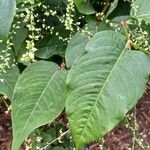
Polygonum virginianum
Jumpseed · Virginia knotweed
Description
Source: leafsnapPersicaria virginiana, also called jumpseed, Virginia knotweed or woodland knotweed is a North American species of smartweed within the buckwheat family. It is unusual as a shade-tolerant member of a mostly sun-loving genus. Jumpseed is a perennial, named for its seeds which can "jump" several feet when a ripe seedpod is disturbed. Persicaria virginiana blooms in midsummer to late summer/early fall. It has a stalk of small white flowers.
🌳 The jumpseed attracts attention among botanists not because it yields essential oils or has culinary uses, but because of its distinctive adaptability and its reproduction through "jumpseeds." Instead of simply dropping its seeds, they are flung out explosively, scattering them far from the original plant. This striking dispersal method draws botanists' interest, shedding light on evolutionary marvels, as though the plant is moving across the landscape by means of its seeds.
🎭 Renewal
Care Guide
💧 Water
☀️ Light Full sun
Jumpseed does best with bright, consistent light. It can tolerate moderate light levels, though growth may be less vigorous. Native to sunny regions, the plant thrives under similar conditions. Too little light can cause thin, leggy growth, while too much can scorch the leaves.
🌡️ Temperature 5–35°C
Jumpseed is native to areas where the average temperature ranges from 68 to 95 °F (20 to 35 ℃). It thrives in climates that remain within this range year-round, but providing shade during hotter periods could help it adapt.
💨 Humidity
🪴 Soil 5-7
🌱 Fertilizer
One fertilizer application in spring is generally adequate for Jumpseed, though repeated feedings can boost growth. Apply fertilizer every month to six weeks. Fertilizing improves the leaves' appearance and function, helping maintain even color and a healthy texture. It also promotes root development and nutrient uptake, supporting the plant's long-term health.
🪴 Pot & Repot 2-3 years
When repotting Jumpseed, select a pot 1–2 inches (2.5–5.0 cm) larger with ample drainage. Use a well-draining potting mix. Repot in spring or fall, making sure the root ball is slightly lower than the rim of the flower pot. Water thoroughly after repotting and place it in a warm spot with indirect sunlight.
✂️ Pruning
🌿 Propagating
🐛 Diseases & pets
☠️ Toxicity
Characteristics
- Plant Type
- Herb
- Life Cycle
- Perennial, Annual
- Genus
- Polygonum
- Family
- Polygonaceae
- Hardiness Zone
- 4-10
- Mature Height
- 0.46 m to 1.22 m
- Mature Spread
- 0.91 m to 1.22 m
- Leaf Color
- Green, Yellow, Red, Variegated, Brown
- Leaf Type
- Semi-evergreen
- Flower Color
- White, Pink
- Flower Size
- 0.76 cm to 1.52 cm
- Bloom Time
- Late spring, Early summer, Mid summer
- Planting Time
- Spring
- Harvest Time
- Mid summer
- Native Area
- Georgia, Mexico