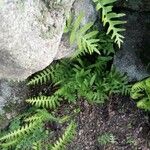
Polypodium vulgare
Common polypody · Golden-maidenhair · Polypody · Adder's fern · Wall fern
Description
Source: leafsnapPolypodium vulgare, the common polypody, is an evergreen fern of the family Polypodiaceae. Polypodium vulgare is an allotetraploid species, believed to have arisen by chromosome doubling of a sterile diploid hybrid between two ferns which are not known in Europe. The fern's proposed parents are the northern Asian and northern North American Polypodium sibiricum and western North American Polypodium glycyrrhiza. Biochemical data point to a species from eastern Asia as the second possible parent. The name is derived from poly (many) and pous, podos (a foot). Polypody has traditional uses in cooking for its aroma and sweet taste, and in herbal medicine as a purgative and vermifuge.
Care Guide
💧 Water
Common polypody thrives in areas with dappled shade, consistent moisture, and moderate humidity. It can tolerate short periods of dryness but needs to be watered twice a week. Since it is mainly an indoor plant, regular misting is crucial for keeping its fronds lush and vibrant throughout the year.
What do I need to do if I give my Common polypody plant too much water or too little water?
The Common polypody can be overwatered if it is left sitting in water or if the planter does not have drainage holes. This can cause the roots to be unable to absorb nutrients and moisture and can also lead to fungal or bacterial diseases. Signs of overwatering include wilted and yellow leaves, droopy stems, and soft and mushy texture. However, it's important to check for other causes since overwatering is difficult to do with this plant. On the other hand, the Common polypody can also be underwatered if not enough attention is given to keeping it moist. In dry conditions, it can quickly change from lush and green to brown and crispy. In extreme cases, the plant may seem completely dried up, but if some of the roots are still healthy, it may be possible to save it. Trim off any dry and dead stems, water thoroughly, and return the plant to its usual location. With proper care, the plant can recover and start producing new fronds, although it may take several months to grow back to its original size.
How should I water my Common polypody plant?
To properly care for your Common polypody, it is important to provide consistently moist soil resembling its natural habitat. This may involve watering every one or two days. This plant should never be allowed to dry out, so you should water it as soon as the top layer of soil shows signs of dryness. When watering, make sure to thoroughly soak the soil until water drains from the bottom of the pot. Afterward, remove any excess water to avoid stagnant puddles. Following this method will help ensure that the soil remains adequately moist at all times.
What do I need to think about when I water my Common polypody?
The frequency of watering for your Common polypody plant depends on the humidity level in the air. Higher humidity means less frequent watering. Avoid placing the plant near heating or cooling vents as it will dry out quickly. Choose a location without drafts. Common polypody prefers dappled and indirect sunlight and temperatures between 55-80 degrees F (13-27 degrees C). Placing the fern in a warm and sunny spot on a windowsill can cause dehydration. If possible, use rainwater or distilled water for this plant, although tap water usually works fine. Tap water with minerals and chemicals can cause brown leaf tips due to the fern's delicate leaves. Small pots can lead to quicker drying out, so give the fern more space in the pot than other houseplants. Consider using a self-watering planter for Common polypody. This type of pot keeps the soil consistently moist by using a wicking system to draw water from a reservoir. It eliminates the need for frequent watering and benefits the roots by providing a constant water supply.
☀️ Light Full shade
Common polypody grows best with moderate sunlight, although it can tolerate both shadier and brighter conditions. The plant's native habitat presents a varied light environment. Too much or too little sunlight can potentially impede its healthy growth.
What are the sunlight requirements for Common polypody?
Common polypody requires moderate levels of sunlight but can thrive in both more shaded and sunnier conditions. It can handle about 3-6 hours of sunlight for what's considered partial sun exposure. Full shade or full sun environments are characterized by less than 3 hours of sunlight. Observing how sunlight moves through your garden is crucial to find spots with the right balance of light and shade, ensuring the plant's health and happiness.
How does artificial lighting benefit indoor Common polypody plants?
Indoor Common polypody plants benefit greatly from adequate artificial lighting, especially when natural sunlight is insufficient, such as during winter or in less sunny spaces. Artificial lights, particularly LED lights that can be customized to provide specific wavelengths of light, are crucial for promoting faster, healthier plant growth. The amount of artificial light needed varies: full sun plants require 30-50W/sq ft, partial sun plants 20-30W/sq ft, and full shade plants 10-20W/sq ft. The artificial light source should be placed 12-36 inches above the plant to mimic natural sunlight conditions, typically for 8-12 hours per day.
What are the signs of inadequate light for Common polypody?
Common polypody can tolerate low light, but certain symptoms indicate light deficiency, impacting the plant's growth and health. These symptoms include smaller new leaves, leggy or sparse growth, early leaf drop, slower or no new growth, lighter-colored or pale new leaves indicating a lack of chlorophyll, chlorosis (leaves turning yellow due to chlorophyll breakdown), sunscald (damage from intense light exposure), leaf curling (a defense mechanism against excessive light), wilting (loss of turgor pressure from overexposure to sunlight), and leaf scorching (brown, dry edges on leaves due to excessive sunlight).
How can one address the issue of inadequate sunlight for Common polypody?
To address inadequate sunlight for Common polypody, gradually adjust the plant to more suitable light conditions. For indoor plants, gradually shift them to sunnier spots each week until achieving 3-6 hours of direct sunlight daily or provide supplemental light using a desk, ceiling lamp, or professional grow lights for at least 8 hours a day. For outdoor plants, similarly move them to more sunlight-friendly locations weekly to prevent shock. Minimize obstructions such as overhanging branches by pruning, and for smaller plants, consider transplanting them during their dormant period to a brighter location. However, parts of the plant that suffered due to previous insufficient light may not fully recover, though new growth should be healthy following these adjustments.
🌡️ Temperature 0–25°C
Common polypody does best in cooler temperatures, ideally between 32 and 77 °F (0 to 25 ℃). In warmer seasons, adjust temperatures to keep it within its preferred comfort range. That will support healthy growth year-round.
What are the ideal temperature conditions for common polypody?
Common polypody thrives in cooler temperatures, ideally maintained between 32 to 77 °F (0 to 25 °C). It's important to make temperature modifications during hotter seasons to keep the plant within this preferred range. This care promotes healthy growth throughout the year. Despite its high tolerance for cold, the common polypody does not require additional protection against frost. However, to prepare for winter, it's recommended to water the plant generously before the first freeze of autumn, ensuring the soil remains moist and enters a frozen state. This preparation aids in preventing drought and water scarcity for the plant during the winter and early spring months.
How can you protect common polypody from low winter temperatures?
Common polypody is extremely cold-tolerant, capable of withstanding winter temperatures above -35°C. However, if temperatures fall below this threshold, you might not notice immediate damage during winter, but the plant may experience decreased sprouting or fail to sprout at all in spring. To mitigate the effects of extreme cold, it is advisable to remove any parts of the plant that have failed to sprout once spring arrives.
What are the suggested actions if common polypody is exposed to high temperatures?
Common polypody struggles in high temperatures, particularly when the mercury rises above 25°C, leading to halted growth and increased susceptibility to rot. To address issues related to high temperature exposure, you should trim away any sunburned or dried-up parts of the plant. Additionally, reposition the plant to a spot with more shade during the midday and afternoon sun or use a shade cloth to protect it. It's also beneficial to water the plant in the morning and evening to ensure the soil remains moist, helping it cope with the heat.
💨 Humidity dry (<40%)
This plant prefers dry conditions, so don't mist it. However, watering it less often can also thrive in higher humidity.
🪴 Soil 4-7
🌱 Fertilizer
For common polypody, it is best to use high-nitrogen fertilizers in the spring and summer to encourage growth. Apply a diluted, balanced liquid fertilizer once a month, taking care not to over-fertilize to prevent root burn. In winter, reduce feedings and always follow the instructions on the package to ensure the plant remains healthy and resilient.
Why should I put fertilizer on my Common polypody?
Fertilizing Common polypody is important for several reasons. Firstly, it provides necessary nutrients for healthy new growth. Additionally, fertilizing supports the overall health of the plant, including old growth, and aids in disease and pest resistance.
When should I put fertilizer on my Common polypody?
The feeding schedule of Common polypody depends on its growth location. Although it is not a very hungry plant, it does need some extra nutrients. Outdoor plants should be fertilized once in the spring, while indoor specimens should be fed monthly from spring to summer.
When should I not put fertilizer on my Common polypody?
To ensure optimal growth of Common polypody, it is recommended to avoid fertilizing in late autumn and during hot and dry weather. Fertilizing during these times can lead to excessive growth before winter and can also be less effective due to the dry soil. Moreover, stimulating growth during these periods may require more water which might not be readily available. It is advisable to reserve fertilization for earlier in the season when temperatures are cooler. Additionally, it is important to be mindful of nearby plants or lawns that may inadvertently receive fertilizer, potentially resulting in a double-dose for the ferns.
What kind of fertilizer does my Common polypody plant need?
When choosing a fertilizer for Common polypody, you have a few options to consider based on whether the plant is growing indoors or in the garden. Outdoor plants tend to do well with mulch or compost as a fertilizer. For indoor plants, an ideal fertilizer would have an N-P-K ratio of 3-1-2. However, it is worth noting that a general-purpose fertilizer with a balanced blend of nutrients can also be effective in certain situations. In any case, it is important to ensure that the ratio number representing the volume of each nutrient in the fertilizer is at 3 or lower.
How can I fertilize my Common polypody?
Fertilizing Common polypody is simple, but it varies based on the plant's location. For outdoor garden plants, adding a layer of mulch or compost to the soil around the plant's base is the best approach. On the other hand, indoor plants do well with a diluted liquid fertilizer applied before watering. This should be done once a month during the spring and summer seasons.
🪴 Pot & Repot Every 12 months
✂️ Pruning
Common polypody is a resilient fern known for its tough, leathery fronds and ability to thrive in shaded areas. To encourage healthy growth, prune the plant in early spring by removing any damaged fronds. Regular trimming not only enhances the plant's appearance but also improves air circulation, which helps prevent fungal issues. Always use sharp, sterilized tools to ensure clean cuts.
🌿 Propagating
🐛 Diseases & pets
☠️ Toxicity
Characteristics
- Plant Type
- Fern
- Life Cycle
- Perennial
- Genus
- Polypodium
- Family
- Polypodiaceae
- Hardiness Zone
- 3-6
- Mature Height
- 30 cm
- Mature Spread
- 91 cm
- Leaf Color
- Green
- Leaf Type
- Evergreen
- Planting Time
- Spring
- Native Area
- Lesotho, Turkey, Sweden, Austria, Morocco, Belarus, Russia, Germany, Iceland, Romania, Belgium, Netherlands, Portugal, France, South Africa, Cyprus, Bulgaria, Poland, Greece, Ukraine, China, Norway, Italy, Kazakhstan, Spain, Switzerland, Denmark, Japan, Finland, Iran, Albania, Ireland, United Kingdom, Hungary