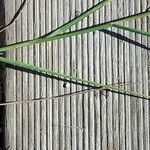
Polypogon maritimus
Mediterranean beard grass · Coast beard grass · Mediterranean Rabbitsfoot Grass · Southern beard grass · Mediterranean Polypogon
Description
Source: leafsnapPolypogon maritimus is a species of grass known by the common names Mediterranean beard grass and Mediterranean rabbitsfoot grass. It is native to the Mediterranean Basin. It is also known in other parts of the world, including Australia, New Zealand, and the United States, as an introduced species that can be found in moist habitat types. It is an annual grass producing stems up to half a meter tall. The inflorescence is a plumelike panicle up to 15 centimeters long containing many V-shaped spikelets with long awns.
Care Guide
💧 Water
Mediterranean rabbitsfoot grass thrives in environments with dry summers and mild, wet winters, typical of Mediterranean climates. To mimic its natural growth pattern, the plant benefits from weekly watering, especially during its growing season when rainfall is ideal. This grass neither tolerates drought well nor depends on high humidity, instead requiring a balanced approach to its water needs.
☀️ Light Full sun
Mediterranean rabbitsfoot grass comes from bright, open habitats where it flourishes in full sun. It can tolerate partial sun but favors direct sunlight for optimal growth. This plant, which can be annual or biennial, is known for its sun-loving nature.
What are the sunlight requirements for Mediterranean rabbitsfoot grass?
Mediterranean rabbitsfoot grass (Polypogon maritimus) thrives in bright, open environments and requires full sun, which means above 6 hours of sunlight per day, for optimal growth. It can tolerate partial sun, approximately 3-6 hours of sunlight, but prefers direct sunlight. When choosing a location for your plants, consider spots that provide a balance of light and shade to ensure plant happiness. Monitor how sunlight moves through your garden to select the perfect location.
How does artificial lighting support plant growth?
Artificial lighting is crucial for indoor plants, especially when natural sunlight is insufficient, like in winter or in less sunny spaces. Proper lighting promotes faster, healthier growth. LED lights are often chosen for being customizable to provide specific wavelengths needed by plants. Full sun plants need 30-50W/sq ft, partial sun plants 20-30W/sq ft, and full shade plants 10-20W/sq ft of artificial light. The light source should be placed 12-36 inches above the plant, mimicking natural sunlight, and most plants require 8-12 hours of light per day.
What are common symptoms of light deficiency in Mediterranean rabbitsfoot grass?
Common symptoms of light deficiency in Mediterranean rabbitsfoot grass include small and lighter-colored new leaves, indicating insufficient sunlight and a lack of chlorophyll. Leggy or sparse growth, faster leaf drop, and slower or no new growth are also signs the plant is struggling with low light levels. Additionally, chlorosis (leaves turning yellow), sunscald, leaf curling, wilting, and leaf scorching can occur due to improper light exposure. These symptoms help identify when the plant needs more sunlight or better lighting conditions.
How can I address insufficient sunlight for my Mediterranean rabbitsfoot grass?
To address insufficient sunlight for Mediterranean rabbitsfoot grass, gradually move plants to a sunnier location each week until they receive at least 6 hours of direct sunlight daily. For indoor plants that are large or not easily movable, consider using artificial light. Keep a desk or ceiling lamp on for at least 8 hours daily or invest in professional plant grow lights. Outdoors, avoid sudden changes in light intensity to prevent sunburn. If trees obstruct sunlight, prune them to allow more light through. For small plants, you may consider transplanting them during their dormant period to a location with more sunlight and good drainage. Remember, parts of the plant that suffered from low light may not recover, but new growth will be healthy with improved light conditions.
🌡️ Temperature 15–35°C
Mediterranean rabbitsfoot grass can tolerate a wide range of temperatures, though its distribution may still be restricted by particular combinations of water and heat. It develops best in warm summer climates with adequate rainfall or watering. Long periods of cloudy, rainy weather or sustained high temperatures can increase the risk of the grass dying. In winter, proper protection from cold can enhance the plant’s chances of survival.
💨 Humidity
🪴 Soil 6-8
🌱 Fertilizer
🪴 Pot & Repot
✂️ Pruning
To maintain the health of Mediterranean rabbitsfoot grass, it's important to prune strategically. This includes removing dead growth and thinning out clumps to improve air circulation. Perform pruning from early to late spring to promote healthy growth and reduce the risk of disease. Be sure to use clean, sharp tools to prevent damage and infections.
🌿 Propagating
🐛 Diseases & pets
☠️ Toxicity
Characteristics
- Plant Type
- Grass
- Life Cycle
- Annual
- Genus
- Polypogon
- Family
- Poaceae
- Hardiness Zone
- 7-10
- Mature Height
- 10 cm to 49 cm
- Mature Spread
- 15 cm to 30 cm
- Leaf Color
- Light Green
- Leaf Type
- Semi-evergreen
- Flower Color
- Yellow, Purple, Green, Brown
- Flower Size
- 0.20 cm to 0.51 cm
- Bloom Time
- Early summer, Mid summer
- Planting Time
- Spring, Summer
- Harvest Time
- Mid summer, Late summer
- Native Area
- Libya, Egypt, Turkey, Morocco, Uzbekistan, Russia, Iraq, Portugal, France, Tunisia, Cyprus, Greece, China, Afghanistan, Italy, Kazakhstan, Spain, Mongolia, Israel, Iran, Algeria, Turkmenistan