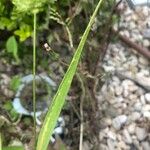
Polypogon monspeliensis
Annual Beard-grass · Beard grass · Rabbit-foot grass · Annual rabbitsfoot grass · Annual rabbit’s-foot grass
Description
Source: leafsnapPolypogon monspeliensis, commonly known as annual beard grass or Mediterranean beard grass, is a species of grass native to Europe and North Africa. It has been introduced to various other regions and can now be found in North America, Asia, and Australia. This plant typically thrives in disturbed areas such as roadsides, fields, and waste places. It has a tufted growth habit, with stems that can reach up to 60 cm in height. The leaves are narrow, flat, and have a rough texture on the upper surface. The inflorescence of Polypogon monspeliensis consists of spikelets arranged on slender branches that emerge from different points along the stem. The spikelets are small, measuring 2-3 mm, and contain several flowers each. As an annual plant, Polypogon monspeliensis completes its life cycle within one year, progressing from seed germination to seed production before dying off completely. This species has been used for forage production due to its high protein content, but it can also be considered an invasive weed. In some areas, it outcompetes native vegetation, posing ecological challenges. Overall, Polypogon monspeliensis is an interesting plant species that can play both positive and negative roles depending on its location. Despite its potential to become invasive, it remains an important subject for ecological studies.
🎭 Psychic abilities, protection. It represents food, concealment and resilience.
Care Guide
💧 Water Every 7 days
Annual rabbitsfoot grass is well adapted to different moisture levels and shows moderate tolerance to drought. It thrives in alternating wet and dry conditions, with an ideal watering schedule of once a week. This grass is best suited for outdoor environments, where its growth cycle can reflect the ecosystem's hydration status.
How do I water Annual rabbitsfoot grass properly?
To water Annual rabbitsfoot grass, there are several options you can use, such as a garden hose with a spray nozzle or a watering can. You can also use any other common watering tool. This type of grass is not too picky about how it receives water, as it can survive on rainwater, tap water, or even filtered water. However, it is generally recommended to avoid watering this plant from overhead, as it can harm the leaves and flowers and increase the risk of disease. Instead, setting up a drip irrigation system is often the best watering method for this plant. Drip irrigation systems provide even and direct watering to the soil. If you have container-grown Annual rabbitsfoot grass, you can use a similar approach but adjust the tools. A cup, watering can, or tap can be used to apply water directly to the soil of the container.
What should I do if I give my Annual rabbitsfoot grass too much or too little water?
A simple remedy for underwatering Annual rabbitsfoot grass is to water it more regularly when you notice it lacks moisture. However, overwatering can be a serious issue that could lead to diseases and the eventual death of the grass. To prevent this, choose a suitable location for growth with plenty of sunlight to dry the soil and good drainage to avoid water pooling. If you overwater your potted Annual rabbitsfoot grass, consider transferring it to a new pot with proper drainage and loose soils.
How often should I water my Annual rabbitsfoot grass?
Annual rabbitsfoot grass requires regular watering throughout the growing season. In the spring, water once per week, and increase to two or three times per week as it gets warmer. However, be careful not to overwater, as this can harm the grass. It's important to keep the soil moist, but not wet. When watering potted grass, you'll need to water more often compared to ground soil. Generally, water container-grown grass a few times per week instead of just once per week for in-ground plants.
How much water does my rabbitsfoot grass need each year?
To determine how much water to give your Annual rabbitsfoot grass, there are multiple approaches you can take. One method is to feel the soil for moisture and water until the first six inches of soil feel moist. Another option is to use a standard measurement, such as giving about two gallons of water per week, taking into account the temperature and soil dryness. However, it's important to be cautious with rigid guidelines, as your plant may require less water and could get overwatered. When growing the grass in a container, you should check the dryness of each layer of soil and water enough to moisten all of them. Stick your finger in the soil to test for moisture or allow a slight excess of water to drain out of the pot's drainage holes.
How can I know if I'm giving enough water to my Annual rabbitsfoot grass?
Avoiding overwatering your Annual rabbitsfoot grass can be a bit challenging. On one hand, these plants have deep roots that require weekly soil moisture. However, they are highly prone to root rot and may develop browning due to excessive watering. It is less likely for your Annual rabbitsfoot grass to be underwatered, as they can survive for some time without supplemental watering. However, if you go too long without watering, the plant will likely wilt and exhibit dry leaves.
☀️ Light Full sun
Annual rabbitsfoot grass grows best in places that receive direct sunlight all day. Plentiful sun supports its vigorous development. Coming from habitats with no barriers to sunlight, it can tolerate the absence of any shade. Neither too much nor too little sun harms it.
What are the sunlight requirements for Annual rabbitsfoot grass?
Annual rabbitsfoot grass thrives best in full sun conditions, requiring more than 6 hours of sunlight daily to grow optimally. Observing the movement of sunlight through your garden and choosing locations that offer a good balance of light and shade is crucial for the happiness of your plants. Ensuring your plants get ample sunlight is essential, as it influences healthy growth by originating in habitats with unobstructed sunlight exposure. This grass can endure both excessive and scarce sunlight without harm.
How can artificial lighting be used for indoor Annual rabbitsfoot grass?
Indoor Annual rabbitsfoot grass benefits significantly from adequate lighting, especially when natural sunlight is insufficient, such as during winter or in less sunny spaces. Artificial lights, particularly LED lights, provide a critical solution by offering the specific wavelengths needed for optimal plant growth. For intense light requirements like those of full sun plants, 30-50W/sq ft of artificial light is recommended, positioned 12-36 inches above the plant to mimic natural sunlight, for a duration of 8-12 hours per day.
What are the symptoms of inadequate light for Annual rabbitsfoot grass?
When cultivated indoors or in areas with insufficient light, Annual rabbitsfoot grass may exhibit symptoms indicating light deficiency. These signs include smaller new leaves, leggy or sparse growth, faster leaf drop, slowdown or cessation of new growth, lighter colored new leaves, chlorosis, sunscald, leaf curling, wilting, and leaf scorching. Each symptom reflects the plant's struggle to adapt to less than ideal light conditions, affecting its health and overall appearance.
What solutions can improve light access for Annual rabbitsfoot grass?
To ensure optimal growth for your Annual rabbitsfoot grass, gradually introducing it to sunnier locations is key, aiming for at least 6 hours of direct sunlight daily. For indoor plants large or hard to move, supplement natural light with artificial lighting, such as desk lamps or professional grow lights, for a minimum of 8 hours a day. Outdoors, moving plants to sunnier spots and reducing light obstructions, such as by pruning tree branches, can enhance sunlight exposure. If necessary, transplant smaller plants during their dormant period to a location with ample sunlight and good drainage. Remember, parts of the plant that have suffered from light deficiency may not recover, but new growth should be healthy after adjusting light conditions.
🌡️ Temperature 15–35°C
Annual rabbitsfoot grass is naturally adapted to do well in a temperate climate, needing a comfortable temperature between 68 and 95 °F (20 and 35 ℃). Seasonal adjustments may be necessary to recreate this environment and preserve the plant's health.
What is the ideal climate for annual rabbitsfoot grass?
Annual rabbitsfoot grass, botanically known as Polypogon monspeliensis, is well-suited for a temperate climate. It thrives in comfortable temperatures ranging from 68 to 95°F (20 to 35°C). To ensure the plant's health, its environment may need seasonal adjustments to mimic these conditions. Despite its strong cold resistance, in regions where winter temperatures drop below -15°C, it's crucial to provide additional cold protection. This can be done by covering the plant with soil or straw. Prior to the first autumn freeze, an abundant watering is recommended so the soil stays moist through winter and early spring, preventing drought and water scarcity.
How does low temperature affect annual rabbitsfoot grass and what solutions are there?
Annual rabbitsfoot grass is cold-tolerant, favoring temperatures above 20°C. Even though it naturally withstands cold and should be kept above 0°C during winter, temperatures falling below -15°C might not show immediate changes in the plant, but can lead to decreased sprouting or a complete lack of sprouting by spring. Should this occur, the remedy is to remove any parts of the plant that have failed to sprout in spring, facilitating healthy growth for the rest of the season.
What impact does high temperature have on annual rabbitsfoot grass and how can it be mitigated?
In the summer, it is crucial to keep the annual rabbitsfoot grass below 35°C, as temperatures exceeding 41°C can cause the leaves to become lighter in color, prone to curling, susceptible to sunburn, and in severe cases, the entire plant may wilt and dry up. To protect the plant from such damage, trim away the sunburned and dried parts. Moving the plant to a shadier location or using a shade cloth to protect it from the midday and afternoon sun can be effective. Additionally, watering the plant in the morning and evening will help maintain soil moisture and prevent heat stress.
💨 Humidity
🪴 Soil 6-7
🌱 Fertilizer
Annual rabbitsfoot grass benefits from regular, light applications of fertilizer to encourage healthy leaf growth. You should fertilize Annual rabbitsfoot grass about once a month during the summer. Nitrogen is essential for foliage, and adding nitrogen-rich sources helps Annual rabbitsfoot grass thrive.
🪴 Pot & Repot
✂️ Pruning
Annual rabbitsfoot grass is a quickly growing annual grass known for its feathery seed heads. To manage its growth effectively, trim any dead foliage in early spring and mow in late spring to control its height. Regular pruning encourages dense growth and helps prevent the grass from spreading. Be sure to use clean tools and properly dispose of the clippings to maintain a healthy and attractive garden, reducing the risk of disease.
🌿 Propagating
🐛 Diseases & pets
☠️ Toxicity
Characteristics
- Plant Type
- Herb
- Life Cycle
- Annual
- Genus
- Polypogon
- Family
- Poaceae
- Hardiness Zone
- 7-10
- Mature Height
- 5 cm to 91 cm
- Mature Spread
- 91 cm
- Leaf Color
- Light Green
- Leaf Type
- Semi-evergreen
- Flower Color
- White, Yellow, Brown
- Flower Size
- 0.51 cm to 3.05 cm
- Bloom Time
- Early summer, Mid summer
- Planting Time
- Spring
- Harvest Time
- Mid summer, Late summer
- Native Area
- Sri Lanka, Libya, Somalia, Egypt, Turkey, India, United Arab Emirates, Montenegro, Eritrea, Slovenia, Morocco, Croatia, Kenya, Niger, Tanzania, Uzbekistan, Iraq, Jordan, Koppen, Oman, Ethiopia, Romania, Qatar, South Korea, Botswana, Portugal, Nepal, Saudi Arabia, France, Tajikistan, Tunisia, Sudan, Mauritania, Cyprus, Bulgaria, Armenia, Greece, Ukraine, Serbia, Chad, Lebanon, China, Afghanistan, Syria, Kyrgyzstan, Kazakhstan, Italy, Spain, Vietnam, Japan, Mongolia, Israel, Iran, Albania, Azerbaijan, United Kingdom, Algeria, Kuwait, Turkmenistan