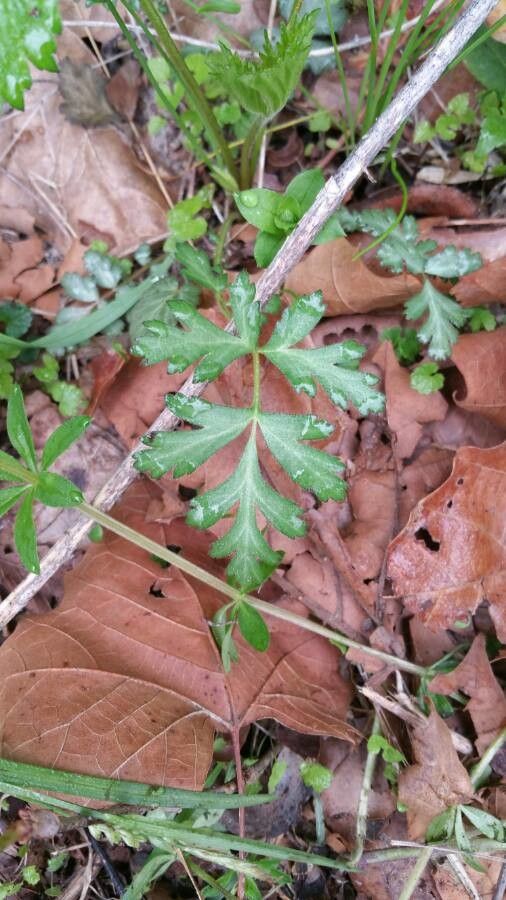
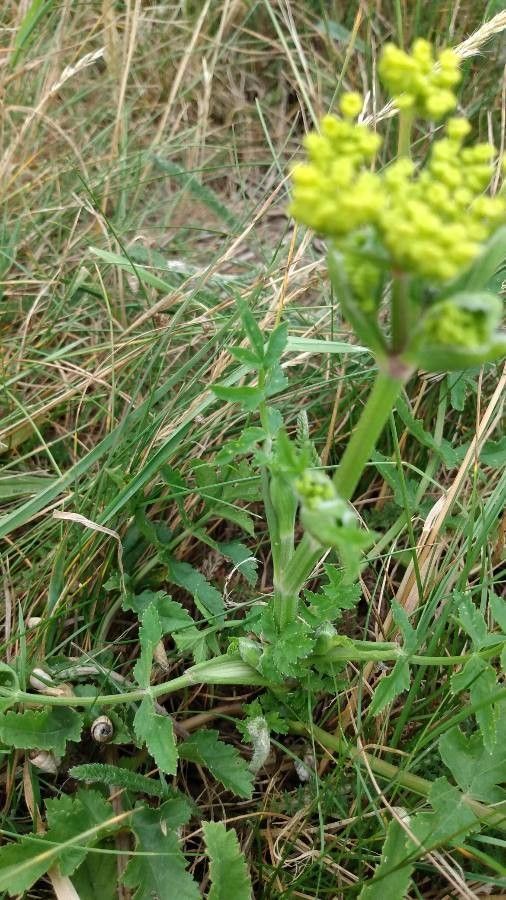
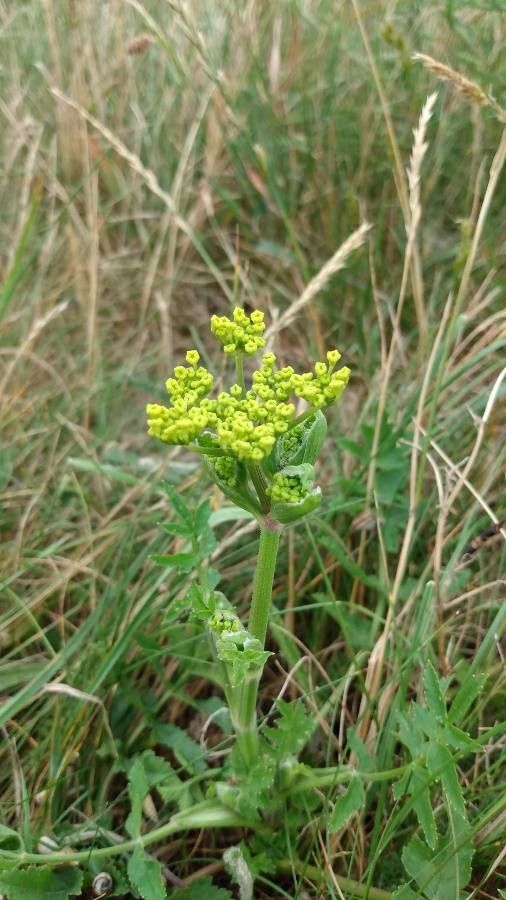
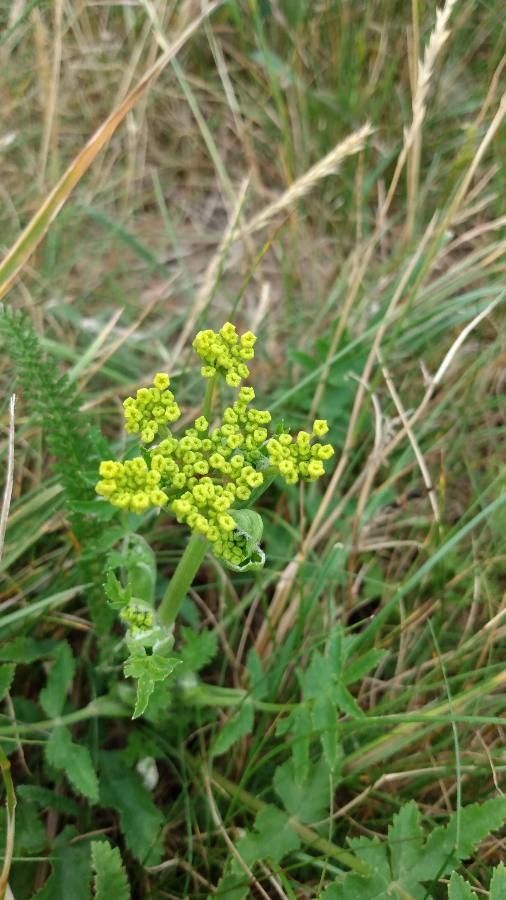
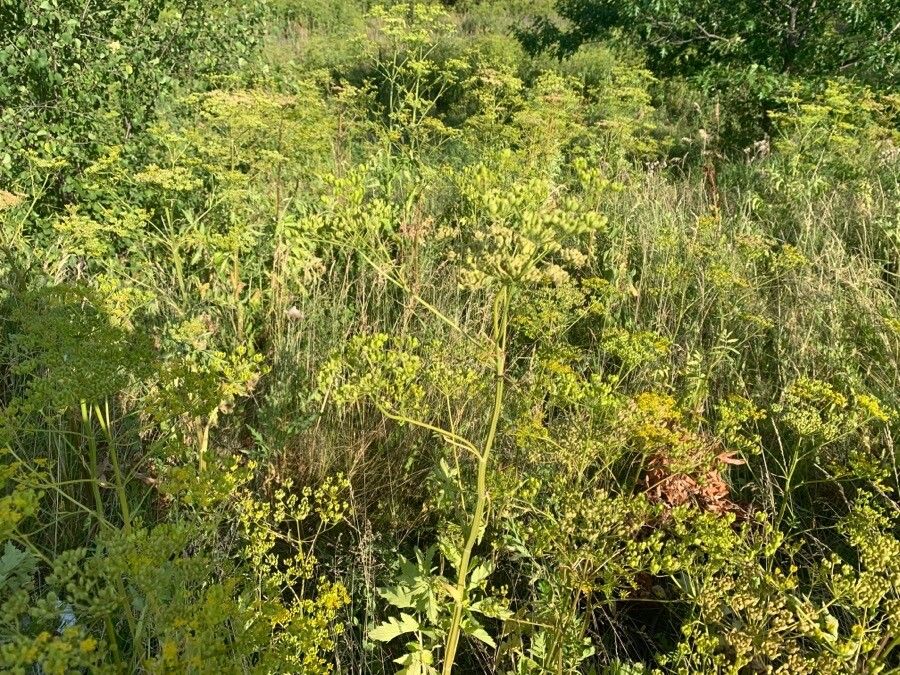
Polytaenia nuttallii is a species of flowering plant in the carrot family known by the common name Nuttall's prairie parsley, or simply prairie parsley. It is native to the central and midwestern United States.This plant is a biennial or perennial herb growing up to 1 meter tall. The inflorescence is made up of many small yellow flowers borne in umbels. The leaves are up to 18 centimeters long and are divided into toothed lobes. They clasp the stem at their bases. They are mostly alternately arranged, but the upper ones can be oppositely arranged. The plant is yellowish in color during spring and summer.This plant can be found in prairies, glades, and open woods. In some areas it is very common on roadsides.This species is used in habitat restoration projects in prairies and it may be planted as an ornamental.
Nuttall's Prairie Parsley is fairly disease-resistant and usually not prone to illnesses. However, it can be vulnerable to pests and diseases present in its environment, though such infections are typically not serious. In terms of care, the plant requires moderate maintenance. It should be pruned regularly to maintain a good appearance and healthy growth. Fertilizing can also help encourage flowering. Nuttall's Prairie Parsley is suitable for anyone with outdoor space, such as a garden or patio, and does not demand extensive care experience. It may need more attention when grown indoors.
How to keep Polytaenia Nuttallii.
Light
Nuttall's Prairie Parsley performs best with plenty of sunlight, which promotes its ideal growth. It can, however, endure spots with reduced sun intensity to a degree. Since it originates from very sunny habitats, too little light can impede its growth, while too much may cause harm.
Water
Nuttall's Prairie Parsley, a native prairie plant, thrives in environments that experience periodic moisture and demonstrates moderate drought tolerance. Consistent weekly watering can further support its growth. As an herbaceous plant, it benefits from being cultivated outdoors, taking advantage of natural rainfall during the active growing season for optimal hydration.
Temperature
Nuttall's Prairie Parsley originates from temperate regions and prefers temperatures between 68 to 95 °F (20 to 35 ℃). When the seasons change, make sure it is exposed to temperatures as close to that preferred range as possible.
Fertilizer
A single fertilizer application in spring is typically enough for Nuttall's Prairie Parsley, though several feedings can maximize growth. Feed approximately once every month to six weeks. Fertilization improves the leaves' appearance and function, maintaining consistent color and a healthy texture. It also promotes root development and nutrient uptake for the plant's long-term health.
Pruning
Nuttall's Prairie Parsley is a perennial herb known for its yellow flower umbels. To encourage bushy growth, it is best to prune the plant from early to late spring. During this time, remove any dead stems and cut back spent flowers to promote more blooming. Make clean, angled cuts to help the plant heal and grow robustly while minimizing the risk of disease.
Botanical profile.
- Plant Type
- Herb
- Life Cycle
- Perennial, Biennial
- Genus
- Polytaenia
- Family
- Apiaceae
- Hardiness Zone
- 4-6
- Mature Height
- 91 cm
- Mature Spread
- 30 cm to 91 cm
- Leaf Color
- Green
- Leaf Type
- Deciduous
- Flower Color
- Yellow, White
- Flower Size
- 0.25 cm
- Bloom Time
- Late spring, Early summer
- Planting Time
- Spring, Autumn
- Harvest Time
- Mid summer, Late summer
Other names.
Reader questions.
What are the sunlight requirements for Nuttall's Prairie Parsley?
Nuttall's Prairie Parsley requires full sun, meaning it should receive above 6 hours of sunlight daily for optimal growth, though it can tolerate partial sun, with about 3-6 hours of sunlight. Observing how sunlight moves through your garden can help determine the best spots providing a balance of light and shade, essential for the plant's happiness. Originating from sunny environments, Nuttall's Prairie Parsley may experience hindered growth if exposed to insufficient sunlight, while excessive exposure could potentially harm it.
What is the native climate for Nuttall's Prairie Parsley?
Nuttall's Prairie Parsley, scientifically known as Polytaenia nuttallii, is native to temperate climate regions. It thrives in temperatures ranging between 68 to 95 °F (20 to 35 °C). To ensure its health throughout the changing seasons, it is important to maintain temperatures as close as possible to this preferred range.
How can artificial lighting be used for Nuttall's Prairie Parsley indoors?
When natural sunlight is insufficient for Nuttall's Prairie Parsley indoors, especially in winter or less sunny spaces, artificial lights can offer a vital solution. For optimal growth, indoor plants benefit from specific types of artificial light, such as LED lights, which can provide the required wavelengths of light. The necessary intensity varies; full-sun plants need 30-50W/sq ft, partial-sun plants 20-30W/sq ft, and full-shade plants 10-20W/sq ft of artificial light. The light source should be placed 12-36 inches above the plant, mimicking natural sunlight as closely as possible, with most plants requiring 8-12 hours of light per day.
How does Nuttall's Prairie Parsley fare in cold weather?
Nuttall's Prairie Parsley is exceptionally cold-tolerant and doesn't require special frost protection measures during the winter. However, to prepare it for the first freeze of autumn, it's advised to water the plant thoroughly. This helps keep the soil moist when it freezes, which is crucial for preventing drought and water scarcity for the plant during the winter and early spring.
What symptoms indicate that Nuttall's Prairie Parsley is not receiving enough light?
Symptoms of light deficiency in Nuttall's Prairie Parsley include smaller new leaves, leggy or sparse growth, accelerated leaf drop, slower or ceased new growth, lighter-colored or chlorotic new leaves, indicating a lack of chlorophyll and essential nutrients. Insufficient or excessive sunlight can lead to poor plant health, manifested through symptoms like chlorosis, sunscald, leaf curling, wilting, and leaf scorching.
What should I do if the temperature drops below -30°C?
Although Nuttall's Prairie Parsley is very cold-tolerant, temperatures dropping below -30°C can affect its ability to sprout in spring. While you may not notice immediate changes during the winter, there might be decreased sprouting or none at all when spring arrives. If this happens, it's recommended to remove any parts of the plant that have failed to sprout in spring.
What solutions can help improve light exposure for Nuttall's Prairie Parsley?
To ensure Nuttall's Prairie Parsley receives adequate light, gradually move it to a sunnier location to get at least 6 hours of direct sunlight daily. Utilize south-facing windows and keep curtains open for maximum exposure. If moving the plant is not feasible, consider supplementing with artificial light for at least 8 hours a day. Outdoors, gradually acclimate the plant to avoid sunburn. Minimize obstructions by pruning trees or relocating plants to sunnier spots. Remember, while parts of the plant damaged by low light may not recover, new growth should be healthy with improved light conditions.
How does Nuttall's Prairie Parsley react to high temperatures?
Nuttall's Prairie Parsley does not tolerate high temperatures well. When temperatures exceed 35°C, the plant's growth can halt, and it's at a higher risk of rotting. To protect the plant, trim away any parts that are sunburned or have dried up. It's also beneficial to move the plant to an area with more shade during the midday and afternoon sun or to provide shade using a cloth. Additionally, watering the plant in the morning and evening can help keep the soil moist and the plant healthy.