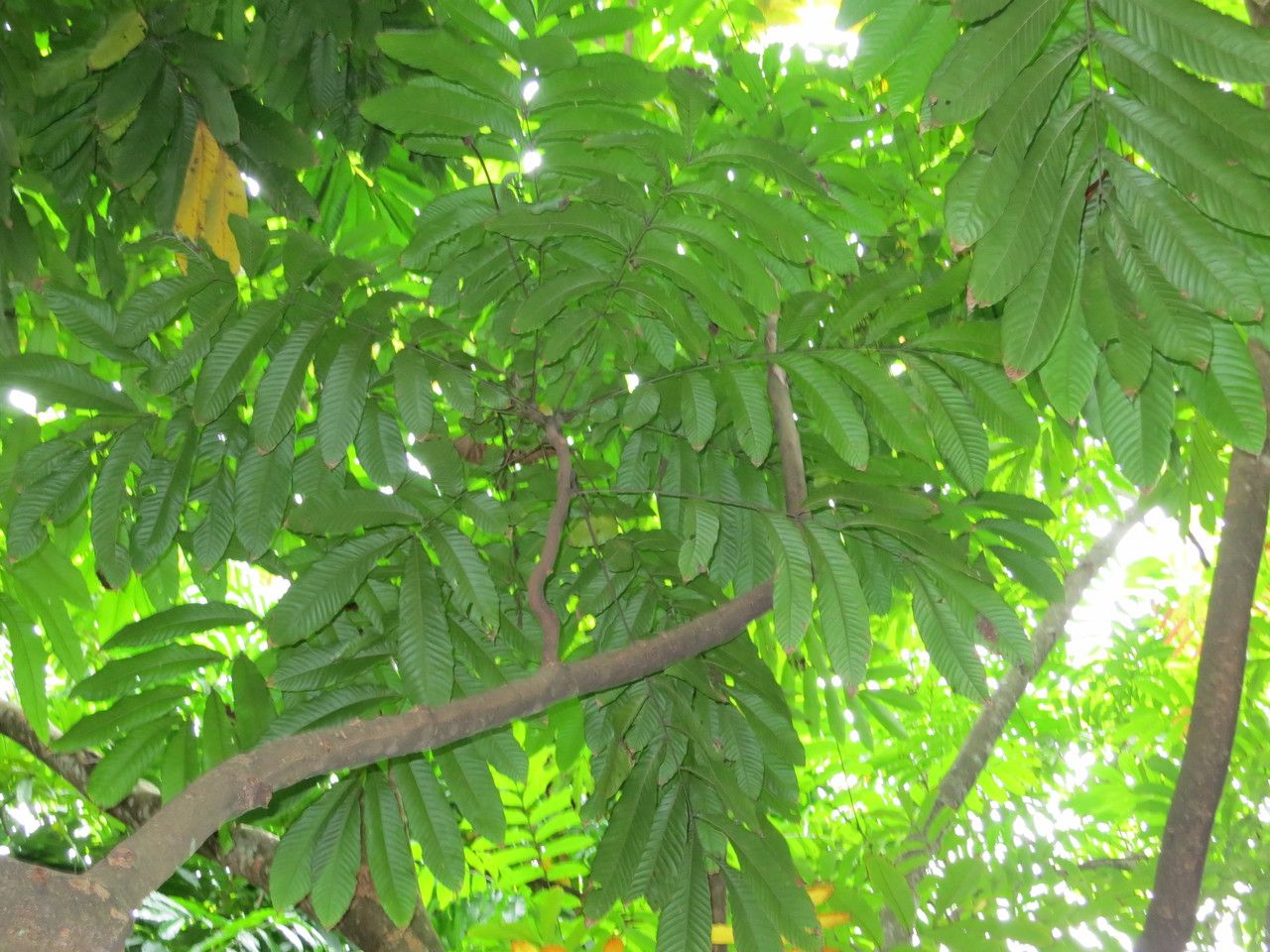
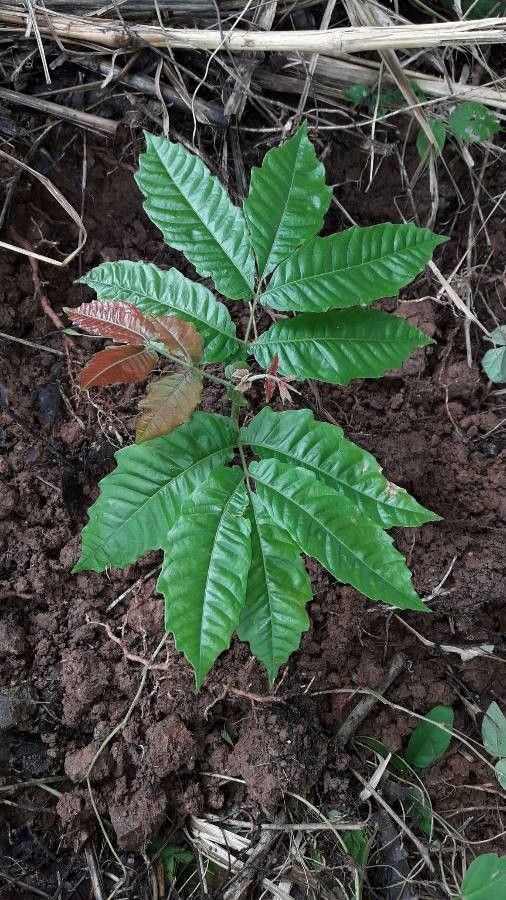
Pometia pinnata is a large tropical hardwood and fruit tree species, with common names including matoa, taun tree, island lychee, tava, Pacific lychee of the plant family Sapindaceae.Naturally widespread, the trees are native to tropical South Asia, Southeast Asia, and Melanesia. It was transported during the Austronesian expansion to Polynesia during prehistoric times.
Megan shows strong disease resistance and is generally not susceptible to illnesses. For care, this plant is fairly low-maintenance. Planted outdoors it needs little watering, and larger plants typically do not require pruning. However, smaller plants should be pruned after they have finished blooming. Megant is suitable for anyone with outdoor space, like a garden or deck, and does not demand extensive care experience.
How to keep Pometia Pinnata.
Light
Megan comes from exposed habitats, like sunlit meadows and the edges of forests, which provide plenty of light. It prefers Full Sun but can also tolerate Partial Sun, adjusting well to different light levels.
Water
Megan thrives in tropical climates that have high humidity and can tolerate moderate drought. Water it every 2-3 weeks, allowing the soil to dry out slightly between waterings. It is best grown outdoors, where mulching can help retain moisture during its active growing season.
Temperature
Megan is native to environments where temperatures range from 59 to 100.4 °F (15 to 38 °C). It flourishes in those conditions, but may need adjustments during cooler seasons to replicate its natural habitat. Regular monitoring is recommended.
Fertilizer
The Megan plant needs adequate nutrients for optimal fruit production. Apply fertilizer in early spring to encourage new growth and flower development. Regular feeding keeps the plant healthy, yields more delicious fruit, and prevents nutrient deficiency problems like yellowing leaves and poor fruit production.
Pruning
Prune megan during the early to late winter months to remove dead branches and improve airflow and sunlight exposure. This process enhances growth, shapes the plant, and helps control its size, which in turn prevents diseases. Be sure to use clean, sharp tools for effective pruning.
Botanical profile.
- Plant Type
- Tree
- Life Cycle
- Perennial
- Genus
- Pometia
- Family
- Sapindaceae
- Hardiness Zone
- 7-11
- Mature Height
- 20.12 m to 49.99 m
- Mature Spread
- 20.12 m to 29.87 m
- Leaf Color
- Dark Green, Forest Green
- Leaf Type
- Evergreen
- Flower Color
- Yellow, Green, Red, Brown
- Flower Size
- 0.20 cm to 0.25 cm
- Bloom Time
- Late spring, Early summer, Mid summer
- Planting Time
- Spring, Summer, Autumn
- Harvest Time
- Late summer, Early fall, Mid fall
- Native Area
- Sri Lanka, Malaysia, Indonesia, Cambodia, Vietnam, Myanmar, Philippines, Singapore, Laos, Fiji, Brunei, Thailand, China
Other names.
Reader questions.
What amount of sunlight is required for 'Full Sun' and 'Partial Sun' conditions?
For a plant to be considered in 'Full Sun,' it requires more than 6 hours of sunlight daily. In contrast, 'Partial Sun' conditions are characterized by about 3-6 hours of sunlight each day. It's important to watch how sunlight moves through your garden to ensure you're selecting spots that provide an ideal balance of light and shade for your plants, contributing to their overall happiness and growth.
What is the ideal temperature range for Megan?
The ideal temperature range for Megan, scientifically known as Pometia pinnata, spans from 59°F to 100.4°F (15°C to 38°C). Megan thrives in environments within this temperature spectrum and may require certain adjustments during cooler seasons to emulate its natural habitat. Regular temperature monitoring is recommended to ensure Megan remains in its ideal conditions.
What are the essentials for Megan's growth regarding sunlight conditions?
Megan, with its origin in sunny meadows and forest edges, thrives best in Full Sun environments but can also adapt well to Partial Sun conditions. This adaptability allows it to grow in various sunlight exposures, ensuring its health and development. When natural sunlight is insufficient, artificial lighting can be a crucial supplement, particularly for indoor plants. LED lights, providing the necessary wavelengths, and ensuring the correct amount of light based on the plant's requirement, can promote healthier and faster growth. The proper setup involves choosing the right type of artificial light, adjusting the light source's distance (12-36 inches above the plant), and setting the appropriate duration (8-12 hours daily).
How does Megan handle cold weather?
Megan has a strong resistance to cold and generally does not require special frost protection measures during the winter. However, if temperatures are expected to fall below -15°C, cold protection is necessary to keep the plant healthy. This can be achieved by wrapping the trunk and branches with insulating materials such as non-woven fabric or cloth. Additionally, watering Megan abundantly before the first freeze of autumn ensures that the soil remains moist and enters a frozen state, which aids in preventing drought and water scarcity during the winter and early spring.
What are the symptoms of insufficient sunlight for Megan?
Megan showcases several signs when exposed to suboptimal lighting conditions. These include smaller new leaves, leggy or sparse growth, faster leaf drop, slower or no new growth, lighter-colored new leaves, chlorosis (yellowing leaves due to chlorophyll breakdown), sunscald (leaf and stem damage from intense exposure), leaf curling, wilting, and leaf scorching. These symptoms indicate the plant's struggle with inadequate sunlight and its attempts to adapt to the limited light conditions. Sunlight is vital for Megan's health, and recognizing these signs early can help rectify the situation before the plant sustains more severe damage.
What are the symptoms of Megan being exposed to low temperatures?
Megan can tolerate cold conditions and thrives best when temperatures are above 15°C. During winter, keeping Megan above -10°C is advisable. Exposure to temperatures below -15°C may not show immediate changes during the winter; however, come spring, the branches may become brittle and dry, and no new shoots will emerge. To manage this, it's recommended to prune away any dead branches that failed to produce new leaves in the spring.
What solutions can be employed to remedy sunlight deficiency for Megan, both indoors and outdoors?
To address sunlight deficiency for Megan, there are several strategies you can use, depending on whether the plant is kept indoors or outdoors. Indoors, gradually moving Megan to a sunnier location each week until it receives at least 6 hours of direct sunlight daily is beneficial. Using artificial light, such as desk or ceiling lamps, for at least 8 hours daily can also provide the necessary light exposure. Outdoors, similarly, gradually transitioning Megan to sunnier spots helps avoid shock and sunburn. Reducing obstructions, such as pruning tree branches, or transplanting to a sunnier location with good drainage, can significantly improve sunlight access. It's important to note that while parts of the plant that suffered from insufficient light may not recover, new growth will be healthy with improved light conditions.
How does high temperature affect Megan?
During the summer, Megan should be kept below 38°C to avoid stress from high temperatures. When exposed to temperatures above 43°C, Megan's leaves may lighten in color, tips may become dry and withered, and the plant becomes more susceptible to sunburn. To remedy this, trim away the sunburned and dried-up parts, move Megan to a shadier location or use a shade cloth to protect it from the midday and afternoon sun. It's also important to water Megan in the morning and evening to maintain moisture in the soil.