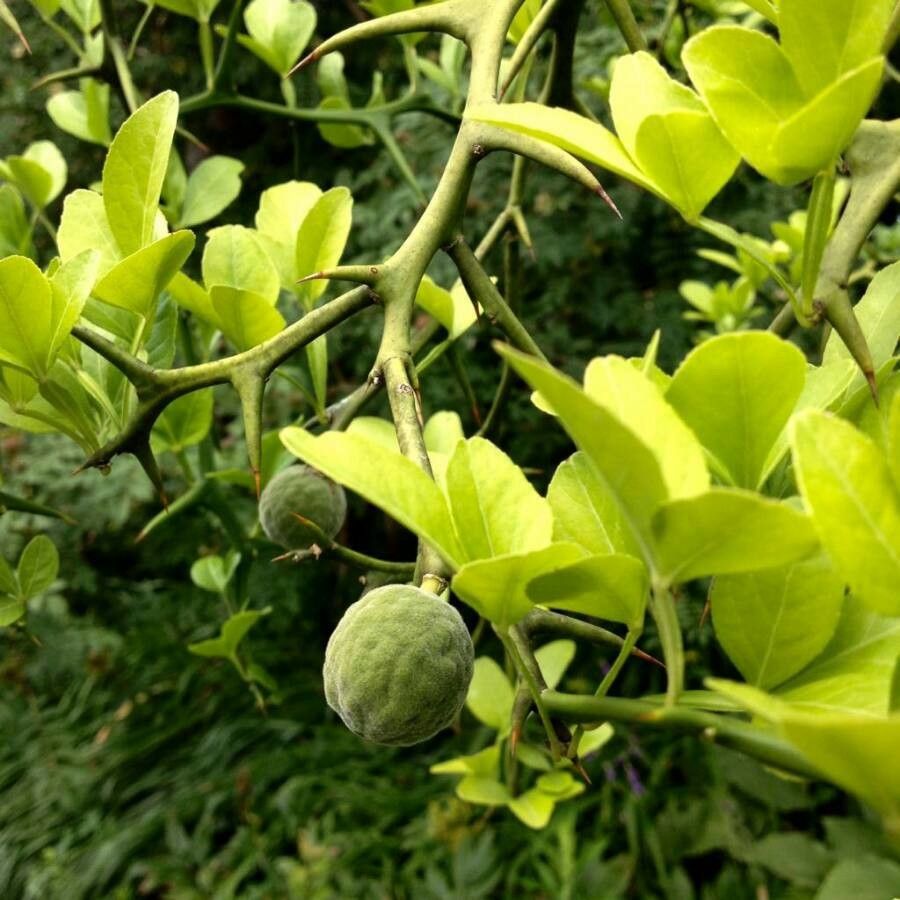
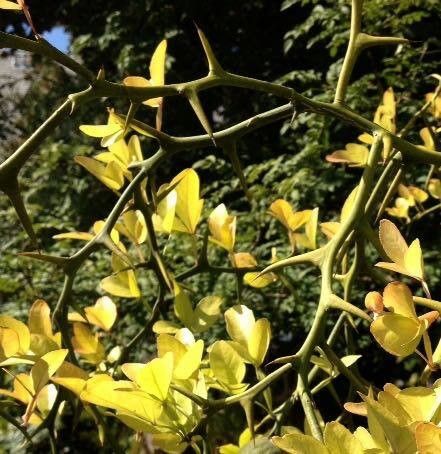
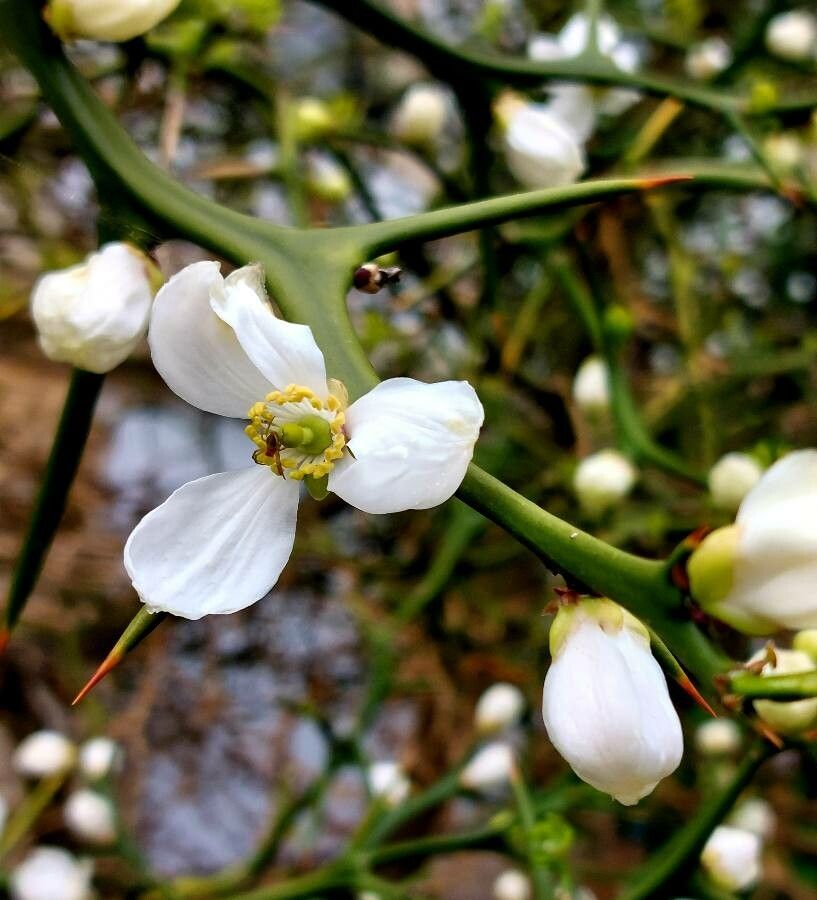
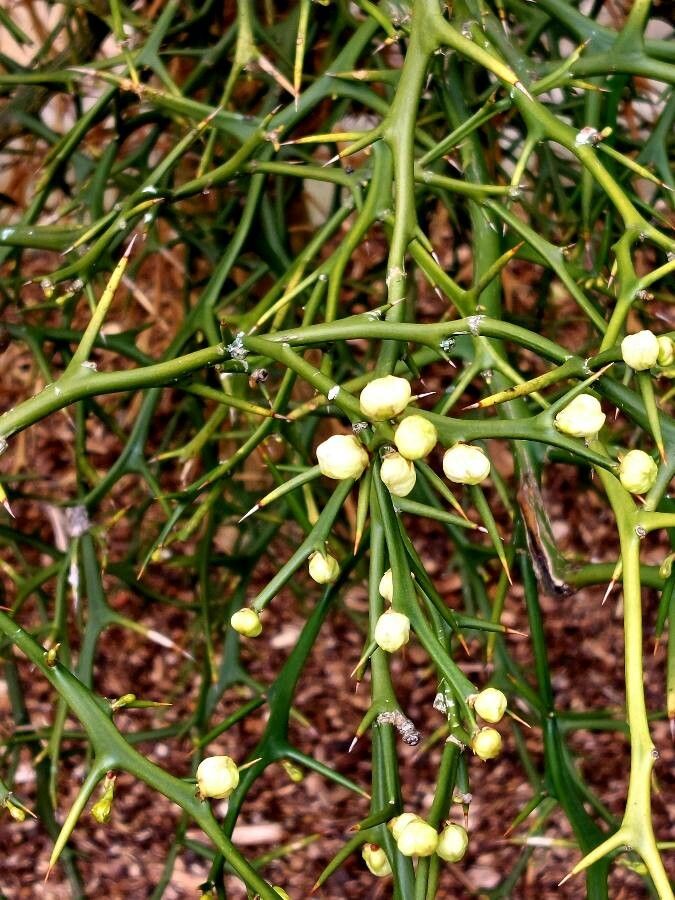
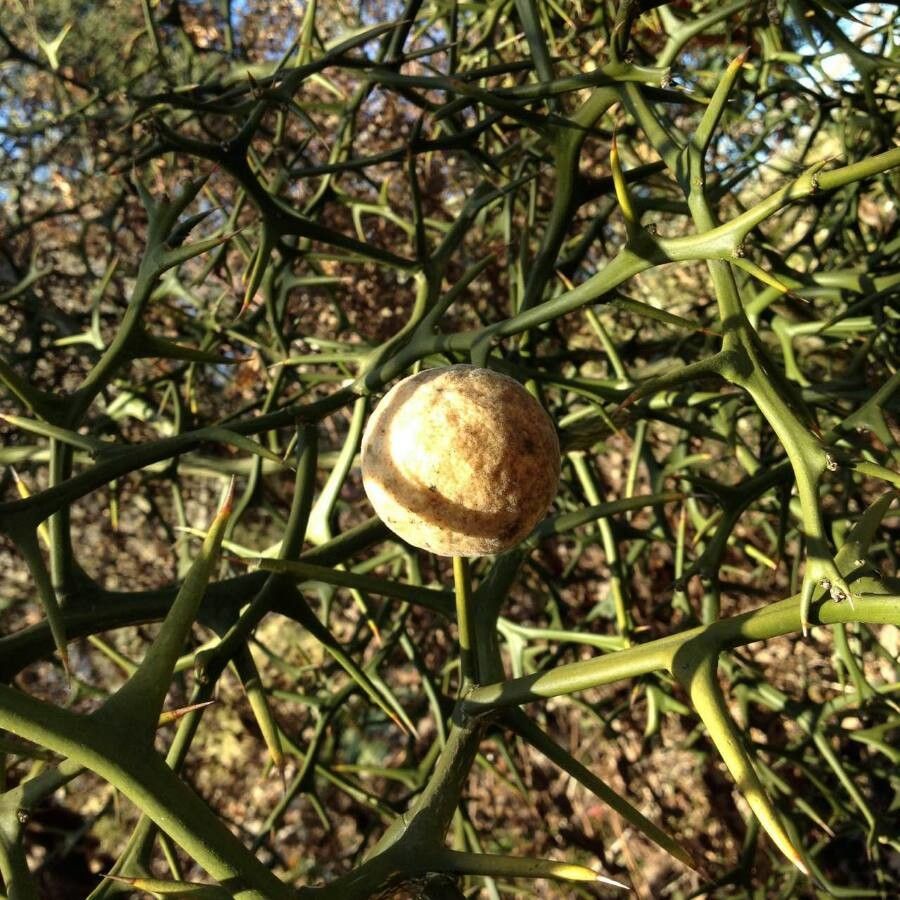
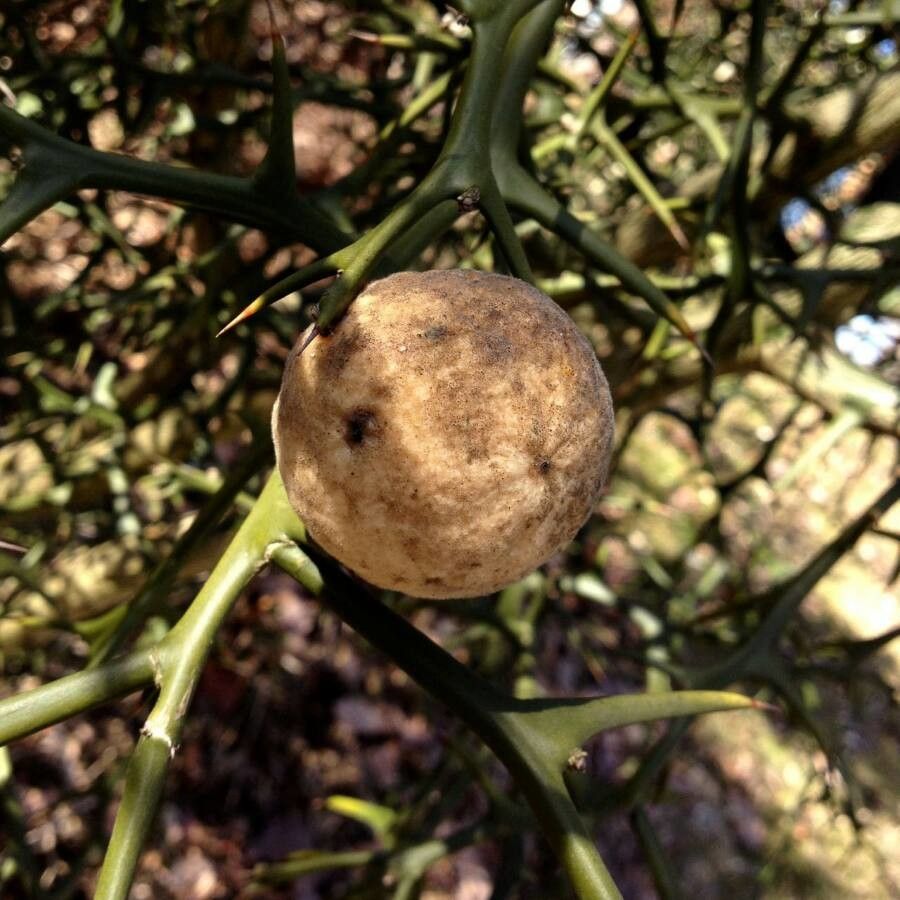
Poncirus trifoliata, commonly known as the trifoliate orange or Japanese bitter orange, is a deciduous shrub or small tree belonging to the Rutaceae family. Native to China and Korea, it is widely cultivated for its ornamental appeal and medicinal properties. The plant features thorny stems and glossy green foliage divided into three leaflets. In the spring, it produces fragrant white flowers that give way to small green fruits, which turn yellow upon ripening. While the fruit is edible, its taste is extremely sour and bitter. Renowned for its hardiness, Poncirus trifoliata can withstand extreme temperatures, making it suitable for a variety of climates. It thrives in well-drained soil with full sun exposure but can also tolerate partial shade. In traditional Chinese medicine, different parts of the plant are used to treat digestive disorders, respiratory issues, and skin conditions. Additionally, the fruit extract has been studied for its potential anti-inflammatory properties. Overall, Poncirus trifoliata is a fascinating plant with unique characteristics. It not only enhances gardens and landscapes but also offers potential medicinal benefits.
Hardy orange is resistant to many diseases and typically does not suffer from them. In terms of care, this plant is fairly low-maintenance. When grown outdoors it needs minimal watering, and larger specimens generally do not require pruning. Smaller plants, however, should be trimmed after they finish blooming. Hardy orange is suitable for anyone with an outdoor area, such as a garden or deck, and does not demand much gardening experience.
How to keep Poncirus Trifoliata.
Light
Hardy orange does best in strong sunlight, but it is sturdy enough to grow in places with moderate sun. At first it has strict requirements, which support vigorous growth. Too little light can stunt the plant, while too much sun generally causes no harm. Its origins are traced to areas that receive abundant sunlight.
Temperature
Hardy orange is a temperate woody plant whose native growing environment is tied to its temperature needs, favoring a range of 50 to 95 ℉ (10 to 35 ℃). To ensure proper growth in different seasons, conditions should be adjusted accordingly.
Fertilizer
Fertilize your Hardy orange in early spring to encourage healthy growth. Regular feeding improves overall vigor, producing robust growth, better tolerance of challenging conditions, and increased resistance to diseases and pests. Keep a consistent fertilization schedule for your Hardy orange to maintain foliage that is vibrant, richly colored, and lush.
Pot & Repot
When repotting Hardy orange, select a pot 1-2 inches (2.5-5.1 cm) larger that provides ample drainage. Use a well-draining potting mix. Repot in spring or fall, making sure the root ball sits slightly lower than the rim of the flower pot. Water thoroughly after repotting and place the pot in a warm spot with indirect sunlight.
Botanical profile.
- Plant Type
- Shrub, Tree
- Life Cycle
- Perennial
- Genus
- Poncirus
- Family
- Rutaceae
- Hardiness Zone
- 6-9
- Mature Height
- 2.44 m to 6.1 m
- Mature Spread
- 1.83 m to 4.57 m
- Leaf Color
- Green, Yellow
- Leaf Type
- Deciduous
- Flower Color
- White
- Flower Size
- 2.54 cm to 7.62 cm
- Bloom Time
- Mid spring, Late spring
- Planting Time
- Spring, Autumn
- Harvest Time
- Mid summer, Late summer
- Native Area
- Tajikistan, China
Other names.