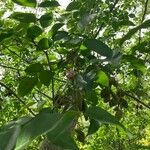
Pongamia pinnata
Karanj · Indian Beech · Pongam oiltree · Poonga oil plant · Karum
Description
Source: leafsnapPongamia pinnata, also known as the Indian beech or Karanja, is a fast-growing tree belonging to the Fabaceae family. Native to India and parts of Southeast Asia, it has been introduced to other tropical and subtropical regions worldwide. The tree can reach a height of 15-25 meters and has a trunk diameter of up to 1 meter. It features a broad crown with dark green, pinnate leaves, which means the leaves consist of multiple leaflets arranged on either side of a central stem. Pongamia pinnata produces clusters of fragrant white or pinkish flowers that bloom from February to May in India and from June to September in other regions. These flowers are followed by large pods containing seeds used for various purposes, such as oil extraction for biodiesel production, traditional medicine, and animal feed. The oil extracted from Pongamia pinnata seeds is known for its high energy content and low sulfur content, making it an ideal alternative fuel source compared to fossil fuels. Additionally, the plant has medicinal properties, including anti-inflammatory effects on skin diseases like eczema and psoriasis. Overall, Pongamia pinnata is an important plant species due to its diverse uses. It serves in fuel production, traditional medicine, and reforestation programs. Its fast-growing nature makes it an ideal candidate for afforestation projects aimed at mitigating climate change by sequestering carbon dioxide emissions. Moreover, it provides economic benefits through sustainable livelihood opportunities, especially for rural communities in degraded landscapes where this species thrives under agroforestry systems.
🌳 Pongame Oiltree has drawn interest as a potential biofuel source because its seeds are rich in oil. It is also valued for its ability to grow on marginal soils and help reclaim land by enhancing soil fertility. In addition, its nitrogen-fixing ability makes Pongame Oiltree an often-overlooked yet important contributor to improving soil nutrient content.
Care Guide
💧 Water Every 7 days
The Pongame Oiltree thrives in tropical and subtropical regions, where it requires balanced sunlight and regular rainfall. While it is drought-tolerant once established, it needs consistent moisture during its growth phase. Water the tree every two weeks. Commonly found near riverbanks, the Pongame Oiltree has a robust root system that can withstand fluctuating water levels.
☀️ Light Full sun
The Pongame Oiltree prospers when it receives plenty of sunlight for most of the day. Nonetheless, it can also tolerate and thrive in moderate sunlight. Its growth is, however, inhibited by excessive shade, and overly intense sunlight may induce leaf scorch. The tree's natural environment is conducive to this affinity for sunlight.
What are the sunlight requirements for a Pongame Oiltree?
The Pongame Oiltree requires full sun, defined as more than 6 hours of sunlight daily, to thrive optimally. It can also grow under partial sun, which means about 3-6 hours of sunlight. However, the tree is adaptable and can still flourish with less sun, though too much shade will inhibit its growth, and excessive sun exposure may lead to leaf scorch. Its natural habitat supports this preference for sunny conditions. It's essential to observe how sunlight moves through your garden, ensuring you pick spots that offer an ideal balance of light and shade for your plants.
How can artificial lighting supplement sunlight for Pongame Oiltree indoors?
Indoor Pongame Oiltrees require adequate lighting for optimal growth, especially when natural sunlight is insufficient, like during winter or in less sunny spaces. Artificial lights can be an effective solution, promoting faster, healthier growth. LED lights are popular for indoor plant lighting due to their customizability to provide specific wavelengths needed by plants. For full sun plants, 30-50W per square foot of artificial light is recommended; partial sun plants need 20-30W per square foot, and full shade plants require 10-20W per square foot. The light source should be placed 12-36 inches above the plant to mimic the sun, and most plants will thrive with 8-12 hours of artificial light per day.
What are the symptoms of inadequate lighting for a Pongame Oiltree?
When a Pongame Oiltree is grown indoors with insufficient light, it may exhibit several subtle symptoms, often unnoticed. These include smaller new leaves, leggy or sparse growth, faster leaf drop, slowed or ceased new growth, and lighter-colored or irregularly patterned new leaves indicating a lack of chlorophyll and essential nutrients. Additionally, excessive sunlight can cause chlorosis, where leaves lose their green color, sunscald with damaged leaves or stems, leaf curling as a defense against too much sun, wilting from water loss, and leaf scorching from overexposure.
What solutions are available for Pongame Oiltrees facing light-related issues?
For indoor Pongame Oiltrees, gradually adjusting them to receive at least 6 hours of direct sunlight daily through south-facing windows or by using artificial lights for 8 hours a day can enhance growth. When situated outdoors, it's vital to adjust the plants gradually to sunnier spots to avoid sunburn. This involves moving them each week until they're in the optimal sunlight location. Reducing obstructions like trimming tree branches allows more sunlight to reach the plants. For plants with insufficient sunlight, consider transplanting during their dormant period to a brighter location with good drainage. Note that parts of the plant already affected by light issues may not recover, but new growth should be healthy with improved light exposure.
🌡️ Temperature 20–37.8°C
The Pongame Oiltree is native to regions with temperatures ranging from 68 to 100.4 °F (20 to 38 ℃). It flourishes in hot environments and requires exposure to sunlight for ideal growth. In colder times, make sure the ambient temperature does not dip below 68 °F (20 ℃).
What is the ideal temperature range for Pongame Oiltree?
Pongame Oiltree is indigenous to areas characterized by warm temperatures, specifically between 68 to 100.4 °F (20 to 38 °C). To thrive, this plant requires warmer climates and sufficient daylight. During the cooler months, it's important to maintain an ambient temperature not falling below 68 °F (20 °C) to ensure the plant's health. The Pongame Oiltree loves heat, and exposure to cold can be detrimental. If the tree is grown outdoors, it should be brought inside near a bright window during autumn, but kept away from direct heat sources to avoid damage.
How does low temperature affect Pongame Oiltree and what should I do?
Pongame Oiltree prefers warmer climates and does not tolerate low temperatures well. It's vital to keep it above certain temperature thresholds, as leaves may start showing discoloration when temperatures drop too much. Frost damage typically results in browning or blackening of leaves, along with wilting and drooping. If your Pongame Oiltree suffers from low temperature exposure, you should trim off the frost-damaged parts and move the plant indoors to a warmer spot, preferably near a south-facing window for adequate sunlight. Avoid placing the tree too close to heaters or air vents to prevent air dryness.
How should I care for Pongame Oiltree in high temperatures?
During the summer months, it's crucial to monitor the temperature around your Pongame Oiltree, ensuring it stays below the upper limit of its tolerance. Exposure to temperatures above its tolerance can lead to leaf discoloration and increased susceptibility to sunburn. To mitigate damage from high temperatures, trim away any sunburned or dried parts of the plant. Relocate the tree to a spot with shade during the peak sun hours of midday and afternoon. Additionally, consistent watering in the morning and evening will help in maintaining soil moisture, vital for the plant's health in high temperatures.
💨 Humidity dry (<40%)
This plant prefers dry conditions, so don't mist it. However, watering it less often can also thrive in higher humidity.
🪴 Soil
🌱 Fertilizer
🪴 Pot & Repot
✂️ Pruning
The Pongame Oiltree is a robust and fast-growing plant with a dense canopy. To maintain its health and appearance, prune the tree between early and late winter. Focus on removing dead or crossing branches to improve its shape and air circulation. Regular light pruning will encourage flowering and promote healthy growth. Always use clean tools to prevent the spread of disease.
🌿 Propagating
🐛 Diseases & pets
☠️ Toxicity
Characteristics
- Plant Type
- Tree
- Life Cycle
- Perennial
- Genus
- Pongamia
- Family
- Fabaceae
- Hardiness Zone
- 10-12
- Mature Height
- 14.94 m to 24.99 m
- Mature Spread
- 9.14 m to 11.89 m
- Leaf Color
- Green
- Leaf Type
- Evergreen
- Flower Color
- White, Purple, Pink
- Flower Size
- 2.54 cm
- Bloom Time
- Late spring, Early summer, Mid summer
- Planting Time
- Spring, Summer, Autumn
- Harvest Time
- Mid summer
- Native Area
- Nepal, Sri Lanka, India, Malaysia, Vanuatu, Philippines, Bangladesh, Pakistan, Fiji, Brunei, China, Indonesia, Vietnam, Myanmar, Japan, Papua New Guinea, Singapore, Thailand