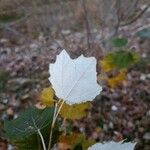
Populus alba
صنوبر · صنوبر نقره ایی · سپیدار، · سفید پلت · Λεύκα
Description
Source: leafsnapPopulus alba, commonly known as the White Poplar, is a deciduous tree species belonging to the family Salicaceae. It is native to Europe and Western Asia but has been introduced and naturalized in many parts of the world. This tree can grow up to 30 meters tall, featuring a broad crown and a straight trunk that can reach up to 1 meter in diameter. The leaves of Populus alba are triangular or heart-shaped with serrated edges, ranging between 5-10 cm in length. They are green on the upper side and white or grayish underneath due to a covering of fine hairs. The bark of young trees is smooth but becomes rougher as they age. Populus alba produces separate male and female flowers on different trees during springtime, before the leaves emerge. The male flowers are long catkins, while the female flowers are shorter spikes located near the branch tips. The White Poplar prefers moist soils near rivers or wetlands but can also grow in drier soils if they are well-drained. It has been used for various purposes, including timber production, ornamental planting, windbreaks, and erosion control. In traditional medicine practices across Europe and Asia Minor, where it is native, different parts of this plant have been used for medicinal purposes. These include treating feverish conditions like malaria, respiratory problems like asthma, and skin conditions like eczema, primarily due to its anti-inflammatory properties. Its bark extract contains salicin, which acts similarly to aspirin when ingested by humans. Overall, this plant species has proven to be useful both ecologically by providing habitat for wildlife and economically through timber production. Its medicinal properties further underline its importance, making Populus alba a significant plant species globally.
💡 White poplar is a versatile tree that thrives in both salty and moist conditions. With its extensive root system, it is frequently used to stabilize sand dunes. Additionally, white poplar serves as an attractive ornamental tree. Its wood is occasionally used for carving sculptures.
🌳 The white poplar is more than a pleasant feature of the landscape; it yields manna, a sweet liquid that draws bees and delights the palate, evoking biblical accounts. Its timber is valued for being light yet durable, and is commonly used to make matchsticks and packing crates. Historically, its leaves were prized for producing green dye.
🎭 Cash, Flying
Care Guide
💧 Water Every 7 days
White poplar is well-suited for temperate climates. It thrives with moderate moisture and can tolerate short periods of drought. Typically grown outdoors, it requires watering every 1-2 weeks. As a deciduous species, it sheds its leaves in response to water availability and seasonal changes.
What's the best way to water my White poplar tree?
To ensure excellent root development, place a garden hose at the base of the plant. Avoid spraying the leaves directly, especially if they are outdoors and receiving direct sunlight, as they will need more water. You can also use bubblers to moisten the roots of each plant or soaker hoses to cover the entire garden or bed. When adding or removing plants, use soaker hoses to encourage deep root growth. After watering, drain any excess water and wait for the soil to dry before watering again. Watering at ground level will help prevent diseases. On sunny days, consider spraying the entire bush with water. Whether the plant is in a pot or in the ground, remember that White poplar prefers deep watering rather than light sprinkling.
What should I do if I give White poplar tree too much or too little water?
White poplars that are overwatered may exhibit symptoms such as yellowing, dropping, and wilting leaves. The plant may also appear unhealthy with mushy stems. When these signs start to show, it's best to adjust your watering schedule. Wilting can also indicate under watering, where leaves become crispy and dry. In such cases, check the soil moisture level and provide thorough watering if needed. However, even with enough water, the damaged root system may cause the plant to continue looking dry with yellow leaves for a few days. Once it returns to normal, the yellowing will stop. When growing White poplars indoors, always monitor moisture levels and avoid overwatering. Look out for black spots, and if present, allow the soil to dry by withholding water for a few days. Overwatering can lead to root rot, so if you observe discolored and slimy roots, consider transferring the plant to a different pot. Preventing root rot is crucial, so avoid excessively soggy soil. When planting White poplars outdoors, ensure the soil is adequately moist. If it feels too dry, it may indicate underwatering, in which case provide appropriate watering to assist with recovery.
How often should I give water to my White poplar tree?
The White poplar prefers deep and infrequent watering. If planted in pots, it is important to soak them with a gallon of water each time, as the water storage in pots is limited and the soil dries out quickly. In cold regions, watering should be done every 3 to 5 days. Watering is best done early in the morning when the soil is dry, both indoors and outdoors. You can check if watering is needed by examining the soil inside the pot. If the top 2-3 inches of soil is dry, it's time to fully water the plant. On hot days, you may need to check the moisture daily, as the heat can dry out the soil fast. If you have a garden, you'll need to irrigate the soil as well. In hot climates, watering once a week is recommended. Pay attention to the dryness of the top 2-3 inches of soil, and be mindful of rainfall to avoid overwatering and root rot. White poplar mainly grows in spring and fall, so adding mulch about 3 to 4 inches deep outdoors can help conserve water. Sandy soil requires more frequent watering, while clay soil needs less frequent watering to prevent root rot. To keep track of watering, mark the date on a calendar and pay attention if the leaves start to droop, as this may indicate a need for water.
How much water does my White poplar tree need?
The White poplar generally needs a gallon of water on a regular schedule. For potted plants, water them deeply until water drips out of the bottom of the pot. Wait for the soil to dry before watering again. Use a water calculator or moisture meter to track how much water your plant receives in a week. During the flowering period, give plenty of water but allow the moisture to evaporate to prevent root rot. If the White poplar is planted outdoors and gets enough rainfall, additional watering may not be necessary. When the White poplar is young or newly planted, it needs 1-2 inches of rain per week. As it grows, it can rely on rainfall for survival. Only water it if the weather is very hot or if there is no rainfall for 2-3 weeks. Water during cooler parts of the day to avoid heat damage. Extra watering may be needed during prolonged dry spells.
Do I need to change how often I water my White poplar tree depending on the time of year or the weather?
To ensure the healthy growth of the White poplar, it is important to provide it with appropriate watering depending on the weather conditions. During the spring and fall seasons, it is best to keep the soil moist but not overly saturated. It is beneficial to alternate between dry and moist soil conditions for optimal growth. In the summer, when the weather is hot and there is less rainfall, more frequent watering is necessary to prevent the soil from drying out too quickly. On the other hand, during winter when the White poplar goes dormant and loses its leaves, it requires less water. Using a well-draining soil mixture like terracotta can help the water evaporate efficiently. Once the White poplar begins to leaf out and go dormant, watering can be skipped as it can rely on fall and winter rains for survival. When cultivating the plant in a pot, good drainage is essential, especially during winter. Limited root growth in pots means they need to be well-watered, particularly in the summer. Surface-level sprinkling should be avoided as it can encourage fungal growth and doesn't reach the roots effectively. In the fall and winter, it is important to avoid complete drying out of the White poplar, even during dormancy. Overwatering should also be avoided, as the plant does not tolerate sitting in water for extended periods, especially during winter when poor drainage can lead to its death. Applying mulch can help reduce stress, conserve water, and promote healthy blooms. Overall, it is important to pay attention to watering needs and provide proper care for the White poplar.
☀️ Light Full sun
White poplar grows best with a large amount of sunlight but can also tolerate moderate shade fairly well. Coming from habitats with abundant sun, its health and growth benefit from ample light. However, too little or too much light could negatively affect its well-being and lead to developmental problems.
What are the sunlight requirements for white poplar?
White poplar requires a substantial amount of sunlight to thrive, performing best in full sun conditions, which means it needs above 6 hours of sunlight daily. It can also tolerate partial sun, receiving about 3-6 hours of sunlight. Originating from environments abundant in sunlight, its growth and health are significantly enhanced when exposed to ample light. However, it's essential to watch how sunlight moves throughout your garden to ensure your white poplar gets the perfect balance of light and shade, as both insufficient and excessive light can negatively affect its development.
Can white poplar be grown with artificial lighting?
Yes, white poplar can be grown with artificial lighting, especially when natural sunlight is insufficient, such as during winter or in less sunny spaces indoors. Artificial lights provide a vital solution for promoting healthier and faster growth. LED lights are recommended due to their customizable wavelengths. Full sun plants like the white poplar need 30-50W/sq ft of artificial light. It's important to mimic natural sunlight conditions by placing the light source 12-36 inches above the plant and ensuring it receives 8-12 hours of light per day.
What are the symptoms of light deficiency in white poplar?
White poplar may show symptoms of light deficiency when placed in suboptimal lighting conditions, indicating its need for fuller sunlight exposure. Symptoms include smaller new leaves, leggy or sparse growth, faster leaf drop, slower or no new growth, and lighter-colored new leaves. In contrast, symptoms of excessive light exposure include chlorosis or yellowing of leaves, sunscald, leaf curling, wilting, and leaf scorching. These symptoms reflect the plant's struggle with inappropriate light conditions and may require adjustments to its environment.
How can I address light-related issues for an indoor white poplar?
To address light-related issues for an indoor white poplar, gradually move the plant to a location where it receives at least 6 hours of direct sunlight per day, such as near a south-facing window. If the plant is large or not easily movable, consider supplementing with artificial lighting, keeping a desk or ceiling lamp on for at least 8 hours daily, or investing in professional plant grow lights. For plants affected by insufficient sunlight, parts that are damaged may not recover, but new growth will be healthy once correct light exposure is established.
What should I do if my outdoor white poplar is not getting enough light?
For outdoor white poplars not receiving enough sunlight, gradually move your plants to a sunnier location, avoiding sudden and drastic changes to prevent sunburn. It's vital to identify and reduce obstructions, such as pruning trees that block sunlight. If dealing with smaller plants or practicable, consider transplanting during the plant's dormant period, usually late winter or early spring, to a location with ample sunlight and good drainage. This will ensure new growth is healthy and the plant can thrive.
🌡️ Temperature 5–32.2°C
White poplar prefers temperatures between 41 and 90 ℉ (5 to 32 ℃), matching the conditions of its native growth environment. To cope with seasonal changes, it becomes dormant in winter and needs less water during the hot summer months.
What are the ideal temperature conditions for White poplar?
White poplar thrives in temperatures ranging from 41°F to 90°F (5°C to 32°C), which reflects its native climate preferences. It has a notable capacity for cold resistance, allowing it to endure without special frost protection measures in most winter conditions. However, in situations where winter temperatures might fall below -30°C, additional precautions like wrapping the trunk and branches with protective materials are recommended. The tree enters a dormant state in winter, requiring less water, which is a natural adjustment to the seasonal variations. Prior to the onset of the first freeze in autumn, it is beneficial to water the plant abundantly, ensuring the soil is moist as it freezes. This practice helps in preventing drought stress during the colder months and into early spring.
How should White poplar be cared for in low temperatures?
White poplar is a cold-tolerant species that performs best when temperatures remain above 5°C and should ideally not fall below -25°C during winter. Although it can generally withstand conditions down to -30°C without visible damage during the winter season, exposure to temperatures below this threshold can result in branches becoming brittle and dry by spring, with no new growth. To manage this, dead branches that failed to produce new leaves should be pruned away in spring as part of the tree's care regimen.
What steps should be taken if White poplar experiences high temperatures?
During the hot summer months, it is important to ensure that the temperature around White poplar does not exceed 32°C. Exposure to temperatures above 35°C can cause the leaves to lighten in color, the tips to become dry and withered, and increase the plant's susceptibility to sunburn. To mitigate these effects, sunburned and dried parts of the plant should be trimmed away. Additionally, the plant should be moved to a shaded location or covered with a shade cloth to protect it from the midday and afternoon sun. Maintaining soil moisture through morning and evening watering can also help alleviate the stress caused by high temperatures.
💨 Humidity
🪴 Soil 6-7
🌱 Fertilizer
Fertilize your White poplar in early spring to encourage healthy development. Regular feeding boosts overall health, producing vigorous growth, improved tolerance of harsh conditions, and stronger resistance to disease and pests. Keep a consistent fertilization schedule for your White poplar to preserve foliage that is vibrant, richly colored, and lush.
Why should I put fertilizer on my White poplar tree?
Regardless of the type of White poplar you own, regular fertilization is essential for overall plant health. Proper supply of nutrients promotes vigorous growth, increases resilience to tough conditions, and improves the plant's ability to fight off diseases and pests. To maintain the attractive foliage of your White poplar, it is crucial to establish and follow a specific fertilization schedule. This will encourage the development of deeply colored leaves and an overall lush appearance.
When should I fertilize my White poplar tree?
To properly fertilize your White poplar, start in late winter or early spring. This gives the tree the necessary nutrients for healthy growth when the weather warms up. If you live in a warm climate, it's recommended to fertilize again in early fall. This not only provides additional nutrients for the following growing season but also helps the tree withstand winter cold without damage. Fertilizing earlier will ensure the new branches have enough time to grow strong before winter arrives.
When is the best time to not give fertilizer to my White poplar?
There are a few specific times each year when you should avoid fertilizing your White poplar. The first one is during the early and mid-winter months, when the tree is dormant and does not require any nutrients. It is also not recommended to fertilize the plant in late spring and throughout the summer. During this time, the weather is typically hotter and drier, which can have a detrimental effect on the tree if it is fertilized. To prevent any problems, it is best to adhere to a fertilization schedule that involves feeding only in early spring and early fall.
What kind of fertilizer should I use for my White poplar tree?
White poplars primarily require nitrogen as their most important nutrient. However, this does not mean that phosphorus and potassium are not important. In fact, White poplars typically need a sufficient amount of all three nutrients. To address this, a balanced fertilizer such as a 10-10-10 can be effective. Nonetheless, achieving optimal growth for White poplars often requires a more nuanced nutrient ratio. Generally, fertilizers with slightly higher nitrogen content tend to produce better results, such as a ratio of 10-6-4. When fertilizing, both granular and liquid fertilizers can be utilized.
How can I make my White poplar plant grow better?
To fertilize your White poplar, you have two options: using granular fertilizer or liquid fertilizer. If you choose granular fertilizer, simply sprinkle it on the soil at the right time. The slow-release feature of granular fertilizer will gradually release nutrients into the soil. Before applying the fertilizer, it's generally recommended to lightly water your White poplar. As for liquid fertilizer, it is less commonly used. To use this method, mix the fertilizer with water and pour it around the base of your White poplar. In some cases, it might be helpful to perform a soil test before fertilizing to determine if any pH adjustments are necessary.
🪴 Pot & Repot Every 12 months
✂️ Pruning
White poplar trees are known for their silvery leaves and rapid growth. To keep them healthy and appealing, it’s important to prune them early in the spring. Pruning involves removing any dead or diseased branches, which helps enhance air circulation and prevent overcrowding. This practice not only supports healthy growth and improves the tree's appearance, but also reduces the risk of pest infestations. Regular pruning is essential for maintaining a vibrant and thriving white poplar.
🌿 Propagating
🐛 Diseases & pets
☠️ Toxicity
Populus alba has no toxic effects reported.
Characteristics
- Plant Type
- Tree
- Life Cycle
- Perennial
- Genus
- Populus
- Family
- Salicaceae
- Hardiness Zone
- 4-8
- Mature Height
- 14.94 m to 29.87 m
- Mature Spread
- 14.94 m to 24.08 m
- Leaf Color
- Green, White, Yellow
- Leaf Type
- Deciduous
- Flower Color
- Green, Red
- Flower Size
- 3.05 cm to 6.35 cm
- Bloom Time
- Spring
- Planting Time
- Spring, Autumn
- Harvest Time
- Early summer, Mid summer
- Native Area
- Libya, Turkey, Austria, Slovakia, Montenegro, Slovenia, Morocco, Croatia, Belarus, Uzbekistan, Russia, Germany, Romania, Portugal, France, Tunisia, Czech Republic, Bulgaria, Armenia, Poland, Greece, Ukraine, Serbia, China, Kyrgyzstan, Kazakhstan, Italy, Spain, Switzerland, Iran, Albania, Azerbaijan, Algeria, Hungary, Turkmenistan