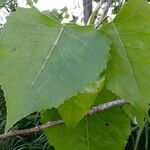
Populus deltoides
Cottonwood · Common Cottonwood · Eastern Cottonwood · Match Poplar · Necklace Poplar
Description
Source: leafsnapPopulus deltoides, the eastern cottonwood or necklace poplar, is a cottonwood poplar native to North America, growing throughout the eastern, central, and southwestern United States as well as the southern Canadian prairies, the southernmost part of eastern Canada, and northeastern Mexico.
💡 The Eastern cottonwood, scientifically known as Populus deltoides, is the state tree of both Kansas and Wyoming in the United States. These trees can live for 200 to 400 years under ideal conditions. As a softwood, Eastern cottonwood is frequently used to manufacture plywood and furniture components.
🌳 Eastern cottonwood does more than supply timber and fuel; its heart-shaped leaves are part of wildlife diets, supplying protein and carbohydrates essential for deer, beavers, and rabbits. Its seeds, likened to "summer snow," disperse widely and provide food for birds and waterfowl. For people, the tree's lightweight wood is well suited for making paper and crates. Notably, the tree also helps detect seismic activity because of its height and deep, sturdy roots.
🎭 The prairie trailblazer, the sun, holiness, the hereafter
Care Guide
💧 Water Every 1-2 weeks
Eastern cottonwood thrives in moist environments and can tolerate short periods of dryness. It prefers consistent moisture and requires watering every one to two weeks. As a deciduous tree commonly grown outdoors, the eastern cottonwood needs plenty of water during the growing season to maintain healthy foliage.
When Should I Water My Eastern Cottonwood?
Watering your Eastern Cottonwood correctly is crucial for its health. It's time to water when the soil feels dry up to an inch deep. Droopy leaves can also indicate it needs water, especially if the droopiness becomes pronounced. Changes to leaf color or texture, such as wilting or a dull green color, suggest the tree is thirsty. More water is required during the active growth phase from spring to summer. Be aware that overwatering can cause root rot and fungal infections, while underwatering can result in leaf burn or even plant death.
How Should I Water My Eastern Cottonwood?
Eastern Cottonwood requires consistent moisture but beware of overwatering to avoid root-rot. Using a soaker hose that runs slowly, ensuring water permeates deeply, can be effective. Drip irrigation is another controlled method that works well by gradually delivering water directly to the roots. It might be helpful to use a moisture meter to maintain optimal moisture levels without overwatering. Always water at the base to avoid wetting the foliage, which can lead to fungal diseases.
How Much Water Does Eastern Cottonwood Really Need?
Being a riparian plant, Eastern Cottonwood requires a generous amount of water to thrive. It needs a substantial volume of water, especially given its deep roots and large size - a minimum of 3-5 gallons per watering instance, depending on pot size. An optimal hydration level is indicated by vibrant green leaves. Droopy, yellow leaves suggest overwatering, while dry, brittle, or brown-edged leaves signal a need for more water. Ensure the pot is deep enough to accommodate its roots and maintain proper moisture levels to prevent root rot or dehydration.
What Kind of Water is Best for Eastern Cottonwood?
Rainwater is the best option for Eastern Cottonwood due to its natural composition. If unavailable, distilled water or tap water left out to evaporate chlorine can be used. Eastern Cottonwood has moderate tolerance to chlorine but is sensitive to fluoride and high mineral content, which can lead to leaf burn and hinder growth. Using a water filter or letting tap water sit for 24 hours can reduce harmful elements. Avoid using very cold or hot water to prevent thermal shock.
How Do Eastern Cottonwood's Watering Needs Change with the Seasons?
In spring, water your Eastern Cottonwood well as it enters a growth phase. Summer demands more frequent watering due to higher evaporation rates. Reduce watering frequency in autumn but continue deep watering as the tree prepares for dormancy. During winter, the tree's watering needs significantly reduce, and little watering should be conducted, depending on environmental conditions. Always avoid overwatering to prevent root rot or other moisture-related issues.
☀️ Light Full sun
Eastern cottonwood does best in locations that receive abundant sunlight throughout the day. It can, however, tolerate places where sunlight is available only for part of the day. During its various growth stages, consistent ample light is essential. Its native habitat reflects this requirement for sunlight. Both insufficient and excessive sunlight can negatively impact its growth.
What are the sunlight requirements for Eastern Cottonwood?
Eastern Cottonwood requires full sun, meaning it thrives best with more than 6 hours of sunlight a day, but it can also endure partial sun conditions, with about 3-6 hours of sunlight daily. It's essential to ensure that during its different growth stages, the plant receives consistent, ample sunlight, reflecting its natural habitat requirements. In locations where natural sunlight is limited, especially during winter or in less sunny areas, artificial lighting can be a vital solution. Adequate lighting, mimicking natural sunlight conditions, promotes healthier, faster growth. For indoor plants, LED lights can be adjusted to provide the necessary wavelengths of light, with full sun plants needing 30-50W/sq ft, partial sun plants 20-30W/sq ft, and full shade plants 10-20W/sq ft of artificial light.
What are the essential growth conditions for Eastern Cottonwood?
The growth of Eastern Cottonwood is highly dependent on ample sunlight exposure throughout its life stages. Its native habitat conditions suggest a significant demand for sunlight, indicating that both inadequate and excessive sunlight can negatively impact its growth. For optimal growth indoors, where natural sunlight may be insufficient, particularly during colder months or in less well-lit areas, employing artificial lighting becomes crucial. Using the right kind of artificial light, such as LED lights that can be tailored to specific plant needs, along with ensuring the correct distance and lighting duration, are fundamental steps to foster healthy plant development.
What are the symptoms of inadequate or excessive sunlight exposure in Eastern Cottonwood?
Eastern Cottonwood may exhibit various symptoms in response to inadequate or excessive sunlight exposure. Symptoms of light deficiency include smaller new leaves, leggy or sparse growth, faster leaf drop, slower or halted growth, and lighter-colored new leaves. These symptoms indicate a plant's struggle with insufficient light. Conversely, excessive sunlight can cause chlorosis, sunscald, leaf curling, wilting, and leaf scorching, reflecting the adverse effects of too much sunlight on the plant's ability to photosynthesize and maintain hydration. Such conditions highlight the plant's need for a balanced light environment to thrive.
How can I address the light conditions for Eastern Cottonwood to promote healthy growth?
To address the light conditions for Eastern Cottonwood and promote its healthy growth, consider gradual relocation to sunnier spots for outdoor plants or using south-facing windows for indoor plants to ensure at least 6 hours of direct sunlight daily. For large indoor plants or those in less movable situations, artificial lighting, such as desk or ceiling lamps left on for at least 8 hours daily or professional plant grow lights, can provide the necessary light exposure. If natural sunlight is obstructed outdoors, pruning or transplanting during the plant's dormant periods to sunnier locations can be effective strategies. It's crucial to make these adjustments gradually to prevent sunburn and ensure new growth is healthy, acknowledging that parts of the plant affected by previous light conditions may not recover.
🌡️ Temperature 0–35°C
Eastern cottonwood thrive in their native habitats with warm summers and cold winters. They prefer temperatures ranging from 32 to 95 ℉ (0 to 35 ℃), making them well-suited to temperate climates. During the winter months, it is advisable to adjust the temperature around the plant to prevent freezing or damage to the tree.
What are the ideal growing conditions for Eastern cottonwood?
Eastern cottonwood (Populus deltoides) flourishes in environments with warm summers and cold winters, preferring temperature ranges from 32 to 95°F (0 to 35°C). These conditions make them well-suited to temperate climates. They demonstrate strong cold resistance, hence special frost protection measures are often not necessary. However, in anticipation of winter temperatures dropping below the critical growth limit, it's important to provide protection by wrapping the trunk and branches with materials like non-woven fabric. Ensuring the soil is moist before the first freeze is beneficial to prevent drought and water scarcity during winter and early spring.
How should I care for Eastern cottonwood in varying temperatures?
For optimal health, Eastern cottonwood should be managed carefully through temperature variations. During cold periods, keeping the temperature above the minimum growth threshold is critical to avoid damage; temperatures falling below this can lead to brittle and dry branches by spring, with no new shoots. Pruning dead branches in spring can help manage this issue. In contrast, summer care involves keeping the plant below the maximum suitable temperature to prevent leaf discoloration, withering, and susceptibility to sunburn. Providing shade during peak sunlight hours, trimming sunburned areas, and regular watering in the morning and evening can mitigate high temperature stress.
💨 Humidity
🪴 Soil 6-8
🌱 Fertilizer
Fertilize your Eastern cottonwood in early spring to encourage healthy growth. Regular feeding boosts the tree's overall health, leading to vigorous development, improved tolerance of harsh conditions, and increased resistance to pests and diseases. Keep a consistent fertilization schedule for your Eastern cottonwood to maintain vibrant, deeply colored foliage and a lush appearance.
Why should I put fertilizer on my Eastern cottonwood tree?
Regular fertilization is important for both types of Eastern cottonwood to ensure the plants are healthy. Providing the proper nutrients promotes strong growth and enhances the trees' ability to withstand difficult growing conditions, as well as resist diseases and pests. The foliage of Eastern cottonwood is particularly appealing, and maintaining its beauty requires following a consistent fertilization routine tailored to your specific tree. By doing so, your Eastern cottonwood will produce vibrant leaves that contribute to an overall lush appearance.
When should I fertilize my Eastern cottonwood tree?
To ensure healthy growth, the Eastern cottonwood should be fertilized in late winter or early spring. This provides the necessary nutrients for the tree to thrive once the weather warms up. If you live in a warm climate region, it is recommended to fertilize again in early fall. This not only adds nutrients for the following growing season but also helps the tree withstand winter cold without foliage damage. Fertilizing earlier in the fall will give the new branches enough time to grow and withstand the cold winter.
When is it a bad idea to add fertilizer to my Eastern cottonwood?
To ensure the health of your Eastern cottonwood tree, it is important to avoid fertilizing it during certain periods throughout the year. Firstly, during the early and mid-winter months when the tree is dormant, fertilization is unnecessary. Additionally, it is not recommended to fertilize the tree during late spring and summer, when temperatures are higher and there is a risk of drying out. These conditions can negatively impact the tree's response to fertilization. To prevent any problems, it is best to follow a fertilization schedule that involves feeding only in early spring and early fall.
Which fertilizer should I use for my Eastern cottonwood?
Eastern cottonwood trees typically require a significant amount of nitrogen as their primary nutrient. However, this does not diminish the importance of phosphorus and potassium. It is beneficial for the tree to receive all three nutrients in a balanced manner, such as using a 10-10-10 fertilizer. That being said, an optimal growth ratio for the Eastern cottonwood is often achieved by using a fertilizer with a slightly higher nitrogen content, like a ratio of 10-6-4. There are options for fertilizing, including granular or liquid-based fertilizers.
How should I add fertilizer to my Eastern cottonwood tree?
To fertilize your Eastern cottonwood, you have two options: using granular fertilizer or liquid fertilizer. If you choose granular fertilizer, simply sprinkle it on the soil at the right time. This type of fertilizer releases nutrients slowly over time. Before applying it, it's a good idea to water your Eastern cottonwood, even if just lightly. On the other hand, liquid fertilizer is less common but can also be used. To use this method, mix the fertilizer with water and pour it around the base of your tree. Sometimes, conducting a soil test beforehand can be helpful to determine if you need to adjust the pH before fertilizing.
🪴 Pot & Repot Every 12 months
✂️ Pruning
The Eastern cottonwood is a fast-growing deciduous tree characterized by its triangular leaves and distinctive bark. To encourage its health and shape, prune it in early spring. Focus on removing any dead or crowded branches, and aim to maintain a strong central leader along with an open canopy. This will improve air circulation, promoting the tree's overall health and preventing diseases.
🌿 Propagating
🐛 Diseases & pets
☠️ Toxicity
Except for the possibility of allergy to cottonwood sap in some individuals, there are no significant warnings linked with the plant, buds, or leaves. There appears to be a correlation between those who are susceptible to bee stings and those who are sensitive to cottonwood sap. When utilizing a new substance either internally or externally, practice caution.
Characteristics
- Plant Type
- Tree
- Life Cycle
- Perennial
- Genus
- Populus
- Family
- Salicaceae
- Hardiness Zone
- 3-9
- Mature Height
- 20.12 m to 60.05 m
- Mature Spread
- 10.36 m to 17.98 m
- Leaf Color
- Green
- Leaf Type
- Deciduous
- Flower Color
- Green, Red
- Flower Size
- 0.10 cm to 0.25 cm
- Bloom Time
- Early spring, Mid spring
- Planting Time
- Spring, Autumn
- Harvest Time
- Late spring, Early summer, Mid summer
- Native Area
- Eastern and central North America