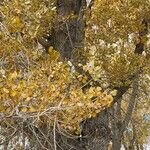
Populus fremontii
Cottonwood · Fremont's Cottonwood · Fremont Cottonwood
Description
Source: leafsnapPopulus fremontii, commonly known as Frémont's cottonwood, is a cottonwood (and thus a poplar) native to riparian zones of the Southwestern United States and northern through central Mexico. It is one of three species in Populus sect. Aigeiros. The tree was named after 19th century American explorer and pathfinder John C. Frémont.
🎭 The sun, the hereafter
Care Guide
💧 Water Every 1-2 weeks
Fremont cottonwood is well-suited to riparian zones and can tolerate both periodic flooding and moderate drought. It thrives best with balanced moisture levels, needing watering every 1-2 weeks. Typically grown outdoors, Fremont cottonwood demonstrates vigorous growth when soil moisture mimics its natural wet-dry cycles.
☀️ Light Full sun
Fremont cottonwood does best when it gets abundant sunlight throughout the day. This preference comes from its ancestral environments, which were typically open and sunlit. Although it can tolerate and grow in locations with less intense light, its best growth occurs with ample sun. Too little light can slow its growth, while very strong sunlight usually does not harm the plant.
What are the sun requirements for Fremont cottonwood?
Fremont cottonwood requires abundant sunlight for optimal growth, reflecting its natural habitat preferences for open, sun-soaked environments. While it can grow in less intense sunlight, the tree thrives best under full sun conditions, which means it should receive more than 6 hours of sunlight daily. Partial sun, about 3-6 hours of sunlight, is the minimum for it to sustain growth. It's important to monitor the movement of sunlight in your garden to ensure that your plants, including Fremont cottonwood, obtain an ideal balance of light and shade.
What artificial lighting requirements do indoor Fremont cottonwood plants have?
For indoor Fremont cottonwood plants or when natural sunlight is insufficient, artificial lighting can play a crucial role in ensuring optimal growth. It's recommended to use LED lights, as they can be customized to provide the specific light wavelengths needed by plants. The requirements vary based on the type of plant: full sun plants need between 30-50W/sq ft of artificial light, partial sun plants require 20-30W/sq ft, and full shade plants should have 10-20W/sq ft. The light source should be placed 12-36 inches above the plant to simulate natural sunlight conditions, and the duration of exposure should mimic natural daylight hours, which is around 8-12 hours per day.
What are the signs of light deficiency in Fremont cottonwood?
Symptoms of light deficiency in Fremont cottonwood can include smaller new leaves, leggy or sparse growth, faster leaf drop, slower or halted new growth, and the development of lighter-colored or yellow leaves. These signs indicate that the plant is not receiving adequate sunlight, leading to reduced chlorophyll production and a compromise in its overall health and growth potential. Additionally, symptoms such as leaf curling, wilting, leaf scorching, and even chlorosis or sunscald may appear due to excessive sunlight, which can also negatively impact the plant's well-being.
How can I address light deficiency in Fremont cottonwood, both indoors and outdoors?
To combat light deficiency in Fremont cottonwood, gradually acclimatize the plant to sunnier conditions. For indoor plants, move them weekly to progressively sunnier spots until they achieve at least 6 hours of direct sunlight, preferably near a south-facing window, and consider artificial lighting options if necessary. Outdoors, also move the plants gradually to avoid sunburn. Removing obstructions that block sunlight and considering transplantation to a sunnier location are effective strategies. It's crucial to note that while the parts of the plant that have already been affected may not recover, new growth following these adjustments should be healthy.
🌡️ Temperature 0–35°C
The fremont cottonwood originates from hot, dry habitats with temperatures ranging from 0 to 35 ℃ (32 to 95 ℉). It favors warm conditions but can withstand cooler temperatures in the winter. During the summer, providing sufficient watering is important to prevent stress from heat.
What is the Fremont Cottonwood and where is it native to?
The Fremont cottonwood, botanically known as Populus fremontii, is native to hot and dry environments. It thrives in temperatures ranging from 0°C (32°F) to 35°C (95°F). While it prefers warm temperatures, it is capable of tolerating cooler conditions in the winter, making it well-suited to a variety of climates.
How should Fremont Cottonwood be cared for in summer and winter?
In summer, the Fremont cottonwood requires adequate watering to prevent stress from heat, as it prefers temperatures below 35°C (95°F). In contrast, during winter, the tree exhibits strong cold resistance, and special frost protection measures are generally unnecessary unless temperatures are expected to drop below -35°C. To prepare for winter, it's recommended to water the plant abundantly before the first freeze in autumn, ensuring the soil remains moist. If extreme cold is expected, protecting the trunk and branches with non-woven fabric or cloth may be beneficial.
What are the important symptoms to watch for in Fremont Cottonwood due to temperature changes?
Fremont cottonwood shows distinct responses to extreme temperatures. During low temperatures, especially below -35°C, branches may become brittle and dry by spring, failing to produce new shoots. Pruning dead branches in spring can mitigate this damage. In high temperatures above 38°C, leaves may lighten, tips can dry and wither, and the risk of sunburn increases. Trimming sunburned parts and moving the plant to shaded areas, or using a shade cloth, along with morning and evening watering, can help alleviate these symptoms.
💨 Humidity
🪴 Soil 5-7
🌱 Fertilizer
Fertilize your Fremont cottonwood in early spring to encourage healthy growth. Regular feeding improves overall health, producing vigorous growth, greater resilience to harsh conditions, and enhanced resistance to pests and diseases. Keep to a consistent fertilization schedule for your Fremont cottonwood to maintain foliage that is vibrant, richly colored, and lush.
🪴 Pot & Repot
✂️ Pruning
To encourage the thriving growth of Fremont cottonwood trees, it's best to prune them in the spring before new growth begins. Start by removing any dead or crossing branches to improve airflow and light penetration. Regularly trim away suckers to maintain a pleasing structure and appearance. This practice not only enhances the tree's health but also reduces the risk of disease, resulting in a vibrant and attractive plant.
🌿 Propagating
🐛 Diseases & pets
☠️ Toxicity
Characteristics
- Plant Type
- Tree
- Life Cycle
- Perennial
- Genus
- Populus
- Family
- Salicaceae
- Hardiness Zone
- 3-9
- Mature Height
- 11.89 m to 35.05 m
- Mature Spread
- 3.66 m
- Leaf Color
- Green, Yellow, White, Orange
- Leaf Type
- Deciduous
- Flower Color
- Green, Yellow, Red
- Flower Size
- 0.25 cm to 1.02 cm
- Bloom Time
- Spring
- Planting Time
- Spring, Summer
- Harvest Time
- Early summer, Mid summer