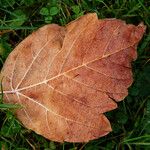
Populus grandidentata
Bigtooth aspen · Large-tooth aspen · Canadian aspen · Big-Tooth Aspen · Large-toothed Aspen
Description
Source: leafsnapPopulus grandidentata, commonly known as the bigtooth aspen or large-toothed poplar, is a deciduous tree species in the Salicaceae family. Native to North America, it thrives in regions such as eastern Canada and the United States. This tree can grow between 20 and 30 meters in height, with a trunk diameter reaching up to 60 centimeters. It features a straight trunk with smooth gray bark that becomes furrowed and rougher as the tree ages. The leaves, which can measure up to 20 centimeters in length and width, are triangular with serrated edges, hence the name "bigtooth." Bigtooth aspen trees produce male and female flowers on separate trees during the spring. Male flowers appear as long catkins, while female flowers grow on short spikes. After pollination, which occurs through wind or insects, small capsules containing numerous seeds develop. This species prefers moist soils but can tolerate dry conditions once established. It grows best in full sunlight but can also adapt to partial shade. The bigtooth aspen is valued for various purposes. Its straight trunk is useful for timber production, and its colorful autumn foliage—turning hues of yellow, orange, and red—makes it an attractive choice for ornamental planting. Overall, Populus grandidentata is an essential plant species, providing ecological benefits such as habitat for wildlife and offering economic advantages through timber production and ornamental uses.
🌳 Big-tooth aspen offers notable versatility beyond its usual role in timber and pulp. Its bark has been used to extract tannins, which play an important role in the leather industry for tanning. The tree’s fibers are also being investigated for use in sustainable textiles. Additionally, big-tooth aspen provides habitat for a range of species, supports ecosystem diversity, and, through its growth patterns, serves as an indicator of soil health.
🎭 Articulateness, Theft Prevention
Care Guide
💧 Water Every 7 days
The big-tooth aspen flourishes in temperate regions, where it thrives in moist conditions without becoming waterlogged. While it has moderate drought tolerance, it benefits from regular watering every 1-2 weeks. As a deciduous tree, the big-tooth aspen adapts its water needs during dormancy by shedding its leaves to conserve moisture in the winter.
How should I water my Big-tooth aspen in the best way?
To ensure excellent root development, it is recommended to place a garden hose at the base of the plant instead of directly spraying the leaves. If the plants are outdoors and exposed to direct sunlight, the leaves will require more water. To moisten the roots, you can use bubblers or soaker hoses. When adding or removing plants, use soaker hoses that can cover the entire garden or bed in order to encourage deep root growth. After watering, drain any excess water and allow the soil to dry before watering again. To prevent diseases, water at ground level rather than spraying the leaves. On a sunny day, it may be beneficial to spray the entire bush with water. Whether the plant is potted or in the ground, keep in mind that Big-tooth aspen prefers deep watering rather than light sprinkling.
What should I do if I give too much or too little water to the Big-tooth aspen?
An overwatered Big-tooth aspen can display several symptoms. The leaves may turn yellow, drop off, and wilt, giving the plant a dull and unhealthy appearance. Mushy stems may also be present. To address these issues, adjust your watering schedule as needed. However, wilting can also be a sign of under watering. In this case, the leaves become crispy and dry. If the soil is dry and watering alone is not enough, give the plant a thorough watering. This will help the Big-tooth aspen recover, although it may still appear dry and have yellow leaves due to root damage. Once it returns to normal, the yellowing of leaves will cease. When you have a Big-tooth aspen indoors, always check the moisture levels in the pot and avoid overwatering. Look for black spots as a potential sign of overwatering, and allow the soil to dry out by withholding water for a few days if you notice them. Overwatering can lead to root rot, so if you see discolored and slimy roots, consider transferring the plant to a different pot. Preventing root rot is vital, so make sure not to make the soil too soggy. When planting a Big-tooth aspen outdoors, check the soil's moisture level by digging a little deeper. If it feels excessively dry, it may indicate underwatering. Proper watering is necessary to assist the plant in recovering.
How often should I water my Big-tooth aspen?
The Big-tooth aspen prefers deep and infrequent watering, especially when planted in pots. In pots, the soil can dry out quickly, so it is necessary to water them every 3 to 5 days in cold regions. Watering should be done in the morning when the soil is dry, both indoors and outdoors. You can check if watering is needed by examining the soil. If the top 2-3 inches of soil are dry, it is time to water the plant thoroughly. On hot days, check the moisture daily as the heat can dry out the soil rapidly. For garden plants, irrigation is also necessary. In hot climates, watering once a week is sufficient. Only water when you notice the top 2 to 3 inches of soil becoming dry, indoors or outdoors. Take into consideration the natural rainfall and avoid overwatering to prevent root rot. If there is ample rainfall, additional watering may not be needed. Big-tooth aspen grows mainly in spring and fall. Outdoors, adding a layer of mulch 3 to 4 inches deep can help conserve water. Sandy soil requires more frequent watering as it drains quickly. On the other hand, clay soil requires less frequent watering, around 2-3 days to allow the plant to dry without developing root rot. To keep track of watering, mark the date on the calendar and observe the condition of the plant's leaves. Drooping leaves may indicate that watering is needed soon.
How much water should I give my Big-tooth aspen tree?
The Big-tooth aspen generally needs about a gallon of water on a regular basis. For potted plants, you should water them deeply until you see water dripping from the bottom of the pot. Then, wait for the soil to dry before watering again. To determine how much water you've given your plant in a week, you can use a water calculator or moisture meter. During the flowering period, provide plenty of water but allow the moisture to evaporate afterwards to prevent root rot. If the Big-tooth aspen is planted outdoors and receives adequate rainfall, it may not need additional watering. However, when the Big-tooth aspen is young or newly planted, make sure it receives 1-2 inches of rain per week. As the Big-tooth aspen continues to grow, it can rely solely on rainfall. Only if the weather is extremely hot or if there is no rainfall for 2-3 weeks, should you consider giving the Big-tooth aspen a thorough watering during the cooler parts of the day to prevent damage from high heat. Additional watering will be necessary during extended dry periods.
Should I water my Big-tooth aspen more or less depending on the time of year or the weather conditions?
The Big-tooth aspen benefits from rainwater when grown outdoors. In dry conditions, it may require additional watering. During the spring and fall, it should be kept moist but not overly saturated. Alternating between dry and moist soil will promote healthy growth. In the summer, hot weather leads to faster evaporation, so more frequent watering may be necessary if there is a lack of rainfall. However, during winter, the Big-tooth aspen needs less water as it enters dormancy. Using terracotta pots with well-draining soil mixtures can help water evaporate more efficiently. Once the plant starts to leaf out and go dormant, watering can be skipped, relying on fall and winter rains to sustain it. When the temperature gets warmer in spring, you can encourage growth and blooming. Good drainage is essential, especially during winter, as Big-tooth aspen does not tolerate excessive moisture. If planted in pots, they have limited root growth and should be kept well-watered in summer. Deep soaking once or twice a week, depending on the weather, is recommended, avoiding shallow sprinkles that may encourage fungi growth and not reach deep into the roots. Even if they are dormant, the plants should not be allowed to dry out completely in fall or winter. Proper drainage is vital to prevent waterlogging, which can be detrimental during winter and cause plants to die. Applying mulch conserves water, reduces stress, and promotes healthy blooms.
☀️ Light Full sun
Big-tooth aspen does best with steady light; it gains from a large amount of daily exposure and can somewhat adapt to locations with reduced light. Its natural habitat consists of areas with abundant sunlight. However, both excessive and insufficient illumination can result in poor plant health.
What are the sunlight requirements for Big-tooth aspen (Populus grandidentata)?
Big-tooth aspen requires a substantial amount of daily exposure to sunlight to thrive, benefiting significantly from full sun conditions, which means the plant should receive above 6 hours of sunlight daily. It can also moderately adjust to partial sun, with approximately 3-6 hours of sunlight, although its natural environment consists predominantly of areas with a strong presence of sunlight. Ensuring that your Big-tooth aspen gets the right balance of light and shade is crucial for its health and growth. When choosing spots for your plant, observe how sunlight moves through your garden throughout the day to find locations that provide the optimal balance.
What are the additional lighting considerations for Big-tooth aspen?
When natural sunlight is insufficient, especially during winter or in less sunny indoor spaces, it's essential to provide Big-tooth aspen with adequate artificial lighting to promote healthy growth. LED lights are recommended because they can be customized to supply specific wavelengths needed by plants. Full sun plants should receive 30-50W/sq ft of artificial light, partial sun plants need 20-30W/sq ft, and full shade plants require 10-20W/sq ft. Ensure the artificial light source is placed 12-36 inches above the plant, mimicking natural sunlight as closely as possible, and keep the lights on for 8-12 hours per day to simulate natural daylight hours.
What are the symptoms of light deficiency in Big-tooth aspen?
In suboptimal lighting conditions, Big-tooth aspen may display symptoms such as smaller leaves than those previously matured, leggy or sparse growth, faster leaf drop, slower or no new growth, and lighter-colored or chlorotic new leaves. Furthermore, excessive sunlight exposure can cause symptoms like sunscald, leaf curling, wilting, and leaf scorching. These symptoms manifest due to the plant's inability to properly photosynthesize or manage water loss efficiently under poor lighting conditions or when subjected to too much direct sunlight.
What are some solutions to address Big-tooth aspen's lighting issues?
For indoor Big-tooth aspen, gradually increase the plant's exposure to sunlight each week until it receives at least 6 hours of direct sunlight daily. Utilize south-facing windows and keep curtains open during the day for maximum exposure. If the plant is large or not easily movable, consider supplementing with artificial light, keeping a lamp on for at least 8 hours a day or investing in professional plant grow lights. For outdoor plants, gradually moving them to sunnier spots each week will help adapt without causing sunburn. Address obstructions by pruning branches or moving smaller plants to sunnier locations. It's important to note that parts of the plant affected by insufficient sunlight may not recover, but new growth will be healthy once proper light conditions are met.
🌡️ Temperature 5–35°C
In its native habitat, big-tooth aspen does best in temperate climates. It favors temperatures of 41 to 95 ℉ (5 to 35 ℃), making it tolerant of warm summers and cold winters. To maintain its health, avoid temperatures above 95 ℉ (35 ℃) and below 41 ℉ (5 ℃). In winter, placing it in a cooler area can help induce dormancy, while steady warmth in summer encourages growth.
What are the ideal temperature conditions for Big-tooth Aspen?
Big-tooth aspen thrives in temperate climates, with ideal temperature ranges between 41 to 95°F (5 to 35°C). This makes it capable of withstanding both warm summers and cold winters. It is important to avoid exposing the plant to temperatures above 95°F (35°C) or below 41°F (5°C) for its optimum health. During the winter months, moving it to a cooler area can promote dormancy, while warmer temperatures in the summer can encourage growth. The plant has significant cold resistance, and usually, special frost protection is not needed. However, if temperatures are expected to drop below -30°C, it's advisable to protect the plant by wrapping the trunk and branches with insulating materials, and ensure the soil is moist before the first freeze to prevent drought and water scarcity during the colder months.
How does low temperature affect Big-tooth Aspen and how can it be managed?
Big-tooth aspen is quite cold-tolerant, performing best when temperatures stay above 5°C and should ideally be kept above -25°C during winter. If the temperature falls below -30°C, though there might not be immediate visible damage during winter, the branches can become brittle and dry by spring, potentially leading to a lack of new growth. To manage this, pruning away any dead branches that fail to produce new leaves in the spring is recommended to promote the health and vitality of the plant.
What are the effects of high temperature on Big-tooth Aspen and how can they be mitigated?
During the summer months, it's critical to ensure that the big-tooth aspen's surrounding temperatures do not exceed 35°C. Should temperatures surpass 38°C, the plant's leaves may start to lighten in color, with tips turning dry and withered, increasing susceptibility to sunburn. To mitigate these issues, remove the sunburned and dried parts of the plant. Relocating the plant to a shaded area or using a shade cloth to protect it from the harsh midday and afternoon sun can be effective. Additionally, watering the plant in the early morning and late evening can help maintain soil moisture, crucial for the plant's wellbeing during high temperatures.
💨 Humidity
🪴 Soil 6-7
🌱 Fertilizer
Fertilize your Big-tooth aspen in early spring to encourage healthy growth. Consistent fertilization improves overall health, producing robust growth, greater tolerance of challenging conditions, and enhanced resistance to pests and diseases. Keep a regular fertilization routine for your Big-tooth aspen to ensure lively foliage with rich color and a full, lush appearance.
Why should I add fertilizer to my Big-tooth aspen?
No matter which type of Big-tooth aspen you have, regular fertilization is key for promoting the plant's overall health. Providing the right nutrients allows for stronger growth and increased resilience to challenging conditions, as well as improved defenses against diseases and pests. The foliage of your Big-tooth aspen is particularly appealing, so it's important to maintain it. To achieve this, establish and stick to a fertilization schedule tailored specifically for your Big-tooth aspen. This will encourage the development of vibrant, lush leaves.
When should I fertilize my Big-tooth aspen tree?
To properly fertilize your Big-tooth aspen, start by doing so in late winter or early spring. This will provide the necessary nutrients for the tree to grow healthily once the weather warms up. In warm climate regions, giving your Big-tooth aspen another dose of fertilizer in early fall is also helpful. This not only adds nutrients for the upcoming growing season but also makes the tree more resilient to winter cold and prevents foliage damage. Fertilizing earlier in the season ensures that new branches have enough time to grow and withstand the cold winter.
When is it not a good idea to use fertilizer on my Big-tooth aspen?
There are specific times of the year when you should avoid fertilizing your Big-tooth aspen. The first is during the winter months when the plant is dormant and doesn't need to be fed. It's also not recommended to fertilize in late spring and summer when the weather is hotter and drier. These conditions can have a negative impact on the plant if fertilized. To prevent any issues, it's best to stick to a fertilization schedule that only includes feeding in early spring and early fall.
What kind of plant food does my Big-tooth aspen need?
Big-tooth aspen primarily relies on nitrogen as its most crucial nutrient, but this doesn't mean that phosphorus and potassium are insignificant. In fact, your Big-tooth aspen needs a sufficient amount of all three key nutrients, so a balanced fertilizer like a 10-10-10 can be effective. However, a more nuanced nutrient ratio often results in optimal growth for a Big-tooth aspen. Fertilizers with slightly higher nitrogen content, such as a ratio of 10-6-4, tend to work better. You have the option of using a granular or liquid-based fertilizer when applying it.
How can I help my Big-tooth aspen grow better?
To fertilize your Big-tooth aspen, you have two options: granular fertilizer or liquid fertilizer. If you choose granular fertilizer, simply sprinkle it on the soil at the right time. This type of fertilizer releases nutrients slowly over time. It's good practice to lightly water your aspen before applying granular fertilizer. On the other hand, liquid fertilizer is less common but still an option. To use liquid fertilizer, mix it with water and pour the mixture around the base of your aspen. It's sometimes helpful to do a soil test beforehand to determine if any pH adjustments are needed.
🪴 Pot & Repot
✂️ Pruning
The big-tooth aspen is characterized by its large, coarse-toothed leaves and its rapid growth. It is best to prune these trees in early spring to remove any dead branches and to improve their structure. Light and regular pruning encourages healthy growth and helps shape the tree without causing stress. Always use clean, sharp tools to prevent the spread of disease. For specific advice, refer to local horticultural guidelines.
🌿 Propagating
🐛 Diseases & pets
☠️ Toxicity
Characteristics
- Plant Type
- Tree
- Life Cycle
- Perennial
- Genus
- Populus
- Family
- Salicaceae
- Hardiness Zone
- 4-9
- Mature Height
- 17.98 m to 24.08 m
- Mature Spread
- 6.1 m to 11.89 m
- Leaf Color
- White
- Leaf Type
- Deciduous
- Flower Color
- Green
- Flower Size
- 0.10 cm to 0.20 cm
- Bloom Time
- Mid spring, Late spring
- Planting Time
- Spring, Summer
- Harvest Time
- Early summer, Mid summer