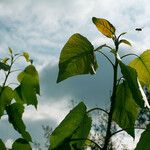
Populus heterophylla
Swamp poplar · Downy poplar · Swamp cottonwood
Description
Source: leafsnapPopulus heterophylla, commonly known as the swamp cottonwood, is a deciduous tree species in the Salicaceae family. Native to North America, it thrives in wetland areas such as swamps, floodplains, and riverbanks. This tree can reach up to 30 meters in height, with a trunk diameter of up to 1 meter. The leaves of Populus heterophylla are alternate and vary in shape, ranging from triangular to ovate with serrated edges. The upper surface of the leaves is dark green, while the lower surface is pale green or white due to the presence of fine hairs. The bark of this species is grayish-brown, characterized by deep furrows and ridges that form diamond-shaped patterns on mature trees. The tree produces male and female flowers on separate trees in the spring, before the leaves emerge. Populus heterophylla plays a crucial ecological role in wetland ecosystems by providing habitat for various wildlife species, including birds, mammals, insects, and amphibians. Additionally, it helps stabilize soil along riverbanks, reducing erosion caused by water currents. Beyond its ecological importance, Populus heterophylla has several uses for humans. Its strong wood properties make it suitable for timber production for furniture making and construction, as it is resistant to decay fungi and insect pests like termites. Traditionally, Native Americans have used it for medicinal purposes, treating various ailments such as fever and coughs. Overall, Populus heterophylla is valuable both ecologically and economically. Its conservation through sustainable management practices is essential to ensure its long-term survival while meeting human needs.
Care Guide
💧 Water Every 7 days
Swamp cottonwood thrives in wetland habitats, where it prefers high moisture and consistent humidity. It generally requires moderate watering, about twice a week. Usually grown outdoors, its hydration needs can vary depending on local rainfall and its growth cycles, as it is a deciduous plant.
☀️ Light Full sun
The swamp cottonwood is native to open spaces like sunny fields and borders of forests that offer generous sunlight. It flourishes in Full Sun but can also withstand Partial Sun, exhibiting good adaptability to different light circumstances.
What are the sunlight requirements for Swamp cottonwood (Populus heterophylla)?
Swamp cottonwood, also known as Populus heterophylla, requires a specific amount of sunlight to thrive. For optimal growth, these plants need 'Full sun' conditions, which means they should receive above 6 hours of sunlight daily. However, they can also tolerate 'Partial sun' conditions, about 3-6 hours of sunlight per day. When planting Swamp cottonwood, it's important to monitor how sunlight moves through your garden. Choosing the right spots that offer a perfect balance of light and shade will ensure the happiness and health of your plants. This careful consideration will help in stimulating their growth and maintaining their well-being.
🌡️ Temperature 5–35°C
Swamp cottonwood shows strong adaptability to a variety of climate conditions, whether facing hot summers or cold winters. Still, it has an optimal temperature range for growth. If temperatures become excessively high, the plant is vulnerable to heat and humidity stress, which can lead to its death. In areas where temperatures near the lower limit of its cold tolerance, it is important to use insulation measures to protect the plant.
What is the Swamp Cottonwood?
Swamp Cottonwood, known botanically as Populus heterophylla, is a type of tree without further details provided in the initial information. There's no additional information regarding its essentials, such as its distinct characteristics, habitat, or uses, nor are there details about symptoms that may pertain to diseases or conditions associated with this tree.
💨 Humidity
🪴 Soil 6-7
🌱 Fertilizer
For nurturing healthy development, provide your Swamp cottonwood with fertilizers at the onset of spring. Consistent fertilizing boosts its overall wellbeing, leading to robust growth, better resistance to harsh environments, and increased protection against diseases and pests. Adhere to a particular fertilization timetable for your Swamp cottonwood to guarantee the tree has brightly colored leaves and a rich look.
🪴 Pot & Repot
✂️ Pruning
Swamp cottonwood trees, which thrive in wetland areas, should be pruned in early spring to improve airflow and sunlight exposure. Start by removing any damaged or crossing branches, and shape the canopy to maintain balance. Pruning during the dormant season reduces stress on the tree. Regular maintenance helps ensure the tree's health and enhances its visual appeal.
🌿 Propagating
🐛 Diseases & pets
☠️ Toxicity
Characteristics
- Plant Type
- Tree
- Life Cycle
- Perennial
- Genus
- Populus
- Family
- Salicaceae
- Hardiness Zone
- 4-9
- Mature Height
- 20.12 m to 29.87 m
- Mature Spread
- 10.06 m to 14.94 m
- Leaf Color
- Green, Dark Green
- Leaf Type
- Deciduous
- Flower Color
- White
- Flower Size
- 2.54 cm
- Bloom Time
- Early spring, Mid spring
- Planting Time
- Spring, Summer, Autumn
- Harvest Time
- Late spring, Early summer