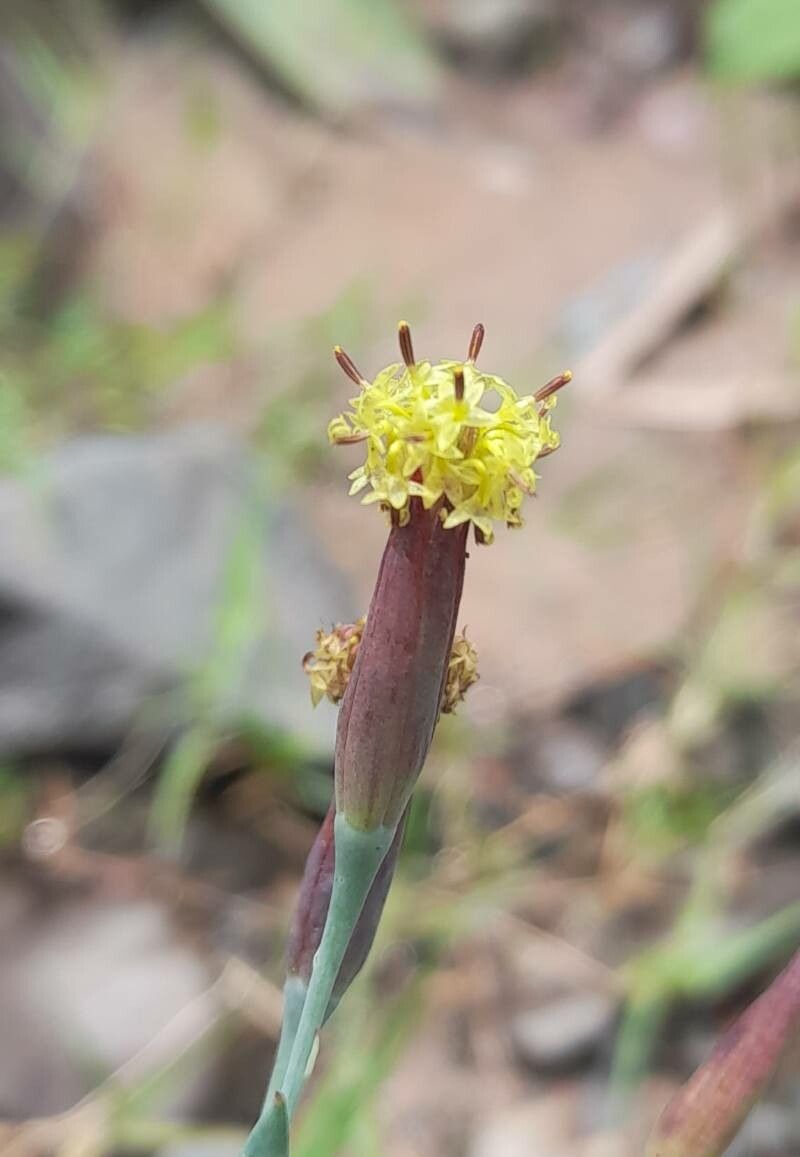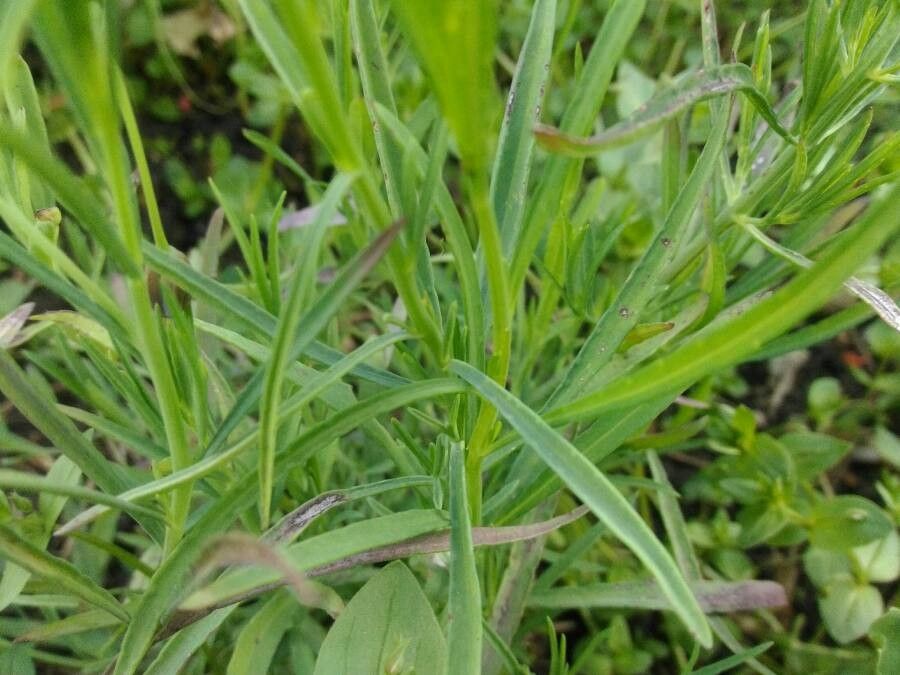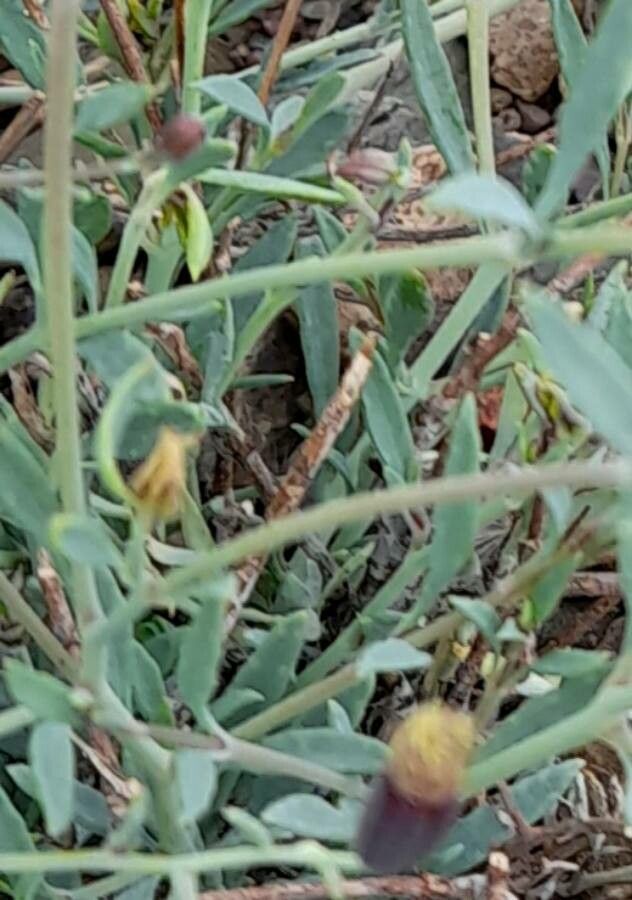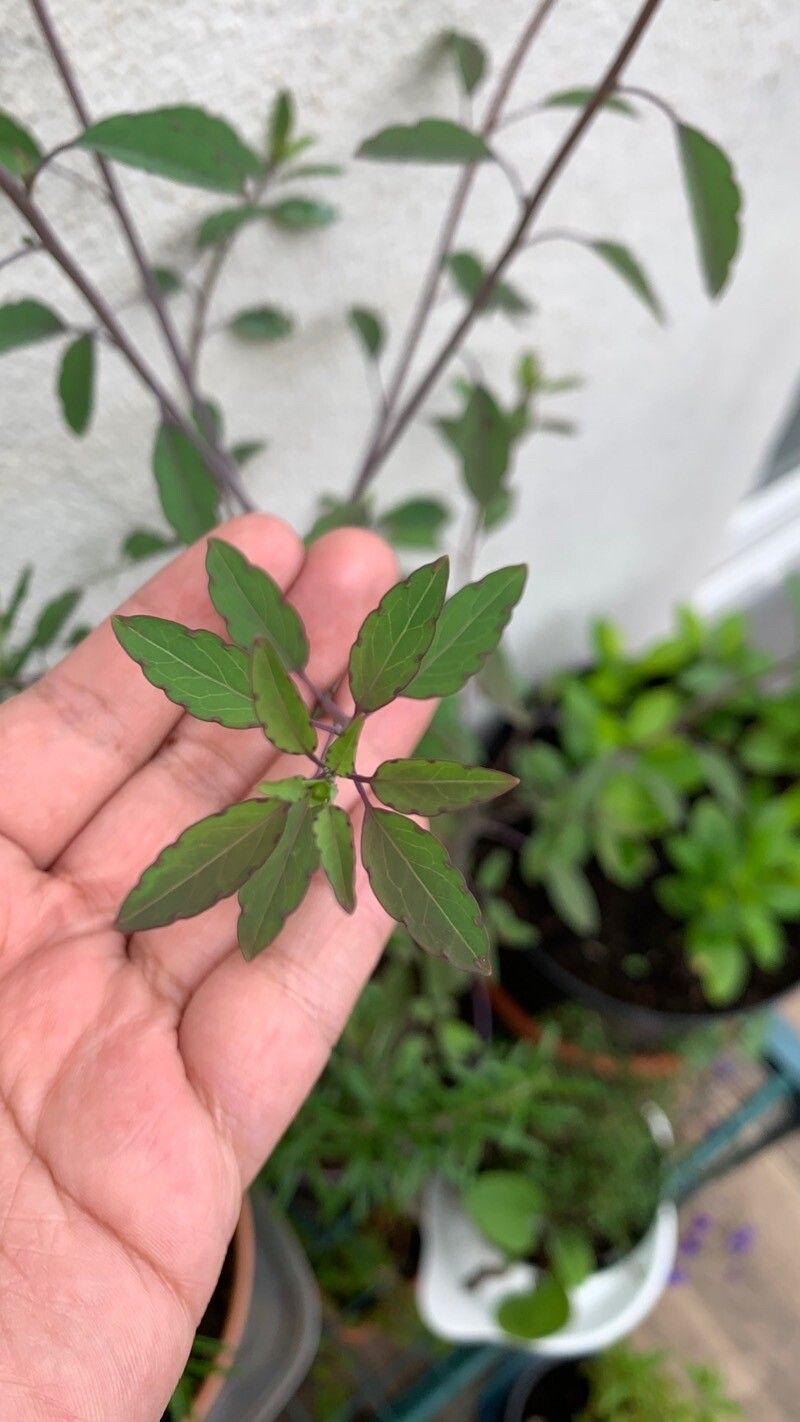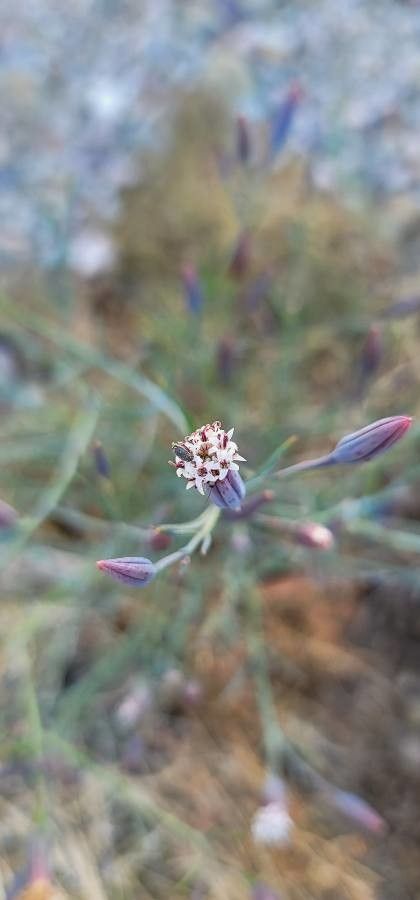
Porophyllum gracile is a species of flowering plant in the family Asteraceae known by the common names odora and slender poreleaf. It is native to northern Mexico and the southwestern United States from California to Texas, where it can be found in rocky and sandy desert scrub habitat. This species grows into a small, short lived perennial shrub with branching slender stems measuring up to about 70 centimeters in maximum length. The stems are hairless and waxy in texture. The sparse waxy leaves are linear in shape and 1 to 5 centimeters in length. The herbage is glandular and aromatic with a strong scent. Glands located in cavities in the leaves, stems and phyllaries produce several volatile chemicals that act in synergy to repel insect predators.The inflorescence produces narrow flower heads which may be nearly 3 centimeters long when in bloom. The flower head is enclosed in five waxy, gland-studded phyllaries. It bears 20 to 30 flowers, which are disc florets. Each flower is white or purplish and has a long, curling style protruding from it. The fruit is a cylindrical achene topped with a pappus of bristles, the whole unit measuring over one centimeter long. These plants have many branches with numerous thin, wiry, upright stems.
Slender poreleaf is resistant to disease and is generally not susceptible to illnesses. Regarding care, this plant is fairly low-maintenance. When grown outdoors it needs only minimal watering, and larger plants usually do not require pruning. Smaller plants, however, should be pruned after they have finished blooming. Slender poreleaft is appropriate for anyone with an outdoor area, such as a garden or deck, and does not demand much experience in plant care.
How to keep Porophyllum Gracile.
Light
Slender poreleaf is native to open habitats, such as sunny meadows and forest edges, which supply abundant light. It prospers in Full Sun but will also tolerate Partial Sun, showing good adaptability to different sunlight conditions.
Temperature
Slender poreleaf comes from tropical areas, where the climate is generally warm and humid. As a result, it is adapted to high temperatures and humidity. It does not tolerate sudden temperature changes and prefers a stable temperature environment, so avoiding temperature fluctuations indoors is important. It typically cannot withstand cold conditions and needs warmer temperatures to grow. If the surrounding temperature drops too low, the plant may stop growing or even die.
Fertilizer
Fertilizing is essential for the care of the Slender poreleaf. Regular feeding during the growing season keeps up the energy needed for its showy leaves and supports overall growth. Failing to fertilize can lead to unhealthy leaves, reduced ornamental appeal, and stunted or weak growth that is more likely to break.
Pruning
Slender poreleaf benefits from pruning in early spring, which encourages growth and increases bushiness. To improve air circulation, remove dead stems and thin out crowded areas. Opt for light, frequent trimming rather than heavy pruning to promote a strong structure and create an appealing garden feature.
Botanical profile.
- Plant Type
- Shrub
- Life Cycle
- Perennial
- Genus
- Porophyllum
- Family
- Asteraceae
- Hardiness Zone
- 9-11
- Mature Height
- 61 cm
- Mature Spread
- 30 cm to 61 cm
- Leaf Color
- Green, Light Green
- Leaf Type
- Semi-evergreen
- Flower Color
- White
- Flower Size
- 3.05 cm
- Bloom Time
- Summer, Fall
- Planting Time
- Spring, Summer
- Harvest Time
- Late summer, Fall, Early winter
- Native Area
- Mexico
Other names.
Reader questions.
What are the sunlight requirements for Slender poreleaf?
Slender poreleaf thrives best in environments that mirror its natural habitat, which includes open, sunny spaces like meadows and forest edges. It prospers under full sun conditions, receiving more than 6 hours of sunlight daily, but can also adapt well to partial sun, with about 3-6 hours of sunlight. It's crucial to monitor the sunlight patterns through your garden to ensure that your plants get an ideal balance of light and shade, catering to their growth needs and ensuring their well-being.
How can I use artificial lighting for indoor Slender poreleaf plants?
When natural sunlight is not sufficient, particularly during winter or in less sunny spaces, artificial lighting becomes critical for the growth of indoor Slender poreleaf plants. It's advised to use LED lights as they can be tailored to provide specific wavelengths needed by your plants. For full sun plants, 30-50W per square foot is recommended, while partial sun plants require 20-30W per square foot. The light source should be placed 12-36 inches above the plant, mimicking natural sunlight's distance, and should be kept on for 8-12 hours per day to simulate natural daylight hours, promoting faster and healthier growth.
What are some symptoms of light deficiency in Slender poreleaf?
Slender poreleaf may show several symptoms when exposed to suboptimal lighting conditions. These include smaller new leaves, leggy or sparse growth, quicker leaf drop, slower or halted new growth, lighter-colored new leaves, and specific signs of distress like chlorosis and sunscald. Chlorosis leads to yellowing leaves due to a breakdown of chlorophyll, while sunscald results in pale or necrotic areas on the plant tissue from intense light exposure. Other symptoms like leaf curling, wilting, and leaf scorching signify the plant’s struggle with excessive sunlight or insufficient hydration.
What solutions can address Slender poreleaf's light deficiency symptoms?
To tackle light deficiency in Slender poreleaf, gradual relocation to a sunnier spot is advisable. For indoor plants, shift them weekly towards a location that receives at least 6 hours of direct sunlight daily, utilizing a south-facing window. If the plant is large, using artificial light sources like desk or ceiling lamps for a minimum of 8 hours daily can supplement light needs. For outdoor plants, a gradual move to a better-lit area can prevent sunburn. Pruning tree branches that obstruct sunlight or transplanting smaller plants during their dormant period to areas with ample sunlight and good drainage are effective strategies for ground-planted Slender poreleaf. It's important to note that while some parts affected by light deficiency may not recover, new growth following these adjustments will return to health.