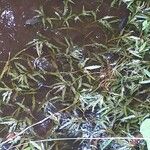
Potamogeton crispus
Curled pondweed · Curly pondweed · Curly-leaf pondweed · Crisped pondweed · Crispy-leaved pondweed
Description
Source: leafsnapPotamogeton crispus, the crisp-leaved pondweed, curly pondweed, curly-leaf pondweed or curled pondweed, is a species of aquatic plant (hydrophyte) native to Eurasia but an introduced species and often a noxious weed in North America.
Care Guide
💧 Water
☀️ Light Full sun
Curly-leaf pondweed grows best when exposed to sunlight continuously during the day, though it can survive with intermittent periods of sun. Native to sunny habitats, it copes with alternating stretches of sun and shade. Both too much and too little light can impede its growth and vigor.
What are the sun requirements for Curly-leaf pondweed?
Curly-leaf pondweed thrives in environments with abundant sunlight, ideally requiring continuous exposure to the sun's rays throughout the day. It can survive in both full sun, which is above 6 hours of sunlight, and partial sun, about 3-6 hours of sunlight. The plant's health and growth can be negatively impacted by either excessive or insufficient light. It's important to observe how sunlight moves through your garden to select the optimal locations that offer a balance of light and shade, ensuring the plant's wellbeing.
How can artificial lighting be used for indoor Curly-leaf pondweed?
When natural sunlight is insufficient for Curly-leaf pondweed, especially during winter or in less sunny spaces, artificial lighting provides a vital alternative. For optimal growth, indoor plants may require LED lights, which can be adjusted to provide specific light wavelengths needed by the plants. Full sun plants need 30-50W/sq ft of artificial light, partial sun plants need 20-30W/sq ft, and full shade plants need 10-20W/sq ft. The light source should be placed 12-36 inches above the plant for 8-12 hours per day to mimic natural daylight.
What are the symptoms of light deficiency in Curly-leaf pondweed?
When Curly-leaf pondweed does not receive sufficient light, several symptoms may appear including smaller new leaves, leggy or sparse growth, faster leaf drop, slower or no new growth, and lighter-colored new leaves. Conditions like chlorosis can also occur, leading to the loss of green color in leaves and turning them yellow. Sunscald, leaf curling, wilting, and leaf scorching are additional symptoms indicating too much sunlight, which impacts the plant’s health.
What are the solutions for addressing light deficiency in Curly-leaf pondweed?
To address light deficiency in Curly-leaf pondweed, gradually move the plants to a location with at least 6 hours of direct sunlight daily, using a south-facing window for indoor plants. If the plant is large or not easily movable, artificial lighting such as desk or ceiling lamps, or professional grow lights, should be used for at least 8 hours daily. Outdoors, plants should be moved to sunnier spots gradually to avoid sunburn. If sunlight is blocked by trees or buildings, consider pruning or transplanting to a location with better sunlight and good drainage. Note that parts of the plant affected by insufficient sunlight may not recover, but new growth should be healthy with increased light exposure.
🌡️ Temperature 15–37.8°C
Curly-leaf pondweed originates from temperate areas and prefers temperatures between 59 and 100.4 °F (15 to 38 ℃). In colder seasons, it may require careful adjustment to warmer temperatures so they fall within this optimal range.
What are the essential care requirements for Curly-leaf Pondweed?
Curly-leaf pondweed, scientifically known as Potamogeton crispus, is adapted to temperate regions and thrives in temperatures ranging from 59 to 100.4°F (15 to 38°C). While this plant possesses strong cold resistance, making it usually unnecessary to take special frost protection measures, care is still required during colder seasons. It is recommended to protect the plant from temperatures dropping below -15°C by covering it with soil or straw. Additionally, ensuring the soil is abundantly watered before the first freeze of autumn helps keep the soil moist and prevents drought and water scarcity during the winter and early spring months.
How does low temperature affect Curly-leaf Pondweed and what are the solutions?
Curly-leaf pondweed is cold-tolerant and prefers temperatures above 15°C. While it can survive winter temperatures down to -10°C, exposure to temperatures below -15°C may not show immediate damage but can lead to decreased sprouting or even no sprouting in spring. To mitigate any potential damage from low temperatures, in spring, gardeners should remove any parts of the plant that have failed to sprout, encouraging healthier growth and recovery.
What should be done if Curly-leaf Pondweed experiences high temperatures?
During the summer, it's crucial to ensure that Curly-leaf pondweed does not get exposed to temperatures above 38°C. Should temperatures surpass 43°C, the plant's leaves might become lighter, curl up, become sunburned, and in severe cases, the entire plant could wilt and dry up. To protect the plant from high temperatures, trim away the sunburned and dried-up parts. Relocate the plant to a shaded area, especially during the midday and afternoon sun, or employ a shade cloth. To maintain moisture and assist the plant in coping with the heat, water it in the morning and evening.
💨 Humidity
🪴 Soil
🌱 Fertilizer
🪴 Pot & Repot
✂️ Pruning
Curly-leaf pondweed, known for its wavy and crinkled leaves, thrives in aquatic environments. Pruning is best done from early to late spring to prevent overcrowding, improve water circulation, and support healthy growth. This practice helps maintain both the beauty and ecological health of garden ponds.
🌿 Propagating
🐛 Diseases & pets
☠️ Toxicity
Characteristics
- Plant Type
- Herb
- Life Cycle
- Perennial
- Genus
- Potamogeton
- Family
- Potamogetonaceae
- Hardiness Zone
- 7-11
- Mature Height
- 91 cm
- Mature Spread
- 0.91 m to 1.52 m
- Leaf Color
- Green
- Leaf Type
- Deciduous
- Flower Color
- Red, Brown, White
- Flower Size
- 2.03 cm
- Bloom Time
- Late spring, Early summer, Mid summer
- Planting Time
- Spring
- Harvest Time
- Mid summer, Late summer, Early fall
- Native Area
- Libya, India, Turkey, Sweden, Slovakia, Montenegro, Pakistan, Slovenia, Croatia, Belarus, Germany, Indonesia, Mozambique, Koppen, Ethiopia, Romania, Latvia, Belgium, Netherlands, Portugal, Malawi, Bulgaria, Bangladesh, Laos, Turkmenistan, Ukraine, China, Lebanon, Afghanistan, Syria, Kyrgyzstan, Kazakhstan, Italy, Japan, Mongolia, Finland, Eswatini, Iran, Azerbaijan, Egypt, Austria, Namibia, Zimbabwe, Uzbekistan, Russia, Iraq, Cambodia, Estonia, South Korea, Botswana, France, Nepal, Tajikistan, Czech Republic, South Africa, Sudan, Zambia, Armenia, Poland, Greece, Serbia, Lithuania, Norway, Hungary, Spain, Switzerland, Vietnam, Myanmar, Denmark, Israel, Bhutan, Albania, Ireland, United Kingdom, Algeria, Thailand