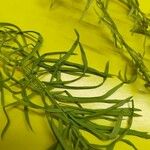
Potamogeton foliosus
Leafy pondweed · Closed-leaved Pondweed
Description
Source: leafsnapPotamogeton foliosus, commonly known as leafy pondweed, is an aquatic plant species in the family Potamogetonaceae. Native to North America, it thrives in freshwater habitats such as lakes, ponds, and slow-moving streams. The plant features long stems that can grow up to 3 meters in length. These stems are covered with narrow, dark green leaves arranged alternately. The leaves have a smooth texture and a pointed tip. Leafy pondweed plays a crucial role in aquatic ecosystems. It provides food and shelter for various aquatic animals, including fish, insects, and waterfowl. Additionally, it helps improve water quality by absorbing excess nutrients from the water. The plant reproduces both sexually (by producing seeds) and vegetatively (by growing new plants from stem fragments). It can be propagated by planting either stem fragments or seeds in suitable aquatic environments. Though leafy pondweed offers many benefits to freshwater ecosystems, it can become invasive if not properly managed. Invasive populations of this species can outcompete native plants for resources, negatively impacting biodiversity. Overall, Potamogeton foliosus is vital to freshwater ecosystems, but it requires proper management, especially in non-native areas or when invasive populations are present.
Care Guide
💧 Water Every 7 days
Leafy pondweed flourishes in aquatic environments, needing consistent moisture and a high tolerance for water saturation. To mimic its natural habitat, it requires weekly watering. It is best suited for outdoor cultivation, as its growth depends on the quality and frequency of watering it receives.
☀️ Light Full sun
Leafy pondweed is native to habitats with abundant sunlight, such as the shallow margins of ponds and lakes. It prefers full sun, although it can also tolerate partial sun.
🌡️ Temperature 0–37.8°C
Leafy pondweed can adjust to a wide range of temperatures, but its distribution can still be limited by particular combinations of water and heat conditions. It performs best in warm summer climates with sufficient rainfall or watering. Long periods of cloudy, rainy weather and extended high temperatures can increase the chance of Leafy pondweed dying. In winter, shielding it from the cold can raise the plant’s survival rate.
💨 Humidity
🪴 Soil
🌱 Fertilizer
🪴 Pot & Repot
✂️ Pruning
Leafy pondweed, with its slender submerged leaves, thrives in aquatic environments. To encourage healthy growth and control its spread, it's best to prune it in early spring. Trimming excess foliage can improve water clarity and enhance the appearance of your pond. Use sharp tools to make clean cuts just above the leaf nodes. For guidance on how often to prune, consult horticultural guides.
🌿 Propagating
🐛 Diseases & pets
☠️ Toxicity
Characteristics
- Plant Type
- Herb
- Life Cycle
- Perennial
- Genus
- Potamogeton
- Family
- Potamogetonaceae
- Hardiness Zone
- 3-11
- Mature Height
- 30 cm to 61 cm
- Mature Spread
- 20 cm to 40 cm
- Leaf Color
- Olive Drab, Dark Green
- Leaf Type
- Deciduous
- Flower Size
- 0.20 cm to 0.25 cm
- Bloom Time
- Summer, Early fall, Mid fall
- Planting Time
- Spring, Summer, Autumn
- Harvest Time
- Late summer, Fall, Early winter
- Native Area
- Cuba, Haiti, Mexico, Guatemala, Georgia, Dominican Republic, Jamaica