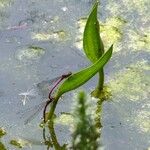
Potamogeton nodosus
Longleaf pondweed · Loddon pondweed · Waterweede · Long-leaf Pondweed · Long-leaved Pondweed
Description
Source: leafsnapPotamogeton nodosus is a species of aquatic plant known by the common names longleaf pondweed and Loddon pondweed. It is native to Eurasia and the Americas, where it is widespread and can be found in water bodies such as ponds, lakes, ditches, and streams. This is a perennial herb producing a thin, branching stem easily exceeding a meter in maximum length. The leaves are linear to widely lance-shaped and up to 15 centimeters long by 4 wide. Both floating leaves and submerged leaves are borne on long petioles, a distinguishing characteristic. The inflorescence is a spike of many small flowers arising from the water on a peduncle.
Care Guide
💧 Water
Long-leaf pondweed thrives in consistently moist conditions, similar to its natural aquatic habitat. It requires weekly watering and is best suited for outdoor environments that resemble wetland ecosystems. Its growth is closely tied to water availability, serving as an indicator of a healthy aquatic system.
How should I water my Long-leaf pondweed?
To effectively water the Long-leaf pondweed, make sure to use filtered water at room temperature or slightly warmer. Tap water may contain harmful particles, so it's best to avoid using it. This plant is accustomed to warm environments, so cold water can be a shock to its system. It's also important to not water the plant from above, as this can lead to issues with the foliage. Instead, simply apply the filtered room temperature water directly to the soil until it is completely soaked. This is beneficial for the plant as it helps moisten the roots and enables them to spread and gather the necessary nutrients from the soil.
What should I do if I give too much or too little water to my Long-leaf pondweed?
Both overwatering and underwatering can harm the health of your Long-leaf pondweed, but overwatering is more common. When the plant gets too much water, its stems and leaves may wilt and turn yellow. Overwatering over time can also lead to diseases like root rot, mold, and mildew, which can be fatal for your plant. Underwatering is less likely for this plant because it has good drought tolerance, but it can still happen. In cases of underwatering, the leaves may become brittle and brown. It's important to recognize the signs of overwatering early when caring for your Long-leaf pondweed. Some diseases caused by overwatering, such as root rot, may not be fixable if you delay taking action. If you notice early signs of overwatering, reduce your watering schedule immediately. You should also check the soil quality where your plant grows. If the soil drains poorly, replace it with a loose, well-draining potting mix. On the other hand, if you see signs of underwatering, simply water more regularly until the signs improve.
How frequently should I water my Long-leaf pondweed?
If your plant is in a pot, the most precise way to determine if your Long-leaf pondweed needs water is by checking the moisture of the soil. You can do this by sticking your finger into the soil. If you notice that the top two to three inches of soil are dry, then it's time to water the plant. If you are growing your Long-leaf pondweed outdoors in the ground, you can use a similar method to test the soil. Once again, check the top few inches of soil for dryness, and if it's dry, it's time to water. Typically, during spring and early fall, you will need to water this plant about once a week using this method. However, in extremely hot weather, you may need to water it two or more times per week. But it's important to note that mature, well-established Long-leaf pondweed has a remarkable ability to withstand drought.
How much water does my Long-leaf pondweed require?
When watering your Long-leaf pondweed, don't be afraid to give it a generous amount of water. Make sure the top layer of soil is dry, then thoroughly water the plant until the soil is soaked. The water should be enough to cause excess water to flow out of the drainage holes at the bottom of the pot. If you don't see excess water draining, you may not have given enough water. However, avoid letting water accumulate in the soil, as this can be harmful to the plant. If water doesn't drain well from the pot, it could mean that the soil doesn't drain properly, which is not good for the plant's health. If the plant is outdoors, providing about 1 inch of rain per week should be enough.
How do I water my Long-leaf pondweed when it is growing at different stages?
The water needs of Long-leaf pondweed vary during different growth stages. In the first few years and when the plant is transplanted, it requires more water because it is focused on developing new roots. These roots need extra moisture to support future growth. However, as the plant matures, it will require less water. Additionally, during the bloom period, the plant needs more water as flower development relies on adequate moisture.
☀️ Light Full sun
Long-leaf pondweed grows best in locations where it receives the majority of the day's sunlight. It can, however, continue to grow under lower light intensity. Excessive sunlight can scorch its leaves, while too little light may cause stunted growth. Its native habitats are flooded with abundant sunlight.
What are the sunlight requirements for Long-leaf pondweed?
Long-leaf pondweed (Potamogeton nodosus) thrives best in full sun conditions, requiring more than 6 hours of sunlight daily. However, it can also grow in partial sun, with about 3-6 hours of sunlight. It's essential to monitor the sunlight in your garden to ensure that your Long-leaf pondweed gets the right balance of light and shade for optimal growth. Too much sun exposure can lead to leaf scorching, while insufficient sunlight can result in stunted growth.
How does Long-leaf pondweed respond to different lighting conditions?
Long-leaf pondweed prefers environments where it can absorb most of the day's sun but can sustain growth in areas with less intense light. When exposed to too much sunlight, it may experience leaf scorching. Conversely, insufficient light exposure can cause stunted growth. For indoor plants, where natural sunlight is inadequate, using artificial lighting such as LED lights can promote healthier growth. Depending on the plant's lighting needs, artificial lights should provide 10-50W/sq ft of light and be placed 12-36 inches above the plant for 8-12 hours per day.
What are the symptoms of inadequate lighting in Long-leaf pondweed?
Symptoms of inadequate lighting in Long-leaf pondweed include small or lighter-colored new leaves, leggy or sparse growth, faster leaf drop, and halted growth indicating a survival mode due to poor light conditions. Conversely, excessive sunlight can lead to chlorosis, sunscald, leaf curling, wilting, and leaf scorching. These symptoms show the plant's struggle in adapting to its lighting environment, either trying to minimize exposure to intense light or conserve resources in low light.
What solutions can help Long-leaf pondweed thrive in optimal lighting conditions?
To ensure Long-leaf pondweed receives optimal lighting, gradually move plants to sunnier locations, ensuring at least 6 hours of direct sunlight daily for outdoor plants. Utilize south-facing windows and keep curtains open for indoor plants. If the plant is large or not easily movable, consider using artificial light sources. For outdoor plants, avoid sudden changes in light intensity to prevent sunburn. If sunlight is blocked by obstructions like trees, consider pruning to improve light penetration. For smaller plants or ground plants, there's also the option of transplanting to a better-lit location during their dormant period. Remember, while parts of the plant that suffered from insufficient sunlight may not recover, new growth after adjusting light exposure will be healthy.
🌡️ Temperature 15–37.8°C
Long-leaf pondweed originates from temperate areas where temperatures usually range from 59 to 100 °F (15 to 38 ℃). It prefers that range and may need adjustments, such as added shade or extra water, when temperatures fall outside it.
What is the native temperature range for Long-leaf Pondweed?
Long-leaf Pondweed (Potamogeton nodosus) is native to temperate regions where temperatures typically range from 59 to 100 °F (15 to 38 °C). It thrives best within this temperature range and may need adjustments, such as providing shade or additional water, when temperatures fall outside of this range.
Does Long-leaf Pondweed require special frost protection during winter?
Long-leaf Pondweed has strong cold resistance, so it usually doesn't require special frost protection measures during winter. However, if temperatures are expected to drop below -15°C, it's important to provide cold protection by covering the plant with soil or straw. Also, before the first freeze in autumn, watering the plant abundantly to ensure the soil remains moist can help prevent drought and water scarcity during winter and early spring.
How does low temperature affect Long-leaf Pondweed, and what should be done?
Long-leaf Pondweed is cold-tolerant and does best when temperatures are above 15°C. If temperatures drop below -15°C, there may not be noticeable changes during winter, but there could be a decrease in sprouting or no sprouting in the spring. In the spring, any parts of the plant that have failed to sprout should be removed.
What is the impact of high temperature on Long-leaf Pondweed and its solution?
During summer, it's crucial to keep Long-leaf Pondweed below 38°C. Exceeding 43°C may result in the leaves becoming lighter in color, prone to curling, susceptible to sunburn, and in severe cases, the entire plant may wilt and dry up. To mitigate this, trim away the sunburned and dried parts of the plant. Move the plant to a location that offers shade during midday and afternoon sun, or use a shade cloth. Watering the plant in the morning and evening to keep the soil moist is also beneficial.
💨 Humidity high (>60%)
This plant needs special care because it loves high humidity levels of 60-80% or more. The best way to achieve this is by placing a humidifier near the plant. Daily misting is also essential! Make sure the room has good ventilation.
🪴 Soil
🌱 Fertilizer
🪴 Pot & Repot
✂️ Pruning
Long-leaf pondweed is characterized by its slender, elongated leaves and thrives in aquatic environments. To encourage growth and control its spread, trim it from early to late spring. Removing dead foliage helps improve circulation, prevents it from becoming invasive, and supports ecological balance in water gardens.
🌿 Propagating
🐛 Diseases & pets
☠️ Toxicity
Characteristics
- Plant Type
- Herb
- Life Cycle
- Perennial
- Genus
- Potamogeton
- Family
- Potamogetonaceae
- Hardiness Zone
- 7-11
- Mature Height
- 91 cm
- Mature Spread
- 30 cm to 61 cm
- Leaf Color
- Olive Drab, Dark Green
- Leaf Type
- Evergreen
- Flower Color
- Yellow, Green, Red, Brown
- Flower Size
- 0.25 cm
- Bloom Time
- Summer, Early fall, Mid fall
- Planting Time
- Spring, Autumn
- Harvest Time
- Late summer, Fall, Early winter
- Native Area
- Sri Lanka, Libya, India, Turkey, Mexico, Guatemala, Slovakia, Madagascar, Montenegro, Pakistan, Dominican Republic, Thailand, Slovenia, Croatia, Morocco, Belarus, Uganda, Tanzania, Germany, Indonesia, Haiti, Koppen, Ethiopia, Romania, Belgium, Netherlands, Portugal, Saudi Arabia, Tunisia, Peru, Philippines, Bulgaria, Bangladesh, Laos, Cyprus, Panama, Ukraine, Chad, China, Lebanon, Afghanistan, Syria, Italy, Kazakhstan, Japan, Senegal, Iran, Azerbaijan, Somalia, Egypt, Angola, Austria, Lesotho, Vanuatu, Namibia, Rwanda, Yemen, Niger, Jamaica, Zimbabwe, Uzbekistan, Russia, Iraq, Cuba, Cambodia, Burundi, Venezuela, Brazil, Oman, South Korea, Botswana, France, Nepal, Tajikistan, Georgia, Czech Republic, South Africa, Sudan, Mauritania, Armenia, Poland, Zambia, Greece, Lithuania, Bahamas, Hungary, Spain, Switzerland, Vietnam, Myanmar, Israel, Albania, United Kingdom, Algeria, Turkmenistan