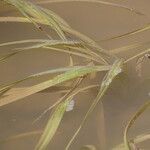
Potamogeton pusillus
Lesser pondweed · Small pondweed · Baby Pondweed · Slender Pondweed
Description
Source: leafsnapPotamogeton pusillus is a species of aquatic plant known by the common names small pondweed, lesser pondweed or least pondweed. It occurs in standing and slow-flowing freshwater habitats throughout the Northern Hemisphere.
Care Guide
💧 Water
☀️ Light Full sun
Small pondweed is native to habitats with abundant sunlight, such as the shallow margins of ponds and lakes. It prefers full sun, though it can also tolerate partial sun.
What are the sunlight requirements for Small Pondweed?
Small Pondweed, botanically known as Potamogeton pusillus, is a sun-loving perennial herbaceous plant that thrives best in full sun, requiring above 6 hours of sunlight daily. It can, however, tolerate partial sun conditions, which means it can grow in areas that receive about 3-6 hours of sunlight a day. It's important to watch how sunlight moves through your garden and choose spots that provide a balanced mix of light and shade, ensuring your Small Pondweed's happiness and health.
What are the essentials for growing Small Pondweed?
Small Pondweed originates from open habitats and often thrives in meadows and grasslands, displaying a preference for full sun, although it can also adapt to partial sun conditions. For indoor plants lacking natural sunlight, artificial lighting is essential for optimal growth. LED lights are recommended as they can be customized to provide the specific wavelengths of light the plants need. Full sun plants should have 30-50W/sq ft of artificial light, partial sun plants 20-30W/sq ft, and full shade plants 10-20W/sq ft. The artificial light source should be placed 12-36 inches above the plant and kept on for 8-12 hours per day to mimic natural daylight hours effectively.
What symptoms indicate insufficient lighting for Small Pondweed?
When Small Pondweed receives inadequate light, it may show several symptoms: new leaves may grow smaller, the plant might exhibit leggy or sparse growth, there could be faster leaf drop, and a halt in new growth. Leaves might develop lighter colors or chlorosis, a condition where leaves lose their green color. Symptoms of overexposure include sunscald, leaf curling, wilting, and leaf scorching. These signs help gauge whether your Small Pondweed is getting the right amount of light for healthy growth.
How can I address lighting issues for Small Pondweed?
To address insufficient sunlight, gradually move your Small Pondweed to sunnier locations until it receives at least 6 hours of direct sunlight daily. For indoor plants, consider using artificial light if moving them is not feasible. Placing a desk or ceiling lamp on for at least 8 hours daily or investing in professional plant grow lights can provide ample light. For outdoor plants, avoid sudden light intensity changes to prevent sunburn. Minimize obstructions by identifying and removing barriers to sunlight, like pruning trees. For smaller plants, transplanting during the plant's dormant period (late winter or early spring) to a location with ample sunlight and good drainage can be beneficial. Note that parts of the plant affected by insufficient sunlight may not recover, but new growth will be healthy with increased light exposure.
🌡️ Temperature 0–21.1°C
Small pondweed can tolerate a wide range of temperatures, but its distribution may still be restricted by different combinations of water and heat. It performs best in warm summer climates when rainfall or watering is sufficient. Long stretches of cloudy, rainy weather or prolonged high temperatures can increase the probability that Small pondweed will die. In winter, protecting the plant from cold can help improve its survival.
What is the botanical name of Small pondweed?
The botanical name of Small pondweed is Potamogeton pusillus.
💨 Humidity
🪴 Soil
🌱 Fertilizer
🪴 Pot & Repot
✂️ Pruning
Small pondweed is a delicate aquatic plant characterized by its slender stems and narrow leaves. To promote its health, manage its growth, and ensure proper water flow, it is important to prune the plant from early to late spring. Regular pruning helps prevent overgrowth, which supports a balanced ecosystem and benefits aquatic life. For detailed care techniques, refer to horticultural guides.
🌿 Propagating
🐛 Diseases & pets
☠️ Toxicity
Characteristics
- Plant Type
- Herb
- Life Cycle
- Perennial
- Genus
- Potamogeton
- Family
- Potamogetonaceae
- Hardiness Zone
- 1
- Mature Height
- 61 cm to 91 cm
- Mature Spread
- 10 cm to 30 cm
- Leaf Color
- Dark Green, Olive Drab
- Leaf Type
- Deciduous
- Flower Size
- 0.76 cm
- Bloom Time
- Summer, Early fall, Mid fall
- Planting Time
- Spring, Summer
- Harvest Time
- Late summer, Fall, Early winter
- Native Area
- Libya, Belize, India, Turkey, Sweden, Mexico, Guatemala, Slovakia, Pakistan, Slovenia, Croatia, Morocco, Belarus, Uganda, Tanzania, Germany, Haiti, Mozambique, Koppen, Ethiopia, Romania, Latvia, Belgium, Netherlands, Portugal, Saudi Arabia, Malawi, Honduras, Peru, Philippines, Bulgaria, Cyprus, Ukraine, Chad, China, Colombia, Afghanistan, Lebanon, Syria, Kyrgyzstan, Kazakhstan, Italy, Japan, Mongolia, Finland, Eswatini, Iran, Ecuador, Azerbaijan, Costa Rica, Congo (DRC), Somalia, Egypt, Lesotho, Austria, Namibia, Rwanda, Eritrea, Yemen, Kenya, Zimbabwe, Uzbekistan, Russia, Uruguay, Iraq, Argentina, Iceland, Venezuela, Estonia, Brazil, Oman, South Korea, Botswana, France, Nepal, Chile, Tajikistan, Georgia, Czech Republic, South Africa, Sudan, Mauritania, Armenia, Poland, Zambia, Greece, Serbia, Lithuania, Norway, Hungary, Spain, Switzerland, Bolivia, Denmark, Myanmar, Israel, Nicaragua, Ireland, United Kingdom, Algeria, Turkmenistan