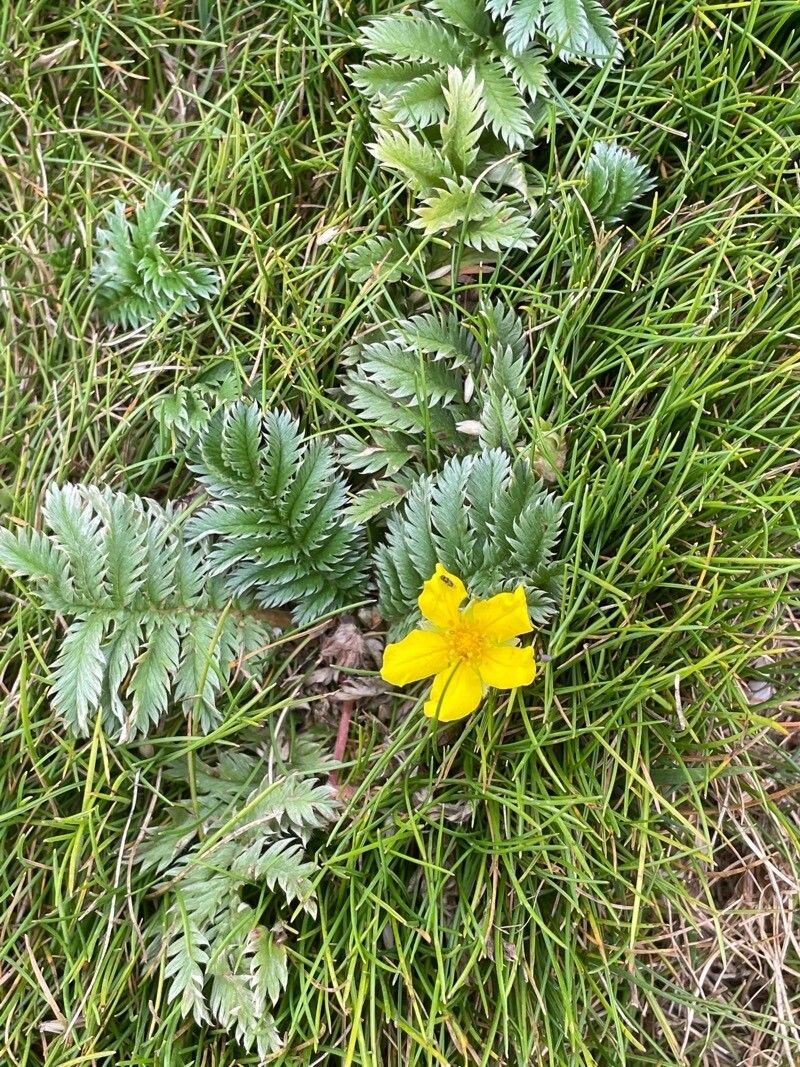
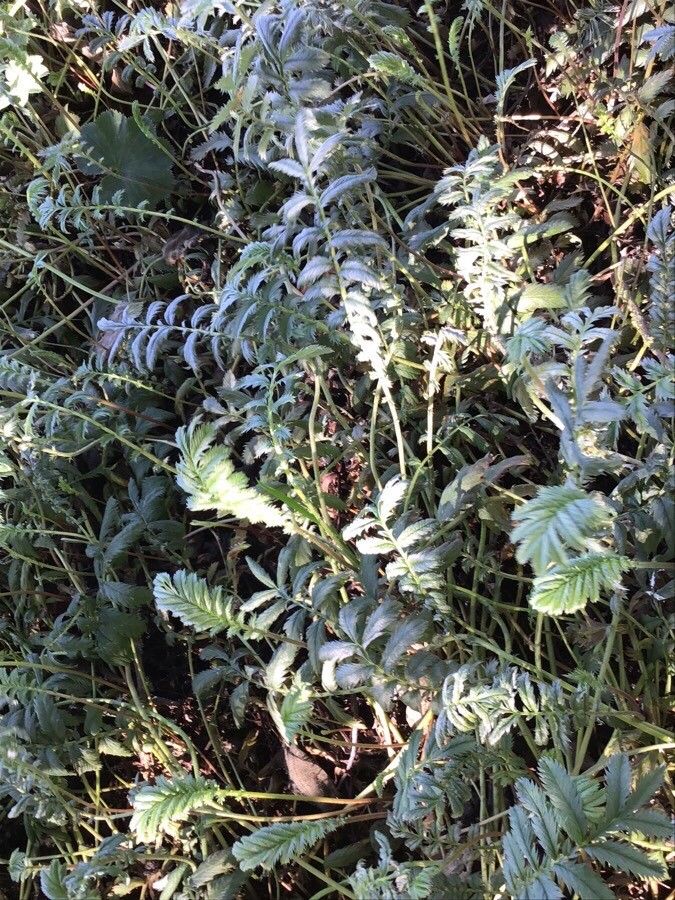
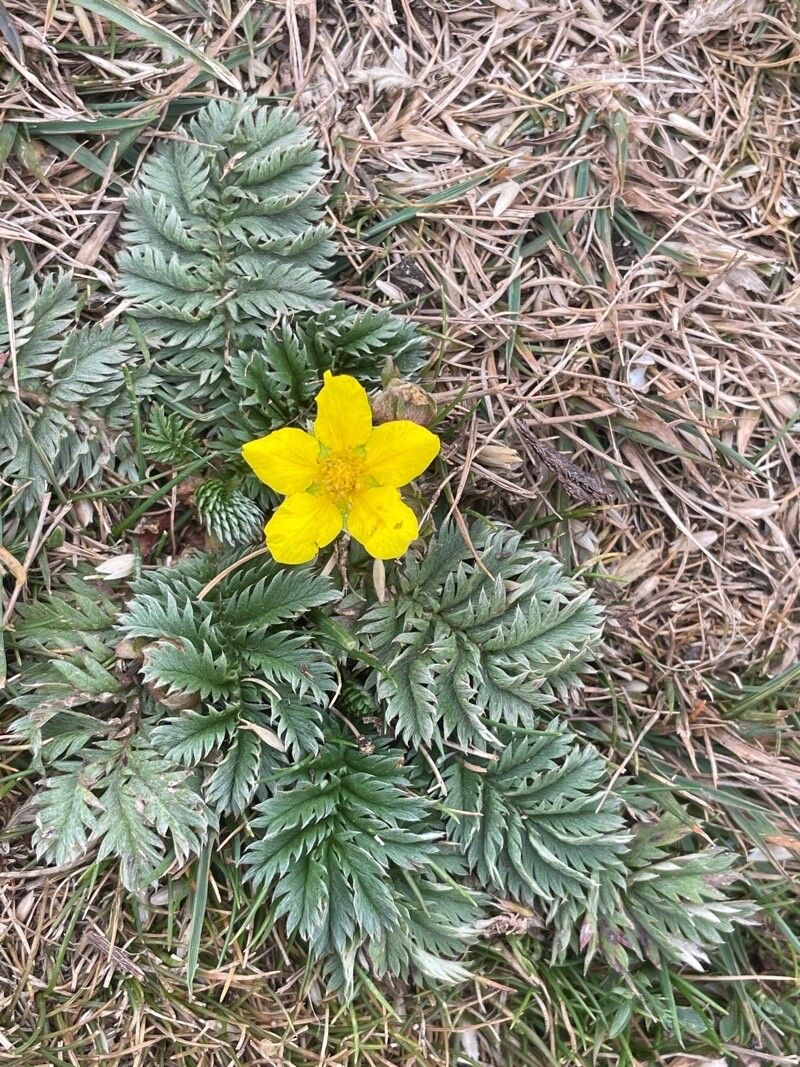
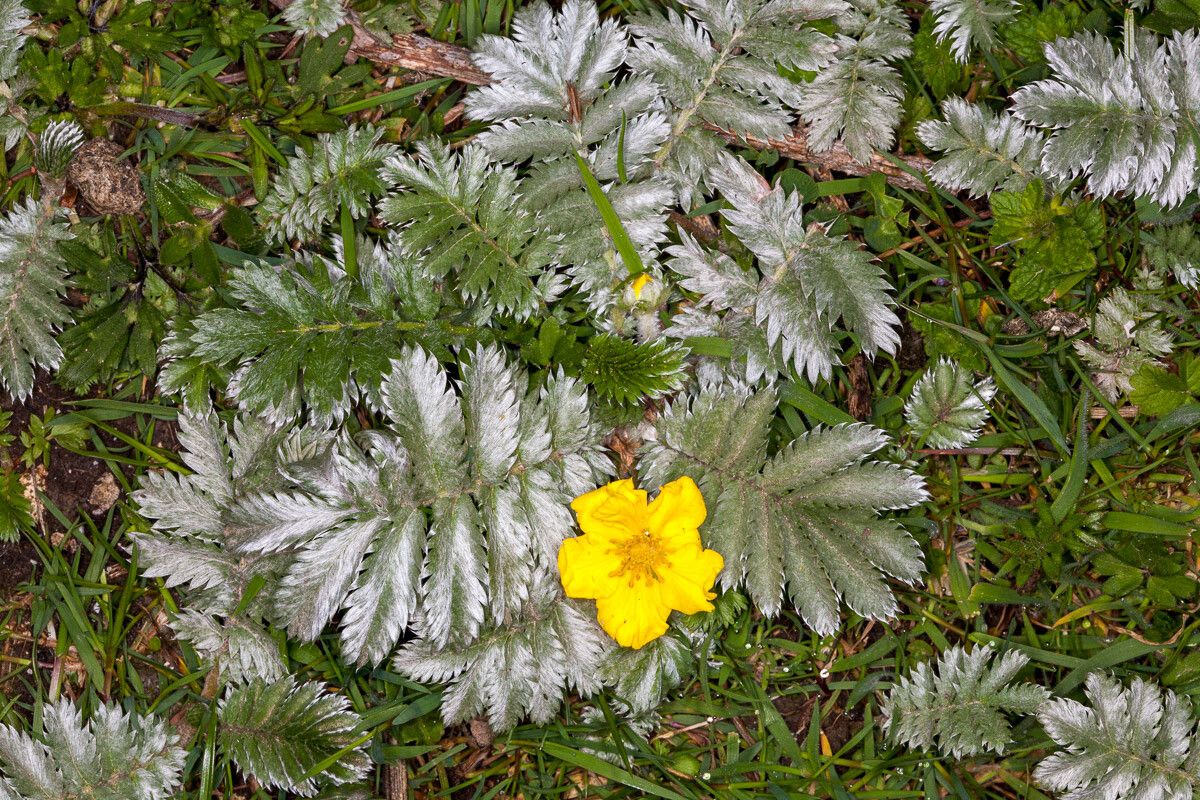
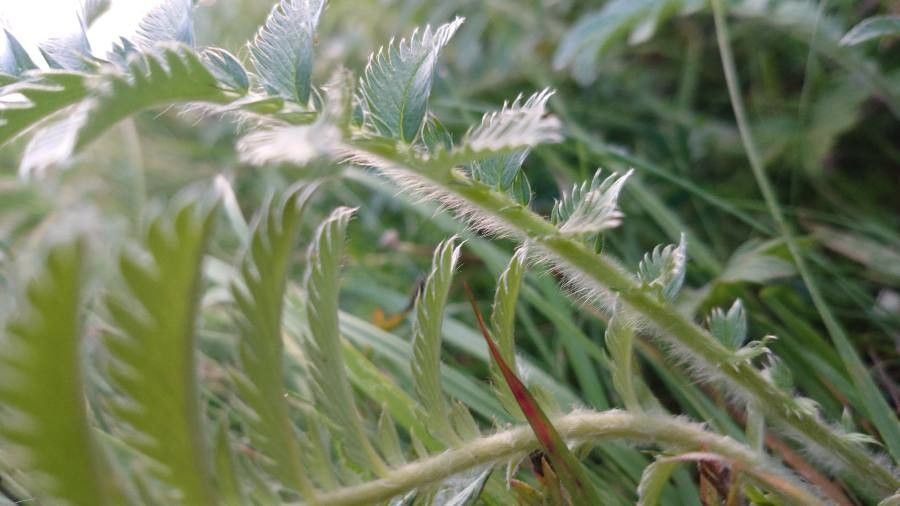
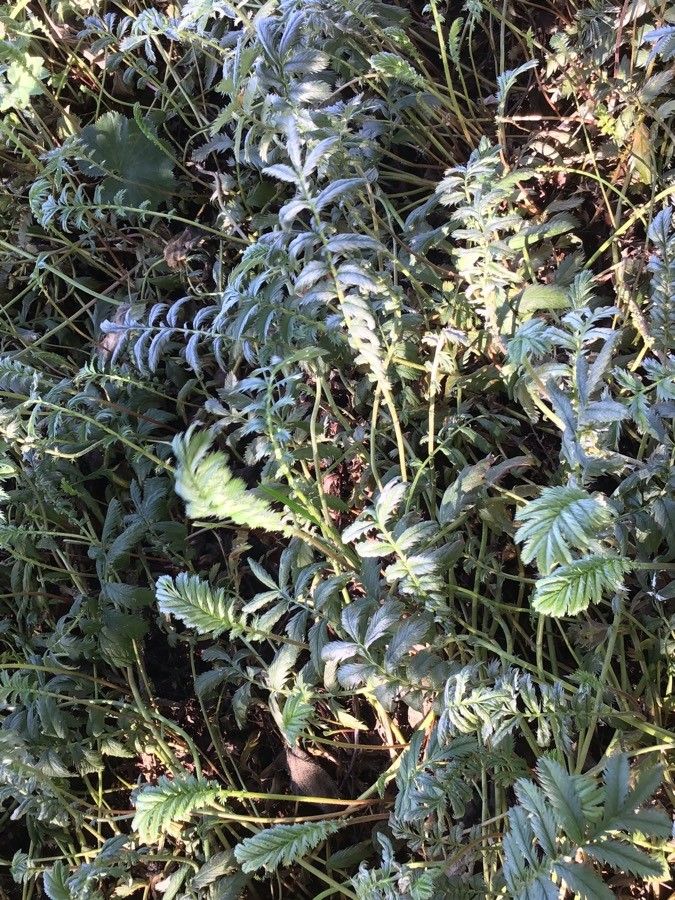
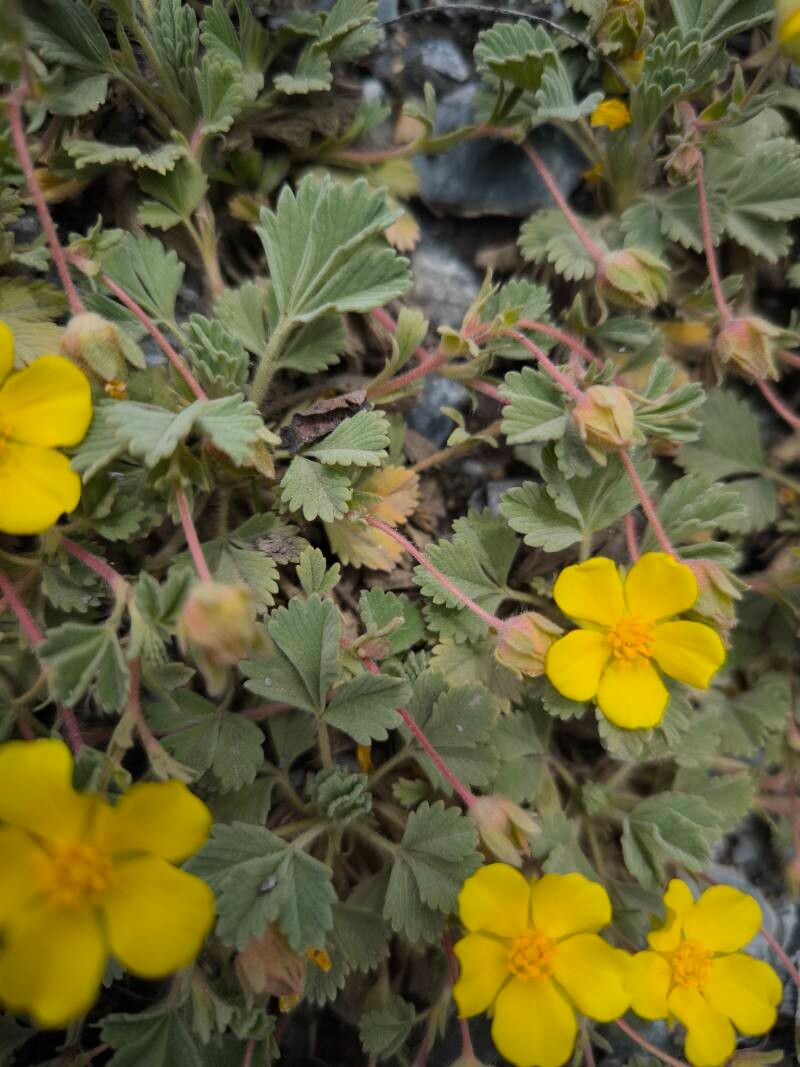
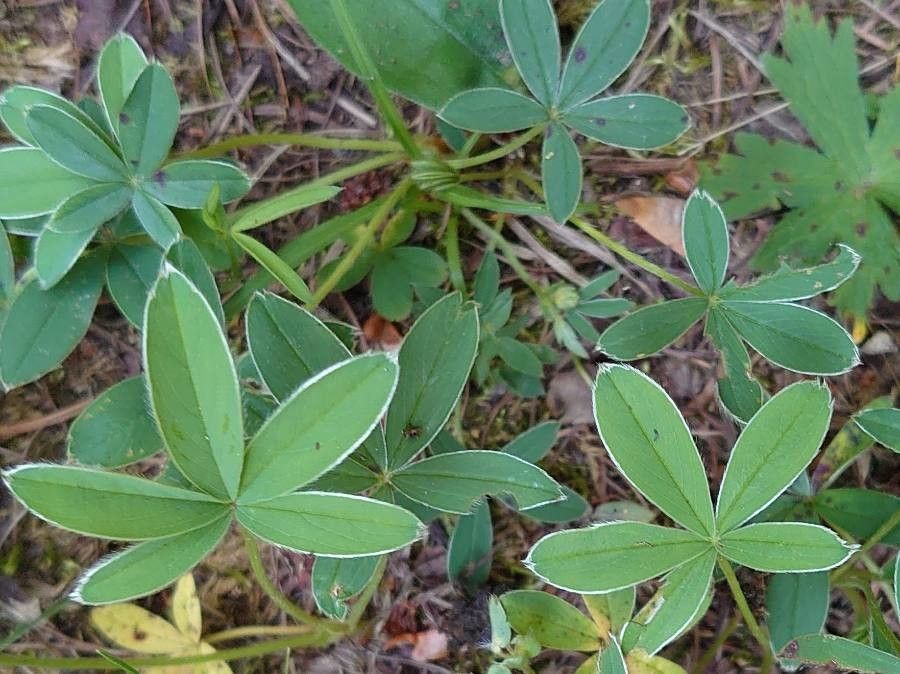
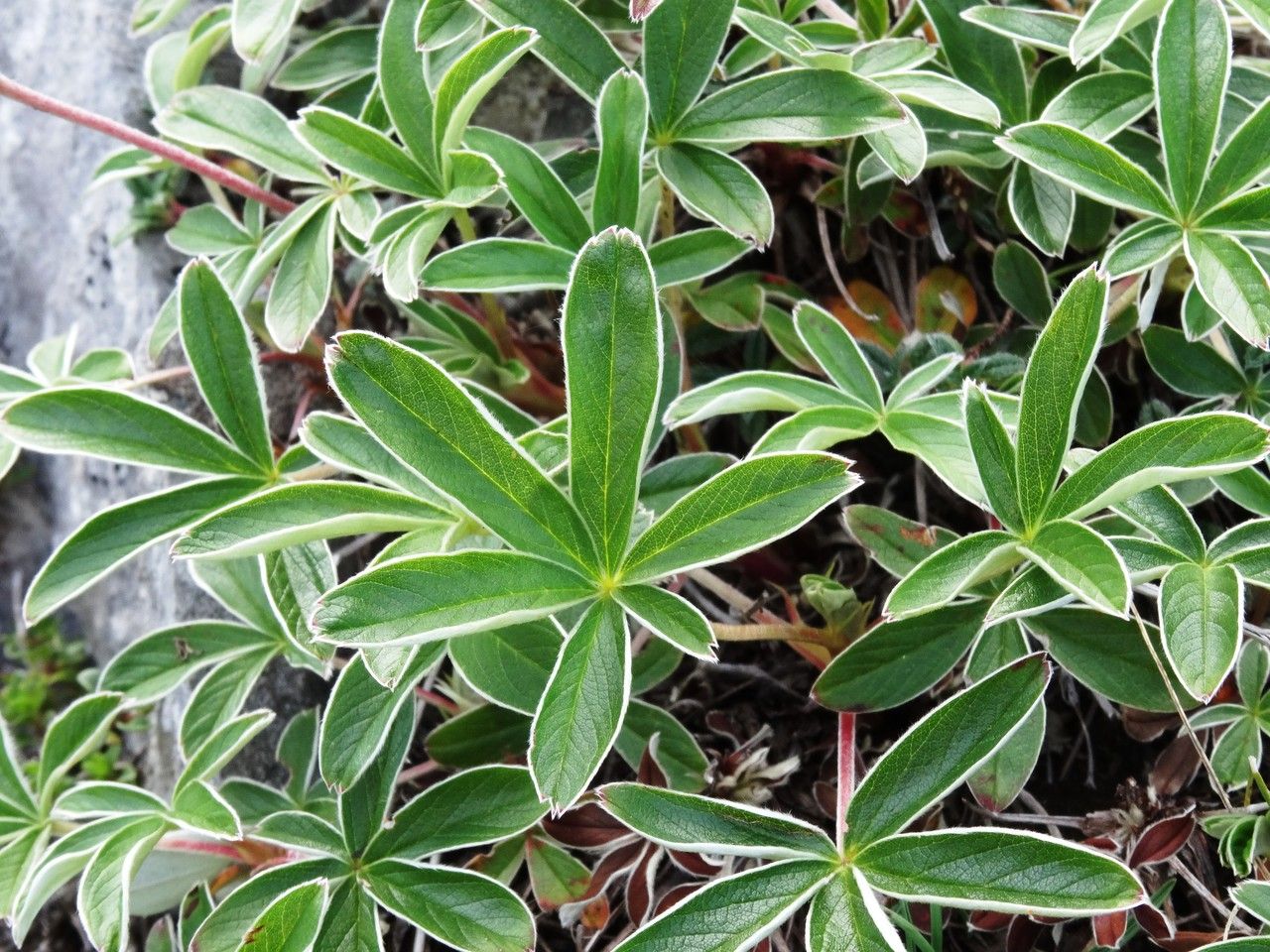
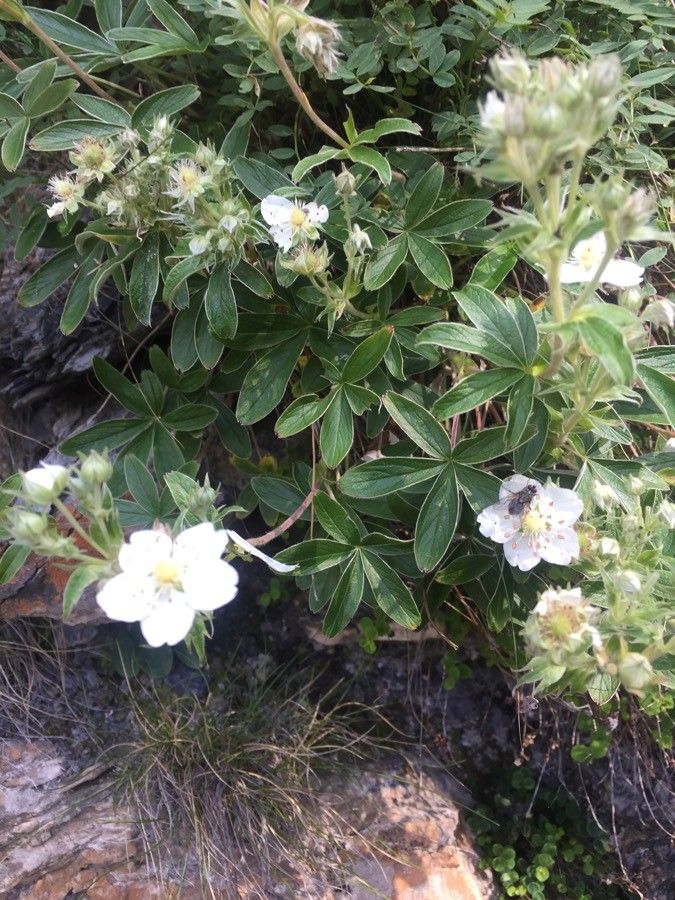
Argentina anserina (synonym Potentilla anserina) is a perennial flowering plant in the rose family, Rosaceae. It is known by the common names silverweed, common silverweed or silver cinquefoil. It is native throughout the temperate Northern Hemisphere, often on river shores and in grassy habitats such as meadows and road-sides. The plant was originally placed in the genus Potentilla by Carl Linnaeus in his Species plantarum, edition 1, (1753) but was reclassified into the resurrected genus Argentina by research conducted in the 1990s. The reclassification remains controversial and is not accepted by some authorities. It is a species aggregate which has frequently been divided into multiple species.
Goose grey is fairly disease-resistant and is generally not prone to illnesses. However, it can be vulnerable to pests and diseases present in its surroundings. These infections are usually mild. In terms of care, the plant requires moderate maintenance. It should be pruned regularly to maintain a good appearance and encourage healthy growth. Fertilizing can also help promote flowering. Goose grey is suitable for anyone with an outdoor space, such as a garden or patio, and does not demand extensive care experience. It may need more attention when grown indoors.
How to keep Potentilla Anserina.
Light
Goose grey thrives in abundant light, which supports optimal growth and health. It can also tolerate reduced light levels. Insufficient light can impair its growth, while overexposure may cause leaf scorching. Its sun-loving nature is shaped by the solar exposure of its native habitat.
Temperature
Goose grey occurs naturally in habitats where temperatures generally range from 41 to 89.6°F (5 to 32°C). It favors moderate climatic conditions but can adapt within that span. During periods of higher or lower temperatures, adjustments to its environment may be required.
Fertilizer
The best time to fertilize a Goose grey is in early spring, when it is coming out of dormancy and beginning active growth. Fertilizing supplies essential nutrients needed for healthy development. Although Goose grey has fairly low fertilizer requirements, an annual application can improve its survival and encourage better, longer-lasting flowers.
Botanical profile.
- Plant Type
- Herb
- Life Cycle
- Perennial
- Genus
- Potentilla
- Family
- Rosaceae
- Hardiness Zone
- 5-8
- Mature Height
- 15 cm to 30 cm
- Mature Spread
- 25 cm
- Leaf Color
- Green
- Leaf Type
- Semi-evergreen
- Flower Color
- Yellow
- Flower Size
- 2.03 cm to 2.54 cm
- Bloom Time
- Late spring, Early summer, Mid summer
- Planting Time
- Winter
- Harvest Time
- Mid summer
- Native Area
- Turkey, Sweden, India, Austria, Mexico, Slovakia, Montenegro, Pakistan, Slovenia, Croatia, Belarus, Russia, Germany, Iceland, Estonia, Romania, Latvia, Belgium, Moldova, Portugal, Nepal, Netherlands, France, Tajikistan, Czech Republic, Bulgaria, Armenia, Poland, Ukraine, Serbia, Lebanon, Lithuania, Norway, China, Afghanistan, Kyrgyzstan, Kazakhstan, Italy, Spain, Switzerland, Denmark, Mongolia, Finland, Bhutan, Iran, Ireland, United Kingdom, Hungary, Azerbaijan
Other names.