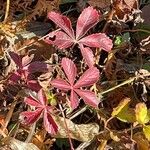
Potentilla simplex
Common cinquefoil · Old-field cinquefoil · Old-field five-fingers · Oldfield Cinquefoil · Oldfield Fivefingers
Description
Source: leafsnapPotentilla simplex, also known as common cinquefoil or old-field five-fingers or oldfield cinquefoil, is a perennial herb in the Rosaceae (rose) family native to eastern North America from Ontario, Quebec, and Labrador south to Texas, Alabama, and panhandle Florida.Potentilla simplex is a familiar plant with prostrate stems that root at nodes, with yellow flowers and 5-parted palmately pinnate leaves arising from stolons (runners) on separate stalks. Complete flowers bearing 5 yellow petals (about 4-10 mm long) bloom from March to June. It bears seed from April to July. It is commonly found in woodlands, fields, and disturbed areas. Along with Potentilla canadensis, the plant is an indicator of impoverished soil.Pollinators include mason bees, small carpenter bees, cuckoo bees, halictid bees, syrphid flies, tachinid flies, blow flies, and others. Less common pollinators are wasps and butterflies. Rabbits and groundhogs eat the foliage.Young shoots and leaves are edible as a salad or pot herb.
🎭 Wealth, Safeguarding, Foretelling, Dreams
Care Guide
💧 Water
Common cinquefoil thrives in moderate moisture, balancing both water retention and drought resilience. It typically requires weekly watering and is usually grown outdoors, where it benefits from natural rainfall patterns. The consistency of seasonal rainfall plays a significant role in its growth cycle as an herbaceous perennial.
What is the easiest way to water my Common cinquefoil plant?
To ensure the health of the Common cinquefoil, it is best to water it with filtered water at room temperature or slightly warmer. Tap water may contain harmful particles that could affect the plant. Since the Common cinquefoil originates from warm environments, cold water could shock its system. It is also recommended to avoid overhead watering as it may lead to foliage complications. Instead, simply apply filtered room temperature water directly to the soil until it is thoroughly soaked. This method promotes root hydration and enables nutrient collection.
What should I do if I give my Common cinquefoil too much water or too little water?
Both overwatering and underwatering can harm the health of your Common cinquefoil, but overwatering is more common. If you give this plant too much water, the stems and leaves may wilt and turn yellow. Overwatering for a long time can also cause diseases like root rot, mold, and mildew, which can kill the plant. Underwatering is less common because the Common cinquefoil can handle drought to some extent. However, underwatering can still happen and can cause the leaves to become brittle and brown. It's important to watch for signs of overwatering and take action quickly. Diseases caused by overwatering, like root rot, may not be fixable if you wait too long. If you see early signs of overwatering, reduce your watering schedule immediately. Check the soil where the plant is growing - if it drains poorly, replace it with a loose, well-draining potting mix. If you notice signs of underwatering, simply water more regularly until the signs go away.
How often should I water my Common cinquefoil plant?
If your Common cinquefoil is in a pot, the most accurate way to know if it needs water is to stick your finger into the soil. If the top two to three inches of soil are dry, it is time to water it. If you have your Common cinquefoil planted outdoors, you can use a similar method to check the soil. When the top few inches of soil have dried out, it is time to water. Typically, during spring and early fall, you will need to water this plant about once a week using this method. However, during extremely hot weather, you may need to water it two or more times per week. It's worth mentioning that mature and well-established Common cinquefoil plants are quite resilient and can tolerate drought conditions.
How much water does my Common cinquefoil plant need?
When watering your Common cinquefoil, don't hold back on the amount of water you give. Wait until the first two to three inches of soil are dry, then give the plant a thorough watering. Make sure to soak the soil completely and allow excess water to drain out of the pot. If you don't see any excess water draining, you may not have given enough water. However, be careful not to let the water accumulate in the soil, as this can harm the plant. If the water isn't draining well, it could be a sign of poorly draining soil, which is not good for the plant's health. If the plant is located outdoors, it should be fine with 1 inch of rain per week.
How much water does my Common cinquefoil need when it is growing?
The water needs of the Common cinquefoil change depending on its growth stages. During the first few years or after transplanting, the plant requires extra water as it focuses on sprouting new roots for future growth. These new roots thrive with slightly more moisture. As the plant matures, it requires less water. Additionally, during the bloom period, the Common cinquefoil needs more water to support flower development.
☀️ Light Full sun
Common cinquefoil prefers plenty of sunlight and performs best when exposed to generous light. It can, however, tolerate some shade. As a species native to open habitats, it is adapted to environments with substantial light. Too little light can limit its growth, while too much may create harsh conditions that are generally unfavorable for the plant.
What are the sunlight requirements for Common Cinquefoil?
Common Cinquefoil flourishes under an abundance of sunlight, ideally thriving in conditions that generously bathe it in light. However, it is also capable of tolerating some shade. Originating from open lands, this plant has adapted to environments that offer significant exposure to light. The requirements specify 'full sun' as more than 6 hours of sunlight, and 'partial sun' as about 3-6 hours of sunlight daily. Insufficient light levels can impede the plant's growth, while too much light can create harsh conditions that are not typically ideal. Remembering to observe how sunlight moves through your garden will help you find the perfect balance of light and shade, ensuring your plants' happiness.
How does artificial lighting affect the growth of Common Cinquefoil indoors?
Indoor plants, including Common Cinquefoil, require adequate lighting to grow optimally. When natural sunlight is insufficient, especially during winter or in less sunny spaces, artificial lights become crucial for promoting healthier, faster plant growth. For indoor plants, it's important to choose the right type of artificial light, such as LED lights which can be customized to provide specific wavelengths needed by the plants. Full sun plants need between 30-50W/sq ft, partial sun plants require 20-30W/sq ft, and full shade plants need 10-20W/sq ft of artificial light. The correct distance to place the light source from the plant is 12-36 inches to mimic natural sunlight. Moreover, mimicking the natural daylight hours most plants benefit from, which is about 8-12 hours of light per day, will support the plant's growth.
What are the symptoms of inadequate or excessive light exposure in Common Cinquefoil?
Common Cinquefoil shows various symptoms when exposed to inadequate or excessive light. In low light conditions, new leaves might grow smaller, and the plant may exhibit leggy or sparse growth, a tendency for earlier leaf drop to conserve resources, delayed or halted growth, paler new leaves indicating a lack of chlorophyll, and in extreme cases, chlorosis where leaves lose their green color. Conversely, excessive sunlight exposure can lead to sunscald, leaf curling as a defense mechanism to reduce water loss, wilting due to increased water loss through transpiration, and leaf scorching characterized by brown, dry, and crispy leaf edges. These symptoms highlight the plant's struggle to adapt to the available lighting conditions, affecting its overall health.
How can I manage light conditions for Common Cinquefoil to ensure optimal growth?
To ensure optimal growth of Common Cinquefoil, gradually acclimatize the plant to the desired light conditions. For indoor plants, move them progressively each week to sunnier spots until they receive at least 6 hours of direct sunlight daily. Utilize south-facing windows for maximum sunlight exposure and consider employing artificial light if the plant is large or immobile, keeping these lights on for at least 8 hours a day. Outdoors, select the best sunlight-drenched spot and slowly adapt your plants to more intense light to prevent sunburn. For obstructed sunlight issues, try pruning trees that shadow your plants or transplant smaller plants to sunnier locations during their dormant period for better light access and drainage. Note that parts of the plant already affected by insufficient light may not recover, but new growth will be healthy with improved light exposure.
🌡️ Temperature 5–35°C
The common cinquefoil comes from temperate regions and prefers temperatures of 41 to 95 ℉ (5 to 35 ℃). In colder months, it is recommended to keep temperatures near 41 to 68 ℉ (5 to 20 ℃), and in warmer months it can tolerate temperatures up to 95 ℉ (35 ℃).
What is the ideal temperature range for Common Cinquefoil?
The Common Cinquefoil thrives in a temperate climate with a preference for temperatures ranging from 41 to 95 °F (5 to 35 °C). During the colder months, maintaining the temperature between 41 to 68 °F (5 to 20 °C) is advised. In the warmer months, it can tolerate up to 95 °F (35 °C). This plant has a strong resistance to cold, and special frost protection measures are generally not required. However, if winter temperatures are expected to drop below -25°C, it's important to take measures to protect the plant, such as covering it with soil or straw and watering it abundantly before the first freeze to keep the soil moist.
How does Common Cinquefoil react to low temperatures?
Common Cinquefoil is notably cold-tolerant, performing best in temperatures above 5°C. During winter, it should not be exposed to temperatures below -20°C. Although the plant may not show immediate adverse effects if temperatures fall below -25°C, such conditions can lead to a decrease in sprouting or absence of sprouting come spring. To ameliorate this, it is recommended to remove any parts that fail to sprout in spring.
What should I do if Common Cinquefoil is exposed to high temperatures?
During the summer, it's crucial to ensure that the temperature surrounding Common Cinquefoil does not exceed 35°C. Exposure to temperatures above 38°C can result in the leaves becoming lighter, curling, and being susceptible to sunburn, leading to the potential wilting and drying of the plant in severe cases. To address these issues, trim away the sunburned and dried parts, move the plant to a shaded location, or use a shade cloth to protect it from the midday and afternoon sun. Additionally, watering the plant in the morning and evening to maintain soil moisture is beneficial.
💨 Humidity
🪴 Soil 6-7
🌱 Fertilizer
One fertilizer application in spring is generally adequate for Common cinquefoil, though several feedings will boost growth to its fullest. Apply fertilizer about once a month to every six weeks. Feeding improves the appearance and function of the leaves, helping them keep an even color and a healthy texture. It also promotes root development and nutrient uptake, supporting the plant’s long-term health.
🪴 Pot & Repot
✂️ Pruning
Common cinquefoil features beautiful five-petaled yellow flowers and serrated leaves. To keep your plant healthy, prune it in early to late spring. This will remove any dead stems, improve airflow, and encourage blooming. Regular maintenance is important to control its vigorous growth and ensure it complements your garden. For specific care recommendations, be sure to refer to local guidelines.
🌿 Propagating
🐛 Diseases & pets
☠️ Toxicity
Characteristics
- Plant Type
- Herb
- Life Cycle
- Perennial
- Genus
- Potentilla
- Family
- Rosaceae
- Hardiness Zone
- 5-9
- Mature Height
- 15 cm to 61 cm
- Mature Spread
- 30 cm
- Leaf Color
- Green, White
- Leaf Type
- Deciduous
- Flower Color
- Yellow
- Flower Size
- 2.54 cm
- Bloom Time
- Mid spring, Late spring, Early summer
- Planting Time
- Spring, Summer
- Harvest Time
- Early summer, Mid summer