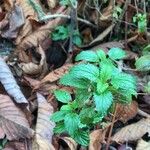
Prasium majus
White hedge-nettle · Mediterranean Prasium
Description
Source: leafsnapPrasium majus, commonly known as greater prasium or meadow-parsnip, is a perennial herbaceous plant belonging to the Apiaceae family. Native to Europe and Western Asia, it typically thrives in meadows, pastures, and along roadsides. The plant can grow up to 1 meter tall and features a thick, hollow stem. Its leaves are alternate, with long petioles that are divided into three toothed leaflets. From June to August, Prasium majus produces small, white or pinkish flowers that bloom in umbels at the top of the stem. Greater prasium has been valued for its medicinal properties for centuries, particularly for its diuretic effects that help increase urine production and its ability to stimulate digestion. Additionally, Prasium majus has culinary applications, often being added fresh or dried to soups and stews. In summary, Prasium majus is a notable plant with significant medicinal and culinary uses, making it an important part of traditional medicine practices across Europe and Asia.
Care Guide
💧 Water Every 7 days
White hedge-nettle is native to the Mediterranean region and thrives in dry climates due to its drought tolerance. It requires watering every 2-3 weeks, but be careful not to overwater, as this can be harmful. This plant is ideal for xeriscaping and water-efficient gardens because it can benefit from occasional rainfall while adapting well to arid conditions.
How should I water my White hedge-nettle plant?
Your White hedge-nettle doesn't have strict requirements for watering. You can use various tools like watering cans, hoses, or cups to water it. It's important to water the soil directly, making sure that all areas receive an equal amount of moisture to nourish the entire root system. Filtered water is preferable, as tap water may contain harmful particles. Additionally, using water at or slightly above room temperature is better, as extremely hot or cold water can shock the White hedge-nettle. However, overall, this plant is usually tolerant to different water types.
What should I do if I give my White hedge-nettle too much water or too little water?
Outdoor plants, especially newly planted ones and seedlings, are prone to being under-watered. It's important to remember that you need to water them enough for a few months when they are small or newly planted. Once the roots are established, White hedge-nettle plants can rely on rain most of the time. When White hedge-nettle is planted in pots, overwatering is often a common problem. If you accidentally overwater your White hedge-nettle, take immediate action to fix the situation. Stop watering the plant right away to minimize the effect of overwatering. Then, remove the plant from its pot and check its roots. If you don't find any root rot, you can return the plant to its container. However, if you find signs of root rot, trim the affected roots and consider using a fungicide to prevent further damage. Finally, repot the White hedge-nettle in well-draining soil. In the case of underwatering, simply water the White hedge-nettle more frequently. This is usually an easy fix. If you underwater, the plant's leaves will droop, dry out, and fall off, but they will quickly recover their fullness after sufficient watering. So, make sure to adjust your watering frequency as soon as you notice underwatering occurring.
How frequently should I give water to my White hedge-nettle?
To take care of most outdoor plants, they usually thrive with natural rainfall. However, if your area doesn't get much rain, it's important to water your plants adequately. During spring and fall, watering every 2 weeks should be sufficient. But in the summer, when plants need more water, you will need to water them more frequently. In the winter, when plant growth slows down, you can reduce watering. In fact, you may not need to water them at all during winter. If you have a White hedge-nettle plant that is young or newly planted, it's important to water it more frequently to help it establish and grow into a more adaptable and drought-tolerant plant. For potted plants, there are two main approaches to determine how often to water your White hedge-nettle. The first is to stick to a predetermined watering schedule, such as once a week or once every other week. However, this may not always be effective as it doesn't take into account the specific growing conditions of your plant. Alternatively, you can adjust your watering frequency based on the moisture level of the soil. It's generally best to wait until the top two to four inches of soil, about one-third to one-half the depth of the pot, have completely dried out before watering again. This method ensures that you're not over-watering the plant.
How often do I need to water my White hedge-nettle plant?
To water your White hedge-nettle, you don't always need a lot of water. If only a few inches of soil have dried since your last watering, give the plant about five to ten ounces of water each time. You can also gauge the amount of water based on how dry the soil is. If more than half of the soil has dried out, give more water until you see excess water draining from the pot's holes. If the White hedge-nettle is in an area with plenty of rain, it may not need additional watering. When it is young or getting established, make sure it gets 1-2 inches of rain per week. As it grows, it can rely solely on rainwater, but if there is no rain for 2-3 weeks during hot weather, give it a full watering to prevent stress.
How do I know if I'm watering my White hedge-nettle plant enough?
The White hedge-nettle is more commonly affected by overwatering. There are a few signs to watch for if this happens. Usually, the leaves of an overwatered White hedge-nettle will turn yellow and some may even fall off. Overwatering can also make the plant structure shrink and encourage root rot. On the other hand, an underwatered White hedge-nettle will start to droop as well. Its leaves may become brown and fragile to the touch. If you notice signs of either overwatering or underwatering, you should take action to restore the health of your White hedge-nettle.
☀️ Light Full sun
The white hedge-nettle generally grows best in full sun for most of the day, though it can tolerate somewhat reduced light. Having originated in sunny habitats, it has adapted to thrive in those conditions. Too little sunlight can restrict its growth, while too much may cause damage.
What are the sunlight requirements for White hedge-nettle (Prasium majus)?
White hedge-nettle thrives best under full sun conditions, where it receives more than 6 hours of sunlight daily. It can, however, adapt and grow in partial sun, which is about 3-6 hours of sunlight. It's essential to watch how sunlight moves through your garden to identify spots that offer the right balance of light and shade. This ensures the plants receive adequate light for optimal growth and health. Inadequate sunlight can inhibit growth, whereas too much direct exposure can be harmful.
How can artificial lighting be used for White hedge-nettle grown indoors?
For White hedge-nettle grown indoors, especially in conditions where natural sunlight is insufficient, artificial lighting is a viable solution. Artificial lights, such as LED lights, can be customized to provide the specific wavelengths of light needed by plants. Full sun plants require 30-50W/sq ft, partial sun plants need 20-30W/sq ft, and full shade plants require 10-20W/sq ft of artificial light. The light source should be placed 12-36 inches above the plant to mimic natural sunlight as closely as possible, and most plants will need 8-12 hours of light per day, depending on the species.
What are some common symptoms of inadequate sunlight in White hedge-nettle?
When White hedge-nettle doesn't receive enough sunlight, it may exhibit several symptoms: smaller new leaves compared to the older ones, leggy or sparse growth, faster leaf drop, slower or no growth, lighter-colored new leaves, and symptoms of chlorosis, where leaves lose their green color and turn yellow. Excessive sunlight can also cause problems such as sunscald, leaf curling, wilting, and leaf scorching, indicating damage from intense light exposure.
What are some solutions to light-related issues for White hedge-nettle?
To address light-related issues in White hedge-nettle, gradual acclimatization to sunlight is critical. For indoor plants, move them progressively closer to a sunnier spot each week, aiming for at least 6 hours of direct sunlight daily. Utilizing a south-facing window or artificial lights can also help. Outdoors, move plants gradually to sunnier spots to avoid sunburn. If obstructions like trees block sunlight, consider pruning them. For smaller plants, consider transplanting during their dormant period to a location with better sunlight and drainage. It's important to remember that parts of the plant already affected by insufficient sunlight might not recover, but new growth after light exposure adjustment should be healthy.
🌡️ Temperature 15–37.8°C
White hedge-nettle is highly adaptable to a variety of climatic conditions, whether exposed to blazing summers or freezing winters. However, it does have a preferred temperature range for growth. If temperatures become too high, the plant is susceptible to heat and humidity stress, which can lead to its death. In areas where temperatures approach the lower limit of its cold tolerance, providing insulation is important to protect the plant.
💨 Humidity
🪴 Soil 6-7
🌱 Fertilizer
Proper timing matters for fertilizing White hedge-nettle. Apply fertilizer in early spring and continue monthly until early summer. The fertilizer encourages attractive blooms and supplies energy during both dormant and active growth periods.
🪴 Pot & Repot
✂️ Pruning
White hedge-nettle is a plant recognized for its silvery-green leaves and white flowers. To keep it thriving, prune it properly from early to late winter. Remove dead stems and thin out crowded areas to improve air circulation. Using clean, sharp tools is crucial to prevent disease and encourage healthy, vigorous growth.
🌿 Propagating
🐛 Diseases & pets
☠️ Toxicity
Characteristics
- Plant Type
- Shrub
- Life Cycle
- Perennial
- Genus
- Prasium
- Family
- Lamiaceae
- Hardiness Zone
- 8-11
- Mature Height
- 10 cm to 30 cm
- Mature Spread
- 10 cm to 40 cm
- Leaf Color
- Green
- Leaf Type
- Evergreen
- Flower Color
- White
- Flower Size
- 0.25 cm
- Bloom Time
- Spring
- Planting Time
- Spring, Autumn
- Harvest Time
- Summer
- Native Area
- Libya, Egypt, Tunisia, Turkey, Montenegro, Cyprus, Greece, Croatia, Morocco, Lebanon, Syria, Portugal, Italy, Spain, Albania, Algeria, France