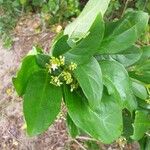
Premna serratifolia
Headache Tree · Bastard guelder · Creek premna · Coastal premna · Buas-buas
Description
Source: leafsnapPremna serratifolia is a small tree/shrub in the family Lamiaceae. It flowers and fruits between May and November. During flowering season, it attracts a large number of butterflies and bees. Synonyms of Premna serratifolia Linn. include P. corymbosa (Burm. f.) Merr., P. integrifolia L. and P. obtusifolia R. Br.).
Care Guide
💧 Water Every 7 days
Bastard guelder, native to coastal woodlands, thrives in moderate humidity and prefers to be watered every 2-3 weeks, allowing the soil to partially dry between waterings. This species is well-suited for subtropical climates and is resilient to fluctuating rainfall patterns.
How should I water my Bastard guelder to keep it healthy?
Your Bastard guelder is not very particular about how you water it, so you can use any common watering tool. Watering cans, hoses, or cups will all work fine. Regardless of the tool you choose, it's important to water the soil directly. Make sure to wet all areas of the soil equally to ensure all parts of the root system receive enough water. Using filtered water is helpful, as tap water may contain harmful particles. It's also beneficial to use water that is at or slightly above room temperature, as very cold or hot water may shock the Bastard guelder. However, the plant typically responds well to any type of water you give it.
What do I need to do if I give my Bastard guelder plant too much water or too little water?
Outdoor plants, especially newly planted ones or seedlings, are susceptible to not being watered enough. It's important to remember to water them consistently for a few months, especially when they are small or recently planted. Once the roots are established, Bastard guelder plants can usually rely on rainwater. However, when these plants are in pots, overwatering is more likely to occur. If you accidentally overwater your Bastard guelder, take immediate action to remedy the situation. First, stop watering the plant to minimize the effects of overwatering. Then, remove the plant from its pot and inspect the roots. If there is no root rot, you can return the plant to its container. But if there are signs of root rot, trim affected roots and consider applying a fungicide. Lastly, repot the Bastard guelder in well-draining soil. In the case of underwatering, simply water the plant more frequently. Underwatering is easily fixable, as the plant's leaves will droop, dry out, and fall off, but they will bounce back quickly after being properly watered. Make sure to adjust your watering frequency as soon as you notice signs of underwatering.
How regularly do I need to water my Bastard guelder?
If your area experiences a normal amount of rainfall, most outdoor plants can grow without additional watering. However, if there is a lack of rainfall, it's important to water your plants every 2 weeks in the spring and fall. In the summer, you will need to water them more frequently. In the winter, plants require less water, so you can water them less often or not at all. Young or newly planted Bastard guelder plants need more frequent watering to help them establish and grow into more adaptable and drought-tolerant plants. For potted plants, there are two main methods to determine watering frequency for your Bastard guelder. The first option is to follow a set watering schedule, such as once a week or once every other week. However, this may not always be suitable as it does not consider the specific conditions of your guelder's growing environment. Watering frequency can also vary depending on the season. During the summer when water needs are highest, a predetermined schedule may not be enough. Alternatively, you can judge when to water based on soil moisture. It is recommended to wait until the top two to four inches of soil, about ⅓ to ½ of the pot's depth, have completely dried out before giving more water.
How much water does my guelder rose plant need?
To water your Bastard guelder effectively, you don't always need to use a lot of water. If only a few inches of soil have dried since the last watering, giving it about five to ten ounces of water each time will promote healthy growth. Take into account the moisture of the soil when deciding how much water to give. If more than half of the soil has dried out, consider giving more water than usual. Make sure to water enough to moisten all the dry soil layers since the last watering, and continue until you see excess water draining from the pot's holes if necessary. If your Bastard guelder is planted outdoors in a rainy area, additional watering might not be necessary. When the plant is young or establishing, it should receive 1-2 inches of rain per week. As it grows and gets established, it can rely on rainwater alone. However, in hot weather with no rain for 2-3 weeks, a full watering is needed to prevent stress.
How can I know if I'm giving enough water to my Bastard guelder plant?
The Bastard guelder commonly experiences issues with overwatering, and there are clear signs to watch for. If overwatered, the plant will have yellowing leaves and may shed some. Additionally, overwatering can lead to shriveling of the overall plant structure and root rot. Conversely, an underwatered Bastard guelder will also start to wilt and may have brown or brittle leaves. In either case, it is important to take action and restore the plant's health.
☀️ Light Full sun
The bastard guelder prefers locations that receive full sunlight throughout the day. Regular exposure to sun supports its healthy growth and vigor. Native to sun-rich habitats, it tolerates varying light levels. However, either too much or too little light can adversely affect its growth.
What are the sunlight requirements for Bastard guelder?
Bastard guelder thrives in areas that receive full sunlight throughout the day, requiring above 6 hours of sunlight for optimal growth. This consistent exposure is crucial for its health and vitality, grounded in its origin from environments with abundant solar exposure. It's important to watch how sunlight moves through your garden and choose spots that provide a perfect balance of light and shade, ensuring the plant's wellness. However, both excessive and insufficient sunlight can negatively affect its growth.
How can artificial lighting be used for indoor Bastard guelder plants?
Indoor Bastard guelder plants necessitate adequate lighting for optimal growth, especially when natural sunlight is insufficient. This is common in winter or less sunny spaces. Artificial lights, like LED lights which provide specific wavelengths needed by plants, can be an effective solution. For full sun plants, 30-50W/sq ft of artificial light is needed, for partial sun plants 20-30W/sq ft, and for full shade plants 10-20W/sq ft. The light source should be placed 12-36 inches above the plant to mimic natural sunlight, and the duration should replicate natural daylight hours, with most plants requiring 8-12 hours of light per day.
What are the symptoms of light deficiency in Bastard guelder?
Light deficiency in Bastard guelder can lead to several noticeable symptoms, including smaller new leaves, leggy or sparse growth, faster leaf drop, slower or no new growth, and lighter-colored new leaves. Additionally, conditions like chlorosis (where leaves lose their green color), sunscald (damage from intense sunlight), leaf curling (as a defense mechanism to reduce water loss), wilting, and leaf scorching (brown, dry edges on leaves due to excessive light) can indicate incorrect light exposure. Observing these symptoms early on can help address light issues before the plant's health declines significantly.
What solutions are recommended for light-related issues in Bastard guelder?
For indoor plants, optimizing light involves gradually moving plants to sunnier locations to achieve at least 6 hours of direct sunlight daily or using artificial lighting like desk or ceiling lamps for at least 8 hours daily. For outdoor plants, finding the best sunlight spot and gradually adapting them to brighter conditions is key. This includes careful relocation and avoiding sudden changes in light intensity. Additionally, for ground-grown plants, reducing obstructions by pruning and relocating smaller plants during dormant periods can significantly improve sunlight exposure. It’s important to note that while damaged parts may not recover, new growth post-adjustment should be healthy.
🌡️ Temperature 20–37.8°C
Bastard guelder is native to habitats with temperatures between 68 and 100 °F (20 to 38 ℃). It favors warmer climates and may need temperature adjustments in colder seasons to maintain vibrant growth.
What are the ideal environmental conditions for Bastard guelder (Premna serratifolia)?
Bastard guelder thrives in warm climates, with its ideal temperature range being 68 to 100 °F (20 to 38 °C). It is a heat-loving plant that requires careful management of temperatures, especially in environments that experience colder seasons. During autumn and winter, it's recommended to bring the plant indoors if it was previously outside, placing it near a bright window but at a distance from direct heat sources like heaters. The goal is to maintain a temperature above 20°C, especially during the winter, to encourage continued growth and prevent any damage from cold temperatures.
How should Bastard guelder be cared for in low temperatures?
Bastard guelder is particularly sensitive to cold temperatures and does not tolerate them well. If temperatures drop below 20°C, and especially if approaching 0°C, the plant may show symptoms like a lightening of leaf color, followed by browning or blackening after frost damage, and wilting or drooping. To care for Bastard guelder in low temperatures, you should trim off any frost-damaged parts and immediately move the plant to a warmer indoor environment. Placing it near a south-facing window can ensure it receives adequate sunlight while avoiding the excessive dryness caused by nearby heaters or air conditioning vents.
What are the effects of high temperatures on Bastard guelder and how can they be mitigated?
While Bastard guelder prefers warm temperatures, it is important to protect it from extreme heat, particularly temperatures above 100°F (38°C). Exposure to temperatures above 109°F (43°C) can cause the leaves to lighten in color and make the plant more susceptible to sunburn. To mitigate the effects of high temperatures, trim away any sunburned or dried parts of the plant. Moving the plant to a location that is shaded during the midday and afternoon sun can help, as can watering the plant in the morning and evening to ensure the soil remains moist and cool.
💨 Humidity normal (40-60%)
This plant will thrive in moderate humidity, which is probably the level in your home. However, misting it a few times a week can be very beneficial. Make sure the room has good ventilation.
🪴 Soil 6-7
🌱 Fertilizer
The best time to fertilize a Bastard guelder is in early spring as it breaks dormancy. This supports overall growth and flower development. Fertilizing improves foliage, stems, and branches and encourages flowers that are large, vivid, and long-lasting. It helps transport nutrients from the roots to the flowers and boosts the plant’s health and resistance to disease.
🪴 Pot & Repot
✂️ Pruning
Pruning the bastard guelder in early to late winter promotes healthier growth by removing dead or overcrowded branches. This practice improves air circulation and reduces the risk of disease. Additionally, it encourages denser foliage and more abundant flowers, contributing to a balanced shape that enhances both the plant's aesthetic appeal and overall health.
🌿 Propagating
🐛 Diseases & pets
☠️ Toxicity
Characteristics
- Plant Type
- Tree, Shrub
- Life Cycle
- Perennial
- Genus
- Premna
- Family
- Lamiaceae
- Hardiness Zone
- 9-11
- Mature Height
- 7.01 m
- Mature Spread
- 3.05 m to 6.1 m
- Leaf Color
- Green, Dark Green
- Leaf Type
- Evergreen
- Flower Color
- White
- Flower Size
- 2.54 cm to 4.57 cm
- Bloom Time
- Summer
- Planting Time
- Spring, Summer, Autumn
- Harvest Time
- Late summer, Early fall, Mid fall
- Native Area
- Nepal, Sri Lanka, India, Malaysia, Vanuatu, Philippines, Madagascar, Bangladesh, Laos, Fiji, Kenya, Tanzania, Brunei, China, Indonesia, Cambodia, Vietnam, Mozambique, Myanmar, Japan, Singapore, Thailand