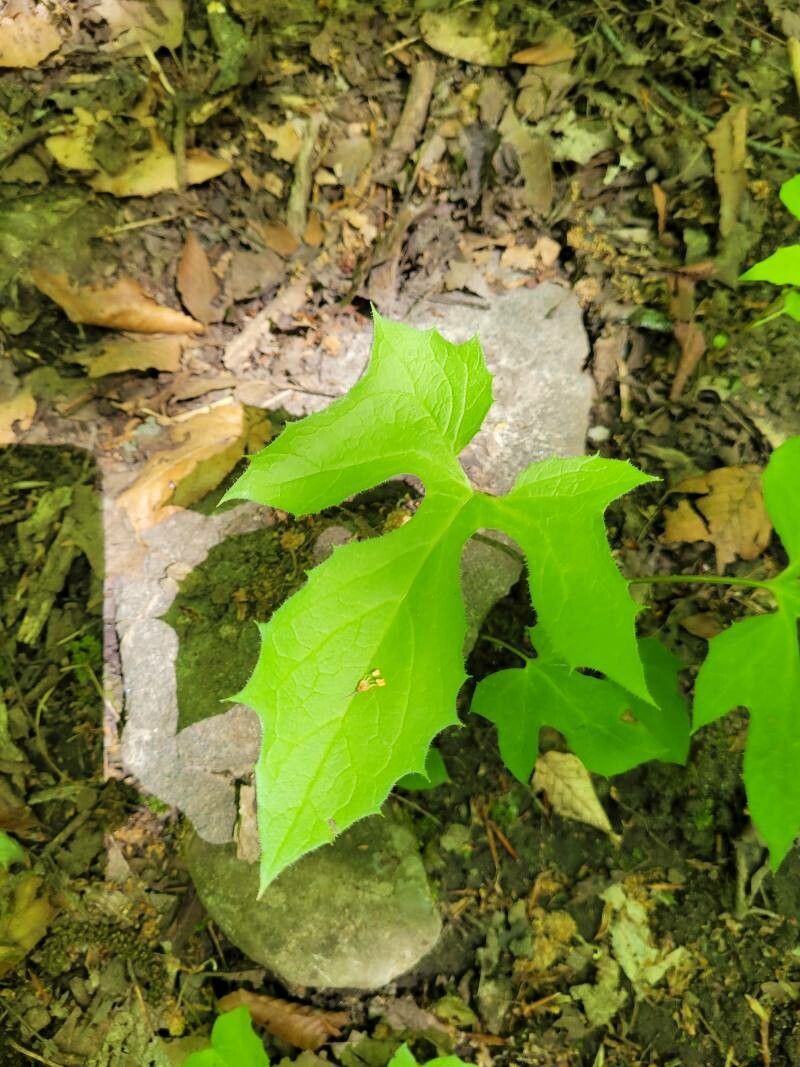
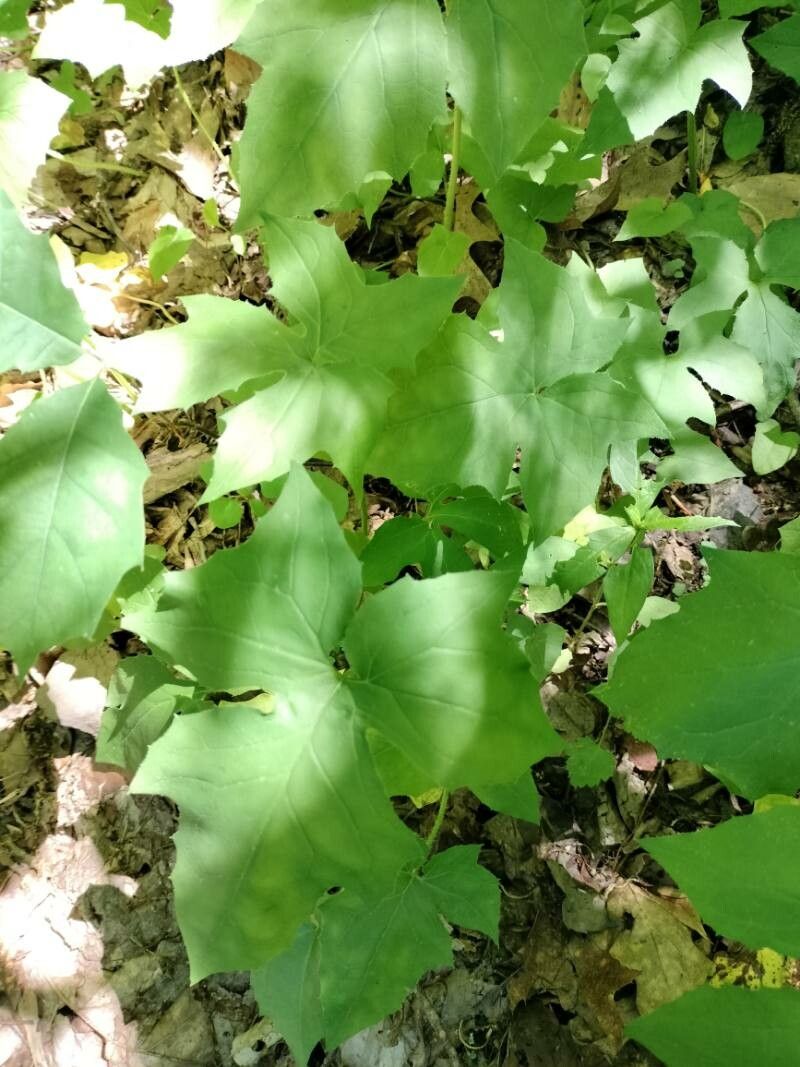
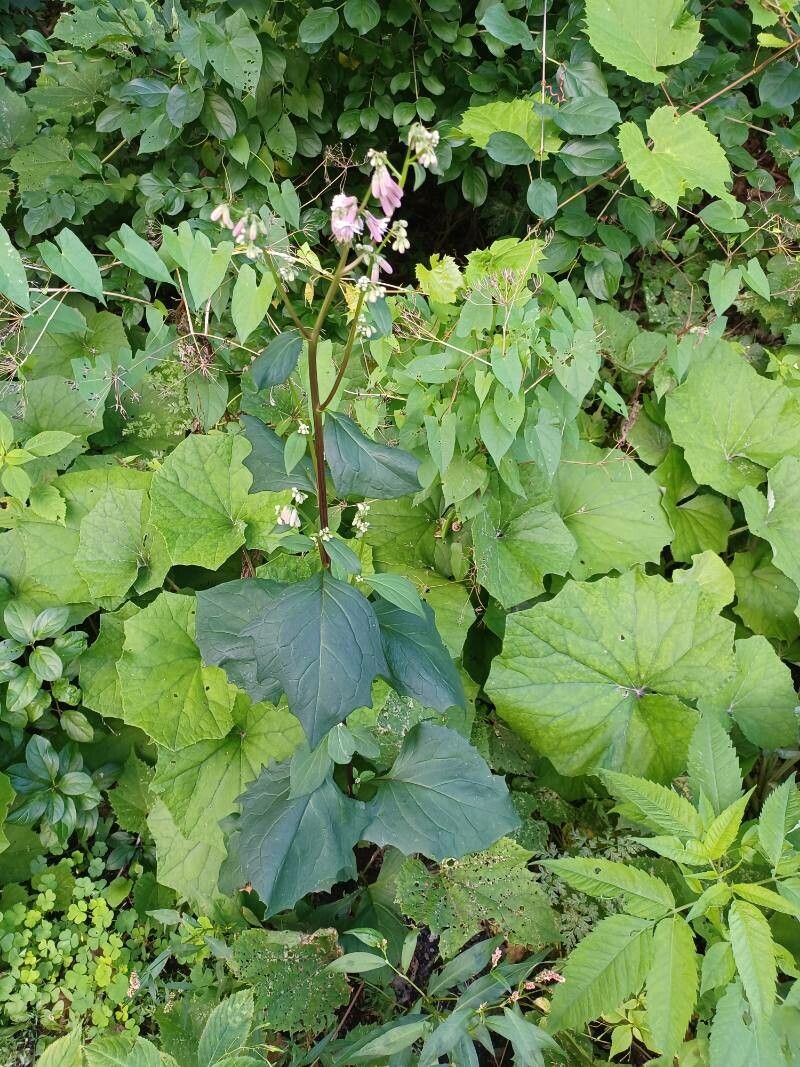
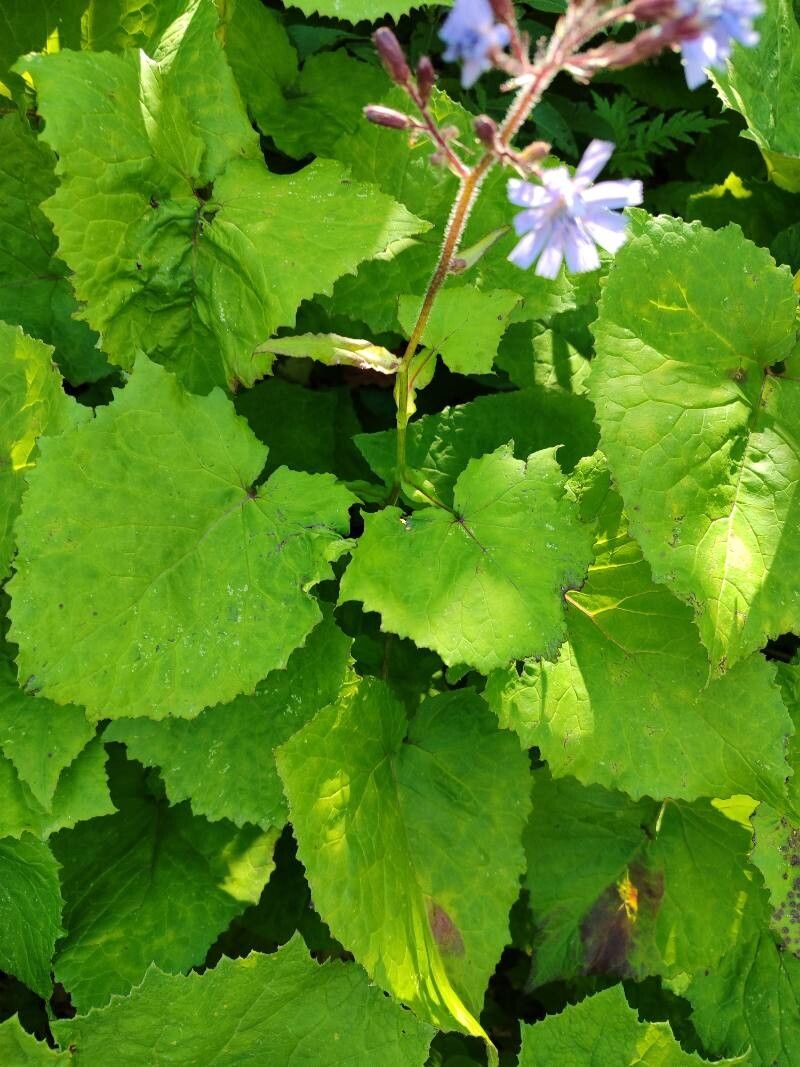
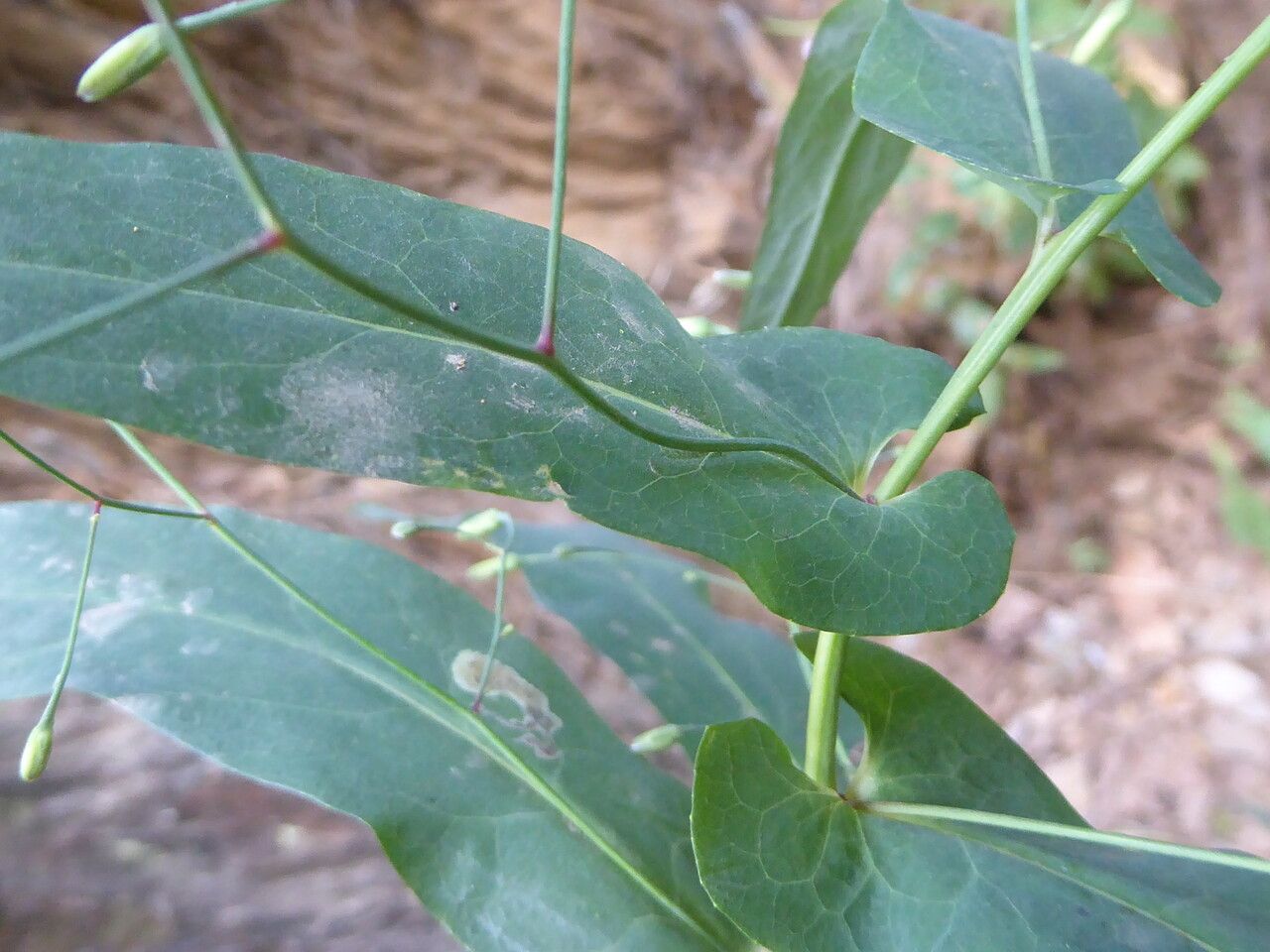
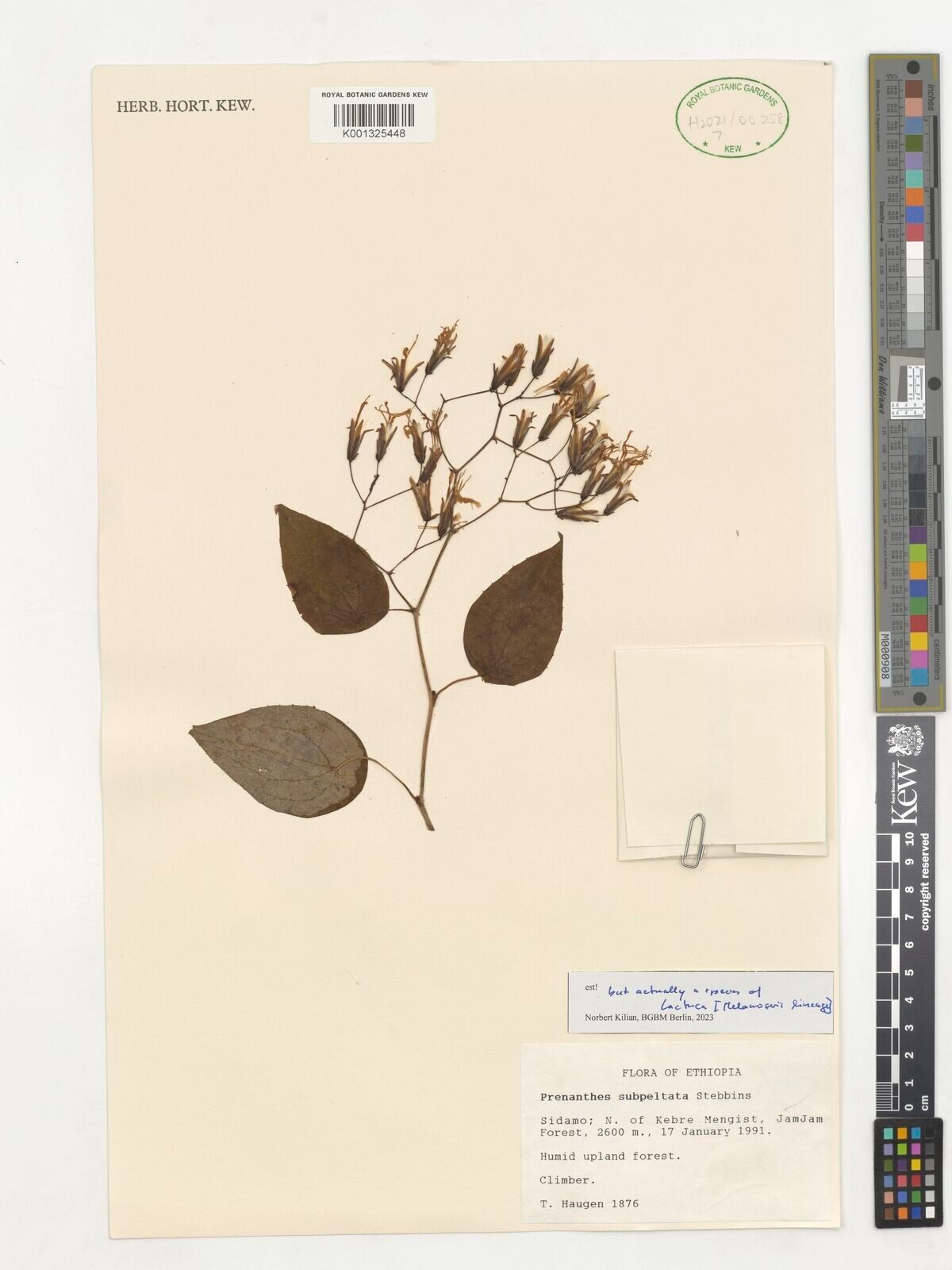
Nabalus albus, the white rattlesnake-root, also known as Boott's rattlesnake-root or white lettuce, is a plant in the family Asteraceae, native to Canada and the Eastern United States. Details of the flower heads are needed to separate this species from others in the rattlesnake-root genus (Nabalus). The Iroquois applied a poultice of the roots of white rattlesnake root to rattlesnake bites. It can be found growing in forests, woodlands, and anthropogenic habitats. The flower head has ray flowers only, meaning all of the individual flowers of the flower head have a strap-shaped ray, which may or may not have teeth at the very tip of the ray. The colors vary from blue to purple, pink to red, or white. The leaf blade length can be between 40 and 300 mm. while the flower head width can be 3 to 5 mm. Blooms from July to September in Missouri. In 2010 it was reclassified from the genus Prenanthes to Nabalus.
White rattlesnakeroot is fairly disease-resistant and typically not prone to illnesses. However, it can be vulnerable to pests and diseases present in its environment. These infections are generally mild. In terms of care, this plant requires a moderate level of maintenance. It should be pruned regularly to keep a good appearance and support healthy growth. Fertilizing can also help encourage flowering. White rattlesnakeroot is appropriate for anyone with outdoor space, such as a garden or patio, and does not demand extensive care experience. It may need more attention when cultivated indoors.
How to keep Prenanthes Alba.
Light
White rattlesnakeroot grows best in locations with moderate sunlight, and it also shows good tolerance for areas with reduced light. Its vigor can be weakened where the sun is overly intense. Its native habitat has adapted it to moderate and lower light levels, so exposure that is either too strong or too weak leads to stunted growth.
Temperature
In its native environment, white rattlesnakeroot prefers temperatures from 41 to 89 ℉ (5 to 32 ℃). It tolerates both cooler and warmer conditions and adjusts its growth to match the seasons. In winter it adapts to lower temperatures, and raising the temperature to 72 ℉ (22 ℃) in summer supports its growth.
Fertilizer
For White rattlesnakeroot, a single spring fertilizer application is generally adequate, though repeated feedings can maximize growth. Apply fertilizer roughly every one to one and a half months. Fertilization improves leaf appearance and function, helping maintain even color and a healthy texture. It also promotes root development and nutrient uptake, supporting long-term plant health.
Botanical profile.
- Plant Type
- Herb
- Life Cycle
- Perennial
- Genus
- Prenanthes
- Family
- Asteraceae
- Hardiness Zone
- 4-8
- Mature Height
- 0.61 m to 1.52 m
- Mature Spread
- 30 cm to 46 cm
- Leaf Color
- Green, Blue
- Leaf Type
- Deciduous
- Flower Color
- White, Yellow, Purple
- Flower Size
- 2.54 cm to 5.08 cm
- Bloom Time
- Mid summer
- Planting Time
- Spring
- Harvest Time
- Mid summer, Late summer
Other names.