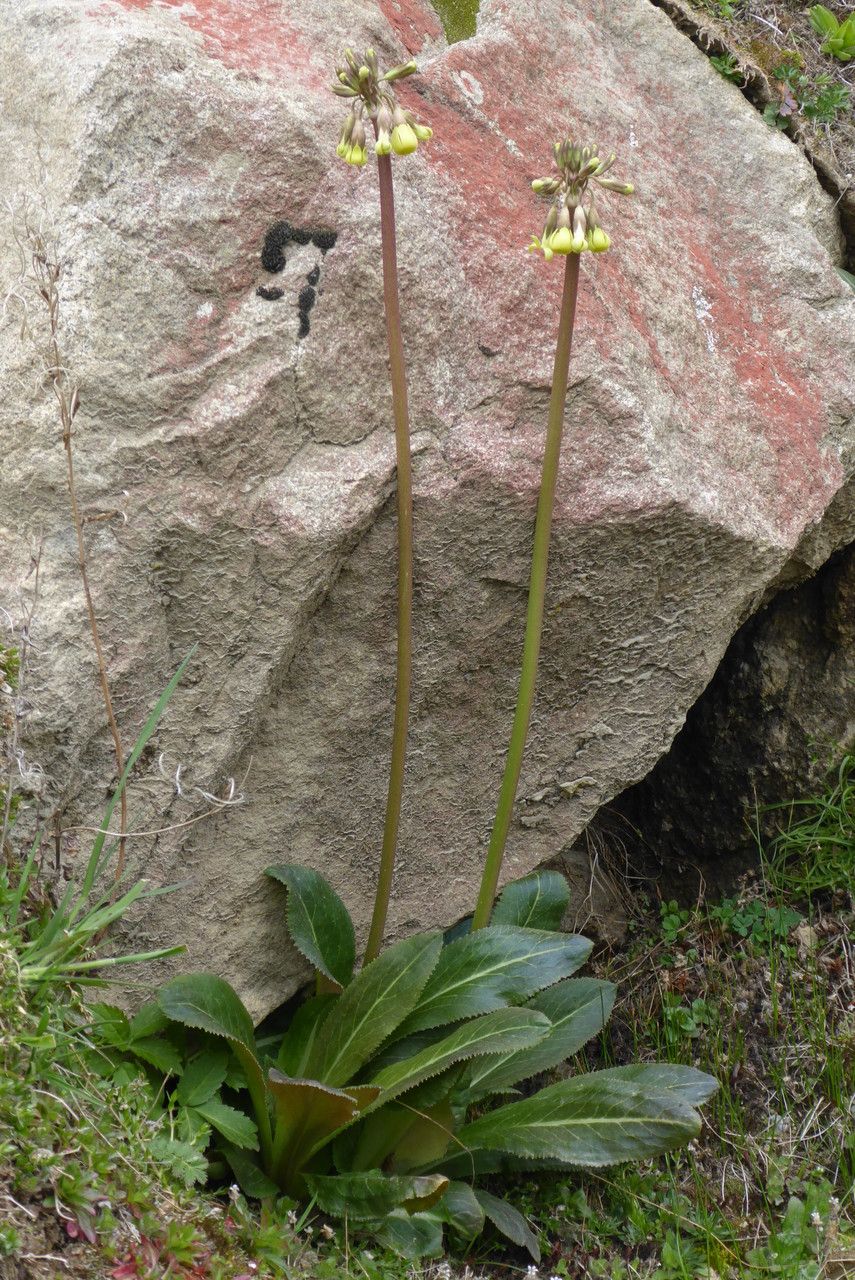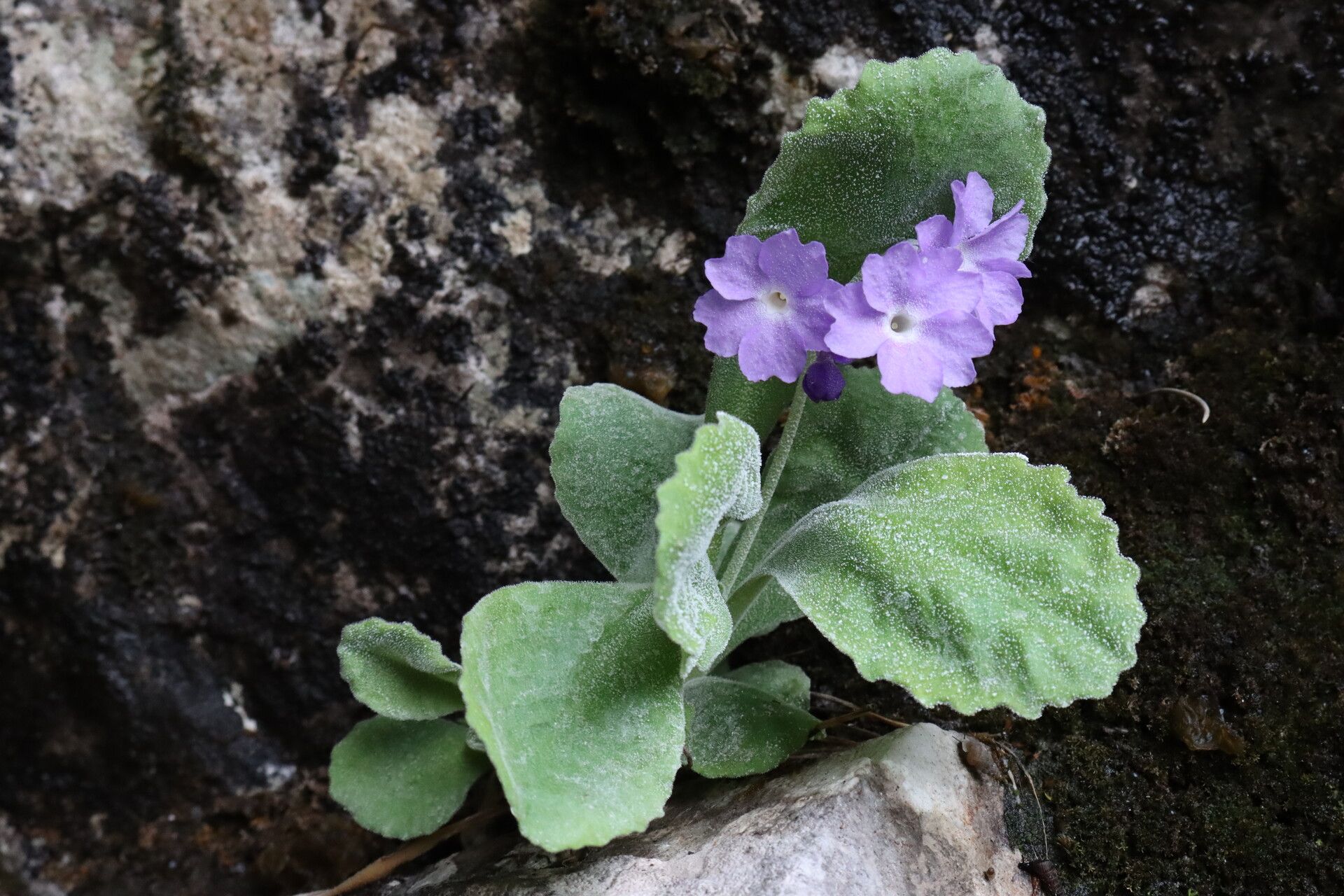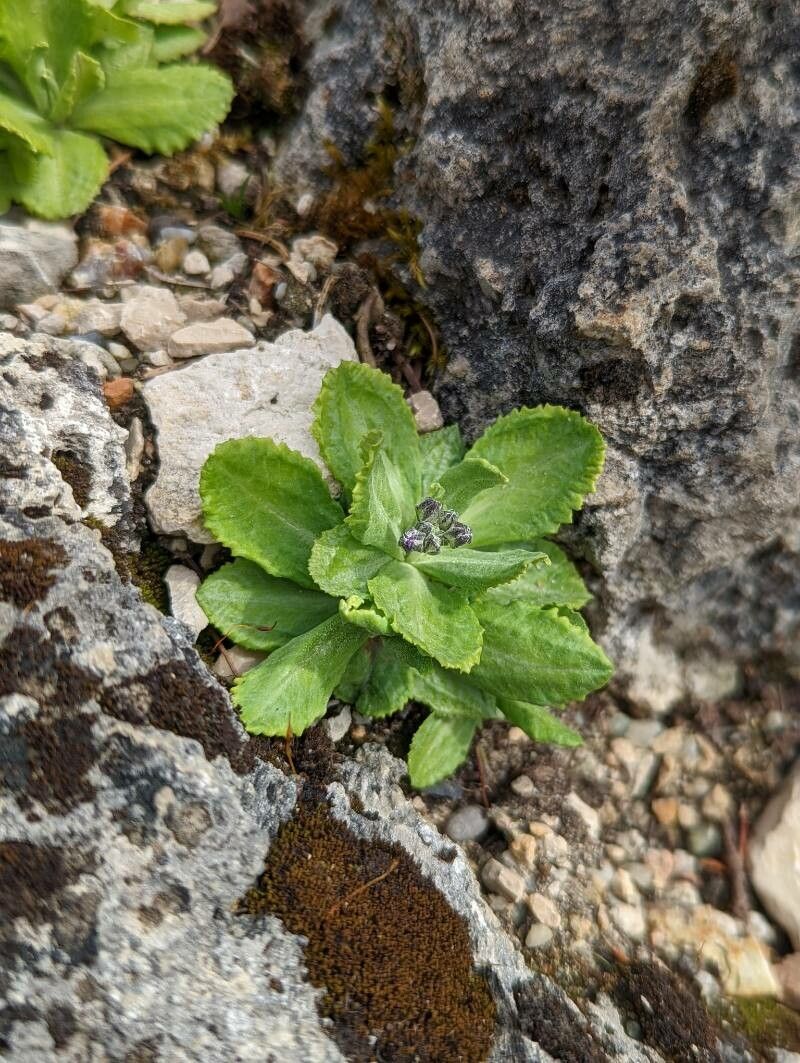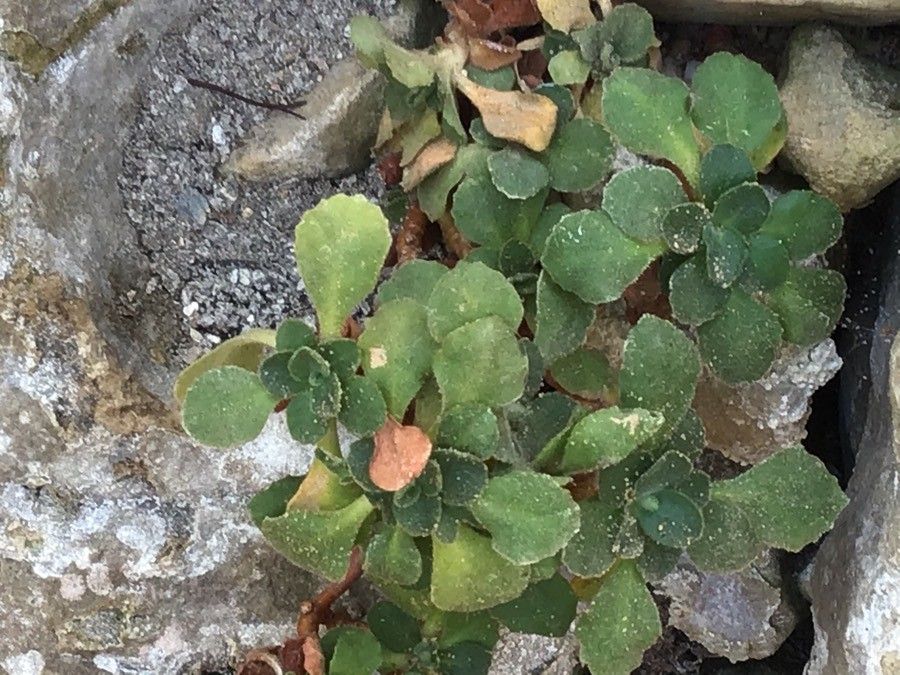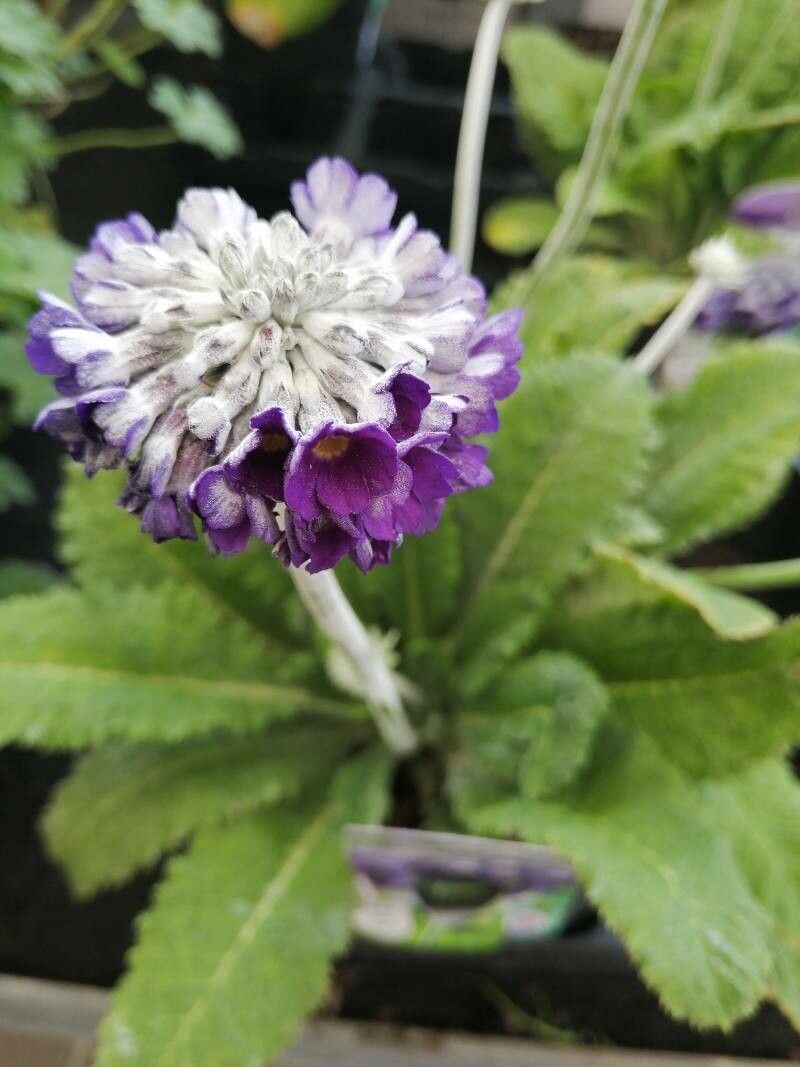
Primula capitata, commonly known as the round-headed Himalayan primrose or Asiatic primrose is a species of flowering plant in the family Primulaceae. It is a short-lived perennial, forming semi-evergreen rosettes of 15cm (6 inch) pale green, mealy leaves that are finely toothed, oblong-lance-shaped or inversely lance-shaped, with white-mealy undersides. Its flowers are up to 1cm (0.5 inch) long, dark purple and tubular, with shallowly lobed petals; they are borne in racemes that form flattened spheres, held on white-mealy stems about 40cm (16 inches) high.Primula capitata is found in moist habitats in alpine areas of Bhutan, Tibet, and Sikkim state in India. Its putative subspecies Primula capitata subsp. sphaerocephala has gained the Royal Horticultural Society's Award of Garden Merit.
Asiatic primrose has strong resistance to disease and is generally not likely to suffer from illnesses. Still, it can be vulnerable to pests and diseases found in its environment. Such infections are typically mild. Regarding care, this plant needs a moderate level of attention. It should be pruned regularly to preserve a neat appearance and maintain healthy growth. Applying fertilizer can also encourage blooming. Asiatic primrose is appropriate for anyone with an outdoor area, like a garden or patio, and does not demand extensive gardening experience. It may need more careful attention when cultivated indoors.
How to keep Primula Capitata.
Light
Asiatic primrose originates from habitats like forest understories or rocky areas, where it occurs in natural shade. It prefers partial sun but can also grow in full sun or full shade, reflecting its versatile, hardy nature.
Water
The Asiatic primrose flourishes in moist woodland environments, where it benefits from higher humidity and requires moderate watering about once a week. As an herbaceous perennial, it can adapt to various climates, but it thrives best in cooler temperatures and damp soil. This makes it ideal for outdoor cultivation in temperate regions.
Fertilizer
One spring application of fertilizer is generally sufficient for Asiatic primrose, though several feedings can maximize growth. Apply fertilizer every month to six weeks. Fertilizing improves the appearance and function of the leaves, helping them keep an even color and healthy texture. It also promotes root development and nutrient uptake for the plant's long-term health.
Pruning
The Asiatic primrose features striking clusters of deep purple flowers in a globe shape. To promote growth, prune the plant in early spring and remove any dead leaves to improve airflow. Trimming spent flower stalks can encourage reblooming. Regularly deadheading the flowers will extend the blooming period and enhance the plant's appearance, helping you maintain a healthy and vibrant garden.
Pot & Repot
When repotting an Asiatic primrose, choose a pot 1–2 inches (2.5–5.1 cm) larger with ample drainage. Use a well-draining potting mix. Repot in spring or fall, ensuring that the root ball is slightly lower than the rim of the flower pot. Water thoroughly after repotting and place in a warm spot with indirect sunlight.
Botanical profile.
- Plant Type
- Herb
- Life Cycle
- Perennial
- Genus
- Primula
- Family
- Primulaceae
- Hardiness Zone
- 5-8
- Mature Height
- 10 cm to 25 cm
- Mature Spread
- 10 cm to 20 cm
- Leaf Color
- Green, Dark Green
- Leaf Type
- Deciduous
- Flower Color
- Purple, Lavender
- Flower Size
- 1.02 cm to 2.03 cm
- Bloom Time
- Summer
- Planting Time
- Spring, Summer
- Harvest Time
- Late summer, Early fall, Mid fall
Other names.
Reader questions.
What are the sunlight requirements for Asiatic primrose (Primula capitata)?
Asiatic primrose (Primula capitata) thrives in different sunlight conditions. For full sun exposure, it requires above 6 hours of sunlight daily. If you're aiming for partial sun, about 3-6 hours of sunlight each day is sufficient. It's important to observe the way sunlight moves through your garden to find the ideal spots that offer a harmonious balance of light and shade, ensuring that your Asiatic primrose plants remain healthy and happy.