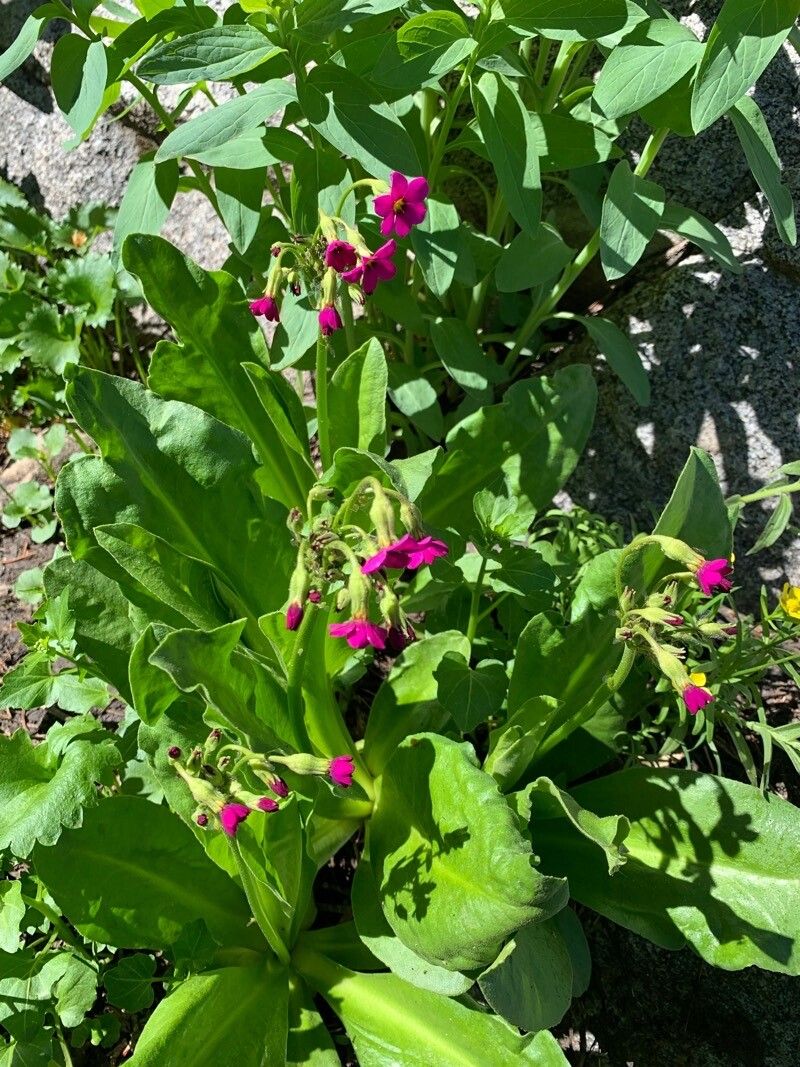
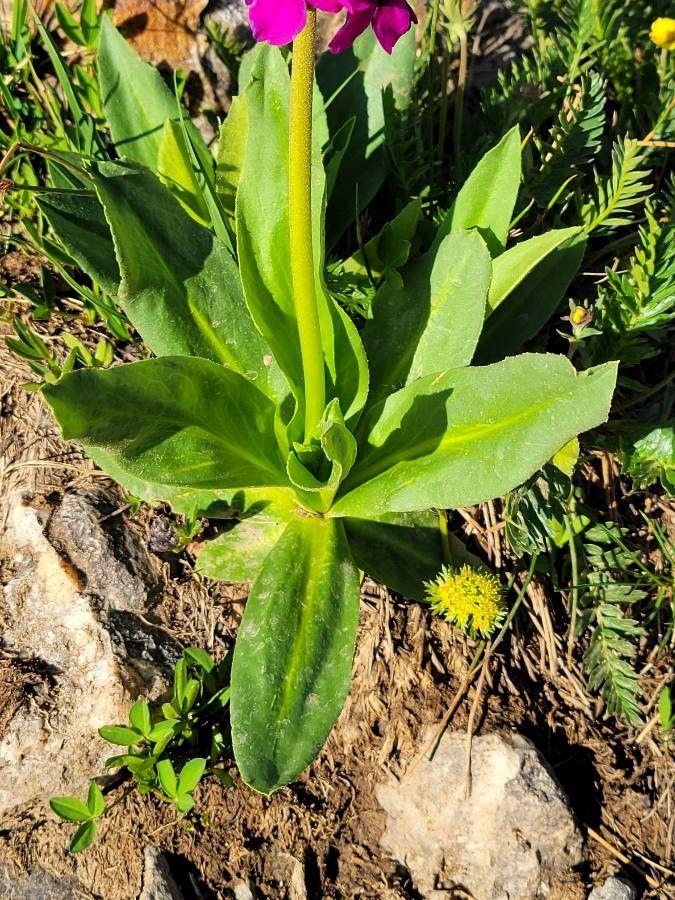
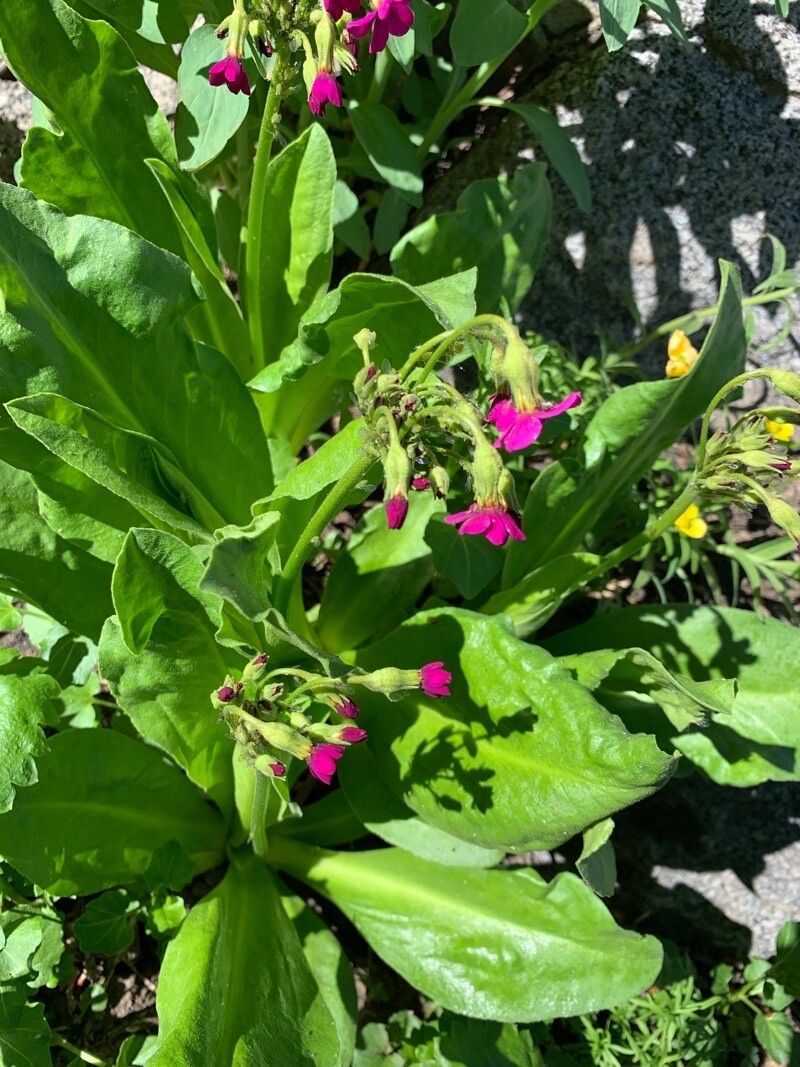
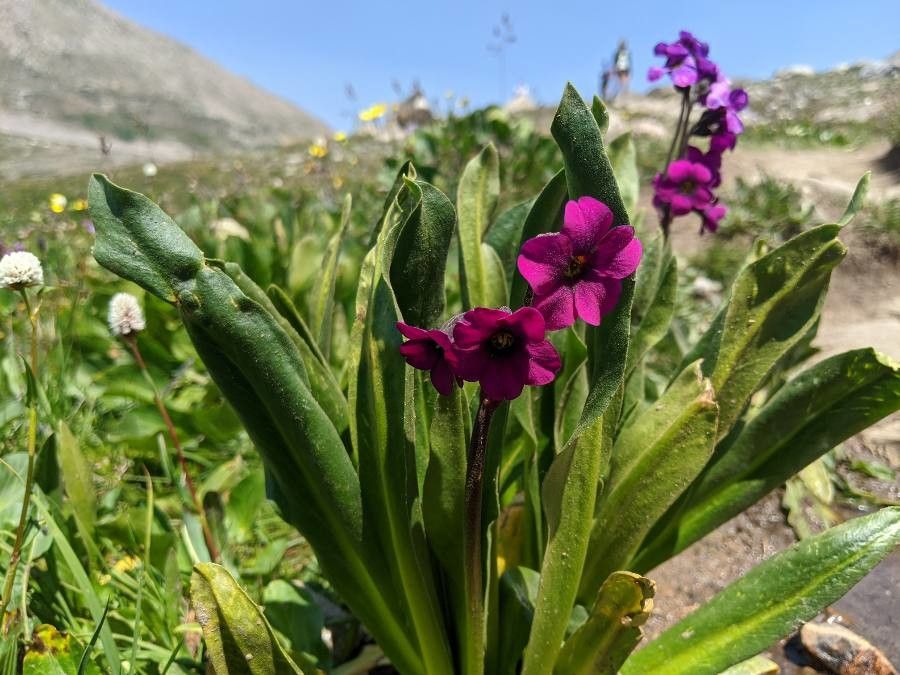
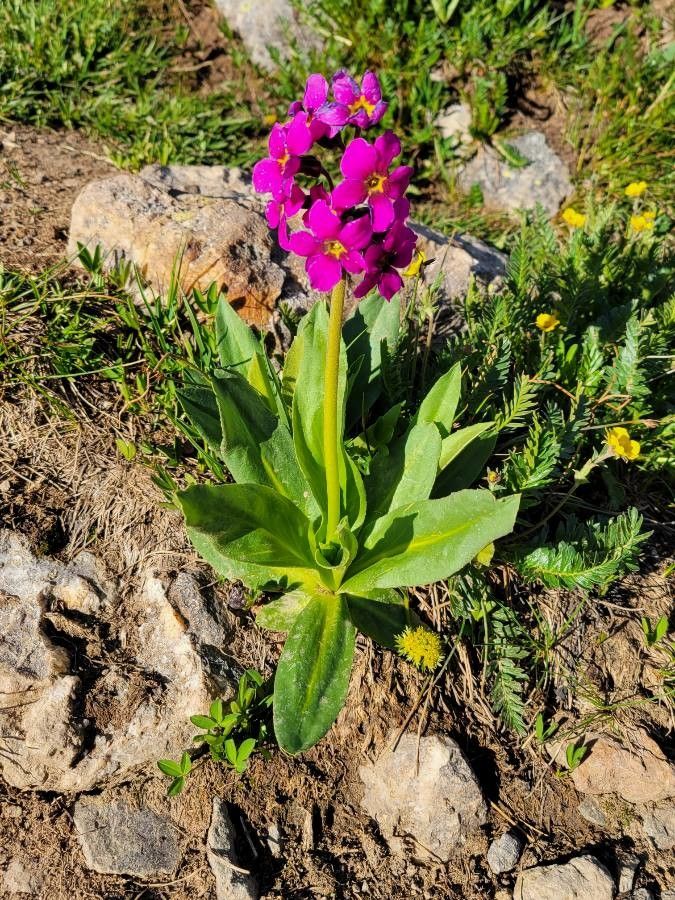
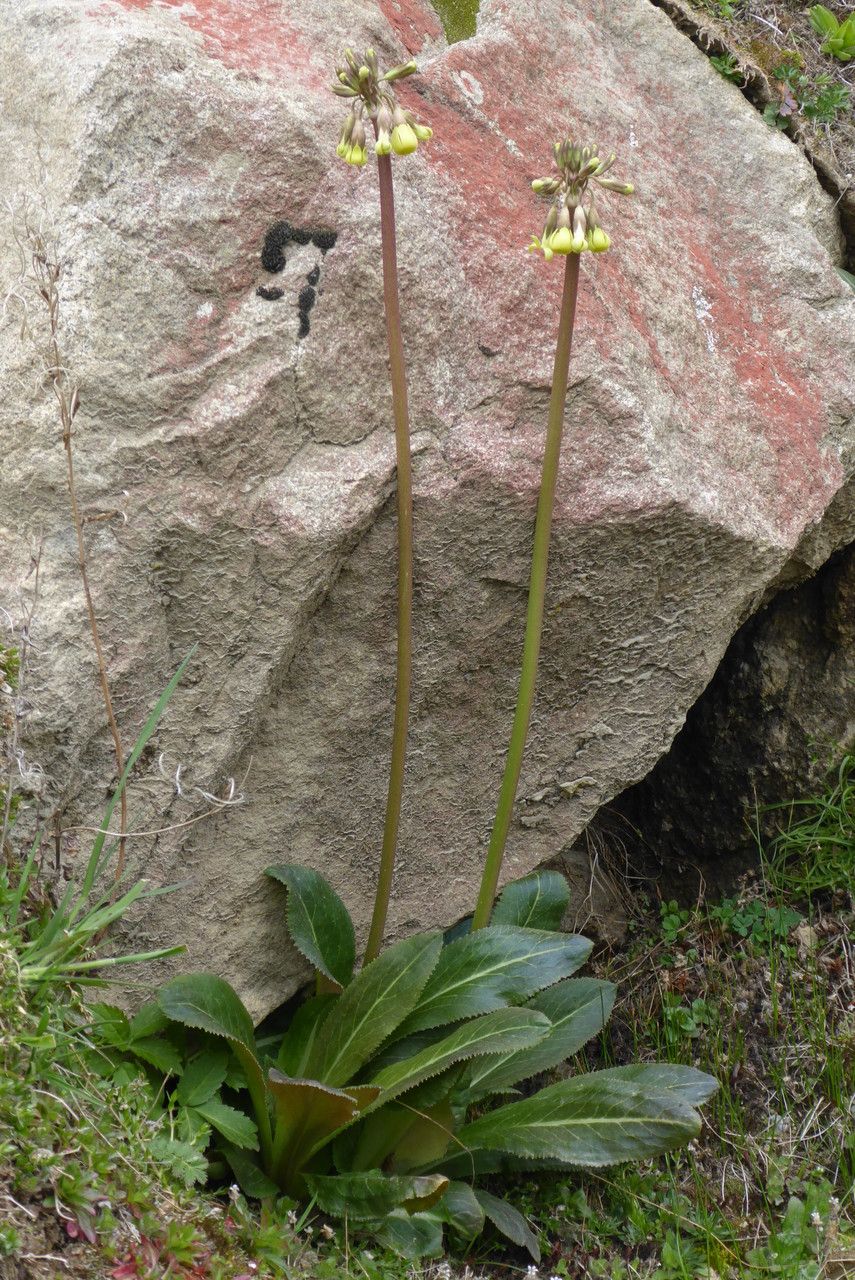
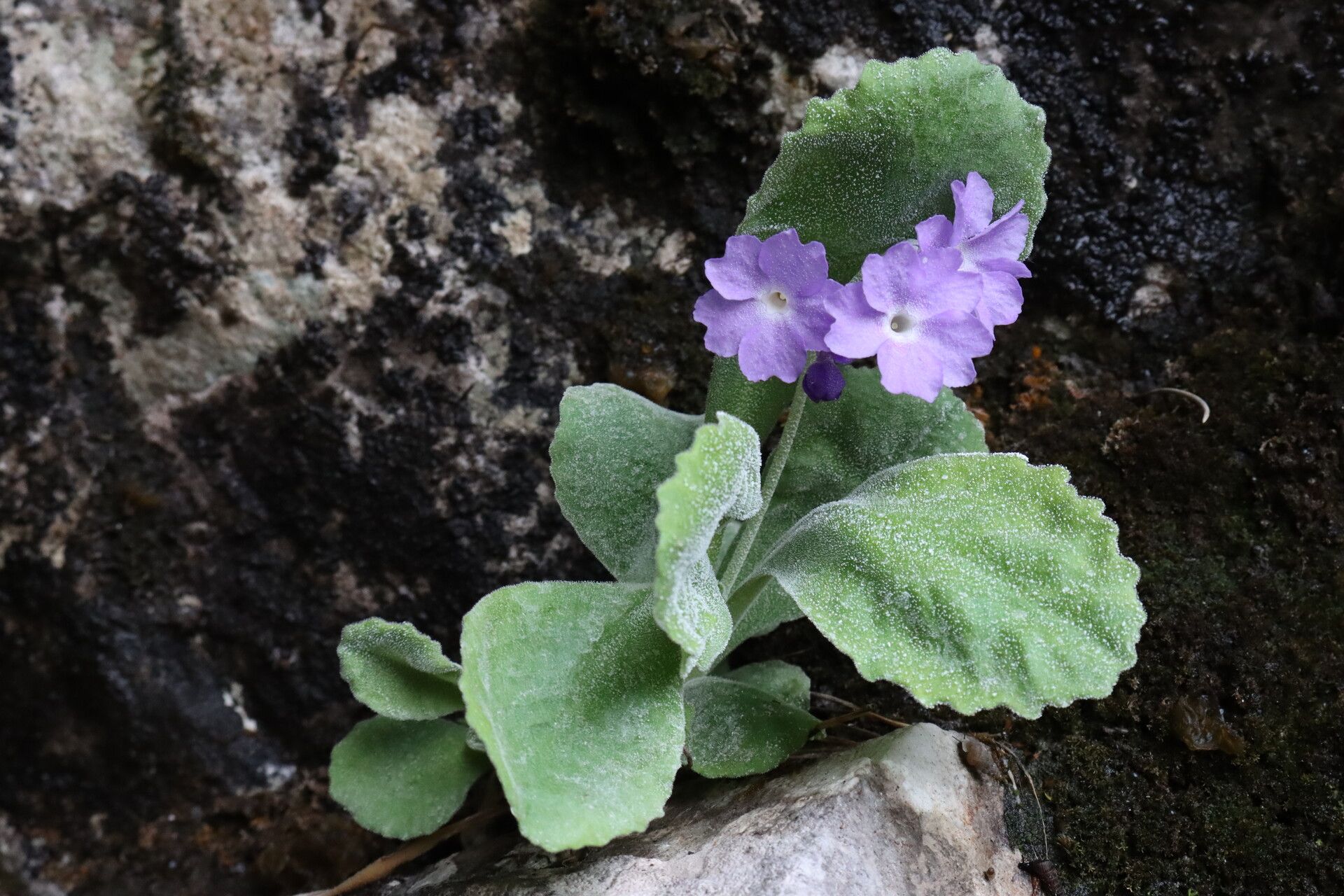
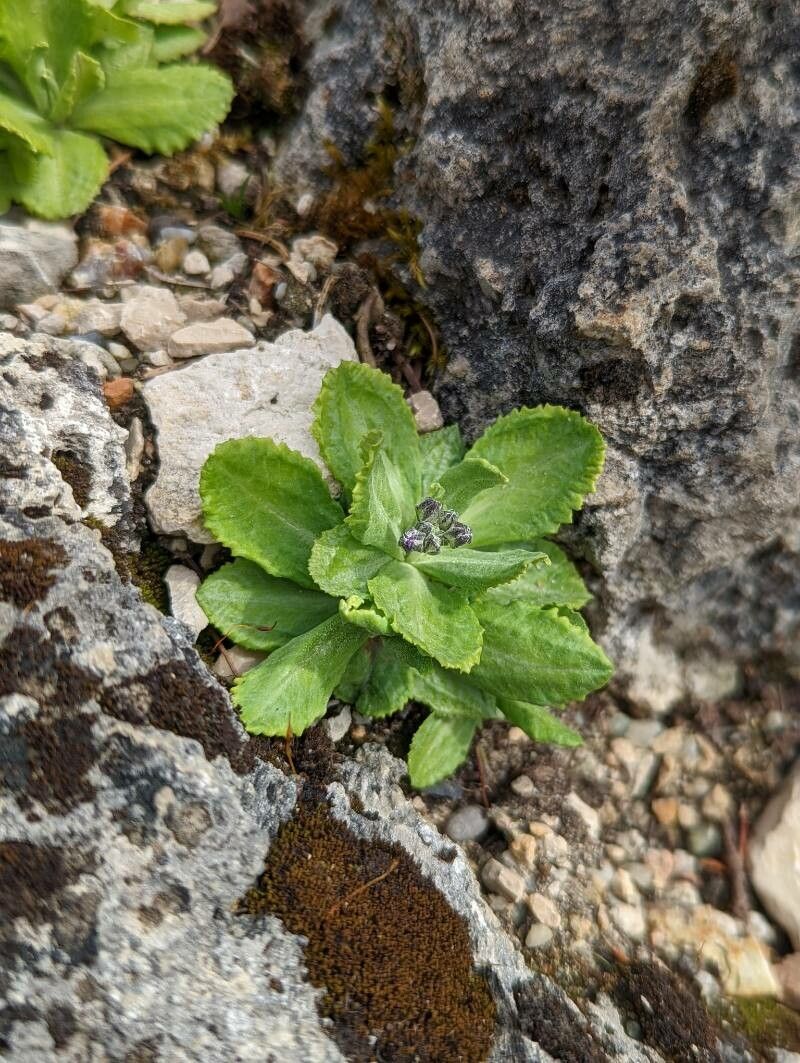
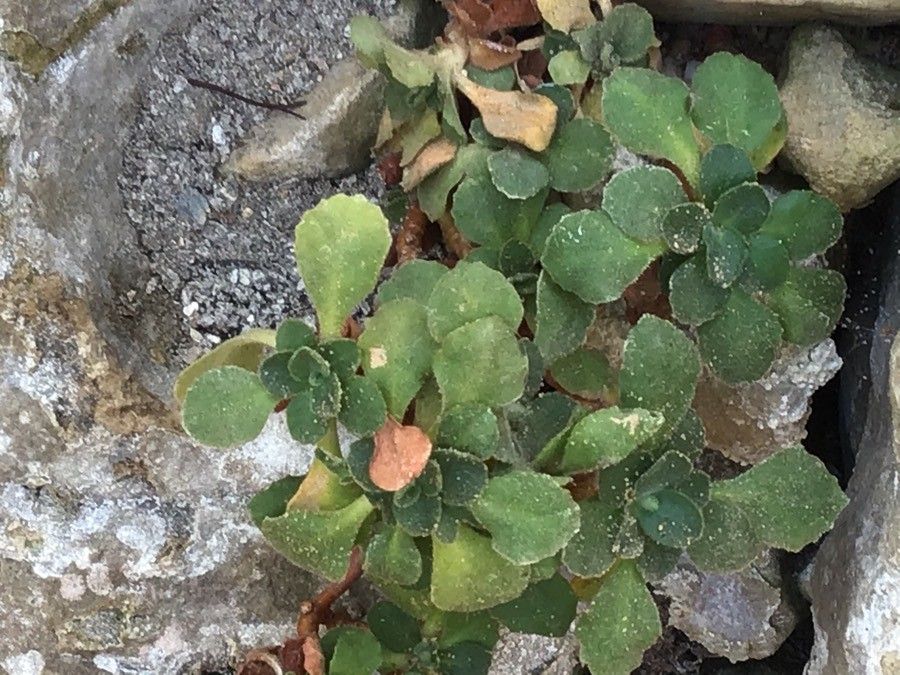
Primula parryi, or Parry's primrose, is a herbaceous perennial native to wet areas from the subalpine zone to alpine tundra in the Rocky Mountains from Montana to Arizona and New Mexico.
Flowers are magenta with yellow eyes. In the high mountains, they bloom in summer; at lower elevations, in late spring. The whole plant has a skunklike smell. Asa Gray named Parry's primrose for Charles Christopher Parry, who discovered it in 1861. Parry had previously named Grays Peak after him.
Parry's primrose has strong disease resistance and is generally not prone to illnesses. Nevertheless, it can be affected by pests and diseases present in the surrounding area. Such infections are typically not severe. Regarding care, this plant needs moderate maintenance. It should be pruned regularly to preserve a neat appearance and ensure healthy growth. Applying fertilizer can also encourage flowering. Parry's primrose is appropriate for anyone with an outdoor area, like a garden or patio, and does not require extensive care experience. It may need more attention if cultivated indoors.
How to keep Primula Parryi.
Light
Parry's primrose thrives in a combination of shade and sunlight and can also withstand full-day sun. However, excessive exposure may cause the foliage to wilt. In its native habitats it occurred in areas that received moderate sunlight. Variations in light exposure do not significantly affect its different growth stages.
Water
Parry's primrose thrives in humid environments, making it well-suited for wet meadows and stream banks. It requires weekly watering because it is not drought-tolerant. Being an herbaceous perennial, Parry's primrose is often grown outdoors where it can enjoy both natural rainfall and regular watering.
Temperature
Parry's primrose is naturally suited to a climate between 41 and 89.6 °F (5 to 32 ℃). It prefers cooler conditions, so lower temperatures are recommended in fall and winter and warmer ones in spring and summer. Temperatures should be adjusted carefully to align with seasonal changes.
Fertilizer
The best time to fertilize a Parry's primrose is in early spring, as it emerges from dormancy and begins active growth. Fertilization supplies essential nutrients needed for healthy development. Although Parry's primrose has comparatively low fertilizer requirements, applying fertilizer annually can boost its survival and encourage healthier, longer-lasting blooms.
Pruning
Parry's primrose flourishes with minimal pruning, ideally done from early to late spring. Trim away spent blooms and any dead foliage to promote growth and improve air circulation. Regularly deadheading the plant encourages it to flower for a longer period. Avoid heavy pruning to maintain its compact shape, ensuring the plant remains healthy and attractive throughout the growing season.
Botanical profile.
- Plant Type
- Herb
- Life Cycle
- Perennial
- Genus
- Primula
- Family
- Primulaceae
- Hardiness Zone
- 4-8
- Mature Height
- 30 cm
- Mature Spread
- 15 cm to 25 cm
- Leaf Color
- Green, Blue
- Leaf Type
- Evergreen, Deciduous
- Flower Color
- Pink, Purple, Red, Yellow
- Flower Size
- 1.02 cm to 2.54 cm
- Bloom Time
- Mid spring, Late spring
- Planting Time
- Spring, Summer, Autumn
- Harvest Time
- Early summer, Mid summer
Other names.
Reader questions.
What are the sunlight requirements for Parry's primrose?
Parry's primrose thrives in conditions that offer a mix of shade and sun, including full day sun exposure. However, it's important to avoid over-exposure as it can lead to wilting of foliage. This plant's native environments included areas that received moderate sunlight. The changes in sunlight exposure throughout its different growth stages do not significantly affect its growth. It's noted that Parry's primrose requires partial sun, which means about 3-6 hours of sunlight, or full sun, meaning more than 6 hours of sunlight. It's essential to observe how sunlight moves through your garden to select spots offering the ideal balance of light and shade, optimizing plant health.
What is the ideal climate for Parry's Primrose?
Parry's Primrose (Primula parryi) is naturally adapted to a climate with temperatures ranging from 41 to 89.6 °F (5 to 32 °C). It thrives in colder environments and is recommended to be kept cooler during the fall and winter, and warmer during the spring and summer to match seasonal changes. The plant has a strong resistance to cold, so special frost protection measures are not usually necessary. However, in areas where winter temperatures are expected to drop below -30°C, it is important to provide cold protection by covering the plant with materials such as soil or straw. Additionally, watering the plant abundantly before the first freeze in autumn ensures the soil remains moist and enters a frozen state, which helps prevent drought and water scarcity during winter and early spring.
What artificial lighting is required for indoor plants like Parry's primrose?
Indoor plants, including Parry's primrose, demand adequate lighting to ensure optimal growth, particularly when natural sunlight is insufficient, such as during winter or in less sunny spaces. Artificial lights are a crucial solution in these scenarios, enhancing growth speed and health. LED lights are often recommended as they can provide specific light wavelengths needed by plants. For optimal development, full sun plants require 30-50W/sq ft of artificial light, partial sun plants need 20-30W/sq ft, and full shade plants require 10-20W/sq ft. The light source should be positioned 12-36 inches above the plant to mimic natural sunlight, and the duration of light exposure should replicate natural daylight hours, typically between 8-12 hours per day.
How does Parry's Primrose react to low temperatures?
Parry's Primrose is cold-tolerant and thrives best when temperatures are above 5°C. During winter, it should be kept above -25°C. If temperatures fall below -30°C, there may not be noticeable changes during the winter, but a decrease in sprouting, or even a complete lack of sprouting, may occur in the spring. If this happens, in spring, remove any parts of the plant that have failed to sprout as a solution to encourage new growth.
What are the symptoms of insufficient sunlight in Parry's primrose?
Parry's primrose shows several symptoms when it doesn't receive enough sunlight. New leaves may grow smaller than the previous ones, and the plant could exhibit leggy or sparse growth, creating a thin appearance. Faster leaf drop is common as the plant tries to conserve resources, leading to slower or halted growth. Leaves may develop irregular colors or appear pale, indicating a lack of chlorophyll. Chlorosis, where leaves lose their green color and turn yellow, and sunscald, which leaves bleached areas on the plant, are symptoms of excessive sunlight but are also critical to note. Leaf curling, wilting, and leaf scorching are defense mechanisms or results of too much sunlight.
What should be done if Parry's Primrose experiences high temperatures?
During the summer, it's important to keep Parry's Primrose below 32°C. When temperatures exceed 35°C, the plant's leaves may become lighter in color, prone to curling, susceptible to sunburn, and in severe cases, the entire plant may wilt and dry out. The solution to this issue includes trimming away the sunburned and dried-up parts of the plant. Also, moving the plant to a location that provides shade during the midday and afternoon sun, or using a shade cloth to create shade, can help. Watering the plant in the morning and evening to keep the soil moist will also be beneficial for recovery and ongoing health.
What are the solutions for adapting Parry's primrose to its light environment?
To optimize Parry's primrose growth indoors, gradually shift it to sunnier spots each week until it receives about 3-6 hours of direct sunlight daily. This gradual adaptation helps prevent stress. If moving the plant isn't feasible due to its size, consider using artificial light sources such as desk, ceiling lamps, or professional grow lights for at least 8 hours daily. Outdoors, it's essential to avoid sudden light intensity changes by gradually relocating the plants to sunnier areas each week, preventing sunburn. Reducing sunlight obstructions, such as pruning trees or relocating plants to sunnier spots, can also enhance growth. Remember that damaged parts might not recover, but new growth after adjusting light exposure will be healthy.