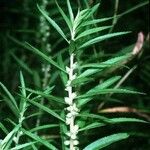
Proserpinaca palustris
Marsh Mermaid-weed · Marsh Mermaidweed · Mermaid Weed
Description
Source: leafsnapProserpinaca palustris, commonly known as mermaid weed or marsh mermaid weed, is a perennial aquatic plant in the family Haloragaceae. Native to North America, it thrives in wetlands, marshes, and shallow waters. The plant features a slender stem that can reach up to 60 cm in length, with small, alternately arranged leaves along the stem. The leaves of Proserpinaca palustris are narrow, lance-shaped, and have serrated edges. They exhibit a bright green color with reddish-brown veins. The plant's flowers are small and inconspicuous, typically featuring four petals arranged in a cross shape. This aquatic plant is ecologically significant, offering habitat for various aquatic animals such as fish, insects, snails, and turtles. Additionally, it helps stabilize soil along riverbanks by reducing erosion caused by water currents. Proserpinaca palustris thrives in full sun but can also tolerate partial shade. It prefers nutrient-rich soils but can still grow well in poorer soils as long as there is adequate sunlight. In conclusion, Proserpinaca palustris is an important aquatic perennial herbaceous flowering plant that provides habitat for various animals and stabilizes soil along riverbanks, thereby reducing erosion.
Care Guide
💧 Water Every 7 days
Marsh mermaidweed flourishes in wetland environments, favoring moist conditions and can withstand brief dry periods. To keep the plant healthy, water it weekly, ensuring the soil remains moist but not waterlogged. This plant is well-suited for outdoor growth and can adapt to changing water levels. Its ability to manage these fluctuations makes it an excellent choice for rain gardens, where it can help control stormwater runoff.
☀️ Light Partial sun
🌡️ Temperature 10–37.8°C
Marsh mermaidweed occurs naturally in habitats with temperatures between 50 and 100.4 °F (10 to 38 ℃). This is the temperature range in which it thrives best. Any shifts to cooler or warmer conditions should be made cautiously to avoid stressing the plant.
What is the ideal temperature range for Marsh Mermaidweed?
Marsh mermaidweed (Proserpinaca palustris) thrives in natural environments where temperatures range between 50 to 100.4 °F (10 to 38 °C). This plant is naturally adapted to this temperature range, and adjustments to conditions outside of it should be done cautiously to prevent stress.
Does Marsh Mermaidweed require frost protection during winter?
Marsh mermaidweed possesses significant cold resistance, so special frost protection measures are generally not necessary. However, if winter temperatures are expected to plummet below -25°C, it's vital to provide protection by covering the plant with insulating materials such as soil or straw. Additionally, watering the plant abundantly before the first freeze in autumn to ensure moist soil is recommended, as it helps minimize water scarcity issues during winter and early spring.
How does Marsh Mermaidweed respond to low temperatures?
Marsh mermaidweed is notably cold-tolerant, optimally thriving when temperatures remain above 10°C. Throughout winter, it is advisable to keep temperatures above -15°C to avoid stress. If temperatures dip below -25°C, there may not be noticeable changes immediately, but there could be a reduced sprouting rate or lack of sprouting in spring. One solution is to remove any parts of the plant that have failed to sprout after the cold season.
How should Marsh Mermaidweed be cared for in high temperatures?
During the summer, it's crucial to ensure that the temperature around Marsh mermaidweed does not exceed 38°C. If the temperature goes beyond 43°C, the plant may show signs of stress such as lighter-colored leaves that are prone to curling, susceptibility to sunburn, and in severe cases, wilting and drying out. To address this, sunburned and dried parts should be trimmed away. Moving the plant to a shadier location or using a shade cloth can protect it from the harsh midday and afternoon sun. Additionally, watering in the morning and evening can help maintain soil moisture.
💨 Humidity high (>60%)
This plant needs special care because it loves high humidity levels of 60-80% or more. The best way to achieve this is by placing a humidifier near the plant. Daily misting is also essential! Make sure the room has good ventilation.
🪴 Soil
🌱 Fertilizer
For marsh mermaidweed, use Balanced Nutrition Fertilizers every two weeks during the growing season. Adjust the amount based on the plant's size and the soil's fertility. During the dormant season, reduce feeding to once a month. Always water the plant thoroughly after fertilizing to prevent root burn, and regularly monitor the marsh mermaidweed's response to ensure optimal growth.
🪴 Pot & Repot
✂️ Pruning
To keep marsh mermaidweed healthy and looking its best, it benefits from selective pruning during its active growth phase, which occurs from early to late spring. Use sterilized shears to trim away any dead or overgrown parts, making clean cuts close to the base. Regular pruning helps improve water flow and prevents the plants from becoming overcrowded, thereby enhancing both their overall health and appearance.
🌿 Propagating
🐛 Diseases & pets
☠️ Toxicity
Characteristics
- Plant Type
- Herb
- Life Cycle
- Perennial
- Genus
- Proserpinaca
- Family
- Haloragaceae
- Hardiness Zone
- 6-11
- Mature Height
- 10 cm to 40 cm
- Mature Spread
- 5 cm to 15 cm
- Leaf Color
- Green, Olive Drab
- Leaf Type
- Deciduous
- Flower Size
- 0.20 cm to 0.25 cm
- Bloom Time
- Summer
- Planting Time
- Spring, Summer
- Harvest Time
- Late summer, Early fall, Mid fall
- Native Area
- Colombia, Bahamas, Cuba, Mexico, Guatemala, Brazil, El Salvador, Jamaica