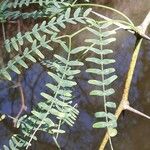
Prosopis juliflora
کهور پاکستانی · Algarroba-bean · Mesquite · Ironwood · Prosopis
Description
Source: leafsnapProsopis juliflora (Spanish: bayahonda blanca, Cuji Venezuela, Trupillo Colombia, Aippia Wayuunaiki and long-thorn kiawe in Hawaii) is a shrub or small tree in the family Fabaceae, a kind of mesquite. It is native to Mexico, South America and the Caribbean. It has become established as an invasive weed in Africa, Asia, Australia and elsewhere. It is a contributing factor to continuing transmission of malaria, especially during dry periods when sugar sources from native plants are largely unavailable to mosquitoes.
Care Guide
💧 Water
Mesquite is a hardy plant that thrives in dry, desert environments with little moisture. It is highly drought-resistant and requires watering only every 2 to 3 weeks. Thanks to its ability to withstand harsh sunlight and poor soil conditions, it is an excellent choice for xeriscaping.
How should I water my Mesquite tree?
Your Mesquite plant is not very picky when it comes to watering. You can use any common watering tool, like watering cans, hoses, or even cups. It's important to water the plant directly onto the soil, making sure that all areas are evenly moistened to provide water to all parts of the root system. Using filtered water is advisable since tap water may contain harmful particles. Also, it's best to use water at or slightly above room temperature, as extremely cold or hot water can shock the Mesquite. However, the Mesquite usually responds well to any kind of water you give it.
What should I do if I give my Mesquite plant too much or too little water?
Outdoor plants, especially newly planted ones or seedlings, are often at risk of not being watered enough. It is important to remember to maintain regular watering for a few months when the tree is small or recently planted. Once the roots have established, Mesquite trees can rely mainly on rainwater. However, when it comes to Mesquites planted in pots, there is a higher likelihood of overwatering. If you accidentally overwater your Mesquite, take immediate action to address the issue. Stop watering the plant right away to minimize the impacts of overwatering. Next, remove the Mesquite from its pot to inspect its roots. If no root rot is present, you can return the plant to its container. However, if root rot is evident, trim away the affected roots and consider applying a fungicide to prevent further damage. Finally, repot the Mesquite in well-draining soil. In the case of underwatering, simply water the plant more frequently. This is usually a straightforward fix as the leaves will droop, dry out, and fall off when underwatered, but they will regain fullness once sufficiently watered. Make sure to adjust your watering frequency promptly when underwatering occurs.
How frequently do I need to water my Mesquite?
If your area lacks rainfall, you should water your outdoor plants every 2 weeks during the spring and fall. During the summer, you will need to water more frequently. In winter, when growth slows down, water sparingly or not at all. However, if your Mesquite plant is young or newly planted, you should water more often to help it establish and grow. For potted plants, there are two ways to determine how often to water your Mesquite. One option is to follow a predetermined watering schedule, such as once a week or once every other week. However, this may not always be accurate for your specific growing conditions. Another approach is to check the soil moisture. Wait until the top two to four inches of soil have dried out completely before watering again.
How much water does my Mesquite tree require?
When watering your Mesquite, you don't always need to give it a lot of water. If only a few inches of soil have dried since your last watering, you can support healthy growth by giving it about five to ten ounces of water each time. You can also gauge the amount of water based on the moisture in the soil. Keep track of how many inches of soil have dried out between waterings. To ensure the Mesquite gets enough moisture, water enough to moisten all the layers of dry soil since the last watering. If over half of the soil is dry, consider giving more water. In these cases, continue watering until you see excess water draining from the pot's holes. If your Mesquite is planted in a rainy area outdoors, it may not need additional watering. When the Mesquite is young or establishing, make sure it gets 1-2 inches of rain per week. As it grows and establishes, it can rely on rainwater alone. Only when the weather is hot and there is no rainfall for 2-3 weeks should you give it a full watering to prevent stress.
How do I know if I'm giving enough water to my Mesquite plant?
Overwatering is a common issue for Mesquite plants and there are clear signs to identify it. An overwatered Mesquite will have yellowing leaves and may lose some leaves. It can also cause the plant's structure to shrink and lead to root rot. On the other hand, an underwatered Mesquite will also start to wilt and may have brown or brittle leaves. Regardless of whether you notice signs of overwatering or underwatering, taking action to restore your Mesquite's health is essential.
☀️ Light Full sun
Mesquite grows best in places that receive uninterrupted sunlight all day. Most of its photosynthetic processes require substantial exposure to the sun. A lack of sufficient sunlight can cause reduced growth or greater vulnerability to health problems. Conversely, excessive light does not necessarily harm the species.
What are the sunlight requirements for a Mesquite plant?
Mesquite plants require above 6 hours of sunlight to thrive, emphasizing the need for full sun exposure throughout the day. This significant exposure to sunlight is crucial for their photosynthetic activities, which in turn ensures their growth and health. Observing the movement of sunlight through your garden to find spots that offer a perfect balance of light and shade is recommended to ensure the plants' happiness. In cases where natural sunlight is insufficient, especially indoors during winter or in less sunny locations, artificial lighting can be a vital solution. It's suggested to use artificial lights such as LED, which can be customized to the plant's needs, with a general guide of 30-50W/sq ft for full sun plants, 20-30W/sq ft for partial sun plants, and 10-20W/sq ft for full shade plants. Proper distance and duration of artificial lighting, mimicking natural conditions, are crucial for optimal plant growth.
What are the symptoms of insufficient sunlight in Mesquite plants?
When Mesquite plants receive insufficient sunlight, they exhibit several symptoms indicative of light deficiency, even though they are commonly grown outdoors with ample sunlight. Symptoms include smaller new leaves compared to the mature ones, leggy or sparse growth that makes the plant appear thin and stretched, faster leaf drop to conserve resources, slower or no new growth as the plant enters survival mode, and lighter-colored new leaves signaling a lack of chlorophyll. Excessive sunlight, however, can cause issues like chlorosis where leaves turn yellow due to chlorophyll breakdown, sunscald marked by pale or necrotic areas on leaves or stems, leaf curling as a defense mechanism against extreme sunlight, wilting from excessive water loss, and leaf scorching characterized by brown, dry edges on leaves.
How can you help Mesquite plants get enough sunlight?
Ensuring Mesquite plants receive adequate sunlight involves several strategies. For indoor plants, gradually moving them to sunnier locations until they receive at least 6 hours of direct sunlight daily is advised, utilizing south-facing windows and keeping curtains open during the day. Artificial lighting, such as desk lamps or professional plant grow lights, should be considered for large or non-movable plants, kept on for at least 8 hours daily. For outdoor plants, gradual relocation to sunnier spots while avoiding sudden changes in light intensity helps in preventing sunburn. Reducing obstructions like pruning trees or branches that block sunlight and transplanting smaller plants during their dormant period to locations with ample sunlight and good drainage are also effective methods. It's important to note that parts of the plant affected by insufficient sunlight may not recover, but new growth following increased light exposure will be healthy.
🌡️ Temperature 15–37.8°C
Mesquite is native to areas where temperatures fluctuate between 59 and 100.4 °F (15 and 38 ℃). That temperature span most effectively supports its growth. Across seasons, it is advisable to maintain temperatures within this range.
What is the native environment temperature range for Mesquite growth?
Mesquite (Prosopis juliflora) is native to an environment where the temperature fluctuates within 59 to 100.4 °F (15 to 38 °C). This range best fosters its growth, making it essential to control temperatures within this range during the different seasons for optimal development.
Does Mesquite require special frost protection measures during winter?
Mesquite has strong cold resistance and usually does not require special frost protection measures. However, if winter temperatures are expected to drop below -15°C, it's important to provide cold protection. This can be achieved by wrapping the trunk and branches with non-woven fabric or cloth. Additionally, watering the plant abundantly before the first freeze in autumn, ensuring the soil remains moist and enters a frozen state, can help prevent drought and water scarcity for the plant during winter and early spring.
What are the symptoms and solutions for Mesquite when exposed to low temperatures?
When Mesquite is exposed to low temperatures, specifically below -15°C, there may not be noticeable changes during winter. However, during spring, the branches might become brittle and dry, with no new shoots emerging. The solution for such a situation is to prune away any dead branches that have failed to produce new leaves in spring.
What are the symptoms and solutions for Mesquite when exposed to high temperatures?
High temperatures, especially above 43°C, can cause the leaves of the Mesquite to lighten in color, and the tips may become dry and withered, making the plant more susceptible to sunburn. Solutions include trimming away the sunburned and dried-up parts, moving the plant to a location with shade from the midday and afternoon sun, or using a shade cloth. Additionally, watering the plant in the morning and evening to keep the soil moist is advisable.
💨 Humidity
🪴 Soil 6-8
🌱 Fertilizer
The timing of fertilizing Mesquite is crucial. Apply fertilizer in early spring and continue monthly until early summer. Fertilizer promotes attractive blooms and supplies energy during both dormant and active growth periods.
🪴 Pot & Repot
✂️ Pruning
Mesquite trees are known for their thorny branches and rapid growth. To maintain their health and shape, it is important to prune them annually. Focus on removing dead or diseased wood, thinning out overcrowded branches, and controlling the tree's height. The best time to prune mesquite trees is from early to late winter when the tree is dormant. During this period, proper pruning can enhance air circulation, reduce pest problems, and promote healthy new growth.
🌿 Propagating
🐛 Diseases & pets
☠️ Toxicity
Characteristics
- Plant Type
- Tree, Shrub
- Life Cycle
- Perennial
- Genus
- Prosopis
- Family
- Fabaceae
- Hardiness Zone
- 7-12
- Mature Height
- 11.89 m
- Mature Spread
- 9.14 m to 11.89 m
- Leaf Color
- Green, Dark Green
- Leaf Type
- Evergreen
- Flower Color
- Yellow, Green
- Flower Size
- 5.08 cm to 10.16 cm
- Bloom Time
- Late spring, Summer, Early fall, Mid fall
- Planting Time
- Spring
- Harvest Time
- Mid summer, Late summer, Fall, Early winter
- Native Area
- Bahamas, Cuba, Honduras, Mexico, Guatemala, Peru, El Salvador, Nicaragua, Ecuador, Costa Rica, Panama