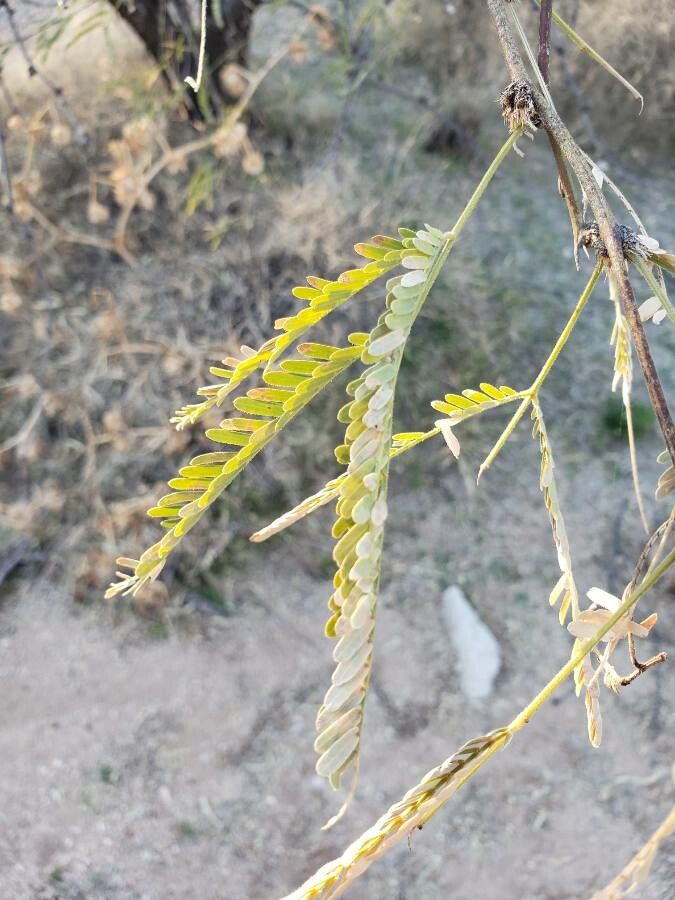
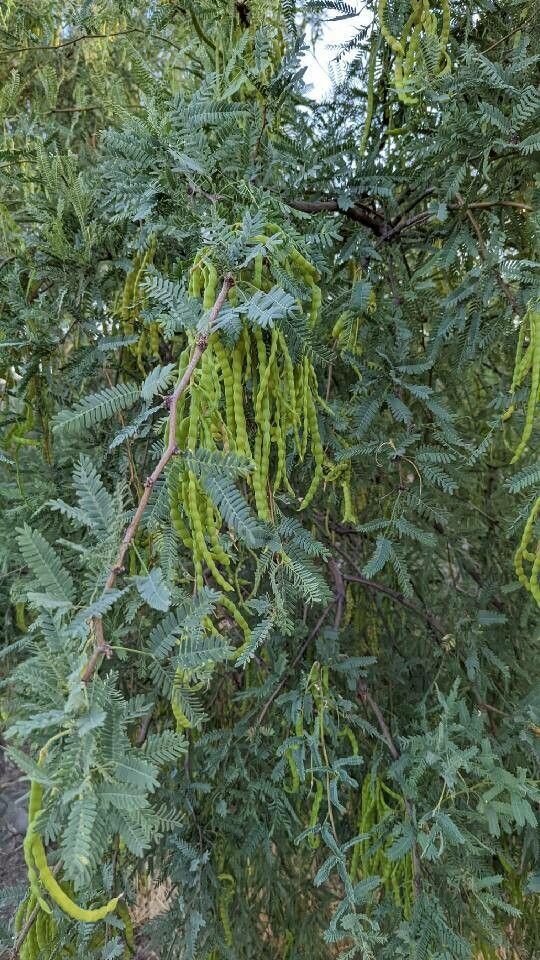
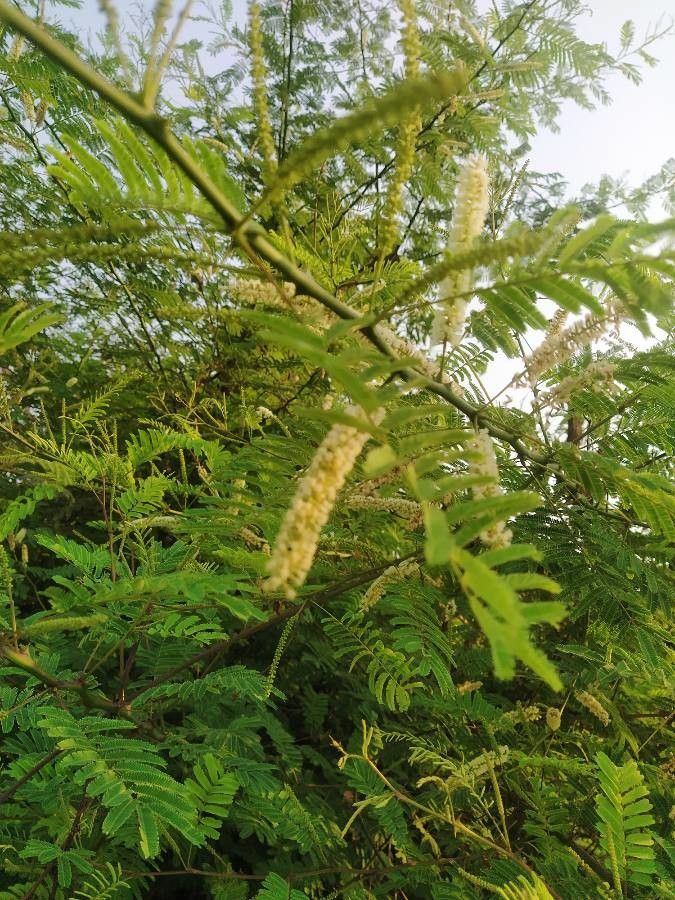
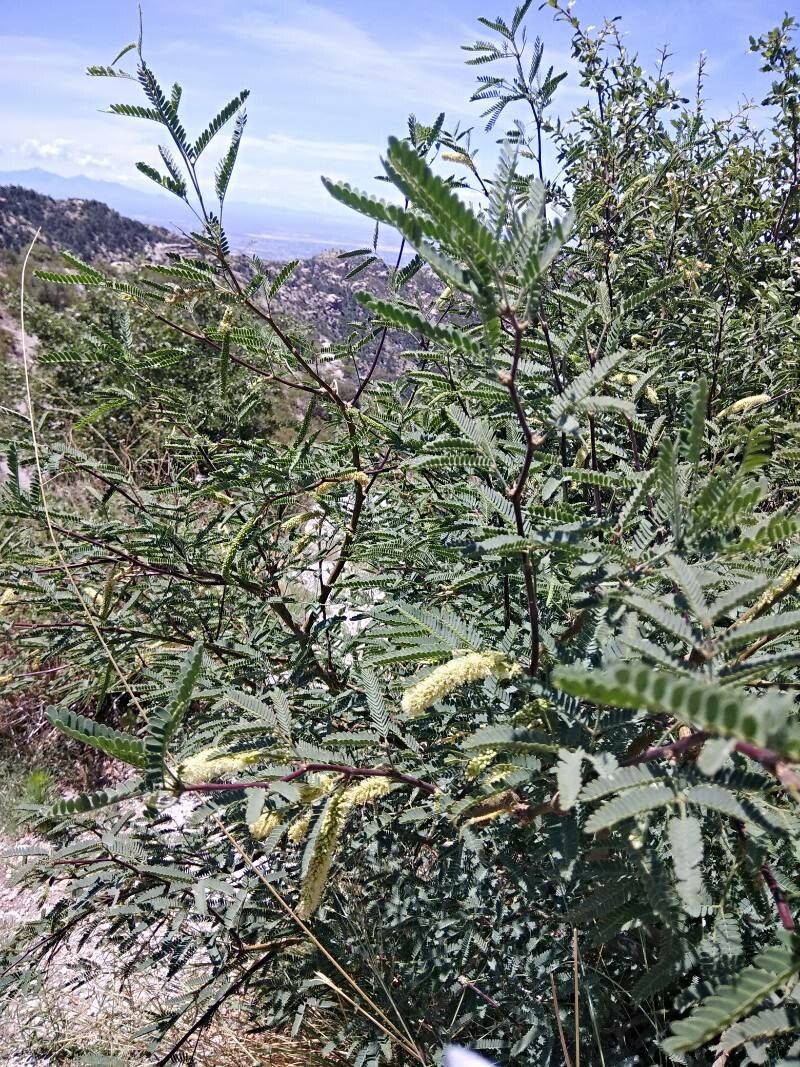
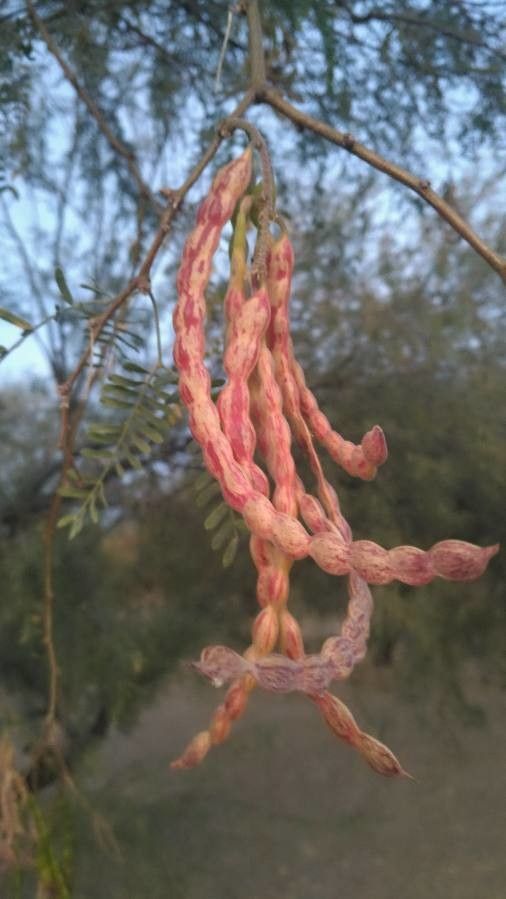
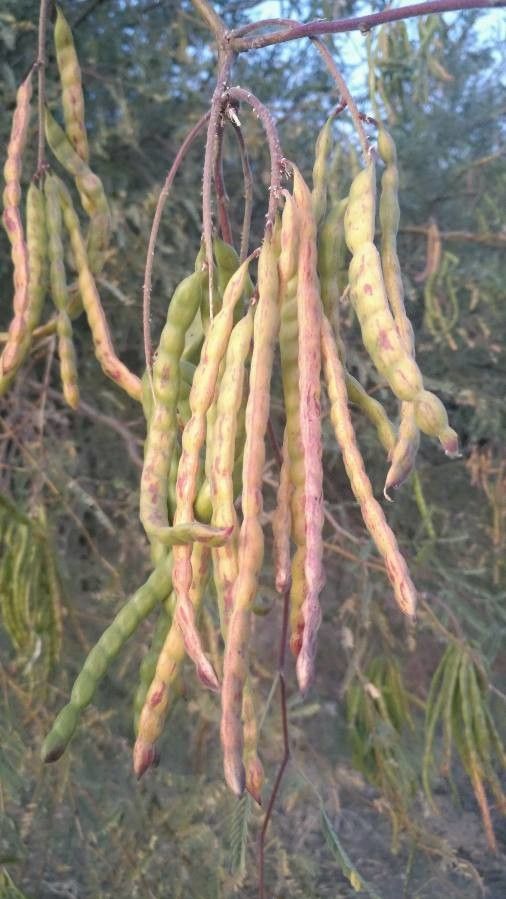
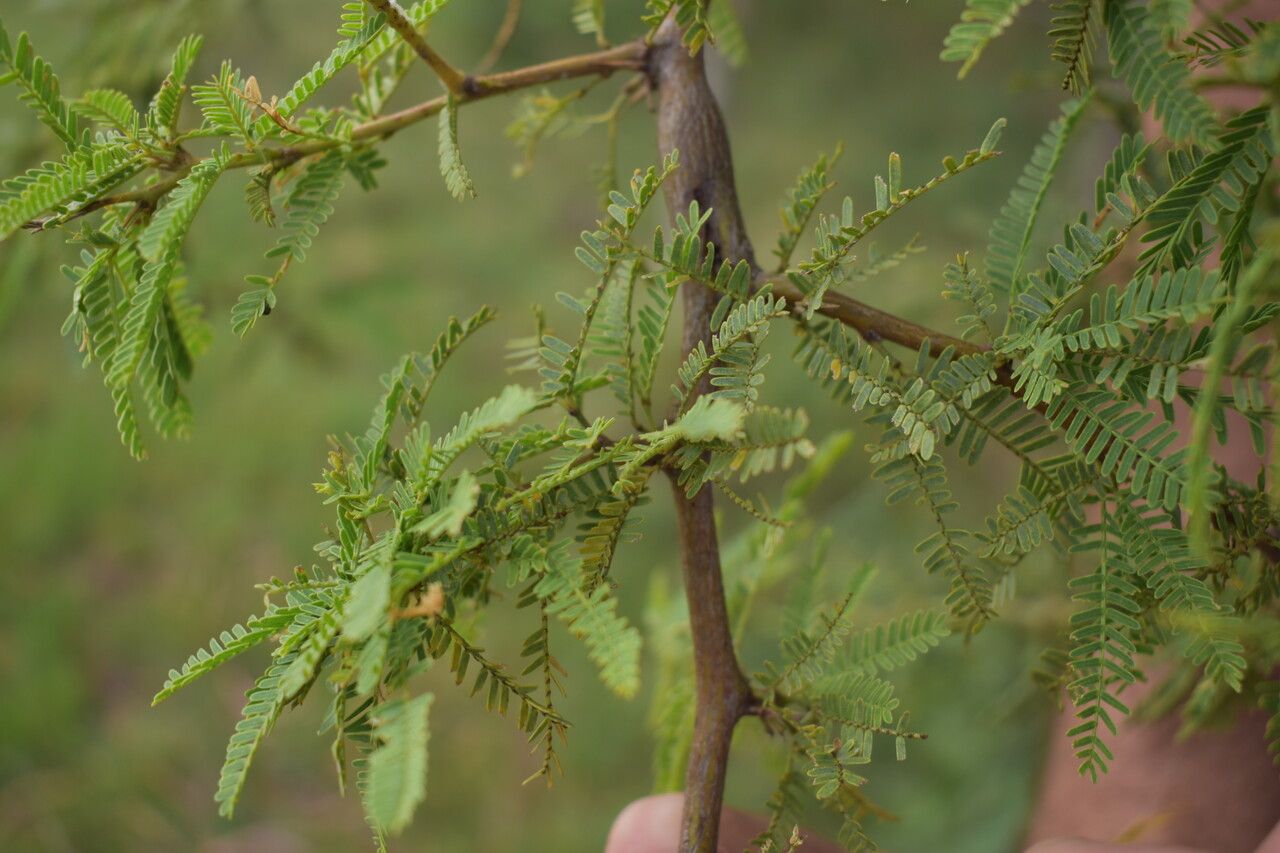
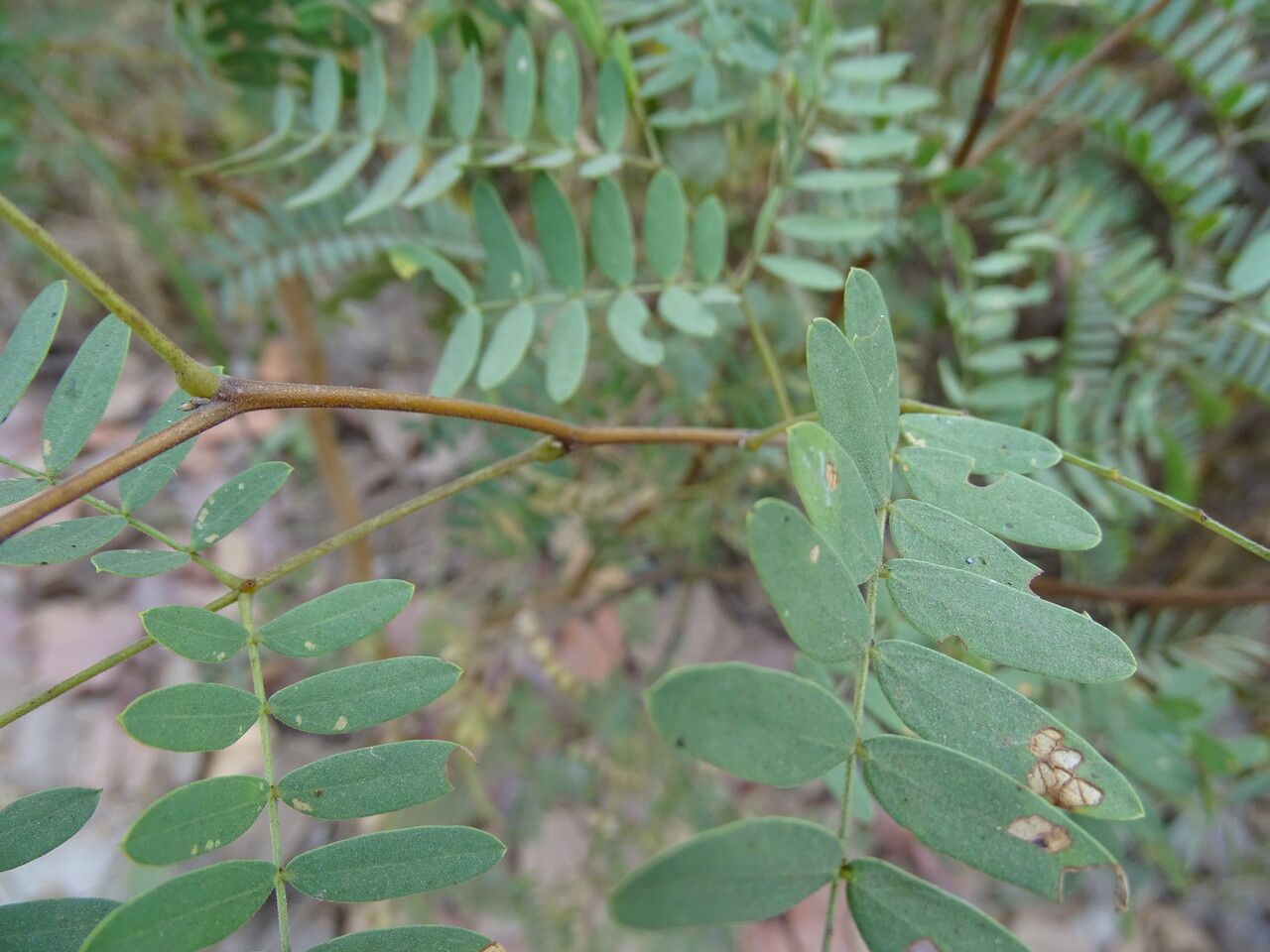
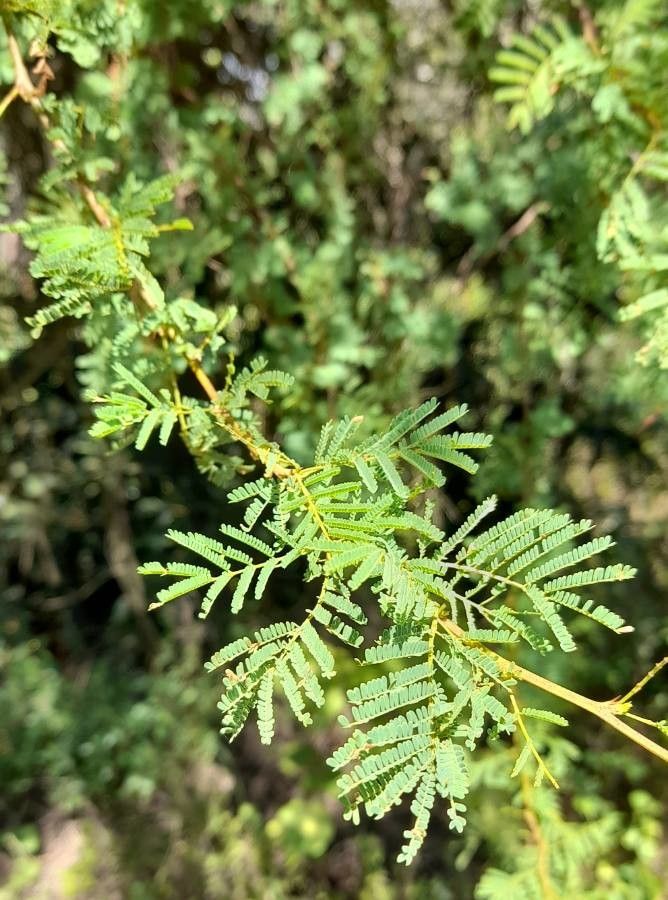
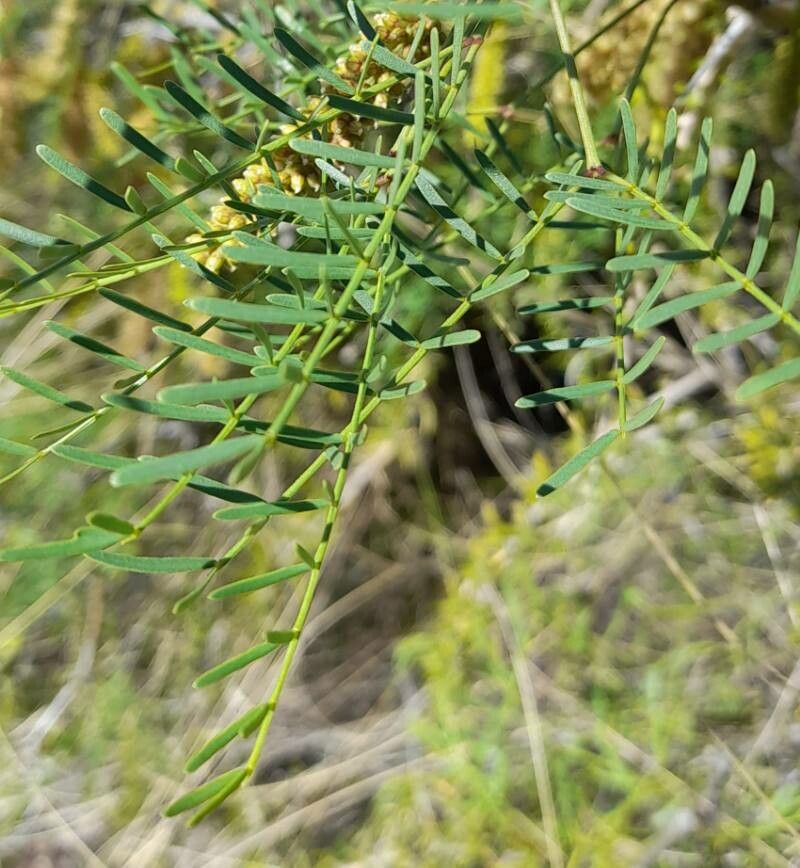
Prosopis velutina, commonly known as velvet mesquite, is a deciduous tree belonging to the legume family. Native to the southwestern United States and northern Mexico, this tree can reach heights of up to 30 feet. It is easily recognizable by its grayish-brown, deeply furrowed, and rough bark. The leaves of Prosopis velutina are compound, with each leaflet measuring about 1 inch long. In the spring, the tree produces small, yellow-green flowers that give way to long seed pods in the summer. Velvet mesquite trees are well adapted to arid environments, capable of thriving in hot, dry conditions with minimal water. Their extensive root systems allow them to access deep underground water sources. The wood of Prosopis velutina is highly valued for its strength and durability, making it a popular choice for furniture making and construction projects. Additionally, the seeds are edible and have been used as a food source by Native American tribes for centuries. Overall, Prosopis velutina plays a crucial role in arid ecosystems. It provides shade for wildlife, stabilizes soil with its extensive root system, and produces food for animals through its seed pods. Additionally, it offers valuable resources, such as wood products, for human use.
Velvet mesquite has strong disease resistance and is generally not susceptible to illnesses. In terms of care, this plant is fairly low maintenance. When grown outdoors it needs little watering, and larger specimens typically do not require pruning. Smaller plants, however, should be pruned after they have finished blooming. Velvet mesquite is suitable for anyone who has an outdoor space, such as a garden or a deck, and does not demand extensive care experience.
How to keep Prosopis Velutina.
Light
Velvet mesquite grows best in places that get uninterrupted sunlight all day, which encourages optimal growth. It can also do well with partial sun. In its native habitat this plant receives abundant sunlight. Both too much and too little light can adversely affect its health.
Water
Velvet mesquite is well-adapted to arid desert conditions and is highly drought-tolerant. It thrives with deep but infrequent watering, typically every 1–2 weeks. This makes it an excellent choice for xeriscaping, as it can withstand full sun and high temperatures, making it ideal for outdoor growth.
Temperature
Velvet mesquite is a temperate woody plant that prefers temperatures between 59 to 100 ℉ (15 to 38 ℃). It is native to hot, arid areas of North and South America, where summer temperatures often rise above 100 ℉ (38 ℃). It can withstand high heat and low humidity, although growth may slow in extreme temperatures. In colder seasons, with proper care it can tolerate temperatures from 23 to 68 ℉ (-5 to 20 ℃).
Fertilizer
Fertilize your Velvet mesquite in early spring to encourage healthy growth. Regular fertilization improves the tree’s overall health, leading to vigorous growth, greater resilience to harsh conditions, and enhanced resistance to diseases and pests. Keep a specific fertilization schedule for your Velvet mesquite to ensure foliage that is vibrant, deeply colored, and lush.
Pruning
Velvet mesquite is known for its feathery leaves and velvety bark. To care for this plant, prune it in early spring to remove any damaged branches and improve air circulation. Regular pruning helps maintain its structure, encourages flowering, and controls its height and spread. Be cautious when handling the plant, as it has thorns.
Pot & Repot
When repotting Velvet mesquite, select a pot 1-2 inches (2.5–5.1 cm) larger that offers good drainage. Use a well-draining potting mix. Repot in spring or fall, making sure the root ball sits slightly below the rim of the flower pot. Water thoroughly after repotting and place the plant in a warm spot with indirect sunlight.
Botanical profile.
- Plant Type
- Tree, Shrub
- Life Cycle
- Perennial
- Genus
- Prosopis
- Family
- Fabaceae
- Hardiness Zone
- 8-11
- Mature Height
- 9.14 m to 14.94 m
- Mature Spread
- 10.36 m
- Leaf Color
- Green, Gray
- Leaf Type
- Deciduous
- Flower Color
- Yellow
- Flower Size
- 0.51 cm to 0.76 cm
- Bloom Time
- Late spring, Early summer, Mid summer
- Planting Time
- Spring, Summer
- Harvest Time
- Mid summer
Other names.
Reader questions.
What are the sunlight requirements for Velvet Mesquite?
Velvet Mesquite (Prosopis velutina) thrives in full sunlight, requiring above 6 hours of sunlight daily for optimal growth. It can also grow under partial sun, which means about 3-6 hours of sunlight daily. In its native environment, Velvet Mesquite is accustomed to abundant sunlight. Whether your garden provides full or partial sun, observe the movement of sunlight to ensure your plants get the right balance of light and shade. This balance is crucial for their health and growth.
What is the preferred temperature range for Velvet Mesquite?
Velvet mesquite thrives in a temperature range of 59 to 100°F (15 to 38°C), making it well-adapted to the hot and arid regions of North and South America. It can tolerate high temperatures and low humidity, although its growth might slow in extreme heat. It is also capable of adjusting to colder temperatures ranging from 23 to 68°F (-5 to 20°C) with proper care during the cold seasons.
How does artificial lighting support plant growth?
Artificial lighting is essential for indoor plants, especially when natural sunlight is insufficient. This can be the case during winter or in spaces that do not receive ample sunlight. Artificial light sources, such as LED lights, offer a solution by providing the specific wavelengths needed by plants. For plants requiring full sun, 30-50 watts per square foot is recommended, while partial sun plants need 20-30 watts, and full shade plants require 10-20 watts. The light should be placed 12-36 inches above the plant, mimicking natural sunlight conditions, and kept on for 8-12 hours per day to ensure healthy growth.
How does Velvet Mesquite handle cold temperatures?
Velvet mesquite has some degree of cold tolerance and typically doesn't need extra protection when temperatures are above its minimum tolerable growing temperature. However, when temperatures are forecasted to drop below this threshold, it is essential to safeguard the plant against the cold. Protective measures like wrapping the plant in plastic film, fabric, or other suitable materials can help. Once warmer temperatures return, it's important to remove these covers promptly.
What are the signs of insufficient light in Velvet Mesquite?
When Velvet Mesquite does not receive enough light, it may show several symptoms: new leaves may be smaller, growth can appear leggy or sparse, and leaf drop may occur faster as the plant conserves resources. Additionally, new growth may slow down or stop, and new leaves could appear lighter in color or develop chlorosis (yellowing). Excessive sunlight can cause sunscald, leaf curling, wilting, and leaf scorching, which are harmful to the plant's health.
What should I do if my Velvet Mesquite is exposed to low temperatures?
If your Velvet Mesquite experiences temperatures below its growth tolerance, the leaves might droop or, in severe cases, wilt and fall off. It is recommended to trim off frost-damaged parts of the plant. To prevent cold damage in the future, you should wrap the plant with non-woven fabric or cloth, and possibly construct a wind barrier to shield it from cold winds.
How can I improve light conditions for Velvet Mesquite indoors and outdoors?
To optimize light conditions for Velvet Mesquite, gradually move your plant to a location with at least 6 hours of direct sunlight daily. For indoor plants, use a south-facing window and consider using artificial lighting if moving the plant is not feasible. For outdoor plants, avoid sudden changes in light intensity to prevent sunburn. If sunlight is obstructed, prune any branches blocking the light or consider transplanting smaller plants to sunnier spots, especially during their dormant period for minimal stress.
How should I care for Velvet Mesquite during high temperatures?
During the summer, it is crucial to ensure that the Velvet Mesquite is kept below its maximum suitable growth temperature. Exceeding this temperature can cause the leaves to lighten in color, with tips becoming dry and withered, causing the leaves to curl and increasing the plant's susceptibility to sunburn. To mitigate these issues, trim away sunburned and dried parts of the plant, move it to a shaded location during the peak sun hours, or use a shade cloth. Additionally, keep the soil moist by watering in the morning and evening.