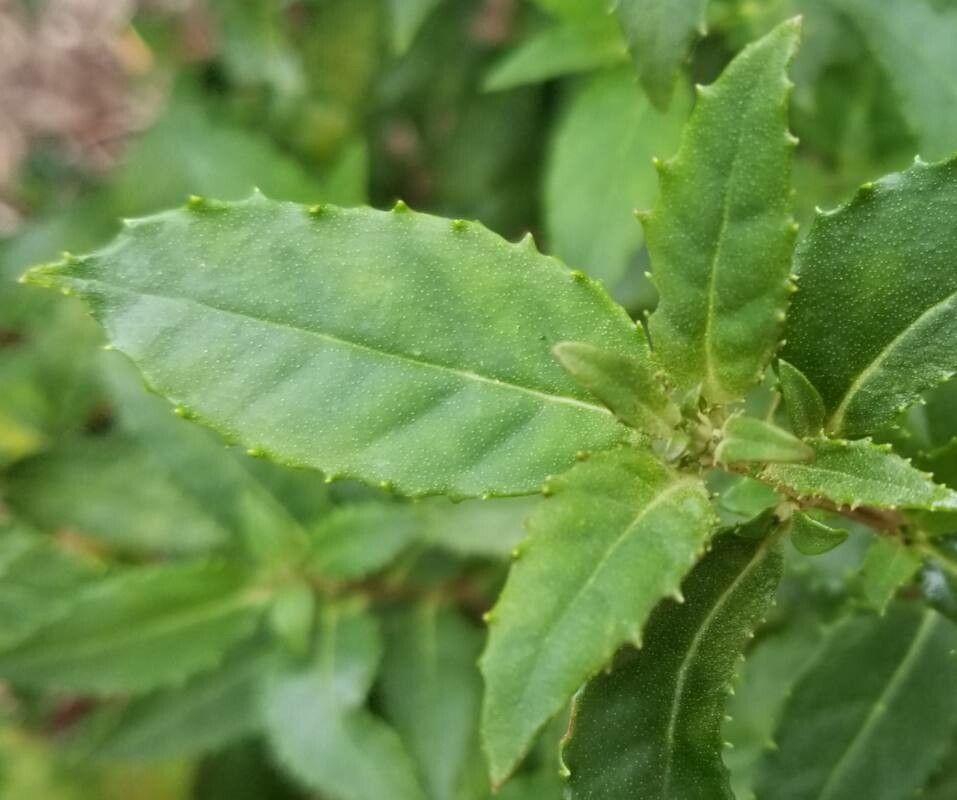
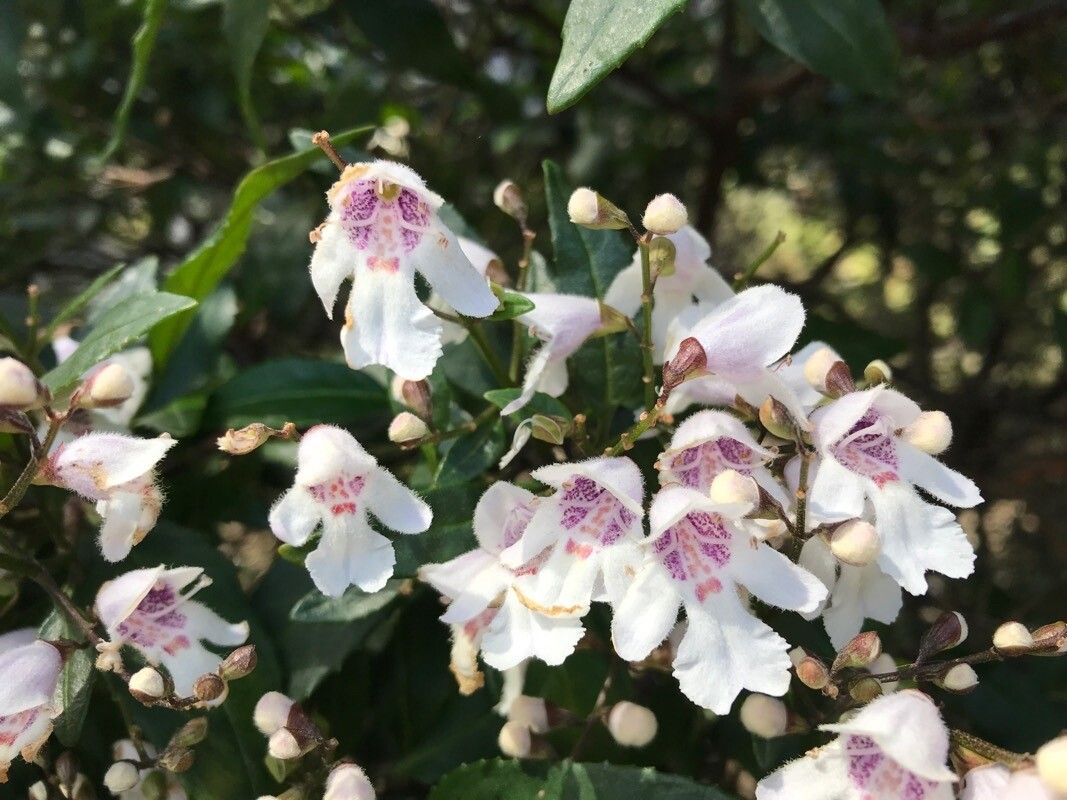
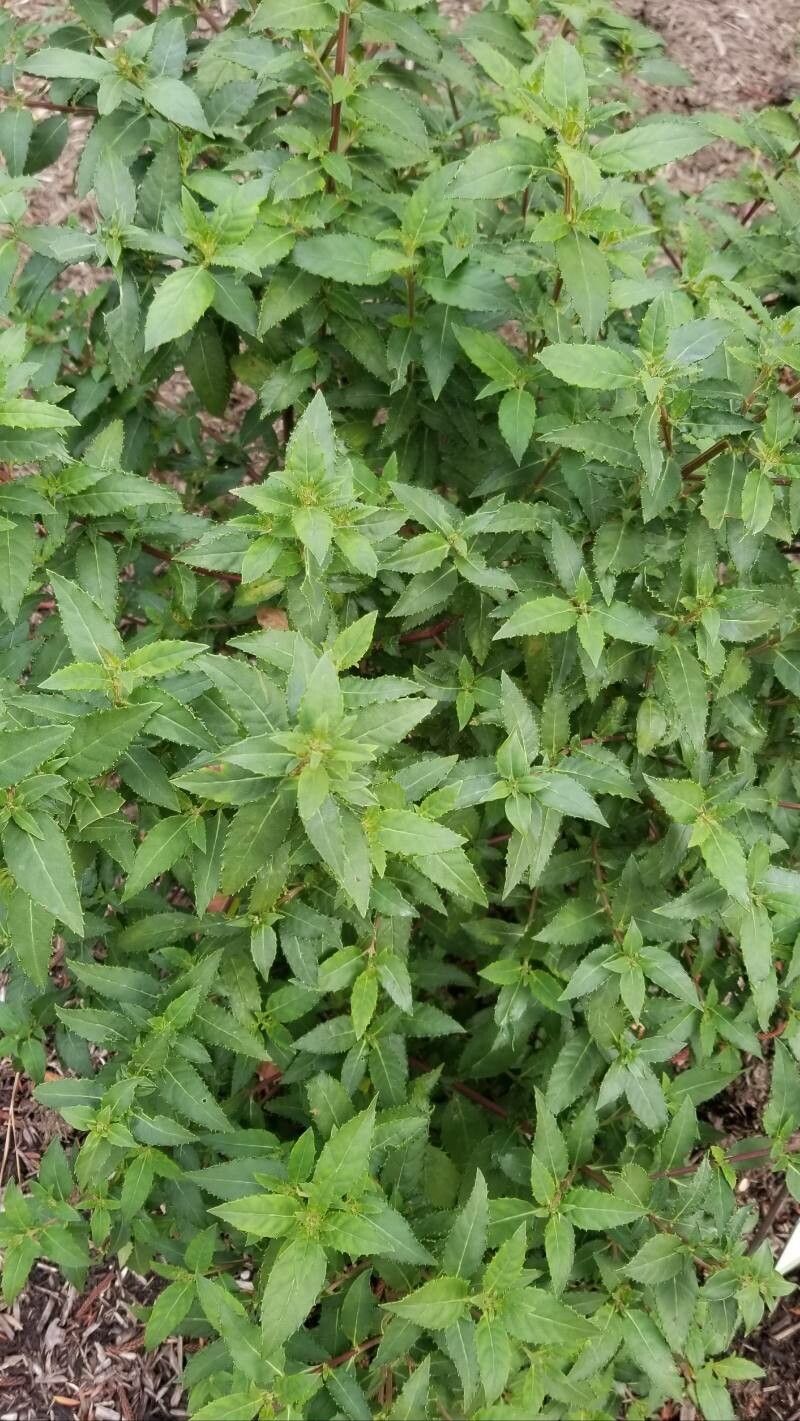
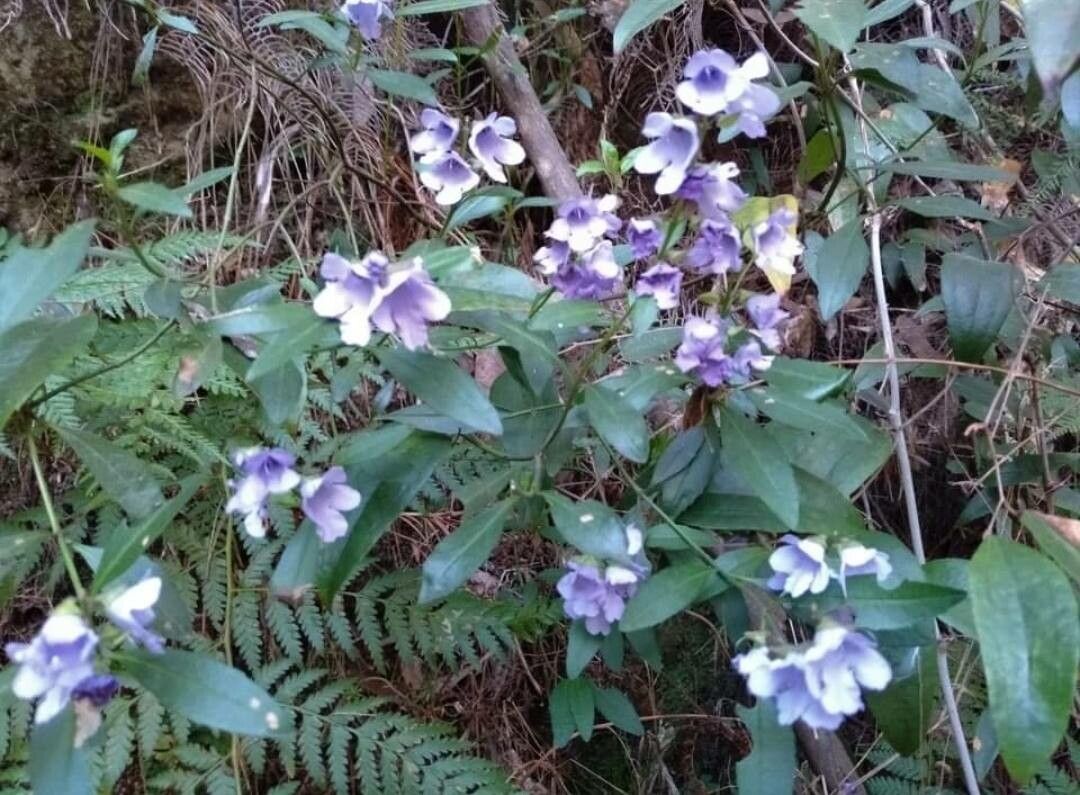
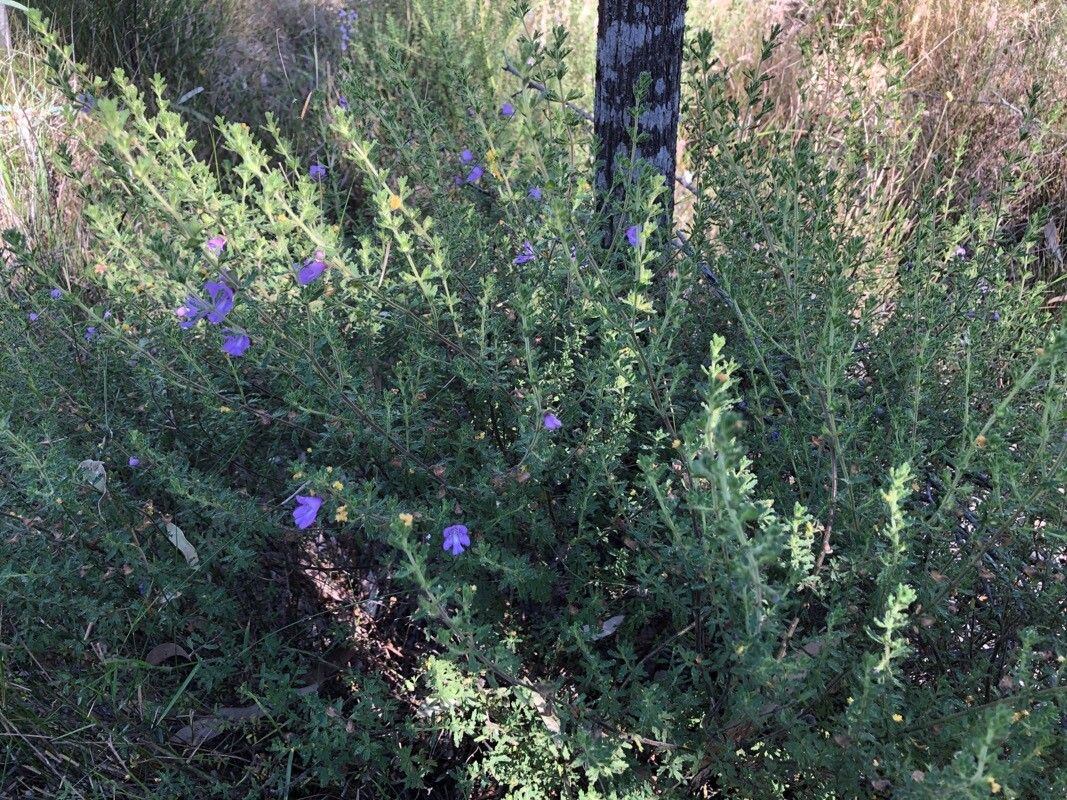
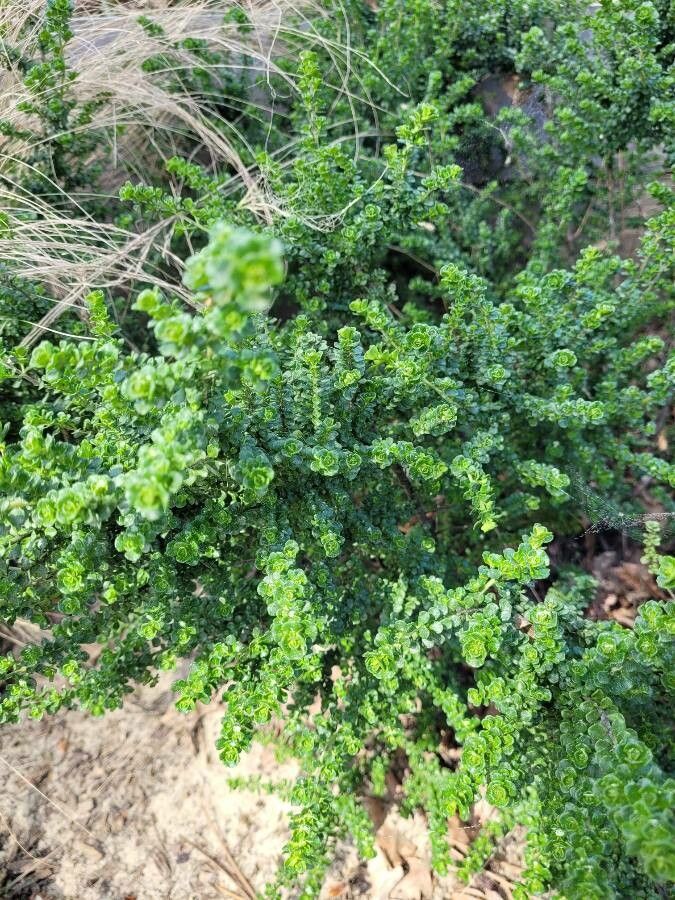
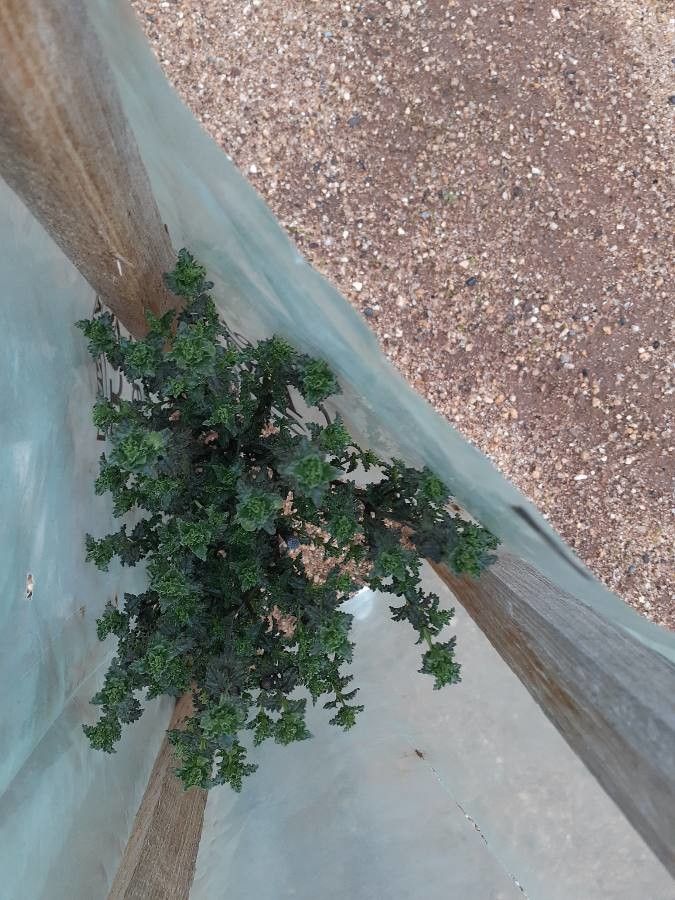
Prostanthera lasianthos, commonly known as the Victorian Christmas bush or coranderrk , is a large shrub or small tree of the mint family, Lamiaceae, which is native to Queensland, New South Wales, Victoria and Tasmania in Australia. It grows up to 10 m (35 ft) high but is usually much less and is found in wet sclerophyll forests, often beside creeks. Its flowers, which appear in profuse sprays, are about 2 cm long and white or pale lilac, with purple and orange blotches in the throat. They appear in late spring and summer, and specifically around Christmas time in Victoria. The fragrant, toothed leaves are 4 to 12 cm long and about 1.5 cm wide.
The Christmas bush has strong resistance to disease and is generally not susceptible to illnesses. Regarding care, this plant is fairly low-maintenance. When planted outdoors, it needs only minimal watering, and larger specimens typically do not require pruning. Smaller plants, however, should be pruned after they finish blooming. The Christmas bush is suitable for anyone who has outdoor space, such as a garden or a deck, and it does not demand a lot of care experience.
How to keep Prostanthera Lasianthos.
Light
The Christmas bush comes from open habitats, such as sunny meadows and forest edges, where light is abundant. It flourishes in Full Sun but can tolerate Partial Sun, adapting well to different sunlight conditions.
Water
The Christmas bush, native to Australia’s arid regions, is well-known for its strong drought tolerance. It needs watering every 2-3 weeks, letting the soil dry out between waterings. As an evergreen, the Christmas bush retains moisture in its leaves throughout the year. It is best grown outdoors to take advantage of natural rainfall.
Temperature
The Christmas bush is highly adaptable to a range of climates, whether in hot summers or cold winters. It nonetheless has an optimal temperature range for healthy growth. If temperatures rise too much, the plant can suffer from heat and humidity stress, which may lead to its death. In areas where temperatures approach the lower limit of its cold tolerance, applying insulation to protect the plant is important.
Fertilizer
Timing matters when feeding a Christmas bush. Apply fertilizer in early spring and then every month up to early summer. Fertilizer promotes attractive blooms and supplies energy during both dormant and active growth periods.
Pruning
The Christmas bush features fragrant leaves and an abundance of flowers. To keep it healthy and vibrant, it's best to prune it annually between early and late winter, right after it finishes flowering. Be sure to trim away any dead wood and excessive branches. This will promote growth, improve air circulation, and ensure a stunning display in the next season.
Botanical profile.
- Plant Type
- Shrub
- Life Cycle
- Perennial
- Genus
- Prostanthera
- Family
- Lamiaceae
- Hardiness Zone
- 8-11
- Mature Height
- 2.13 m to 3.96 m
- Mature Spread
- 1.52 m to 2.44 m
- Leaf Color
- Green
- Leaf Type
- Evergreen
- Flower Color
- White, Purple
- Flower Size
- 1.02 cm to 1.52 cm
- Bloom Time
- Summer
- Planting Time
- Spring, Summer, Autumn
- Harvest Time
- Late summer, Early fall, Mid fall
Other names.