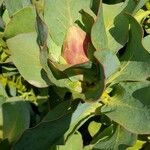
Protea grandiceps
Peach protea · Princess protea · Red Sugarbush · Red protea
Description
Source: leafsnapProtea grandiceps, commonly known as the "Green Sugarbush" or "Green Protea," is a flowering plant species in the Proteaceae family. Native to South Africa, it is primarily found in the Western Cape and Eastern Cape provinces. This shrub can grow up to 2 meters tall and features leathery, dark green leaves that measure about 10-15 cm long and 2-3 cm wide. It produces large flower heads approximately 15 cm in diameter, with greenish-yellow bracts surrounding small yellow flowers. The Green Protea blooms from late winter to early spring (July-August) and attracts birds such as sunbirds for pollination. The plant thrives in well-drained soils with low nutrient content and requires full sun exposure for optimal growth. Protea grandiceps has been used in traditional medicine by indigenous peoples of South Africa to treat various ailments such as coughs, colds, fever, headaches, and stomach problems. Early settlers also used its leaves as a tea substitute due to their caffeine-like properties. Today, it is widely cultivated both locally and internationally for its unique beauty, making it an attractive ornamental plant. It is especially prized in floral arrangements and gardens, adding an exotic touch wherever it is planted.
Care Guide
💧 Water Every 7 days
Water your red protea every two weeks during dry spells. For newly planted proteas, water them once a week. If your red protea is grown in a container, let the soil dry out a bit between waterings to avoid root rot.
☀️ Light Full sun
Red protea is native to open habitats, like sunny meadows and forest edges, which provide abundant light. It does best in full sun but can also tolerate partial sun, adapting well to different sunlight conditions.
What are the sunlight requirements for Red protea (Protea grandiceps)?
Red protea (Protea grandiceps) thrives in environments with specific sunlight conditions to ensure its growth and happiness. It requires 'Full sun,' which means it needs to be in a spot that receives above 6 hours of sunlight daily. However, it can also tolerate 'Partial sun' conditions, where it gets about 3-6 hours of sunlight per day. It's important to observe how sunlight moves through your garden throughout the day. Selecting the ideal locations that offer a harmonious balance of light and shade will support the health and well-being of your Red protea.
🌡️ Temperature 20–37.8°C
Red protea adapts well to temperature, tolerating higher heat and substantial temperature fluctuations. In hot weather, you should watch watering and provide adequate shade to avoid sunburn. Conversely, Red protea is less tolerant of cold; it can handle some chill, but very low temperatures may cause frost damage.
What is the name and botanical name of the Red protea?
The Red protea is known by its common name 'Red protea', and its botanical name is Protea grandiceps.
💨 Humidity
🪴 Soil 6-7
🌱 Fertilizer
The timing of fertilization is vital for Red protea. Apply fertilizer in early spring and continue monthly until early summer. Fertilizer encourages attractive blooms and supplies energy during both dormant and active growth periods.
🪴 Pot & Repot
✂️ Pruning
To encourage healthy growth and abundant blooms, prune red protea in early spring. Start by removing any dead wood and thinning out overcrowded stems. Shape the plant to achieve the desired size. Pruning at this time promotes vigorous growth and enhances the plant's overall health, maximizing the production of blossoms.
🌿 Propagating
🐛 Diseases & pets
☠️ Toxicity
Characteristics
- Plant Type
- Shrub
- Life Cycle
- Perennial
- Genus
- Protea
- Family
- Proteaceae
- Hardiness Zone
- 9-11
- Mature Height
- 3.05 m
- Mature Spread
- 2.13 m
- Leaf Color
- Dark Green, Olive Drab
- Leaf Type
- Evergreen
- Flower Color
- Pink, Red
- Flower Size
- 7.62 cm to 11.43 cm
- Bloom Time
- Winter
- Planting Time
- Spring, Summer, Autumn
- Harvest Time
- Spring
- Native Area
- South Africa