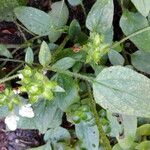
Prunella laciniata
Cutleaf selfheal · Cut-leaved Selfheal · White selfheal · Cut-leaved Self-heal
Description
Source: leafsnapPrunella laciniata, the cutleaf selfheal, is a plant in the family Lamiaceae.
Care Guide
💧 Water
Cut-leaved self-heal thrives in humid, moist environments and needs weekly watering to maintain optimal health. This herbaceous plant is well-suited for both indoor and outdoor growth, but it flourishes best in containers that allow for controlled watering. It naturally comes from regions with significant rainfall.
How should I water my Cut leaved self heal plant?
To properly care for the Cut leaved self heal, it is recommended to use room temperature filtered water. Tap water may contain harmful particles, so filtered water is preferable. Since this plant originates from a warm environment, it is important to avoid using cold water as it can be a shock to its system. Additionally, it is best to refrain from overhead watering as it can cause issues with the foliage. Instead, gently water the plant by saturating the soil with your filtered room temperature water. This helps to nourish the roots and facilitates their spread in the soil, ensuring they can gather essential nutrients.
What should I do if I give too much or too little water to my Cut leaved self heal plant?
Both overwatering and underwatering can harm your Cut leaved self heal plant, but overwatering is more common. Too much water can cause wilting, yellowing of stems and leaves, and diseases like root rot, mold, and mildew, which can be fatal. Underwatering is less likely but can make the leaves brittle and brown. It's crucial to spot overwatering signs early and reduce watering immediately. Check the soil's drainage and replace it if it's poor. If underwatering is detected, increase watering until the signs disappear.
How frequently should I water my Cut leaved self heal plant?
If your Cut leaved self heal plant is in a pot, the most precise way to determine if it needs water is by checking the soil with your finger. If the top two to three inches of soil feel dry, then it's time to water. For outdoor plants grown in the ground, you can use a similar method. When you find that the top few inches of soil have dried out, it's time to water. Typically, during the spring and early fall, you may need to water this plant about once a week using this method. However, in extremely hot weather, you may need to increase your watering to about twice a week or more. It's worth noting that mature, well-established Cut leaved self heal plants have a remarkable ability to withstand drought.
How much water does my Cut leaved self heal require?
To ensure your Cut leaved self heal is properly watered, be generous with the amount of water you provide. Wait until the top two to three inches of soil are dry, and then give the plant a deep watering so that the soil is completely soaked. Make sure to add enough water so that it drains out through the bottom of the pot. Seeing excess water flow out indicates that you have watered enough. However, be careful not to let water accumulate in the soil, as it can harm the plant. If you notice that water is not draining properly, it could be due to poorly draining soil, which is not good for the plant's health. If the plant is grown outside, one inch of rain per week should be sufficient.
How do I water my Cut leaved self heal plant as it grows?
The water needs of the Cut leaved self heal vary depending on its growth stages. When the plant is in its early years or has recently been transplanted, it requires more water than usual. During these stages, the plant devotes energy to growing new roots, which need extra moisture to support future growth. After a few seasons, the plant requires less water. Additionally, during the bloom period, the plant may require more water as flower development utilizes a significant amount of moisture.
☀️ Light Partial sun
Cut leaved self heal is native to habitats like forest understories and rocky areas, where it occurs in natural shade. It prefers partial sun but can tolerate full sun or full shade, showing its versatile and hardy nature.
🌡️ Temperature 5–35°C
Cut leaved self heal can tolerate a wide range of temperatures, but its distribution may still be restricted by various combinations of moisture and heat. It performs best in warm summer conditions with sufficient rainfall or watering. Extended periods of cloudy and rainy weather, as well as prolonged high temperatures, can raise the chance of Cut leaved self heal dying. In winter, adequate protection from cold can increase the plant's survival rate.
💨 Humidity
🪴 Soil 6-7
🌱 Fertilizer
Early spring, when a Cut leaved self heal is coming out of dormancy and starting active growth, is the best time to apply fertilizer. Feeding supplies essential nutrients for healthy growth. Even though Cut leaved self heal needs relatively little fertilizer, applying it once a year can improve its survival and help produce better, longer-lasting flowers.
🪴 Pot & Repot
✂️ Pruning
The cut-leaved self-heal plant is known for its distinct cut-leaved foliage and medicinal properties. To encourage growth and flowering, prune the plant from early to late spring. Be sure to remove old stems and spent flowers to maintain the plant's health and desirable shape. Always use clean, sharp tools during pruning to prevent the spread of disease.
🌿 Propagating
🐛 Diseases & pets
☠️ Toxicity
Characteristics
- Plant Type
- Herb
- Life Cycle
- Perennial
- Genus
- Prunella
- Family
- Lamiaceae
- Hardiness Zone
- 4-9
- Mature Height
- 30 cm
- Mature Spread
- 91 cm
- Leaf Color
- Green
- Leaf Type
- Deciduous
- Flower Color
- White
- Flower Size
- 1.02 cm to 1.52 cm
- Bloom Time
- Late spring, Early summer, Mid summer
- Planting Time
- Spring, Summer, Autumn
- Harvest Time
- Mid summer, Late summer, Early fall
- Native Area
- Turkey, Austria, Slovakia, Montenegro, Croatia, Morocco, Slovenia, Russia, Germany, Romania, Belgium, France, Portugal, Tunisia, Czech Republic, Bulgaria, Armenia, Poland, Greece, Ukraine, Serbia, Lebanon, Italy, Spain, Switzerland, Iran, Albania, Algeria, Hungary