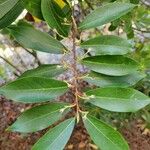
Prunus caroliniana
Carolina laurel cherry · Cherry-laurel · Laurel cherry · Wild orange · Mock orange
Description
Source: leafsnapPrunus caroliniana, commonly known as the Carolina Cherry Laurel, is a small to medium-sized evergreen tree native to the southeastern United States. Belonging to the Rosaceae family, it can grow up to 40 feet tall and spread 20-30 feet wide. The tree features glossy, dark green, lance-shaped leaves that can reach up to 5 inches in length. In early spring, it produces fragrant white flowers, which are followed by small black berries in late summer. The Carolina Cherry Laurel is a popular ornamental plant because of its attractive foliage and its ability to thrive in various soil types and growing conditions. Its dense growth habit makes it an excellent choice for hedges or privacy screens. However, it is important to note that all parts of this plant contain cyanide compounds, which can be toxic if ingested by humans or animals. Therefore, caution should be exercised when planting this species in areas accessible to children or pets. In summary, while Prunus caroliniana is a visually appealing evergreen tree with considerable ornamental value, it requires careful consideration due to its potential toxicity.
💡 Carolina cherry laurel is a popular choice due to its tolerance for salt spray and pollution, as well as its attractiveness to pollinators and birds. However, the plant does have significant drawbacks. It is highly toxic because it contains cyanide compounds, and it is also highly invasive.
🌳 Carolina cherry laurel is frequently ignored for purposes other than serving as a privacy screen or hedge. It is an excellent host plant for butterfly caterpillars, such as the Eastern Tiger Swallowtail, and plays an important role in local ecosystems. Its hard, dense wood has been used to make tool handles and other wooden implements. The evergreen foliage offers year-round shelter and nesting sites for small animals and birds, making Carolina cherry laurel a keystone species in its habitat.
🎭 The spring's hope, perseverance, honor
Care Guide
💧 Water Every 7 days
Carolina cherry laurel grows best in moderate moisture and well-drained soil. To prevent overwatering, it only needs watering every 1-2 weeks. Being an evergreen plant, it benefits from regular watering during its growing season, which helps promote lush foliage and vibrant flowering. This makes it an excellent choice for outdoor cultivation.
When Should I Water My Carolina Cherry Laurel?
Watering your Carolina cherry laurel appropriately is key to its health. Look for signs such as wilting or browning leaves, which indicate the plant is under stress and needs water. Check the soil's moisture by feeling the top 1-2 inches; if it's dry, it's time to water. Additionally, if you notice the lower leaves dropping or the plant shows stunted growth, these are signals that the plant needs more water. Be mindful not to water too early or too late to prevent root rot from oversaturation or stress from under-watering. Both conditions make the cherry laurel more prone to pests and diseases.
How Should I Water My Carolina Cherry Laurel?
The Carolina cherry laurel thrives with the soak and dry method of watering, favoring evenly moist soil that mimics its natural woodland habitat. To water effectively, use a long-spouted watering can to direct water to the soil and avoid wetting the foliage, which can lead to fungal diseases. Employing a moisture meter can prevent over or under-watering by measuring the soil's moisture level accurately. Aim to water the soil rather than the foliage, especially avoiding late-day watering that can leave the plant damp overnight, increasing the risk of fungal issues.
How Much Water Does Carolina Cherry Laurel Really Need?
The water requirement for Carolina cherry laurel varies with its size and stage of growth. Mature plants generally need more water than saplings. The goal is to soak the soil until water drains from the bottom, ensuring deep roots receive enough moisture. Over or under-watering can manifest through wilted, yellow, or brown leaves. Adjust water quantity based on the plant's environment, considering factors like temperature, humidity, and light. Regularly checking the plant’s hydration signs helps maintain optimal growth.
What Kind of Water is Best for Carolina Cherry Laurel?
Carolina cherry laurel thrives best with distilled or rainwater due to their purity and balanced pH levels. Tap water is acceptable if other sources aren't available, but be cautious of chlorine and fluoride, which can harm the plant. Letting tap water sit out for 24 hours or using a filter can reduce these harmful elements. Room temperature water is ideal, as extreme temperatures might shock the plant. Being moderate in your choice of water helps avoid leaf burn and ensures the cherry laurel's health.
How Do Carolina Cherry Laurel's Watering Needs Change with the Seasons?
Seasons greatly impact the watering needs of Carolina cherry laurel. During spring, water well to support growth, adjusting as the soil's top layer dries. Summer demands careful moisture management to prevent wilting or leaf drop. As autumn approaches, gradually reduce watering as growth slows and temperatures drop. Minimal watering is required during winter, focusing only on preventing the soil from becoming completely dry. Adapting your watering routine to the changing seasons ensures the plant remains healthy year-round.
☀️ Light Full sun
For healthy growth, carolina cherry laurel prefers spots that receive plenty of sunlight all day but can tolerate locations with slightly less sun. Excessive shade can limit growth, while very intense sun may cause leaf scorch.
What are the sunlight requirements for Carolina Cherry Laurel?
Carolina Cherry Laurel thrives best in locations that receive ample sunlight throughout the day, ideally leaning towards full sun conditions which are above 6 hours of sunlight. However, it can also tolerate partial sun conditions, about 3-6 hours of sunlight. It's important to observe the movement of sunlight through your garden and choose spots that ensure a balance of light and shade for the plants' optimal growth. Excessive shade can inhibit growth, whereas too much direct sunlight may risk leaf scorch.
What should I know about artificial lighting for Carolina Cherry Laurel indoors?
When natural sunlight is insufficient, especially in less sunny spaces or during the winter, artificial lighting becomes crucial for the growth of indoor Carolina Cherry Laurel plants. LED lights are recommended for their ability to be customized to the specific light wavelengths needed by plants. For full sun plants, 30-50W per square foot is needed; for partial sun plants, 20-30W per square foot; and for full shade plants, 10-20W per square foot. The light source should be placed 12-36 inches above the plant to mimic natural sunlight, and the plants generally require 8-12 hours of light per day.
What are the symptoms of improper lighting for Carolina Cherry Laurel?
Carolina Cherry Laurel may show several symptoms if the lighting conditions are not ideal. These include small or underdeveloped leaves, leggy or sparse growth, faster leaf drop, slower or no new growth, lighter-colored or pale new leaves, chlorosis (yellowing of leaves), sunscald, leaf curling, wilting, and leaf scorching. These symptoms can arise from both too little and too much sunlight, indicating the importance of optimal lighting for the plant's health.
How do I address lighting issues for Carolina Cherry Laurel?
For indoor Carolina Cherry Laurel, gradually moving the plant to a sunnier location every week until it receives at least 6 hours of direct sunlight daily is advisable. Use south-facing windows and consider supplemental artificial light for large or immobile plants, keeping lights on for at least 8 hours daily. For outdoor plants, a gradual transition to sunnier spots helps avoid sunburn, emphasizing the importance of not making sudden changes in light intensity. If sunlight obstruction is an issue, consider pruning nearby trees or transplanting the plant to a sunnier location, especially during its dormant period for smaller plants. Note that parts of the plant affected by insufficient light may not fully recover, but new growth will be healthy with improved light conditions.
🌡️ Temperature 15–35°C
Carolina cherry laurel, a temperate woody species, prefers temperatures of 59 to 95 ℉ (15 to 35 ℃). In its native habitat it requires warmth to grow and thrive. In winter it can adapt to cooler temperatures with appropriate protection, while in summer it needs protection from extreme heat.
What temperatures are essential for the growth of Carolina cherry laurel?
Carolina cherry laurel, whose botanic name is Prunus caroliniana, thrives in temperate conditions and prefers temperatures ranging between 59°F to 95°F (15°C to 35°C). It requires warmth to grow optimally in its native environment. Although it has some level of cold tolerance, additional measures are needed when temperatures are expected to drop below its tolerable growing temperature minimum. These measures might include wrapping the plant with plastic film, fabric, or other suitable materials to protect it from cold. When summer arrives and temperatures rise, it is also important to shield the plant from extreme heat to ensure its health and growth.
How does Carolina cherry laurel react to low temperatures, and what should be done?
Carolina cherry laurel possesses a moderate tolerance to low temperatures and shows optimal growth when the temperature is maintained above its suitable growth temperature minimum. To prevent damage when the thermometer dips below its tolerable growing temperature minimum, the plant's leaves may begin to droop, and in severe cases, wilt and fall off. To mitigate these effects, damaged parts should be trimmed off, and preventive measures, such as wrapping the plant in non-woven fabric or cloth and setting up a wind barrier, should be employed ahead of the cold season to protect it from chilly winds.
What are the effects of high temperatures on Carolina cherry laurel and how can they be managed?
During the hotter months, Carolina cherry laurel should ideally be kept below its suitable growth temperature maximum to avoid stress from high temperatures. Exceeding this temperature range can lead to symptoms like lighter leaf color, dry and withered leaf tips, curled leaves, and a higher risk of sunburn. To manage these issues, it's advised to trim away sunburned or dried parts of the plant, relocate it to a shaded area during peak sun hours, or use a shade cloth. Additionally, maintaining soil moisture with regular watering sessions in the morning and evening can help alleviate stress from heat.
💨 Humidity normal (40-60%)
This plant will thrive in moderate humidity, which is probably the level in your home. However, misting it a few times a week can be very beneficial. Make sure the room has good ventilation.
🪴 Soil 6-7
🌱 Fertilizer
Fertilize your Carolina cherry laurel in early spring to encourage healthy growth. Regular feeding improves overall health, leading to vigorous growth, better tolerance of harsh conditions, and increased resistance to pests and diseases. Maintain a specific fertilization schedule to keep the foliage vibrant, deeply colored, and lush.
Why should I put fertilizer on my Carolina cherry laurel plant?
No matter which kind of Carolina cherry laurel you have, regular fertilization is essential for keeping your plant healthy. Providing the right nutrients will promote strong growth, making your Carolina cherry laurel more resilient to difficult conditions and better equipped to fight off diseases and pests. One of the most appealing aspects of your Carolina cherry laurel is its foliage, so it's important to maintain it. To achieve this, you should establish a consistent fertilization routine tailored to your specific Carolina cherry laurel. This will result in leaves that are vibrant and lush.
When should I fertilize my Carolina cherry laurel?
To properly fertilize your Carolina cherry laurel, it is recommended to do so in late winter or early spring. This provides the necessary nutrients for healthy growth when the weather becomes warmer. If you live in a warm climate, it can be beneficial to give an additional fertilization in early fall. This not only adds nutrients for the following growing season, but also helps the plant endure the winter cold without foliage damage. By fertilizing earlier, the new branches will have sufficient time to grow and withstand the cold winter.
When is it not a good idea to fertilize my Carolina cherry laurel plant?
There are specific times throughout the year when you should avoid fertilizing your Carolina cherry laurel. The first time is during the early and mid-winter months when the plant is dormant and does not require any feeding. Additionally, it is not advisable to fertilize during the late spring and summer when the weather is hotter and drier. These conditions can negatively affect the plant's response to fertilization. To prevent any problems, it is best to stick to a fertilization schedule that focuses on feeding only in early spring and early fall.
What kind of fertilizer does my Carolina cherry laurel require?
Carolina cherry laurels primarily require nitrogen as their main nutrient, but this does not diminish the importance of phosphorus and potassium. These three nutrients are all necessary for the optimal growth of your Carolina cherry laurel, which is why a balanced fertilizer such as a 10-10-10 is often effective. However, it has been observed that a more nuanced nutrient ratio, particularly one slightly higher in nitrogen, can result in even better growth. For instance, a ratio of 10-6-4 can often be beneficial. When it comes to fertilizing, you have the option of using either granular or liquid-based fertilizers.
How do I make my Carolina cherry laurel grow better?
To fertilize your Carolina cherry laurel using a granular fertilizer, simply sprinkle it on the soil at the right time. The slow-release nature of granular fertilizer means nutrients will be released gradually over time. It's recommended to lightly water your Carolina cherry laurel before applying the fertilizer. Another option is to use liquid fertilizer, although this is less common. To do this, mix the fertilizer with water and pour it onto the soil around the base of your Carolina cherry laurel. Sometimes, it's helpful to do a soil test before fertilizing to check if any adjustments to pH are needed.
🪴 Pot & Repot Every 12 months
✂️ Pruning
The Carolina cherry laurel is an evergreen shrub known for its glossy dark-green leaves and small white flowers. Pruning it from early to late winter helps shape the plant, control its size, and improve air circulation, which in turn reduces the risk of disease. Regular trimming also encourages growth, flowering, and berry production, enhancing its ornamental appeal.
🌿 Propagating
🐛 Diseases & pets
☠️ Toxicity
Characteristics
- Plant Type
- Tree
- Life Cycle
- Perennial
- Genus
- Prunus
- Family
- Rosaceae
- Hardiness Zone
- 8-10
- Mature Height
- 4.88 m to 13.11 m
- Mature Spread
- 6.1 m to 9.14 m
- Leaf Color
- Green
- Leaf Type
- Evergreen
- Flower Color
- White
- Flower Size
- 0.76 cm
- Bloom Time
- Spring
- Planting Time
- Spring, Autumn
- Harvest Time
- Early summer, Mid summer
- Native Area
- Mexico