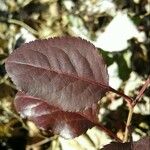
Prunus cerasifera
آلوچه قرمز · آلو قطره طلایی · آلوچه، آلبالو گلک، · Cherry plum · myrobalan
Description
Source: leafsnapPrunus cerasifera, commonly known as the cherry plum or myrobalan plum, is a deciduous tree belonging to the Rosaceae family. Native to Asia and Europe, it has been widely cultivated in other regions around the globe. This tree can reach a height of 6-10 meters and features a rounded crown with a dense canopy of leaves. The leaves of Prunus cerasifera are oval-shaped with serrated edges and are typically green, although some cultivars display purple or bronze foliage. The tree produces pink or white flowers that bloom in early spring, prior to the emergence of the leaves. The fruit of Prunus cerasifera is small, about 2-3 cm in diameter, and round with smooth skin that can vary in color from yellow to red, purple, or black, depending on the cultivar. While the fruit is edible, it is not particularly flavorful. Prunus cerasifera is often used as an ornamental tree due to its attractive foliage and early spring blossoms. It also provides food for wildlife, such as birds that feed on its fruit. In addition to its ornamental value, Prunus cerasifera has been utilized for medicinal purposes for centuries. It contains high levels of antioxidants, which have demonstrated anti-inflammatory properties. Traditionally, its bark has also been used as a remedy for diarrhea. Overall, Prunus cerasifera is not only an attractive deciduous tree but also offers potential health benefits through its traditional medicinal uses.
🌳 Although cherry plum is most commonly recognized for its ornamental qualities, it also performs ecological functions, such as providing habitat for bird species and pollinators like bees. Its deep root system can help prevent soil erosion, making it a useful component in landscape restoration and urban forestry efforts.
🎭 Joy, uplifting energy, renewal, the arrival of spring
Care Guide
💧 Water Every 7 days
Cherry plum thrives in the typical moderate moisture found in temperate regions. It requires consistent hydration but should not be overwatered. To achieve this balance, water the plant once every 1-2 weeks, ensuring that the soil remains lightly moist. When grown outdoors, cherry plum prefers well-draining soil that retains some moisture to support its deciduous nature.
When Should I Water My Cherry Plum?
Determining when to water cherry plum (Prunus cerasifera) involves observing specific signs indicating the plant's need for water. Look for wilting or droopy leaves, especially during hot, dry days, as a sign that your plant needs water. The soil's moisture is another indicator; the top layer should be dry, and if the soil is dry beyond the first inch, it's time to water your cherry plum. Reduced fruit size and decreased leaf turgor pressure, where leaves don't quickly return to their original shape after being pinched, also suggest the need for watering. It's important to balance watering because both over and under-watering can lead to issues such as root rot, yellowing of leaves, reduced fruit production, or even plant death.
How Should I Water My Cherry Plum?
Watering cherry plum requires specific techniques to ensure optimal hydration without causing harm. The best approach is deep and infrequent watering, allowing the water to reach the roots and encourage deep root growth while letting the top few inches of soil dry out before watering again. Use a long-spouted watering can to target the base of the plant, avoiding the foliage to reduce disease risk. Moisture meters can also be helpful in determining when to water. Additionally, bottom-watering by placing the pot in a tray of water allows the plant to absorb moisture from the bottom up, preventing over-saturation of the soil surface and foliage. Avoid misting since it doesn't adequately hydrate the roots and promotes moisture on the foliage.
How Much Water Does Cherry Plum Really Need?
Cherry plum's watering needs depend on several factors, including pot size, root depth, and environmental conditions. Generally, this plant requires about 1-1.5 inches of water per week, but this can vary. It's crucial to ensure water reaches the entire shallow root system, promoting healthy growth. Proper hydration is indicated by green, healthy leaves and active growth. Overwatering can lead to root rot, while underwatering causes wilting and leaf drop. Watering deeply and infrequently, allowing the soil to slightly dry out between watering, and mulching can help maintain the soil's moisture level.
What Kind of Water is Best for Cherry Plum?
Cherry plum thrives best with certain types of water and displays moderate sensitivity to water quality. Distilled water is ideal as it's free from contaminants and minerals. Rainwater is also suitable for its natural balance, but ensure it's collected cleanly. Tap water is acceptable but may contain chlorine and other chemicals harmful to cherry plum. High chlorine sensitivity requires letting tap water sit for 24 hours before use to evaporate chlorine. Room temperature water, around 68-72°F (20-22°C), is preferred to prevent shocking the plant.
How Do Cherry Plum's Watering Needs Change with the Seasons?
Cherry plum's watering requirements vary through the seasons. In spring, as the plant exits dormancy and begins new growth, it needs more water to support development; keep the soil consistently moist. Summer's heat increases water demand; ensure the soil remains moist to support active growth and prevent wilting. Reduce watering frequency in autumn as growth slows down; the soil should be less frequently watered but still slightly damp. Water sparingly in winter, during the plant's dormancy, to avoid root damage from excess moisture.
☀️ Light Full sun
Adapted to locations with steady sunlight, cherry plum grows best in consistently strong sun. It can endure partial shade, but this may impede its healthy growth and development. Too much shade can cause its iridescent foliage to lose color, while too much sun may lead to leaf scorch.
What are the sunlight requirements for cherry plum?
Cherry plum thrives in full sun, requiring above 6 hours of sunlight daily to flourish. It can tolerate partial sun, approximately 3-6 hours of sunlight, but its growth and health might be impacted in such conditions. It's essential to monitor how sunlight travels through your garden and select planting locations that provide an adequate balance of light and shade to support the well-being of your cherry plum plants.
How should cherry plum be cared for in terms of sunlight exposure?
Cherry plum is well-adapted to areas with consistent sunlight exposure, flourishing under intense sun. While it can endure partial shade, overly shady conditions may result in its vibrant foliage fading, and excessive sunlight exposure might cause leaf scorch. During periods of insufficient natural sunlight, particularly in winter, indoor cherry plum plants benefit from artificial lighting to ensure optimal growth. LED lights are recommended for their ability to provide specific wavelengths needed by plants, with full sun plants requiring 30-50W/sq ft, partial sun plants 20-30W/sq ft, and full shade plants 10-20W/sq ft of artificial light.
What symptoms indicate a cherry plum plant isn't receiving adequate sunlight?
Cherry plum shows several symptoms when it's not getting enough light, including small or underdeveloped new leaves, leggy growth with longer spaces between leaves or stems, premature leaf drop, cessation or slowdown of new growth, and new leaves appearing lighter in color or pale, indicating a chlorophyll deficiency. Too much sunlight can result in chlorosis (yellowing leaves), sunscald, leaf curling, wilting, and leaf scorching. These symptoms highlight the plant's struggle in inadequate light conditions or its defensive measures against overexposure.
What solutions are recommended for cherry plum plants not receiving adequate sunlight?
To address insufficient sunlight for cherry plums, gradually acclimatize indoor plants to brighter conditions by moving them closer to south-facing windows, ensuring they receive at least 6 hours of direct sunlight daily. If relocating the plant isn't feasible, supplement with artificial lighting for at least 8 hours a day. For outdoor plants, find the optimal sunlight spot and transition the plant gradually to avoid shock. Reducing obstructions like overhanging branches can also increase sun exposure. For plants in the ground, consider transplanting during the dormant season to a sunnier location, ensuring good drainage. Remember, parts of the plant affected by low light may not recover, but new growth should be healthy with improved light conditions.
🌡️ Temperature 5–35°C
The cherry plum is a temperate woody plant that thrives in average temperatures of 41 to 95 ℉ (5 to 35 ℃) for best growth. It comes from regions with seasonal temperature changes but can tolerate a wide range of temperatures. In colder months, it is advisable to bring the cherry plum indoors or shield it from freezing conditions.
What are the optimal growing conditions for Cherry Plum?
The cherry plum, known botanically as Prunus cerasifera, thrives in a temperate climate, preferring average temperature ranges between 41 to 95°F (5 to 35°C) for optimal growth. It is well-suited to regions experiencing seasonal temperature variations and can adapt to a broad spectrum of temperatures. Despite its strong cold resistance, during the colder months, it's advisable to bring the cherry plum indoors or shield it from freezing conditions to safeguard its health. Before the first freeze of autumn, it's beneficial to water the plant thoroughly so the soil remains moist and enters a frozen state, which helps prevent drought and water scarcity during the winter and early spring.
How can I protect Cherry Plum during extreme temperatures?
To protect Cherry Plum during extremely cold temperatures, when winter forecasts predict temperatures to fall below the plant's cold tolerance threshold, wrapping the trunk and branches with non-woven fabric or cloth offers significant protection. Conversely, during high temperatures, especially in summer, managing the heat involves ensuring the plant is situated in a location that avoids midday and afternoon sun or employing a shade cloth for additional protection. Moreover, maintaining soil moisture with morning and evening watering sessions is crucial to prevent leaf desiccation and sunburn.
What should I do if the Cherry Plum experiences temperature stress?
In case of temperature stress, such as cold-induced damages where branches may become brittle and dry, leading to lack of new shoots in spring, pruning away the dead branches is advisable to facilitate new growth. On the other end, when Cherry Plum experiences high-temperature stress, resulting in lighter-colored leaves, dry and withered tips, and increased susceptibility to sunburn, trimming away the sunburned and dried parts is recommended. Relocating the plant to a shadier spot or using a shade cloth can also mitigate the impact of high temperatures.
💨 Humidity normal (40-60%)
This plant will thrive in moderate humidity, which is probably the level in your home. However, misting it a few times a week can be very beneficial. Make sure the room has good ventilation.
🪴 Soil 6-7
🌱 Fertilizer
The cherry plum needs adequate nutrients to achieve the best fruit production. Apply fertilizer in early spring to promote new growth and flower development. Regular feeding keeps the plant healthy, yields tastier fruit, and prevents nutrient-deficiency problems like yellowing leaves and poor fruit set.
When is the best time not to fertilize my Cherry plum?
Here are some tips to follow when fertilizing your Cherry plum tree: 1. Avoid fertilizing the tree during its first year of growth. Only provide fertilizer if necessary, being cautious not to overdo it. 2. If you pruned 20% or more of the tree in the previous year, refrain from fertilizing. 3. Do not fertilize diseased or damaged plants as it can cause more harm than good. Instead, address the root cause of the problem before considering fertilization. 4. Refrain from fertilizing after the peak of summer because it can lead to excessive growth right before winter. 5. Avoid fertilizing Cherry plum during hot and dry periods as dry soil may not effectively deliver the fertilizer. Moreover, fertilization during this time can stimulate growth that requires more water, which may not be readily available. 6. It's best to apply fertilizer earlier in the season when temperatures are cooler. 7. Be cautious of inadvertently giving nearby plants a double-dose of fertilizer, as Cherry plum can absorb fertilizer that has been applied to neighboring plants or lawns.
Why should I put fertilizer on my Cherry plum tree?
Regular fertilization is important for Cherry plum plants because they deplete the soil of nutrients, especially fast-growing varieties. By providing extra nutrients, fertilization helps the plant to stay healthy and produce more delicious fruit. Without regular fertilization, plants can have various problems such as foliage issues - such as yellow leaves or reddish color -, shape deformities, withered tips, or dieback in large areas. Bark disorders, slow growth, poor shoot development, and a lack of fruit production can also occur due to nutrient deficiency.
When should I put fertilizer on my Cherry plum?
To ensure the healthy growth of Cherry plum trees, it is recommended to fertilize them in early spring, before the buds start to appear. During this time, Cherry plum trees utilize the energy reserves stored over winter to produce new growth. As the development of blooms requires a substantial amount of energy, it is advisable to fertilize the trees about 2 to 4 weeks prior to their expected blooming period. This allows sufficient time for the nutrients in the fertilizer to penetrate the soil and be absorbed by the plant, ensuring they are distributed throughout effectively. While it is possible to continue fertilizing Cherry plum trees during spring, it is best to avoid fertilizing them in autumn. This is because autumn fertilization can lead to excessive late-season foliage growth, making the leaves more vulnerable to damage during winter.
Which fertilizer should I use for my Cherry plum?
Using fertilizer that contains a balance of nitrogen, phosphorus, and potassium can bring many benefits to plants. Nitrogen is important for leaf growth and chlorophyll production. Phosphorus helps support the root system and promotes the development of blossoms, fruits, and seeds. Potassium plays a role in photosynthesis and the movement of water and nutrients throughout the plant. When choosing a fertilizer, you can opt for a commercial one that is specifically designed for a particular type of tree. Alternatively, you can use organic sources of nitrogen such as manure, feather meal, or blood meal. To ensure you apply fertilizer accurately, conducting a soil test can give you a better understanding of the condition of your soil. For commercial fertilizers, if your soil lacks sufficient phosphorus and potassium according to the soil test, you can use a balanced granular fertilizer with a ratio of 10-10-10 or similar. In most cases, nitrogen in the soil is continuously depleted with rainfall. If your soil already has enough phosphorus and potassium, it would be more appropriate to use a high-nitrogen fertilizer with a ratio of 6-2-1 or 10-2-2.
How can I help my Cherry plum grow better?
To properly fertilize your Cherry plum tree, it's important to follow the specific directions for the type of fertilizer you are using and do some research. Avoid over-fertilizing by determining the correct amount to use, which is especially crucial for fruit trees. Generally, you can use the age of the tree or the trunk diameter to estimate the amount of fertilizer needed. A good rule of thumb is about one-tenth of a pound of fertilizer per year or per inch of trunk, with a maximum of one pound. Keep in mind that you should not fertilize a Cherry plum tree for the first few years. When applying granular or organic fertilizers like blood meal, sprinkle the substance around the base of the tree, extending it all the way to the drip line (the space beneath the farthest-reaching branches). Make sure to avoid contact with the trunk. Over time, the granules will break down and filter into the soil, being absorbed by the roots. After fertilizing, spread a one-inch deep layer of compost around the base of the tree and water thoroughly.
🪴 Pot & Repot Every 12 months
✂️ Pruning
Cherry plum trees feature small, fragrant flowers and vibrant foliage. To maintain their health and appearance, prune them from early to late winter, concentrating on removing dead branches and reducing crowding to improve air circulation. Using clean, sharp tools is crucial to preventing disease. For the best results in plant health and fruit production, consult reliable sources for optimal care practices.
🌿 Propagating
🐛 Diseases & pets
☠️ Toxicity
Characteristics
- Plant Type
- Shrub, Tree
- Life Cycle
- Perennial
- Genus
- Prunus
- Family
- Rosaceae
- Hardiness Zone
- 5-9
- Mature Height
- 7.92 m to 11.89 m
- Mature Spread
- 9.14 m
- Leaf Color
- Green, Red, Yellow, Purple
- Leaf Type
- Deciduous
- Flower Color
- Pink, White
- Flower Size
- 2.03 cm to 2.54 cm
- Bloom Time
- Spring
- Planting Time
- Spring, Autumn
- Harvest Time
- Early summer, Mid summer
- Native Area
- Nepal, Tajikistan, Turkey, Czech Republic, Bulgaria, Armenia, Pakistan, Greece, Croatia, China, Uzbekistan, Russia, Serbia, Afghanistan, Iraq, Kyrgyzstan, Kazakhstan, Iran, Albania, Azerbaijan, Turkmenistan