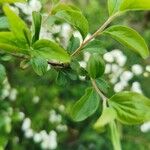
Prunus glandulosa
Chinese bush cherry · Dwarf flowering almond · Flowering almond · Ornamental cherry
Description
Source: leafsnapPrunus glandulosa, commonly known as Chinese bush cherry or Chinese plum, is a deciduous shrub in the Rosaceae family. Native to China, Korea, and Japan, it has been extensively cultivated worldwide for its ornamental appeal. The plant typically grows to a height of 2-3 meters and has a spreading habit with arching branches. The leaves of Prunus glandulosa are oval-shaped with serrated edges and are dark green in color. The plant produces fragrant pink or white flowers that bloom in early spring before the leaves emerge. These flowers are followed by small red or yellow fruits that ripen in late summer. Prunus glandulosa prefers well-drained soil and full sun exposure but can also tolerate partial shade. It is relatively easy to grow and requires minimal maintenance once established. In traditional Chinese medicine, Prunus glandulosa has been used for its medicinal properties, such as treating coughs, sore throats, and reducing fever, among other uses. Overall, Prunus glandulosa is an attractive ornamental shrub with beautiful spring blooms, making it an excellent addition to any garden landscape design. Its medicinal properties also make it valuable in traditional medicine practices.
Care Guide
💧 Water Every 7 days
The Chinese bush cherry thrives in a well-balanced moisture environment, alternating between wet and dry spells. Water the plant every 1-2 weeks, making sure that the soil stays adequately moist but not waterlogged. In its active growing season, you should water more frequently to promote flowering, but keep in mind that the plant also has a moderate tolerance for drought.
☀️ Light Full sun
Chinese bush cherry grows best in full sun but will also do well in partial shade. Originating from sunny habitats, this plant's growth suffers from too little light, while excessive sunlight can cause the leaves to scorch.
🌡️ Temperature 5–35°C
Chinese bush cherry originates from regions with temperate climates where average temperatures range from 41 to 95 °F (5 to 35 °C). It favors moderate temperatures and may need seasonal adjustments to recreate its native climate. Extra care and added warmth may be necessary during severe winters.
💨 Humidity
🪴 Soil 6-7
🌱 Fertilizer
The Chinese bush cherry needs adequate nutrients to achieve optimal fruit production. Apply fertilizer in early spring to encourage new growth and flowering. Regular fertilization helps the plant remain healthy, produce more delicious fruit, and prevents nutrient-deficiency problems like yellowing leaves and poor fruit production.
🪴 Pot & Repot Every 12 months
✂️ Pruning
Pruning Chinese bush cherry in early spring is essential for promoting growth and enhancing blooming. To achieve the best results, consider these key techniques: remove damaged branches, thin the plant for better air circulation, and reshape it to improve its appearance. Cutting back up to one-third of the old growth rejuvenates the plant, encouraging the development of strong new shoots and maintaining its ornamental beauty.
🌿 Propagating
🐛 Diseases & pets
☠️ Toxicity
Characteristics
- Plant Type
- Tree
- Life Cycle
- Perennial
- Genus
- Prunus
- Family
- Rosaceae
- Hardiness Zone
- 4-9
- Mature Height
- 1.52 m
- Mature Spread
- 0.91 m to 1.22 m
- Leaf Color
- Yellow, Green
- Leaf Type
- Deciduous
- Flower Color
- White, Pink
- Flower Size
- 3.30 cm
- Bloom Time
- Early spring, Mid spring
- Planting Time
- Spring, Autumn
- Harvest Time
- Early summer, Mid summer
- Native Area
- Russia, Japan, Koppen, South Korea, China