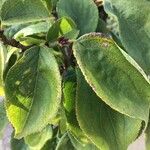
Prunus mume
Japanese apricot · Ume · Chinese plum · Japanese plum
Description
Source: leafsnapPrunus mume is an East Asian and Southeast Asian tree species classified in the Armeniaca section of the genus Prunus subgenus Prunus. Its common names include Chinese plum, Japanese plum, and Japanese apricot. The flower, long a beloved subject in the traditional painting and poetry of East Asia and Vietnam, is usually called plum blossom. This distinct tree species is related to both the plum and apricot trees. Although generally referred to as a plum in English, it is more closely related to the apricot. In East Asian cuisine (Chinese, Japanese and Korean) and Vietnamese cuisine, the fruit of the tree is used in juices, as a flavouring for alcohol, as a pickle and in sauces. It is also used in traditional medicine. The tree's flowering in late winter and early spring is highly regarded as a seasonal symbol. Prunus mume should not be confused with Prunus salicina, a related species also grown in China, Japan, Korea and Vietnam. Another tree, Prunus japonica, is also a separate species despite having a Latin name similar to Prunus mume's common name.
💡 In China, the Prunus mume (commonly known as the plum blossom), pine, and bamboo are collectively referred to as the "three friends of winter." Additionally, Chinese artists often describe the plum blossom, orchids, chrysanthemums, and bamboo as the "four gentlemen" of flowers. In this tradition, the plum blossom symbolizes winter, the orchid represents spring, the lotus stands for summer, and the chrysanthemum signifies autumn.
🌳 Beyond its culinary uses and visual appeal, the japanese apricot has potential in areas such as essential oil extraction, prized for its rich fragrance, and in woodworking, thanks to its durable, fine-grained timber. Additionally, the japanese apricot acts as an ecological indicator of soil metal content, and its blossoms provide a natural pigment for dyeing fabrics. These less-discussed applications highlight the japanese apricot's unexplored potential beyond conventional uses.
🎭 The plum blossom became a symbol of perseverance and hope, as well as of beauty, purity, and the fleeting nature of life. In Confucianism, the plum blossom represents the principles and values associated with virtue.
Care Guide
💧 Water Every 2 weeks
The Japanese apricot grows best in moist, well-drained soils and has a moderate tolerance to drought. To keep the soil moist without causing waterlogging, water the plant every two weeks. While it is usually grown outdoors and benefits from natural rainfall, its watering needs decrease during the cooler months when the plant is dormant.
What's the easiest way to water my Japanese apricot tree?
To promote excellent root development, make sure to put a garden hose at the base of the plant and avoid directly spraying the leaves. If the plant is outdoors and exposed to direct sunlight, the leaves will require more watering. You can use bubblers or soaker hoses to moisten the roots, either for individual plants or for the entire garden or bed when adding or removing plants. After watering, remember to drain any excess water and wait for the soil to dry before watering again. It's also important to water at ground level to prevent diseases. On a sunny day, you can spray the entire bush with water. Whether the Japanese apricot is potted or in-ground, it prefers deep watering instead of light sprinkling.
What should I do if I give the Japanese apricot tree too much or too little water?
An overwatered Japanese apricot can display symptoms of yellowing, dropping leaves, and wilting. The plant may also appear dull and unhealthy, with mushy stems. To address these issues, it is advisable to adjust your watering schedule. Conversely, wilting could also indicate under watering, which can cause crispy and dry leaves. If the soil is dry and simply watering is not sufficient, thoroughly hydrate the plant. While enough water can help the Japanese apricot recover, the damaged root system may result in dryness and yellowing of leaves a few days later. Once the plant returns to its normal state, the yellowing of leaves will cease. When growing a Japanese apricot indoors, always check the moisture levels and avoid overwatering. Look out for black spots as an indicator of excessive water, and allow the soil to dry by refraining from watering for a few days. Overwatering can lead to root rot, so transferring the plant to a different pot is recommended if discolored and slimy roots are detected. It is crucial to prevent root rot by avoiding excessively soggy soil. When planting a Japanese apricot outdoors, ensure that the soil is adequately hydrated. If the soil feels too dry when checked with your fingers, it may indicate underwatering. Therefore, providing sufficient water is necessary for the plant's recovery.
How frequently should I give water to my Japanese apricot?
The key to watering Japanese apricots is to provide deep and infrequent watering. If they are planted in pots, it's important to soak them in a gallon of water each time as the water storage in pots is limited and the soil dries out quickly. In cold regions, watering is needed every 3 to 5 days. It's best to water them early in the morning when the soil is dry, both outdoors and indoors. To determine if watering is needed, check the soil inside the pot. If the top 2-3 inches of soil is dry, it's time for a full watering. On hot days, check the moisture daily as the heat can quickly dry out the soil. If you have a garden, irrigation of the soil is also necessary. In hot climates, watering once a week is sufficient. Only water when you notice about 2 to 3 inches of soil becoming too dry. Avoid adding water if there has been a lot of rainfall to prevent root rot. Japanese apricots mainly grow during spring and fall, so when they're outdoors, add mulch about 3 to 4 inches deep to conserve water. Sandy soil drains faster, so it may require more frequent watering. On the other hand, clay soil should be watered less frequently to avoid root rot, allowing it to dry out for 2-3 days. It's helpful to mark the date on the calendar whenever you water and to pay attention to the leaves drooping, which can indicate if you're a day late on watering.
How much water should I give my Japanese apricot?
The Japanese apricot typically requires about a gallon of water on a regular basis. For potted plants, it is best to water them deeply until you see water dripping from the bottom of the pot. Allow the soil to dry before watering again. To determine how much water you've given your plant in a week, you can use a water calculator or a moisture meter. During the flowering period, provide ample water but allow the moisture to evaporate to prevent root rot. If the Japanese apricot is planted outdoors and receives sufficient rainfall, additional watering may not be necessary. However, when the tree is young or newly planted, make sure it receives 1-2 inches of rain per week. As the Japanese apricot grows, it can survive solely on rainfall. Only water it fully during cooler times of the day when the weather is extremely hot or if there has been no rainfall for 2-3 weeks to prevent damage from high heat. Additional watering will be needed during prolonged dry periods.
Should I water my Japanese apricot less or more depending on the time of year or the weather?
The Japanese apricot requires outdoor conditions with rain, but may need watering if there is persistent dry weather. To ensure proper growth, the soil should be kept moist but not soaked during the spring and fall. In the summer, hot weather can cause water to evaporate too quickly, so additional watering may be necessary if there is a lack of rainfall. During winter, the Japanese apricot requires less water as it goes dormant. Using a well-draining soil mixture like terracotta can help with moisture evaporation. Once the plant starts to leaf out and go dormant, watering can be skipped as it can rely on fall and winter rains. Good drainage is important, especially when flowering, and the plant should be watered consistently when in a pot. Deep soaking once or twice a week is recommended, avoiding shallow sprinkles that only reach the leaves. The plant should not be allowed to dry out completely, even during dormancy. Avoid waterlogging the plant, as it does not like sitting in water for too long. Applying mulch can help reduce stress, conserve water, and promote healthy blooms.
☀️ Light Full sun
Japanese apricot grows best when it receives direct, unblocked sunlight. It can still survive if it gets somewhat less sunlight. However, its native habitat leads it to prefer abundant light. Too much or too little exposure can harm the plant.
What are the sunlight requirements for Japanese apricot?
The Japanese apricot requires full sun, meaning it thrives best with more than 6 hours of sunlight daily. It can also tolerate partial sun, receiving about 3-6 hours of sunlight. To ensure the plant's happiness, it's crucial to observe how sunlight moves through your garden and select locations that offer a good balance of light and shade.
How important is sunlight for the growth of Japanese apricot?
Sunlight is essential for the growth of the Japanese apricot, which prospers under the unobstructed radiance of the sun. While it can survive with less sunlight, its native environment predisposes it towards a preference for ample light. Both excessive and insufficient sunlight exposure can have adverse effects on the plant.
What should I know about using artificial lighting for Japanese apricot?
For indoor Japanese apricot plants, adequate lighting is critical, especially when natural sunlight is scarce, like during winter or in less sunny areas. Artificial lights, particularly LED lights customized to provide specific wavelengths, can significantly promote healthier growth. For full sun plants, aim for 30-50W/sq ft of light, for partial sun plants 20-30W/sq ft, and for full shade plants 10-20W/sq ft. The light source should be placed 12-36 inches above the plant and be kept on for 8-12 hours daily to mimic natural daylight hours.
What are common symptoms of inadequate sunlight in Japanese apricot?
Japanese apricot may show several symptoms when not receiving enough sunlight, including smaller new leaves, leggy or sparse growth, faster leaf drop, slower or halted new growth, lighter-colored new leaves indicating a lack of chlorophyll, chlorosis, sunscald, leaf curling, wilting, and leaf scorching. These symptoms reveal the plant's struggle with insufficient light conditions.
How can I address sunlight deficiencies for my Japanese apricot, both indoors and outdoors?
To address sunlight deficiencies, gradually move the Japanese apricot to sunnier spots, ensuring it receives at least 6 hours of direct sunlight daily. For indoor plants, use a south-facing window, keep curtains open, or use artificial grow lights for at least 8 hours a day. For outdoor plants, adapt them gradually to sunnier locations to prevent sunburn. Pruning obstructing trees and transplanting to sunnier spots during the plant's dormant period can also help improve light exposure. Remember, parts of the plant affected by low light may not recover, but new growth should be healthy with improved light exposure.
🌡️ Temperature 5–35°C
The Japanese apricot is native to areas with mild climates and prefers temperatures between 41 and 95 °F (5 to 35 ℃). In colder seasons, it is advisable to place a protective covering around the Japanese apricot to offset temperature drops.
What is the native environment of the Japanese apricot?
The Japanese apricot, or Prunus mume, is native to environments with mild temperatures, thriving in a range between 41 to 95 °F (5 to 35 °C). It shows strong cold resistance but prefers conditions that are not too extreme.
How should Japanese apricot be protected during cold seasons?
During colder seasons, it's advised to protect the Japanese apricot if temperatures are expected to drop significantly. Wrapping the trunk and branches with non-woven fabric or cloth can safeguard the plant against cold. Additionally, watering the plant abundantly before the first freeze in autumn helps the soil stay moist and prevents drought and water scarcity during winter and early spring. This method is particularly important if winter temperatures are anticipated to drop below -25°C.
What are the crucial symptoms to look out for in Japanese apricot due to temperature changes?
For the Japanese apricot, critical symptoms to monitor include the plant's response to low and high temperatures. At temperatures below -25°C, you might not notice immediate changes, but by spring, branches may become brittle and dry with no new shoots. During high temperatures, specifically above 38°C, leaves may lighten in color, tips might dry and wither, and the plant could become more susceptible to sunburn.
How can one manage temperature-related issues in Japanese apricots?
Managing temperature-related issues in Japanese apricots involves specific care strategies for both cold and hot conditions. In spring, if branches become dry and brittle due to low winter temperatures, pruning the dead branches that fail to produce new leaves is recommended. For damage caused by high temperatures, such as sunburn or dried-up leaves, trimming away affected areas and providing shade can help. Moving the plant to a shaded location or using a shade cloth, along with watering in the morning and evening, can protect the plant and keep the soil moist.
💨 Humidity normal (40-60%)
This plant will thrive in moderate humidity, which is probably the level in your home. However, misting it a few times a week can be very beneficial. Make sure the room has good ventilation.
🪴 Soil 6-7
🌱 Fertilizer
The Japanese apricot plant needs adequate nutrients to produce fruit well. Apply fertilizer in early spring to support new growth and flower development. Regular feeding keeps the plant healthy, promotes more delicious fruit, and prevents nutrient deficiency problems such as yellowing leaves and poor fruit production.
Why should I put fertilizer on my Japanese apricot tree?
Fertilizing a Japanese apricot is important for several reasons. Firstly, it helps the tree produce beautiful blooms. To ensure excellent flowers in early spring, it is recommended to fertilize at that time. Additionally, fertilizer provides the tree with ample energy to store in the ground during its dormant phases. By giving the tree extra nutrients during fall planting or late spring, it will have more energy to use when active growth resumes.
When should I fertilize my Japanese apricot to get the best results?
To effectively fertilize Japanese apricot, timing is crucial. Applying fertilizer too early, while the Japanese apricot is still dormant, is ineffective and results in wasted product that is washed away by rainwater, causing pollution. The first application of fertilizer should be done in early spring, followed by monthly fertilizations until early summer.
When is it not a good idea to add fertilizer to my Japanese apricot?
To ensure proper blooming, it is important to avoid using fertilizer with excessive nitrogen on Japanese apricot. Such fertilizers may cause excessive leaf growth but few blooms. Instead, opt for a fertilizer with a lower nitrogen content compared to other nutrients. Additionally, refrain from fertilizing the tree/shrub after early autumn as this can lead to excessive growth just before winter. It is also not recommended to fertilize during hot and dry periods, as the dry soil is less effective in delivering nutrients and the growth stimulated by fertilizer may require additional water that may not be available. It is best to apply fertilizer earlier in the season when temperatures are cooler. Lastly, exercise caution when applying fertilizer to nearby plants or lawns as Japanese apricot can absorb the nutrients unintentionally, resulting in an overdose of fertilizer.
What kind of fertilizer does my Japanese apricot tree need?
To promote healthy growth and blooming of your Japanese apricot tree, it is recommended to use a fertilizer that provides a balanced mix of plant nutrients, with slightly higher levels of phosphorus. Alternatively, you can choose to improve the soil by adding organic materials like compost, worm castings, and manure. Experienced gardeners often supplement with water-soluble fertilizers containing phosphorus when the flower buds emerge, as this helps the flowers develop better, grow larger, and bloom for a longer period. Fertilizers for Japanese apricot come in various forms, but liquid or powdered options are considered among the best. Regardless of the form you choose, make sure to dilute the fertilizer and apply it while watering the tree.
How can I help my Japanese apricot grow better?
To ensure proper fertilization for your Japanese apricot, it is essential to follow the directions specific to the type of fertilizer being used and conduct additional research. Avoid over-fertilizing the tree by determining the correct amount of fertilizer to apply, which can be determined by the age of the tree or the diameter of the trunk. Generally, a rule of thumb is to apply one-tenth of a pound of fertilizer per year or per inch of trunk, not exceeding one pound. To apply granular or organic fertilizers, such as blood meal, evenly sprinkle the substance around the base of the tree, extending up to the drip line. Take care not to let the fertilizer come into contact with the trunk. Over time, the granules will break down and seep into the soil, allowing the roots to absorb the nutrients. After fertilizing, spread a one-inch layer of compost around the base of the tree and thoroughly water the area.
🪴 Pot & Repot 2-3 years
Repot your Japanese apricot every 2-3 years in early spring to promote root expansion and recovery. Use a large container with good drainage, and place it in a location with ample sunlight. After repotting, make sure the soil stays moist to encourage healthy growth, which is essential for strong blossoming.
✂️ Pruning
The Japanese apricot, cherished for its fragrant blossoms, thrives with late winter pruning to improve both its health and flowering. Important techniques include removing dead wood, thinning branches to promote air circulation, and shaping the tree. To prevent disease, always use sterilized tools. Annual pruning helps maintain the tree's aesthetic appeal and structural integrity.
🌿 Propagating
🐛 Diseases & pets
☠️ Toxicity
Characteristics
- Plant Type
- Tree, Shrub
- Life Cycle
- Perennial
- Genus
- Prunus
- Family
- Rosaceae
- Hardiness Zone
- 5-9
- Mature Height
- 3.96 m to 10.06 m
- Mature Spread
- 6.1 m
- Leaf Color
- Green
- Leaf Type
- Deciduous
- Flower Color
- Pink, White
- Flower Size
- 2.03 cm to 2.54 cm
- Bloom Time
- Early spring, Mid fall, Late fall, Winter
- Planting Time
- Spring, Autumn
- Harvest Time
- Late spring, Early summer, Mid summer
- Native Area
- Myanmar, Japan, Vietnam, Laos