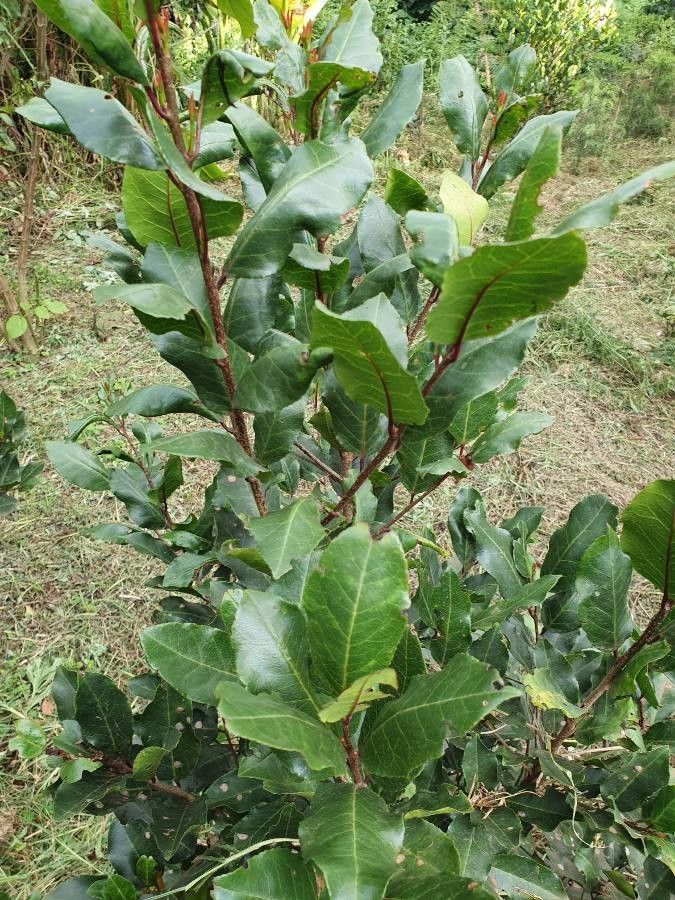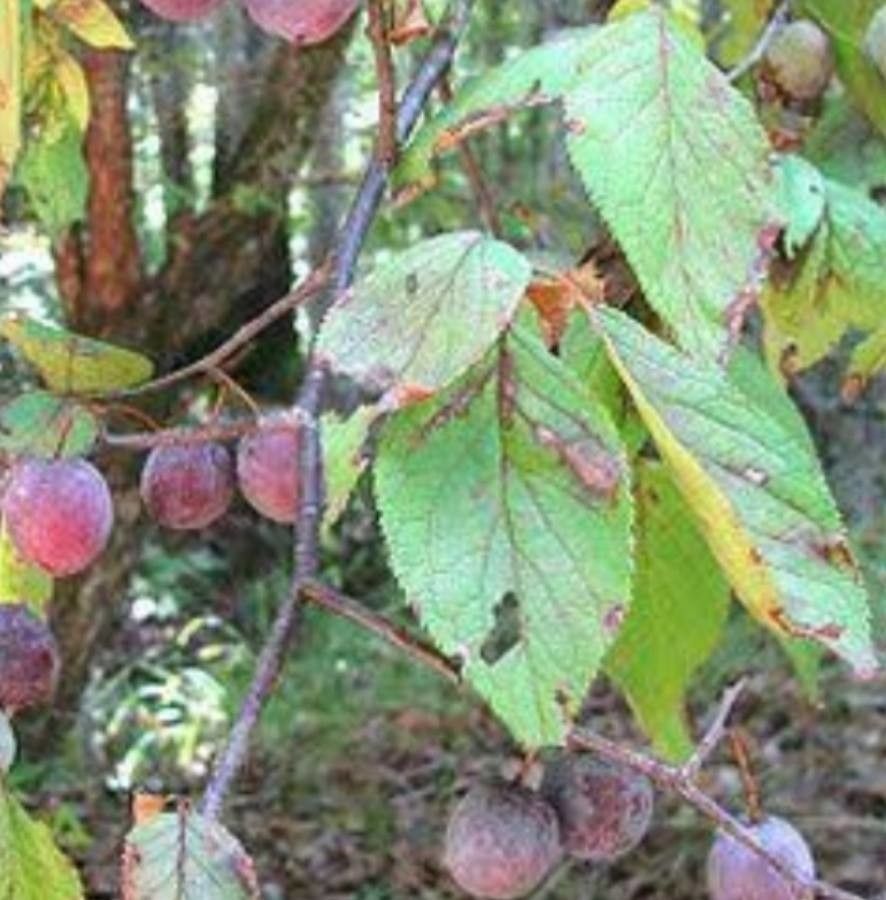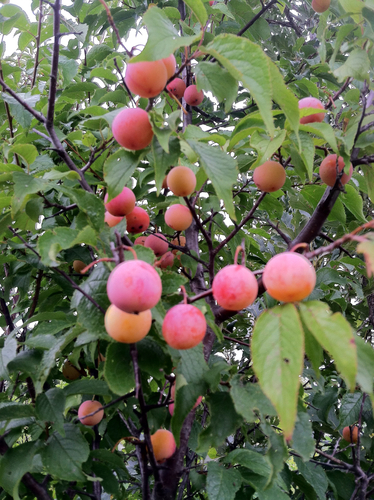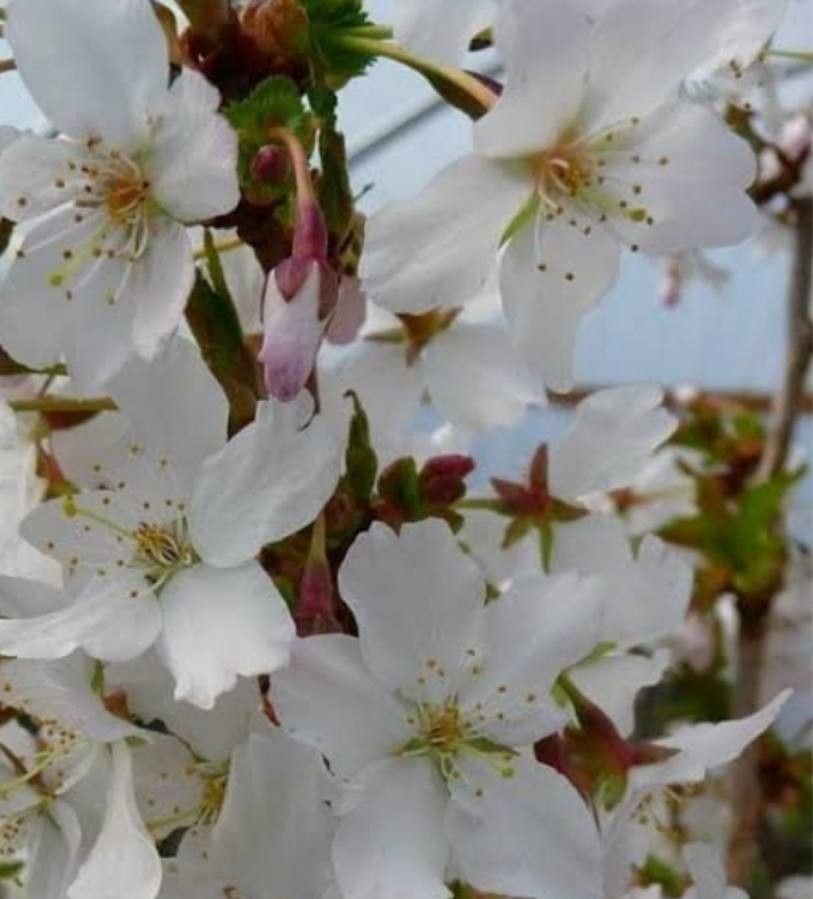
Prunus nipponica, also called Japanese alpine cherry (高嶺桜, Takanezakura), is a shrub which originates from the islands of Hokkaido and Honshu, Japan. It grows to a height of about 5 meters (16 ft) and can grow in sandy, loamy, and clay soils.This species is one of the hardiest of cherry trees, well-suited to cold climates. The flowers are a very light pink or even white in color. Flowers bloom in the first half of spring. They have 5 petals and are 3 centimeters (1.2 in) in diameter. The pistils are usually longer than the stamen. The leaves are serrated and the bark is gray. In autumn the leaves turn yellow and orange-red; these are rare autumnal colors for a cherry tree.P. nipponica wood contains significant amounts of these flavonoids: d-catechin, naringenin, sakuranetin, eriodictyol, taxifolin, genistein, and prunetin. Being a member of the genus Prunus, P. nipponica would contain amygdalin and prunasin which form hydrocyanic acid when combined with water. This acid is poisonous but in very small doses it can improve respiration, digestion, and a sense of well-being. The fruit can be used as food and to make green dye.This species was first reported by Japanese botanist Jinzō Matsumura in the Tokyo Botanical Magazine in 1901. It is in the section Pseudocerasus of the cherry subgenus Cerasus of the genus Prunus, which are ornamental plants. Ma et al classified it in a group with Prunus incisa. P. nipponica is on the "List of Protected Animals and Plants in the Wildlife Protection Zone" of the wilderness Shirakami-Sanchi World Heritage Site.
The Japanese alpine cherry is resistant to disease and usually not susceptible to illnesses. In terms of care, the plant is fairly low-maintenance. When grown outdoors it needs only light watering, and larger specimens generally do not require pruning. Smaller plants, however, should be trimmed after they finish blooming. Japanese alpine cherryt is appropriate for anyone with an outdoor area, such as a garden or a deck, and does not need extensive gardening experience.
How to keep Prunus Nipponica.
Light
Japanese alpine cherry is native to open habitats, like sunny meadows and forest edges, which provide plentiful light. It prefers Full Sun but will tolerate Partial Sun, adjusting well to different sunlight conditions.
Water
Water your Japanese alpine cherry tree based on its growth stage, the local weather, and the soil conditions. Begin by watering once before the tree starts budding. After that, continue watering once a month until fall. Make sure to water thoroughly until you see water draining from the soil. After watering, loosen the soil and remove any weeds. Cease watering during the autumn and winter months to prevent frost damage.
Temperature
The Japanese alpine cherry is highly adaptable to a wide variety of climatic conditions, whether in blazing summers or freezing winters. Still, it has an ideal temperature range for growth. When temperatures become too high, the plant is susceptible to heat and humidity stress, which can lead to its death. In locations where temperatures approach the lower limit of its cold tolerance, it is important to use insulation to protect the plant.
Fertilizer
Proper timing matters for fertilizing the Japanese alpine cherry. Apply fertilizer in early spring and continue monthly until early summer. Fertilizer encourages attractive blooms and supplies energy during both dormant and active growth periods.
Pruning
The Japanese alpine cherry benefits greatly from early spring pruning, focusing on removing dead branches and thinning to improve air circulation. Pruning during its dormant period reduces stress and encourages vigorous flowering, while also strengthening the tree’s structure by eliminating crossing branches. This promotes healthier growth and more vibrant blooms.
Botanical profile.
- Plant Type
- Tree
- Life Cycle
- Perennial
- Genus
- Prunus
- Family
- Rosaceae
- Hardiness Zone
- 4-7
- Mature Height
- 4.88 m
- Mature Spread
- 2.13 m to 3.05 m
- Leaf Color
- Green, Dark Green
- Leaf Type
- Deciduous
- Flower Color
- Pink, White
- Flower Size
- 3.05 cm
- Bloom Time
- Early spring, Mid spring
- Planting Time
- Spring, Summer
- Harvest Time
- Mid summer, Late summer
- Native Area
- Russia, Japan
Other names.
Reader questions.
What are the sunlight requirements for Japanese alpine cherry (Prunus nipponica)?
The Japanese alpine cherry (Prunus nipponica) thrives in conditions that meet its sunlight requirements. It needs full sun, which is defined as receiving more than 6 hours of direct sunlight daily, for optimal growth and health. Alternatively, it can also grow well in partial sun, which means it should get about 3-6 hours of sunlight each day. It's important to observe the movement of sunlight through your garden throughout the day to find spots that provide a perfect balance of light and shade. This ensures that your Japanese alpine cherry plants are happy and healthy.
What is the Japanese alpine cherry?
The Japanese alpine cherry, known scientifically as Prunus nipponica, is a species within the Prunus genus. Unfortunately, the provided data does not include specifics about this plant's essential characteristics, symptoms of concern, or additional details. It is recommended to consult more comprehensive resources for a thorough understanding of this species.