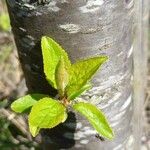
Prunus persica
هلو · هلوگل · Peach · Peach tree · Common Peach
Description
Source: leafsnapPrunus persica, commonly known as the peach tree, is a deciduous tree belonging to the Rosaceae family. Native to China, it has been cultivated for thousands of years for its delicious fruit. The peach tree can grow up to 6 meters tall and features a spreading canopy with ovate leaves that are serrated at the edges. The fruit of Prunus persica is a drupe with juicy flesh and fuzzy skin that can be yellow or pink in color. Peaches are rich in vitamins A and C, as well as potassium, fiber, and antioxidants. Peach trees require well-drained soil and plenty of sunlight to thrive. They are typically propagated through grafting or budding onto rootstocks from other Prunus species. In addition to their culinary uses, Prunus persica has been used in traditional medicine for its anti-inflammatory properties. The bark of the tree contains compounds such as amygdalin, which have been studied for their potential anti-cancer effects. Overall, Prunus persica is an important fruit-bearing plant that offers both nutritional benefits and medicinal properties.
🌳 Peach trees are employed in precision agriculture as indicators of soil trace metals. By observing the uptake of elements such as arsenic and lead into plant tissues, farmers and scientists can estimate the presence and concentration of these metals in the soil, because peach trees are known to concentrate higher amounts of some contaminants. This aids in managing soil health and promoting safer fruit production.
🎭 Long life, well-being, prosperity
Care Guide
💧 Water Every 7 days
Peaches, which originate from temperate climates, require moderate water to thrive. They should be watered every 1-2 weeks, ensuring the soil stays evenly moist without becoming waterlogged. The water needs of peaches increase during their active growth periods in spring and summer, but decrease when they are dormant in the winter months.
When Should I Water My Peach?
Watering your peach is critical for its health, growth, and fruit production. You should water the peach when the soil moisture level is low, as checked by inserting a finger or a moisture meter probe about 1-2 inches deep into the soil. If it feels dry, it's time to water. Additionally, wilting or drooping leaves, especially during hot parts of the day, indicate a need for water. Visible dryness and cracking on the soil surface are other signs that the peach requires water. During hot and dry weather, peaches may need more water, and sufficient watering is critical during its flowering stage to ensure healthy blossom development. Be mindful of the risks of watering too late or over/underwatering, as these can lead to temporary wilting, reduced fruit size, poor fruit quality, and at worst, plant death or susceptibility to diseases.
How Should I Water My Peach?
Watering your peach effectively requires utilizing techniques and tools that support its health. The deep soak method ensures that water penetrates well below the root level, encouraging deep root growth and preventing diseases. Drip irrigation is beneficial for providing a gradual water supply directly to the roots and avoiding excess moisture on the leaves. Tools like moisture meters and soaker hoses help in achieving efficient watering. It’s essential to focus watering efforts at the tree’s drip line instead of near the trunk to prevent rot and disease. Additionally, avoiding wetting the foliage can help reduce the risk of fungal diseases.
How Much Water Does Peach Need?
A young peach tree requires about 1 to 1.5 gallons of water per week, while larger, mature peaches may need approximately 2 gallons per week, ensuring the water reaches the root's base. The peach shows it's well-watered through strong, upright leaves. Signs of overwatering include yellow leaves and root rot, whereas underwatering is indicated by curling leaves or browning leaf tips. A moisture meter can give a precise assessment of the soil's moisture levels, helping to prevent both over and underwatering issues.
What Kind of Water is Best for Peach?
The ideal water for peach is balanced pH water that's not too hard or too soft. Rainwater is the optimal choice due to its softness, natural composition, and suitability in temperature. If rainwater isn't available, filtered tap water is a good alternative. Be cautious with tap water as it may contain chlorine and fluoride, which can harm the peach. Letting tap water stand for 24 hours before use can allow chlorine to evaporate, making it safer for the plant. Remember, peach prefers water at room temperature as cold or hot water can shock or harm the plant.
How Do Peach's Watering Needs Change with the Seasons?
The watering needs of peach vary with the seasons. In spring, during its active growth phase, maintain consistent soil moisture. Summer demands increased watering to counter higher temperatures and evaporation, using mulch to retain soil moisture. In autumn, reduce the frequency of watering as the plant prepares for dormancy. Winter requires minimal watering, only when the topsoil feels dry, as peach's water needs significantly decrease during this dormant period.
☀️ Light Full sun
The peach grows best when it receives a generous amount of sunlight for lengthy periods each day, though it can also tolerate sites where sunlight is less regular. Since it comes from an area with abundant sunshine, it can endure and prosper under those circumstances. Nevertheless, too much or too little sun can influence the plant’s growth and health.
What are the sunlight requirements for peach plants?
Peach plants require specific sunlight conditions to thrive. Full sun exposure, generally defined as more than 6 hours of direct sunlight daily, is highly beneficial for peach plants, fostering robust growth and health. Partial sun, quantified as about 3-6 hours of sunlight per day, can also support the growth of peach plants, though full sun is more ideal. Observing how sunlight moves through your garden and choosing locations that achieve a balance between light and shade can significantly contribute to the well-being of your plants. Such attention ensures that the specific needs of your peach plants are met, enhancing their growth, flowering, and fruiting potential.
How do peach plants respond to their sunlight environment?
Peach plants are adaptable to varying sunlight conditions. Originating from sunny climates, they can thrive in ample sunshine for extended periods throughout the day but can also manage in less consistent sunlight environments. Exposure to too much or too little sunlight, however, may negatively impact the growth and health of the plant. For indoor plants, when natural sunlight is insufficient, particularly during winter or in shaded areas, artificial lighting serves as an excellent alternative, ensuring optimal growth. LED lights are recommended for indoor peach plants, with recommended wattages varying depending on the plant's sunlight needs—30-50W/sq ft for full sun, 20-30W/sq ft for partial sun, and 10-20W/sq ft for full shade. Proper positioning and duration of artificial lighting, mimicking natural sunlight conditions, are critical for making up for the lack of direct sunlight.
What are common symptoms of improper sunlight exposure in peach plants?
Peach plants may exhibit several symptoms when they don't receive adequate sunlight, including small leaves, leggy growth, premature leaf drop, slowed or halted new growth, paler new leaves, chlorosis, sunscald, leaf curling, wilting, and leaf scorching. These symptoms indicate either excessive sunlight or insufficient light, affecting the plant's ability to perform photosynthesis, maintain structural integrity, and regulate water and nutrient transport. Properly assessing and adjusting the light conditions, either by providing more natural sunlight or supplementing with artificial light, can help mitigate these symptoms and promote healthier growth.
What are some solutions for addressing sunlight-related issues for peach plants?
Addressing sunlight-related issues in peach plants involves several strategies. For indoor plants, gradually increasing exposure to direct sunlight or using artificial light sources can improve conditions. Moving plants closer to south-facing windows or providing at least 8 hours of light from a desk or ceiling lamp daily are practical steps. Outdoors, adapting plants to sunnier spots gradually prevents sunburn, while for ground plantings, reducing obstructions such as tree branches can enhance sunlight access. Transplanting smaller plants during their dormant period to locations with better sunlight and drainage also supports healthier growth. Although parts of the plant already affected may not recover, new growth following these interventions will be more vigorous and healthy.
🌡️ Temperature 5–35°C
Because peaches are native to temperate regions, they need cool winters to produce fruits. During the growing season, peaches prefer temperatures between 41 and 95 ℉ (5 and 35 ℃). In winter, temperatures below 45 ℉ (7 ℃) are required to release buds and enhance flowering. In summer, they prefer temperatures of about 68 to 77 ℉ (20 to 25 ℃) so the fruits can develop fully.
What is the ideal temperature range for growing peaches?
Peaches are native to temperate regions and thrive in a temperature range of 41 to 95°F (5 to 35°C) during their growing season. They need cool winters with temperatures below 45°F (7°C) to release buds and enhance flowering. In the summer, ideal temperatures for fruit development are around 68 to 77°F (20 to 25°C). Peaches have strong cold resistance, so special frost protection is usually not necessary. However, if temperatures are expected to drop below the growth limit, protection measures like wrapping the trunk and branches with fabric should be considered. Additionally, watering the plant abundantly before the first freeze in autumn helps to prevent drought and water scarcity during winter and early spring.
How does low temperature affect peach trees and what can be done?
Peach trees are cold-tolerant and perform best when temperatures are kept above certain minimum values. If winter temperatures fall below the growth limit, there may not be noticeable changes immediately, but by spring, branches may become brittle and dry, and no new shoots will emerge. To remediate this, it's recommended to prune away any dead branches that have failed to produce new leaves come springtime.
What happens when peach trees are exposed to high temperatures and what are the solutions?
During summer, it's crucial to keep peach trees below a maximum suitable growth temperature. Exceeding this limit can cause leaves to lighten in color and tips to become dry and withered, increasing susceptibility to sunburn. Counteract these effects by trimming away sunburned and dried-up parts of the plant. Moving the plant to a shaded location or using a shade cloth can protect it from midday and afternoon sun. Ensuring the soil remains moist through morning and evening watering sessions can also mitigate damage from high temperatures.
💨 Humidity normal (40-60%)
This plant will thrive in moderate humidity, which is probably the level in your home. However, misting it a few times a week can be very beneficial. Make sure the room has good ventilation.
🪴 Soil 6-7
🌱 Fertilizer
The peach plant needs adequate nutrients to achieve optimal fruit production. Apply fertilizer in early spring to encourage new growth and blossom development. Regular feeding keeps the plant healthy, helps it produce tastier fruit, and prevents nutrient deficiency problems like yellowing leaves and poor fruit production.
Why should I put fertilizer on my Peach tree?
Plants need nutrients to grow, but fast-growing plants can quickly deplete the soil of these nutrients. To help Peach plant stay healthy and produce delicious fruit, it is important to regularly fertilize it. If plants are not fertilized for a long time, they can face a number of problems. Nutrient deficiencies can cause issues with the leaves, such as yellowing, reddish coloring, deformities, withered tips, or significant dieback. These deficiencies can also affect the bark, resulting in slow growth, poor shoot development, and a lack of fruit production.
When should I fertilize my Peach tree?
The best time to fertilize your peach tree is in early spring, before the buds start growing. During this time, the tree uses the stored energy from winter to produce new growth. To support the development of blooms, it is recommended to fertilize the tree about 2 to 4 weeks before it is expected to bloom. This will allow enough time for the nutrients to penetrate the soil and be absorbed by the plant. While you can continue to fertilize the tree during spring, it is not recommended to fertilize during autumn. This is because fertilizing in autumn can lead to excessive foliage growth late in the season, which makes the leaves more susceptible to damage during winter.
When should I not put fertilizer on my Peach plant?
When growing Peach in the first year, it's best to avoid fertilizer altogether. If the plant is not in need of fertilizer, be cautious about providing it. Additionally, refrain from fertilizing if you pruned 20% or more of the plant the previous year. Similarly, avoid fertilizing plants that are diseased or damaged, as this can cause more harm than good. Remember that fertilizer is not a cure-all; it's important to address the root cause of any issues before considering fertilization. Another key point to note is to avoid fertilizing after the peak of summer. Fertilizing at this time can result in excessive growth just before winter. It's also important to refrain from fertilizing Peach during hot and dry periods, as dry soil is not as effective in delivering fertilizer as moist soil. Fertilizing at this time may also stimulate growth that requires more water, which may not be readily available. It's best to apply fertilizer earlier in the season when temperatures are cooler. Lastly, be mindful that Peach can absorb fertilizer from surrounding plants or lawns. Take care not to inadvertently provide a double dose of fertilizer to nearby plants.
Which kind of fertilizer should I use for my Peach tree?
Using fertilizer that contains a balance of nitrogen, phosphorus, and potassium can bring many benefits to plants. Nitrogen is important for leaf growth and chlorophyll production. Phosphorus helps support the root system and promotes the development of blossoms, fruits, and seeds. Potassium plays a role in photosynthesis and the movement of water and nutrients throughout the plant. When choosing a fertilizer, you can opt for a commercial one that is specifically designed for a particular type of tree. Alternatively, you can use organic sources of nitrogen such as manure, feather meal, or blood meal. To ensure you apply fertilizer accurately, conducting a soil test can give you a better understanding of the condition of your soil. For commercial fertilizers, if your soil lacks sufficient phosphorus and potassium according to the soil test, you can use a balanced granular fertilizer with a ratio of 10-10-10 or similar. In most cases, nitrogen in the soil is continuously depleted with rainfall. If your soil already has enough phosphorus and potassium, it would be more appropriate to use a high-nitrogen fertilizer with a ratio of 6-2-1 or 10-2-2.
How should I fertilize my Peach tree?
To properly fertilize the Peach you are growing, it is important to follow the directions for the specific type of fertilizer and do some research. Over-fertilizing can be harmful, so determining the correct amount is crucial, especially for fruit trees. The general guideline is to use the age of the tree or the trunk diameter to estimate how much fertilizer to use. Typically, you can use about one-tenth of a pound of fertilizer per year or per inch of trunk, but no more than one pound. It's worth noting that you should wait a few years before fertilizing a Peach tree. When applying granular or organic fertilizers like blood meal, sprinkle them around the base of the tree, extending to the drip line (the space underneath the outermost branches). Avoid letting the fertilizer come into contact with the trunk. Over time, the granules will break down and filter into the soil, allowing the roots to absorb the nutrients. After fertilizing, spread a one-inch layer of compost around the base of the tree and make sure to water it thoroughly.
🪴 Pot & Repot 2-3 years
When repotting Peach, select a pot 1-2 inches (2.5–5 cm) larger with ample drainage. Use a well-draining potting mix. Repot in spring or fall, making sure the root ball is slightly lower than the rim of the flower pot. Water thoroughly after repotting and place the plant in a warm spot with indirect sunlight.
✂️ Pruning
Pruning peach trees in late winter is beneficial for encouraging growth and improving fruit quality. The key techniques include removing damaged branches, thinning crowded areas to enhance air circulation, and shaping the tree to allow better sunlight access. Consistent pruning promotes healthy growth, enhances fruit quality, and prevents disease, ensuring that the trees remain productive.
🌿 Propagating
🐛 Diseases & pets
☠️ Toxicity
Characteristics
- Plant Type
- Tree, Shrub
- Life Cycle
- Perennial
- Genus
- Prunus
- Family
- Rosaceae
- Hardiness Zone
- 5-9
- Mature Height
- 2.13 m to 7.92 m
- Mature Spread
- 6.1 m
- Leaf Color
- Green
- Leaf Type
- Deciduous
- Flower Color
- Pink
- Flower Size
- 2.54 cm to 3.56 cm
- Bloom Time
- Mid spring, Late spring
- Planting Time
- Spring, Autumn
- Harvest Time
- Mid summer
- Native Area
- China