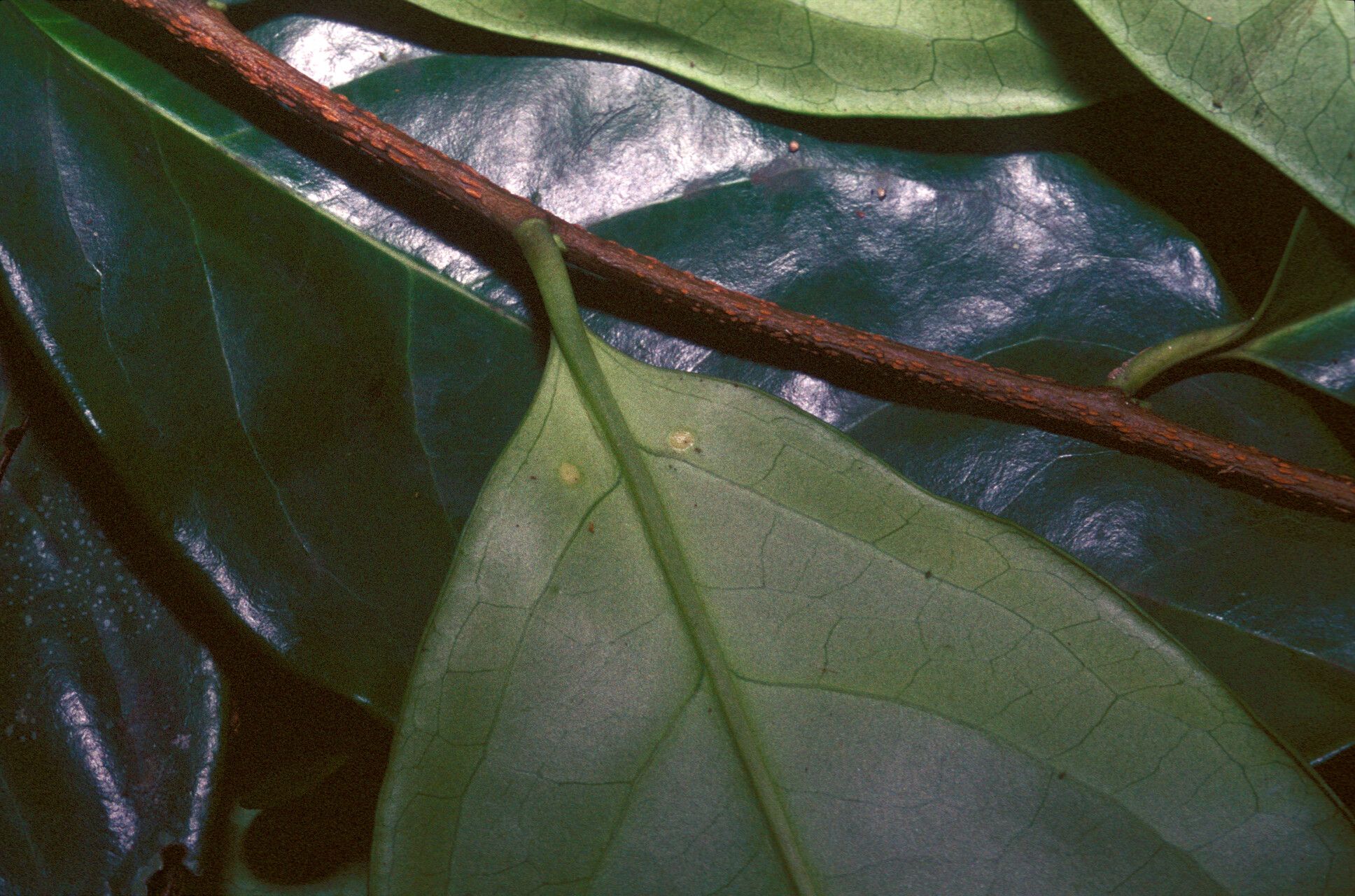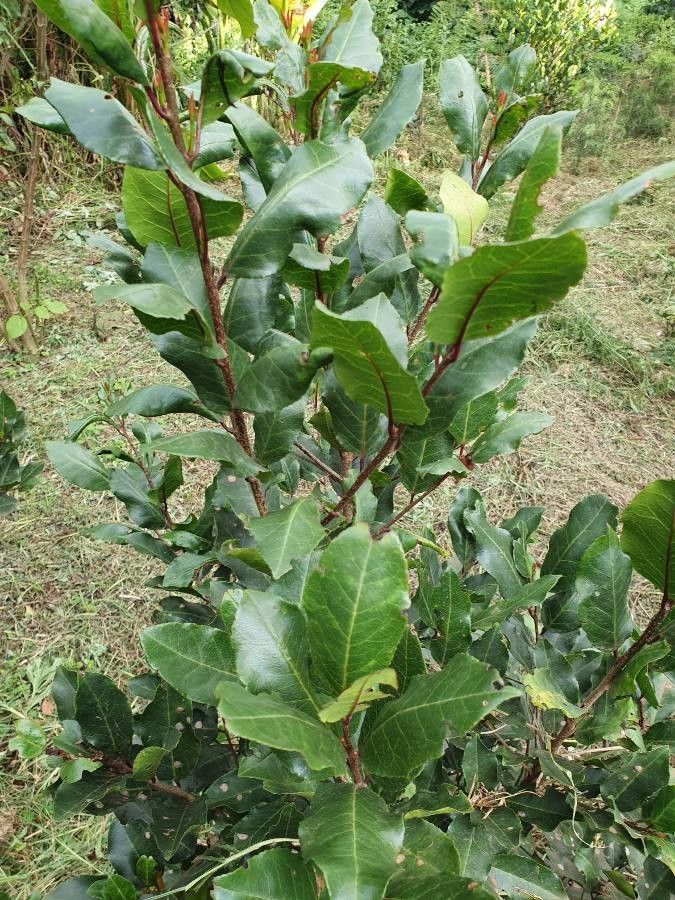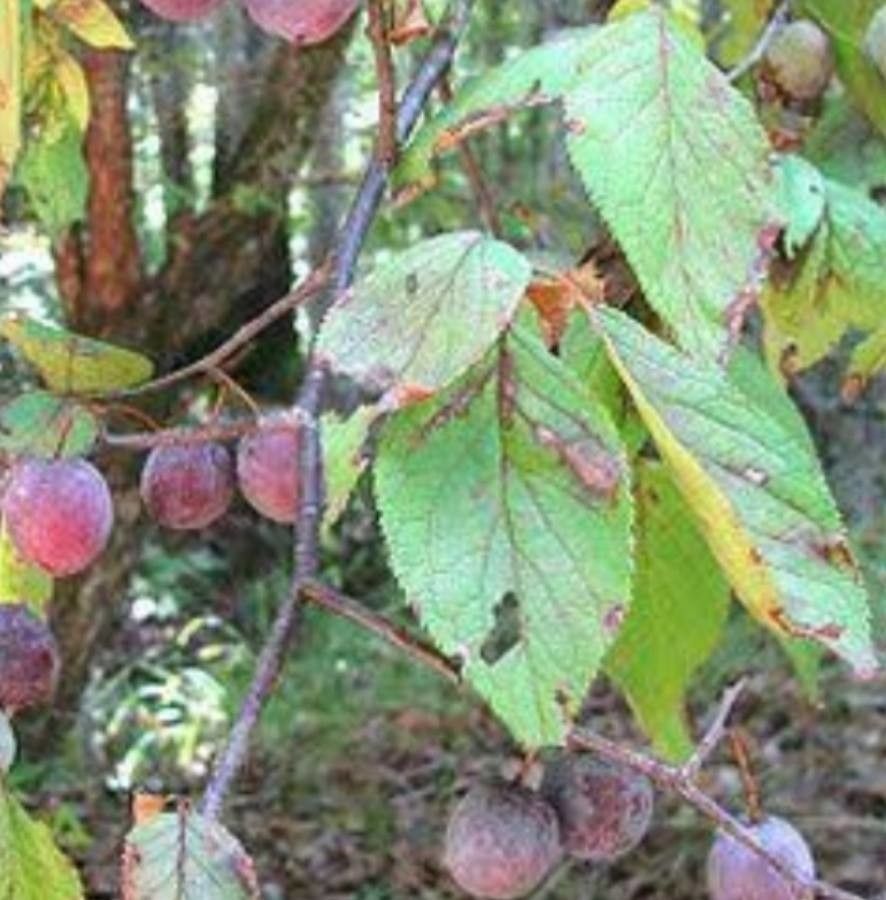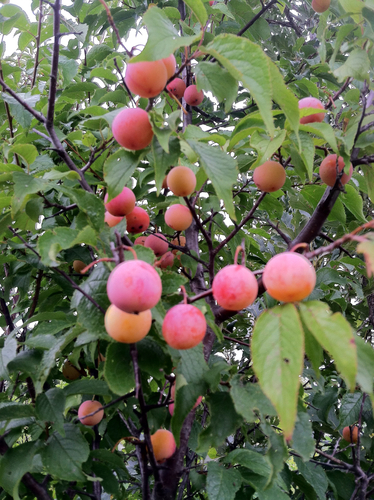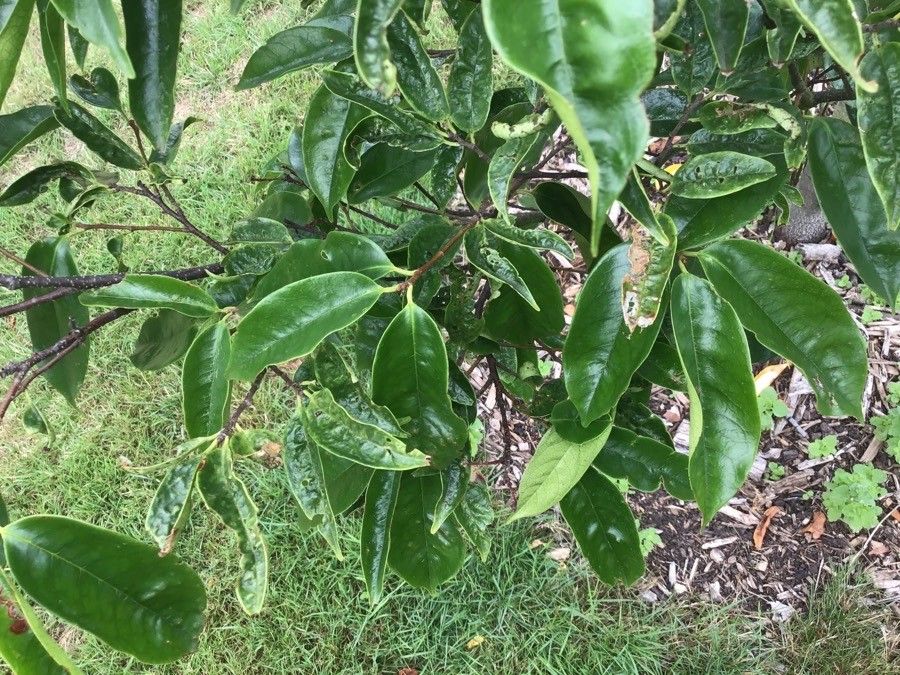
Prunus phaeosticta, the dark-spotted cherry, is a species of Prunus native to China, including Taiwan, and southeast Asia, including far eastern India, Bangladesh, Burma, Thailand, Laos and Vietnam. It goes by a number of different names in Chinese, including 黑星櫻, black star cherry, 墨點櫻桃 and 墨点樱桃, ink point cherry, and 腺葉桂櫻, gland leaf cherry. It gets its specific epithet and its common names from the small dark spots (glands) on the undersides of its leaves. Formosan rock macaques (Macaca cyclopis) eat the fruit.
Dark-spotted cherry is highly resistant to disease and is usually not susceptible to illnesses. In terms of care, this plant is fairly low-maintenance. When planted outdoors it needs only minimal watering, and larger plants generally do not require pruning. Smaller plants, however, should be pruned after they have finished blooming. Dark-spotted cherryt is suitable for anyone with outdoor space, such as a garden or deck, and does not demand extensive experience in plant care.
How to keep Prunus Phaeosticta.
Light
The dark-spotted cherry is indigenous to habitats like forest understories and rocky landscapes where it is naturally shaded. It favors conditions of partial sunlight, however, it showcases its adaptable and robust nature by thriving in situations of either full sunlight or full shade.
Water
The dark-spotted cherry grows best in environments with balanced humidity and consistently moist soil. To keep the soil adequately moist, it needs to be watered weekly. Although it is drought-resistant and comes from areas with moderate rainfall, adding a layer of mulch is beneficial. This helps retain soil moisture, especially during the plant's active growing season.
Temperature
The dark-spotted cherry demonstrates superb resilience to a range of weather conditions, spanning from hot summers to cold winters. Nevertheless, there is a preferable temperature range for its growth. If temperatures soar too high, the plant becomes susceptible to heat and humidity stress, leading to its potential death. In areas where temperatures verge on reaching below its capacity to endure cold, it becomes imperative to put into action insulation measures to safeguard the plant.
Fertilizer
The meticulous timing of fertilization is important for Dark-spotted cherry. Apply fertilizer in the early stage of spring and maintain this on a monthly basis until the commencement of summer. The purpose of fertilization is to facilitate beautiful blossom production and offer energy during both dormant and active growth periods.
Pruning
The dark-spotted cherry tree exhibits dark spots on its leaves and requires pruning to maintain good health. To achieve this, remove dead branches and thin out crowded areas to improve air circulation. The best time to prune is from early to late winter after the leaves have fallen, which helps promote growth and boosts fruit yield. For detailed pruning techniques, consult horticultural guides.
Botanical profile.
- Plant Type
- Tree, Shrub
- Life Cycle
- Perennial
- Genus
- Prunus
- Family
- Rosaceae
- Hardiness Zone
- 7-10
- Mature Height
- 3.96 m to 11.89 m
- Mature Spread
- 3.05 m to 6.1 m
- Leaf Color
- Green
- Leaf Type
- Evergreen
- Flower Color
- White, Pink
- Flower Size
- 0.51 cm to 0.51 cm
- Bloom Time
- Early spring, Mid spring
- Planting Time
- Spring, Summer, Autumn
- Harvest Time
- Summer
- Native Area
- India, Vietnam, Myanmar, Bangladesh, Laos, Thailand, China
Reader questions.
What are the sunlight requirements for Dark-spotted cherry (Prunus phaeosticta)?
The Dark-spotted cherry (Prunus phaeosticta) needs a specific amount of sunlight to thrive. For 'Full sun' conditions, it requires above 6 hours of sunlight daily. If the area provides 'Partial sun,' then about 3-6 hours of sunlight is necessary. It's important to observe how sunlight moves through your garden, selecting locations that offer an ideal balance of light and shade. This ensures the plants maintain their health and happiness.